
Struggling to pick the right cutting board material for your kitchen in 2026?
You’re not alone.
With so many options—wood, bamboo, plastic, composite, smart and eco-friendly boards—choosing “just one” can feel impossible. And the truth is, you shouldn’t. In 2026, the real secret is matching the right cutting board material to the right usage scenario:
- Raw meat and poultry vs. fresh vegetables and fruits
- Fish and seafood vs. bread, cheese, and charcuterie
- Heavy chopping vs. precision slicing
- Everyday home cooking vs. BBQ, camping, and outdoor kitchens
The wrong board can dull your knives, harbor bacteria, or even ruin the texture and flavor of your food. The right one keeps things safer, cleaner, and easier—and yes, it can also be more sustainable.
In this 2026 guide, you’ll discover exactly which cutting board materials to use for every task, how new antimicrobial plastics and eco-plastic boards compare to wood and bamboo, and why modern, color-coded boards like Calmchop are becoming the go-to choice for everyday kitchens.
Let’s dive into the best usage scenarios for different material cutting boards in 2026—so you never have to guess which board to reach for again.
Cutting Board Materials Available in 2026 – What’s Still Relevant and What’s New
If you’re still wondering what the “best” cutting board material is in 2026, the honest answer is: it depends on what you’re cutting, how you cook, and how much maintenance you’re willing to do. The good news is that we now have more options than ever, from classic wood to advanced plastics and smart, eco-focused materials.
Let’s break down what’s actually worth your attention this year.
Traditional Wood Cutting Boards (Maple, Walnut, Teak)
Wood is still the go-to for many home cooks and professional chefs because it feels great under the knife and looks good on any counter.
Why people still love wood:
- Knife-friendly: Especially end-grain maple and walnut – they’re gentle on edges and feel “buttery” when you chop.
- Naturally antibacterial: Studies have shown hardwoods can trap and slowly kill bacteria inside the fibers when boards are properly dried.
- Great for serving: Cheese, charcuterie, bread – wood simply looks and photographs better than plastic.
Best woods in 2026:
- Maple: The classic, balanced choice – durable, fine-grained, and widely accepted by pros.
- Walnut: Slightly softer, darker, and premium-looking; excellent for knives and presentation.
- Teak: More oil-rich, water-resistant, and stable, but can be a bit harder on knife edges than maple.
Trade-offs:
- Not dishwasher-safe.
- Needs regular oiling.
- Not ideal for raw meat in busy, high-risk kitchens.
Bamboo Cutting Boards – The “Green” Favorite
Bamboo still wears the “eco-friendly” crown in 2026, and for good reason. It’s fast-growing, widely available, and looks modern on the counter.
What makes bamboo appealing:
- Sustainable image: Technically a grass, not a wood; grows fast, needs less land.
- Lightweight but sturdy: Easier to move, lift, and store than many hardwood boards.
- Resists water better: Less prone to swelling and warping if cared for properly.
But you should know:
- Bamboo is harder than many hardwoods and often bonded with resins, which can be a bit tougher on knife edges.
- Not ideal for heavy chopping or cleavers.
- Just like wood, it’s not dishwasher-safe and still needs regular conditioning.
Plastic Cutting Boards (HDPE, Polypropylene, Antimicrobial)
Plastic cutting boards have quietly become the workhorses of modern kitchens. In 2026, they’re no longer just “cheap boards” – they’re highly engineered tools.
Key plastic types:
- HDPE (High-Density Polyethylene): The professional standard – thick, tough, and NSF-ready.
- Polypropylene: A bit lighter and more flexible; often used for thin mats and color-coded sets.
- Antimicrobial plastics: Infused with silver, copper, or antimicrobial agents to slow bacterial growth on the surface.
Why plastic is dominating serious food prep:
- Non-porous & hygienic: Ideal for raw meat, poultry, and seafood.
- Dishwasher-safe: You can sanitize at high temperatures without worrying about warping (with quality boards).
- Color-coding: Makes it easy to separate raw meat, fish, vegetables, and ready-to-eat foods.
- Consistent surface: Predictable grip, no deep cracks like old, dried-out wood.
For a global market that cares about cutting board hygiene, dishwasher safety, and professional chef standards, high-quality HDPE remains the smart, practical choice in 2026.
Composite / Wood-Fiber Cutting Boards (Epicurean-Style)
Composite or wood-fiber boards sit in the middle ground between wood and plastic. Think of them as compressed wood fibers bonded with resins, engineered for durability.
Why cooks choose composite boards:
- Slim but strong: Thinner than most wood boards, but surprisingly rigid and durable.
- Often dishwasher-safe: Many are rated for dishwashers, which is a huge plus over traditional wood.
- Knife-friendly enough: Not as gentle as end-grain wood, but far better than glass or stone.
- Heat-resistant: Many can double as a trivet or handle warmer items from the oven.
Good to keep in mind:
- Can be a bit harder on knives than softwood boards.
- Once heavily scarred, they’re not as easy to resurface as thick plastic or end-grain wood.
Emerging Cutting Board Materials in 2026
The cutting board market isn’t standing still. New materials are driven by sustainability, smart technology, and advanced hygiene.
1. Recycled Ocean Plastic Cutting Boards
These boards target both performance and eco-impact, using recycled ocean-bound plastic to reduce waste.
- Great for buyers who want an eco-friendly cutting board without losing durability.
- Often built from HDPE-style plastics, so still non-porous and dishwasher-safe.
- Some lines, like Calmchop’s eco-focused collections, aim for 70%+ recycled content while meeting hygiene and performance standards.
2. Glass-Ceramic Hybrid Boards
Glass-only boards have always been terrible for knives, but hybrid designs try to balance durability with surface gentleness.
- Pros: Very stain-resistant, easy to wipe clean, visually sleek.
- Cons: Still significantly harder than wood or plastic; not ideal as a main knife surface.
- Better suited for pastry work, serving, or occasional tasks, not daily chopping.
3. Smart Boards with UV Sanitization
Smart boards with built-in UV-C sanitizing compartments or lids are starting to appear more often.
- Targeted at health-conscious homes and small commercial kitchens.
- UV sanitization can help reduce surface bacteria when used correctly.
- These usually pair UV tech with a plastic or composite cutting surface for easier cleaning.
While these smart designs are still evolving, they clearly show where cutting board innovation is heading: more hygiene, more data, more automation, without sacrificing usability.
In 2026, all these materials coexist for a reason. Traditional wood and bamboo win on aesthetics and knife feel, but plastic and engineered composites dominate when it comes to food safety, durability, and ease of cleaning. As a manufacturer deeply invested in plastic and eco-plastic boards, I’m seeing one clear trend worldwide: people want cleaner, safer, smarter surfaces that match real-life cooking, not just pretty photos.
The Golden Rule in 2026: Never Cross-Contaminate
In 2026, the rule is simple: never mix raw and ready‑to‑eat foods on the same cutting board. Dedicated boards are non‑negotiable. If you care about food safety, you need a system, not guesswork.
What health guidelines say (FDA, EU, NSF)
Global food safety agencies are all saying the same thing:
- FDA (US), EU food safety bodies, and NSF recommend:
- Separate cutting boards for:
- Raw meat and poultry
- Raw fish and seafood
- Ready‑to‑eat foods (bread, cheese, fruit, cooked meat)
- Vegetables and salad ingredients
- Non‑porous, dishwasher safe boards (like HDPE plastic) for raw proteins
- Easy‑to‑clean surfaces that don’t trap deep knife grooves
- Separate cutting boards for:
As a cutting board manufacturer, we design our plastic cutting boards to match these requirements:
- NSF‑style hygiene standards in mind
- Smooth, non‑porous HDPE and similar plastics
- Safe to run through a hot dishwasher cycle for full sanitizing
This is what restaurants and professional kitchens are already doing in 2026, and home kitchens are catching up fast.
Color coded cutting boards: how it works
Color‑coded cutting boards make this easy, especially in busy homes and small commercial kitchens. No one has to think twice; you just follow the colors.
The most common setup looks like this:
- Red – Raw meat (beef, pork, lamb)
- Yellow – Raw poultry (chicken, turkey, duck)
- Blue – Raw fish and seafood
- Green – Vegetables, fruits, herbs, salad
- Brown – Cooked meat, BBQ, grilled foods
- White – Bakery, dairy, bread, cheese, general prep
Why this works so well in real life:
- Less risk of “I forgot” moments
- Everyone in the kitchen follows the same color rules
- Guests, kids, or new staff can see at a glance which board to use
- Ideal for:
- Small apartments (thin, stackable boards in different colors)
- Big families cooking multiple dishes at the same time
- BBQ and outdoor cooking where raw and cooked food mix easily
Our plastic cutting boards are built around this system:
- Sold as color‑coded sets
- Different thickness options: heavy duty for daily prep, thin flexible boards for quick jobs
- Textured surfaces to hold food in place, but still easy to scrub clean
Why dedicated plastic cutting boards make sense in 2026
If you want the best cutting board for raw meat in 2026, plastic is still the winner:
- Non‑porous surface: less chance for bacteria to “hide”
- Dishwasher safe: heat + detergent = deeper sanitizing
- Color coding: perfect fit for modern hygiene guidelines
- Affordable to keep several boards:
- One set for raw proteins
- One set for vegetables and ready‑to‑eat foods
- Optional extra board for allergens (gluten‑free, nut‑free, etc.)
The bottom line:
- One knife, one color, one task.
- No cross‑contamination, no guesswork.
- Use dedicated, color‑coded plastic cutting boards and stick to the system every time you cook.
Detailed usage: which cutting board material wins in 2026
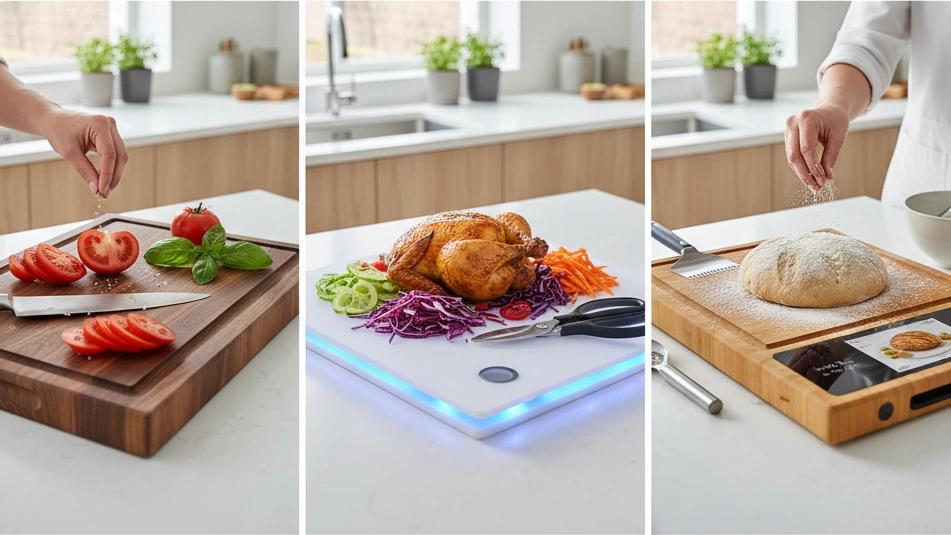
When people ask me about “the best cutting board,” I always say: it depends on what you’re cutting. Here’s how I break it down in 2026, based on hygiene, knife feel, and real-life kitchen habits.
Raw meat & poultry – HDPE plastic is the clear winner
If you’re looking for the best cutting board for raw meat in 2026, thick HDPE plastic is still number one.
Why HDPE plastic wins:
- Non-porous: it doesn’t soak up blood, juices, or bacteria.
- Easy to sanitize: fully dishwasher safe, so you can hit high-heat cycles.
- NSF-style hygiene: the same style many professional kitchens use.
- Color-coding: red boards for meat make it simple to avoid cross-contamination.
Good choices:
- Best: HDPE plastic cutting board (thick, solid, non-warping).
- Runner-up: composite / wood-fiber board that’s NSF-safe.
What to avoid:
- Porous wood or bamboo for raw meat and poultry. They look nice but can hold onto juices and are harder to sanitize properly if you’re cooking daily for family or in a small restaurant kitchen.
Raw fish & seafood – antimicrobial plastic for the win
For fish and seafood, odor and bacteria are the big issues. This is where modern antimicrobial plastic boards shine.
Why antimicrobial plastic cutting boards work best:
- No odor absorption: HDPE and antimicrobial plastics don’t hold fish smells.
- Simple cleaning: straight into the dishwasher after sushi, sashimi, or shrimp.
- Hygiene: smooth, non-porous surface keeps bacteria in check when cleaned correctly.
Good choices:
- Best: HDPE or antimicrobial plastic board, ideally color-coded (like blue for seafood).
- Runner-up: a dedicated composite board that you never mix with meat or veggies.
What to avoid:
- Wood boards for raw fish. They can hold odor and moisture, especially in humid climates, and that’s not what you want in a modern, high-hygiene kitchen.
Vegetables & fruits – wood, bamboo, or plastic depending on your style
For fresh produce, you’ve got more flexibility. This is where personal cooking habits matter.
Best picks:
- Wood cutting boards:
- Gentle on knives.
- Feel great under the blade.
- Natural antibacterial properties on well-maintained hardwood.
- Bamboo cutting boards:
- Light and “green” option.
- Good for everyday salad and fruit prep.
- Plastic cutting boards:
- Great if you prefer everything dishwasher safe.
- Perfect for busy home cooks who want easy cleaning between tasks.
Simple setup:
- Many home cooks use:
- 1 dedicated plastic board for raw meat/seafood.
- 1 wood or bamboo board for fruits and vegetables.
- If you’re tight on space, a color-coded plastic set still keeps things safe and simple.
Bread & baked goods – wood and bamboo look and feel better
If you bake or just slice a lot of bread, you’ll feel the difference right away.
Why wood wins for bread:
- End-grain wood boards are self-healing and gentle on knives.
- The surface feels stable, so slices stay neat.
- They look great on the table for serving bread or pastries.
Good choices:
- Best: end-grain wood board for bread, cakes, and baked goods.
- Runner-up: bamboo board for lighter, more affordable use.
What to avoid:
- Soft plastic boards for bread:
- They show deep knife marks quickly.
- They don’t look good for serving guests.
- Not ideal if you care about presentation.
Cheese & charcuterie – go for looks and stability
For cheese boards and charcuterie platters, aesthetics matter almost as much as function.
Best options:
- Wood boards:
- Warm, natural look.
- Gentle on knives when cutting cheese and cured meats.
- Perfect for serving at the table.
- Bamboo boards:
- Clean, modern look and light weight.
- Marble or stone:
- Keeps cheese cooler for longer.
- Great as a serving surface (just don’t use it as your main chopping board; it’s not knife friendly).
What to avoid:
- Standard plastic boards for cheese and charcuterie:
- They work, but they look “cheap” on a table.
- Knife marks and stains show fast, especially under bright lighting or in restaurant service.
Heavy chopping – thick HDPE plastic is almost indestructible
When you’re dealing with bones, frozen foods, or heavy cleavers, not every cutting board can survive.
Why thick HDPE plastic is best:
- Tough and durable:
- Handles cleavers, bones, and frozen meat without cracking.
- Won’t chip like glass or thin boards.
- Easy to clean after heavy butchery.
Good choices:
- Best: thick, solid HDPE plastic block board.
- Runner-up: heavy, end-grain wood block if you prefer a more traditional look.
What to avoid:
- Thin plastic boards:
- They bend, warp, and get damaged fast under heavy chopping.
- Glass or glass-ceramic:
- Very bad for knives.
- Loud and slippery. Great for serving, not chopping.
Dough rolling & pastry – smooth, stable surfaces
For pastry, dumpling dough, or pizza bases, you need a cool, stable, and fairly smooth surface.
Best options:
- Wood boards:
- Nice grip for dough, not too sticky when dusted with flour.
- Comfortable for long rolling sessions.
- Composite / wood-fiber boards:
- Smooth and stable.
- Easy to clean off flour and butter.
- Marble:
- Stays cooler, which is helpful for buttery pastry.
What to avoid:
- Thin, flexible plastic mats:
- They wrinkle and move while rolling.
- Not ideal for precise pastry work.
Outdoor, BBQ, and portable use – plastic wins on practicality
For grills, camping, tailgating, and outdoor cooking, convenience is key.
Why plastic cutting boards are best outdoors:
- Lightweight and easy to carry.
- Can be color-coded for meat vs veggies to avoid cross-contamination at the grill.
- Easy to rinse and toss into the dishwasher when you get home.
Good choices:
- Best: lightweight HDPE plastic boards or thin, durable plastic mats.
- Runner-up: foldable composite or thin bamboo boards for quick prep.
What to avoid:
- Heavy wood boards:
- Not practical to carry to BBQs, picnics, or food trucks.
- Harder to manage in tight outdoor spaces.
In short:
- Raw meat & poultry: HDPE plastic.
- Raw fish & seafood: antimicrobial HDPE plastic.
- Vegetables & fruits: wood/bamboo for feel, plastic for easy cleaning.
- Bread & baked goods: wood, especially end-grain.
- Cheese & charcuterie: wood, bamboo, or marble for presentation.
- Heavy chopping: thick HDPE plastic.
- Pastry & dough: wood, composite, or marble.
- Outdoor & BBQ: lightweight, color-coded plastic boards.
That’s how I set up boards for most global customers today: plastic for anything risky, wood or bamboo where feel and looks matter, and the right thickness and size for each job.
In-Depth Cutting Board Material Comparison 2026
As a plastic cutting board manufacturer, I look at every material with one question first: does it actually work in a real kitchen in 2026? Here’s a quick cutting board material comparison 2026 so you can match each board to the right job.
Suggestions for the usage scenarios of different material cutting boards in 2026
| Material | Knife-Friendly | Hygiene / Bacteria | Maintenance | Eco Impact 2026 | Price (2026) | Dishwasher Safe | Best Use Case (Quick Tip) |
|---|---|---|---|---|---|---|---|
| HDPE / Plastic (color coded) | Very good | Excellent | Very low | Good (recycled options rising) | $ | Yes | Raw meat, poultry, seafood, BBQ, busy family kitchens |
| Antimicrobial plastic (self-healing) | Very good | Outstanding | Very low | Good | $$ | Yes | High-risk foods, pro kitchens, small apartments |
| Composite / wood-fiber | Good | Very good | Low–medium | Good (long lifespan) | $$ | Some models | Veg, pastry, all‑round everyday board |
| Traditional wood (end grain) | Excellent | Good if maintained | Medium | Good (renewable, long life) | $$$ | No | Bread, cheese, show boards, knife-friendly prep |
| Bamboo | Good | Good if maintained | Medium | Very good (fast-growing grass) | $$ | No | Veg / fruit, light prep, eco‑focused homes |
| Recycled plastic (ocean-bound, etc.) | Very good | Excellent | Very low | Excellent (waste-to-use) | $$ | Yes | Eco-friendly cutting board 2026, everyday all‑round |
| Glass / stone / marble | Poor | Excellent | Very low | Mixed (long-lasting but heavy) | $$–$$$ | Yes | Serving, pastry cooling; not for chopping |
Knife friendly cutting board material
Knife feel matters a lot, especially for home cooks who sharpen rarely.
- Most knife-friendly: end-grain wood, quality HDPE plastic, recycled plastic boards
- Balanced feel: composite boards, bamboo (can be a bit harder on cheaper knives)
- Worst for knives: glass, ceramic, stone – these will dull or chip blades fast
If you want the professional chef cutting board choice feel without the maintenance of wood, a thick HDPE cutting board or a self-healing cutting board (advanced plastic) is the sweet spot.
Cutting board hygiene & bacteria resistance
In 2026, hygiene is non‑negotiable, especially for best cutting board for raw meat 2026.
- Top for hygiene
- HDPE plastic and antimicrobial plastic: non‑porous, easy to sanitize, perfect for plastic vs wood cutting board bacteria concerns
- Color coded cutting boards (red for meat, blue for fish, green for veg) make it easy to follow cutting board hygiene guidelines
- Good, but needs care
- Wood and bamboo: can naturally resist bacteria if kept dry and oiled, but you must avoid soaking and deep cracks
- Smart extras in 2026
- Built‑in antimicrobial agents (silver/copper ions) in plastic boards
- UV-sanitizing smart boards as premium add‑ons
For raw meat and seafood, I always recommend plastic or antimicrobial cutting board over wood.
Maintenance & lifespan
Think about how much time you really want to spend on board care.
- Lowest maintenance
- HDPE, polypropylene, recycled plastic boards: no oiling, no drama, just wash
- Many can be resurfaced (light sanding) to extend life
- Medium maintenance
- Composite boards: durable but can warp if abused; some are dishwasher safe, some not
- Bamboo: needs oiling, avoid soaking
- Highest maintenance
- Wood: regular oiling, no dishwasher, keep away from standing water
If you want long lifespan + low effort, go plastic or composite. Wood lasts long too, but only if you actually do the care.
Eco-impact & sustainability trends
Global customers are asking hard questions about eco-friendly cutting board 2026 options.
- Strong eco picks
- Recycled plastic cutting board (including ocean-bound): diverts waste, very durable
- Bamboo: fast-growing, low resource use
- Balanced eco choice
- Wood: renewable, long life, but depends on sourcing and forestry practices
- Composite: long lifespan reduces replacement frequency
- What we focus on
- Higher recycled content in HDPE
- Durable boards so you replace less often, which matters more than “green” marketing
If you want eco + hygiene, recycled HDPE cutting boards are a very practical choice.
Price range in 2026
A quick feel for cost vs performance:
- Budget ($): thin HDPE, basic plastic, small boards
- Mid-range ($$): thick HDPE, antimicrobial plastic, composite, good bamboo
- Premium ($$$): large end-grain wood, designer marble, smart UV boards
You don’t need to overspend. For most homes, a mid‑range HDPE set plus one nicer wood board for serving is more than enough.
Heat & stain resistance
Real kitchens see hot pans, turmeric, and red beet every week.
- Heat
- Plastic (HDPE): heat-resistant up to a point, but keep away from direct hot pans
- Composite and stone: handle heat better; stone is best for hot pots and pastry
- Wood and bamboo: no direct heat, keep away from burners
- Stains
- Light plastic will show stains faster but can be bleached or deep cleaned
- Dark plastic, composite, and darker woods hide stains better
- Glass and stone resist stains but are not knife friendly
For heavy curry, beet, or BBQ sauces, I recommend dark HDPE boards or composite boards that can take aggressive cleaning.
Dishwasher safe cutting board
Dishwasher safety is a big reason many people move to plastic.
| Material | Dishwasher Safe? | Notes |
|---|---|---|
| HDPE / plastic | Yes (ideal) | Handles high heat and strong detergents well |
| Antimicrobial plastic | Yes | Keeps hygiene high with minimal effort |
| Recycled plastic | Yes | Same benefits as standard HDPE |
| Composite | Often “top rack” | Check label; some warp in very hot cycles |
| Wood / end grain | No | Hand wash only, dry fast |
| Bamboo | No | Dishwashers cause cracking and warping |
| Glass / stone | Yes | Safe, but noisy and bad for knives |
If you rely on the dishwasher daily, go for dishwasher safe cutting board sets made from HDPE or recycled plastic and use wood/bamboo mainly for serving and light prep.
Latest Cutting Board Innovations 2026 – Suggestions for the Usage Scenarios of Different Material Cutting Boards in 2026
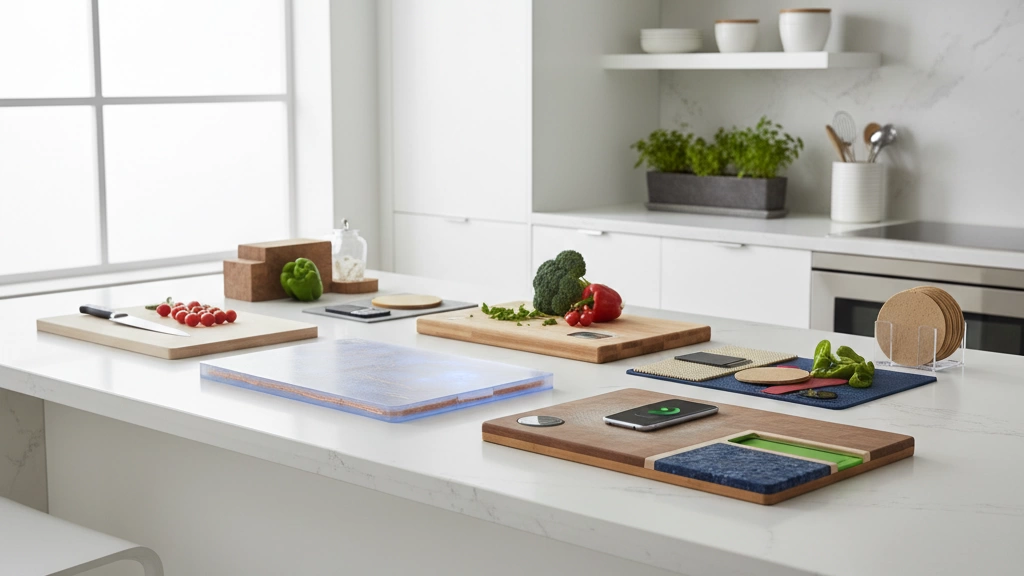
The biggest jump in cutting board tech in 2026 is happening in plastic. As a plastic cutting board manufacturer, I’m focused on upgrades that actually change how you cook and clean, not just how the board looks.
Self-healing plastic cutting boards
Self-healing cutting board surfaces are designed to close up shallow knife marks over time.
- Great for: high-volume home cooks, meal prep, small food businesses
- Main benefits:
- Fewer deep grooves where bacteria can hide
- Smoother surface for longer, even with heavy knife use
- Extends lifespan of HDPE and similar professional chef cutting boards
- Why it matters: In 2026, the best cutting board for raw meat needs to stay smooth and easy to sanitize. Self-healing plastic gives you that without babying the board.
Antimicrobial cutting boards with silver/copper ions
New antimicrobial cutting boards embed silver or copper ions directly into the plastic.
- Great for: raw meat, poultry, fish, and seafood (high‑risk foods)
- Main benefits:
- Continuous antimicrobial action on the cutting surface
- Extra support for cutting board hygiene guidelines (FDA, EU style standards)
- Ideal as color coded cutting boards for meat vs vegetables
- Why it matters: In plastic vs wood cutting board bacteria discussions, these antimicrobial boards give plastic a real edge for raw protein, especially when you want fast, reliable sanitation.
QR-coded cutting boards with smart care
QR-coded cutting boards are a simple but powerful upgrade.
- Great for: busy families, rentals, shared kitchens, first‑time cooks
- Scan the QR code to instantly see:
- Care instructions (dishwasher safe cutting board or not)
- Best usage scenarios by material (raw meat, veggies, bread, etc.)
- Knife friendly cutting board material tips
- Cutting board hygiene guidelines and color‑coding reminders
- Why it matters: No guessing. Everyone in the kitchen knows how to use and clean each board correctly, which keeps cross‑contamination risk down.
Recycled ocean-bound plastic cutting boards (Calmchop Eco line)
Recycled plastic cutting board options are finally serious in 2026, not just a marketing angle. With Calmchop Eco, I’m pushing this even further.
- Great for: eco-first shoppers, restaurants with sustainability goals, global markets with plastic reduction policies
- Calmchop Eco features:
- Made with high levels of recycled ocean-bound plastic (up to 70% in our line)
- Still durable, knife-friendly, and compatible with color coded cutting systems
- Designed for repeated dishwasher cycles without warping
- Why it matters: If you want an eco-friendly cutting board 2026 that still works like a pro HDPE cutting board, Calmchop Eco-Plastic is built for that balance: sustainability without sacrificing hygiene, lifespan, or real-world performance.
In short, the future of cutting boards is smart, antimicrobial, self-healing, and recycled. As manufacturers, we’re building these features directly into plastic boards so you get safer prep, easier cleaning, and better sustainability in everyday cooking.
Calmchop cutting board recommendations
I design Calmchop cutting boards for real, busy kitchens – not showroom photos. Here’s how our 2026 range fits different cooking styles and spaces.
Calmchop Pro Series HDPE – best all-rounder
If you want the “one and done” solution, this is it. Our Calmchop Pro Series HDPE cutting board set is built around what chefs and serious home cooks actually do every day.
Key points:
- Color-coded boards to avoid cross-contamination:
- Red – raw meat
- Yellow – poultry
- Blue – fish & seafood
- Green – vegetables & fruits
- White – cooked foods / bread
- Made from premium NSF-style HDPE:
- Non-porous, food-safe, BPA-free
- Gentle on knives, no dulling like glass or stone
- Dishwasher safe and warp-resistant
- Optimized for:
- Raw meat and poultry (best cutting board for raw meat 2026)
- Raw fish and seafood
- High-volume daily meal prep
Why it works:
- Professional kitchens trust HDPE and color coded cutting boards for hygiene.
- The surface is tough, yet knife friendly.
- It’s the most practical choice if you cook daily and want to follow cutting board hygiene guidelines without overthinking it.
Ideal for:
- Busy families cooking multiple meals a day
- Home cooks who want “restaurant-style” food safety at home
- Meal preppers and batch cooks
Calmchop Antimicrobial Thin Boards – perfect for small apartments
For small kitchens, student housing, and travel, our Calmchop Antimicrobial Thin Boards keep things light, compact, and hygienic.
Key points:
- Ultra-slim, flexible plastic cutting boards for easy storage:
- Slide into narrow drawers
- Hang on hooks
- Pack into a suitcase or RV
- Built-in antimicrobial additives:
- Helps reduce bacterial growth between washes
- Great for raw meat and seafood when space is tight
- Simple features that matter:
- Textured surface for grip
- Juice groove on selected sizes
- Lightweight but resistant to warping
Why it works:
- You still get the benefits of a plastic cutting board:
- Hygienic
- Easy to clean
- Dishwasher safe
- Antimicrobial tech adds an extra layer of protection on top of normal cleaning – perfect when you have only one sink and limited drying space.
Ideal for:
- Small apartments and micro-kitchens
- Students and shared flats
- RVs, camping, and travel cooks
- Quick, everyday chopping when you don’t want a heavy board
Calmchop Eco-Plastic (70% recycled) – sustainability without compromise
If you care about the planet but still want pro-level performance, our Calmchop Eco-Plastic cutting boards are built for you.
Key points:
- Made with 70% recycled plastic:
- Includes recycled ocean-bound and post-consumer plastic
- Cuts down on waste without sacrificing quality
- Same core benefits as premium HDPE cutting boards:
- Knife friendly
- Non-porous, easy to sanitize
- Dishwasher safe
- Eco-friendly cutting board 2026 focus:
- Lower environmental impact than classic virgin plastic
- Durable enough to last for years, not months
Why it works:
- You get the hygiene and strength of a professional plastic board, plus:
- Reduced carbon footprint
- A more responsible material choice
- We designed this line for global customers who want recycled plastic cutting boards that still feel solid, safe, and professional.
Ideal for:
- Eco-conscious home cooks
- Cafés and small restaurants with sustainability goals
- Families teaching kids about greener choices at home
How to choose the right Calmchop set for your cooking style
Use this quick guide to pick the Calmchop cutting board that fits how you actually cook:
-
If you cook a lot of meat, fish, and full meals:
- Choose: Calmchop Pro Series HDPE (color-coded set)
- Why: Best hygiene, best cutting board for raw meat 2026, easy to follow food safety rules.
-
If your kitchen is small or you move often:
- Choose: Calmchop Antimicrobial Thin Boards
- Why: Space-saving, lightweight, easy to store and clean.
-
If sustainability is your top priority:
- Choose: Calmchop Eco-Plastic (70% recycled)
- Why: Eco-friendly cutting board with professional performance.
-
If you’re unsure and just want one reliable main board:
- Go for: Pro Series HDPE in a medium or large size
- Add-on: One Antimicrobial Thin Board for raw meat or travel.
In simple terms:
- Pro Series HDPE – maximum safety and performance.
- Antimicrobial Thin – minimal space, maximum convenience.
- Eco-Plastic – lower environmental impact, same strong, knife friendly cutting board material.
No matter where you are in the world, if you’re cooking at home and want safe, durable, and easy-to-clean plastic cutting boards, one of these Calmchop sets will fit smoothly into your kitchen routine.
Care & Maintenance Cheat Sheet for Every Cutting Board Material
Keeping boards clean and safe is non‑negotiable. Here’s a quick care guide for plastic, wood, bamboo, composite, and glass/stone cutting boards in 2026.
Quick Care Rules (All Boards)
- Wash ASAP after use, especially after raw meat, poultry, or seafood.
- Use hot water + detergent every time.
- Disinfect regularly (especially plastic boards used for raw meat).
- Replace when deeply scarred, warped, or cracked.
Cutting Board Care Table (2026 Quick Reference)
| Material | Daily Cleaning | Disinfection | Deep Care | Dishwasher Safe | What to Avoid | When to Replace |
|---|---|---|---|---|---|---|
| HDPE / Plastic Cutting Board | Hot water + dish soap, soft sponge or brush | Diluted bleach (per local guidelines) or food-safe sanitizer; rinse well | Light scrape with scraper to remove buildup | Yes (top rack ideal), this is one of the biggest HDPE cutting board benefits | No harsh metal scrubbers; avoid >90°C / 194°F if not rated | Heavy knife grooves, warped, stained, or strong odors that don’t wash out |
| Antimicrobial Plastic (silver/copper ion) | Same as normal plastic, don’t rely only on the coating | Same as above; antimicrobial is just an extra layer of safety | Same as above | Yes, if labeled dishwasher-safe | Don’t sand or aggressively scrape (can reduce antimicrobial surface) | When surface is rough, pitted, or coating is visibly damaged |
| Wood Cutting Board (maple, walnut, teak) | Hand wash quickly with mild soap + warm water; wipe, then air-dry upright | White vinegar wipe or light hydrogen peroxide spray; never soak | Oil 1–2x/month with food-grade mineral oil; optional beeswax finish | No (dishwasher ruins wood) | Soaking, standing water, high heat, direct sun | Deep cracks, large splits, black mold stains, board won’t dry fully |
| Bamboo Cutting Board | Fast hand wash, dry immediately with towel, stand to air-dry | Vinegar spray for deodorizing and mild disinfection | Light oiling with mineral oil as needed (less often than wood) | No (can split and warp) | Long soaking, harsh scrubbers, very dry or very wet storage | When edges splinter, surface feels fuzzy, or big cracks appear |
| Composite / Wood-Fiber (Epicurean style) | Normal dish soap + warm water; scrub and rinse well | Food-safe sanitizer or diluted bleach if manufacturer allows | Occasional baking soda paste for stains | Usually yes, if manufacturer says so | Extreme heat, broiler, or direct flame | Burn marks, warping, deep grooves difficult to clean |
| Glass / Stone / Marble Boards | Dish soap + warm water, wipe and rinse | Sanitizer spray or diluted bleach; easy to disinfect | None needed; very low maintenance | Usually yes, but check spec | Using as main prep board (kills knives), dropping on hard floor | Chips, cracks, or broken edges (can be dangerous) |
Plastic Cutting Board Care (Our Main Focus)
Since we manufacture plastic cutting boards, here’s how to get the most life and hygiene out of them:
-
For raw meat & poultry (best cutting board for raw meat 2026)
- Use color coded cutting boards (red for meat, yellow for poultry, etc.).
- Wash in the dishwasher on hot cycle whenever possible.
- Disinfect regularly, especially in commercial or high‑volume home kitchens.
-
To prevent plastic vs wood cutting board bacteria issues
- Replace plastic boards when grooves get deep. Bacteria love cuts that are hard to clean.
- Use a plastic scraper to peel off residue instead of heavy sanding.
-
For eco-friendly cutting board 2026 buyers
- Choose recycled plastic cutting board options.
- Proper care = longer life = less waste.
Quick Do/Don’t Checklist
Do:
- Keep separate boards for raw meat, ready-to-eat foods, and bakery items.
- Let boards dry fully before storing.
- Follow the manufacturer’s temperature limits for dishwashing and sanitizing.
Don’t:
- Don’t leave any board soaking in the sink.
- Don’t use glass or stone as your daily chopping board (bad for knives, noisy, slippery).
- Don’t keep a board that smells, stains, or stays damp even after proper washing.
Use this cheat sheet to set up a simple, reliable routine. With the right care, HDPE plastic, antimicrobial plastic, and other materials will stay safer, cleaner, and more knife‑friendly for years.
Frequently Asked Questions (2026 Edition)
Can I still use wood if I’m worried about bacteria?
Yes, you can, as long as you use wood boards the right way. Modern research on plastic vs wood cutting board bacteria shows that good care matters more than the material.
- Use wood for ready-to-eat foods: bread, fruit, herbs, cheese, cooked meat.
- Keep raw meat and poultry on plastic or HDPE only.
- Wash wood with hot soapy water, dry upright, and oil regularly.
- If the board has deep cuts, smells bad, or won’t clean up, retire it.
This way you get the natural feel of wood without compromising cutting board hygiene guidelines.
Are plastic cutting boards really eco-friendly now?
They can be. The story has changed a lot by 2026.
- Look for recycled plastic cutting board options (like 50–70% recycled or ocean-bound plastic).
- A thick HDPE cutting board that lasts 5–10 years is more eco-friendly than a cheap board you replace every year.
- Our own plastic cutting boards are built for long lifespan, full recyclability, and efficient production to cut waste.
If you want an eco-friendly cutting board 2026 style, choose durable HDPE or recycled plastic, not disposable thin boards.
What’s the most knife-friendly material?
If you care about sharp knives, the surface matters.
- Most knife-friendly: end grain wood and quality HDPE plastic cutting boards.
- Very good: composite/wood-fiber and thicker PE boards.
- To avoid: glass, stone, and cheap hard plastic – they dull edges fast.
A good rule: if the surface feels slightly “forgiving,” your knife will thank you. That’s why many professional chef cutting board choice sets are HDPE or end-grain wood.
Do I need separate boards for gluten-free cooking?
If anyone in your home is gluten-sensitive or celiac, yes, you should.
- Keep a dedicated, color coded cutting board for gluten-free foods.
- Use it only for gluten-free bread, pastries, and prep.
- Choose dishwasher safe cutting boards (HDPE or composite) so you can sanitize at high heat.
- Mark the board clearly (color band, engraving, or a big “GF”).
Separate boards are the simplest way to avoid cross-contact, especially in busy family and shared kitchens.
Will glass or stone boards ever be good for knives?
No. Even with new materials in 2026, glass and stone are still bad news for blades.
- They are too hard, so they crush and roll the knife edge.
- They are noisy, slippery when wet, and not knife friendly cutting board materials.
- Use glass or stone only as serving platters, not as chopping boards.
If you want long-lasting knives and a self-healing cutting board feel, stick with HDPE plastic or end grain wood instead of glass or stone.
 English
  German
  Turkish
  Italian
  Russian
  Polish
  Arabic
  French
  Malay
Malay  Japanese
  Korean
  Thai
Thai