
What Makes Polypropylene Cutting Boards Stand Out
If you care about kitchen hygiene and convenience, polypropylene cutting boards are hard to ignore in 2026. A polypropylene board is a durable plastic cutting board made from food-grade PP material – a safe, hard, non-porous plastic that’s widely used in food containers and medical tools. More home cooks are switching to polypropylene cutting boards because they’re cleaner, tougher, and easier to live with than many old-school options.
What makes PP kitchen boards stand out is the surface. Polypropylene is:
- Non-porous – it doesn’t soak up juices, bacteria, or smells
- Stain-resistant – beet, turmeric, and meat juices wash off instead of leaving permanent marks
- Odor-resistant – onions, garlic, and fish don’t linger in the board
Compared with other plastics like polyethylene, polypropylene is typically:
- Firmer and more stable, so it resists deep knife gouges and ugly grooves
- Better at holding its shape, reducing warping over time
- More groove-resistant, which means fewer bacteria traps and a smoother cutting feel
For busy home cooks and modern kitchen setups, that combination is powerful. Knife-friendly cutting boards made from polypropylene give you:
- A clean, smooth, bacteria-resistant cutting surface that’s easy to sanitize
- A board that’s tough enough for daily chopping, meal prep, and family cooking
- Lightweight, thin profiles that store easily in small apartments or tight kitchen spaces
Brands like Calmchop polypropylene boards lean into all these traits: firm but gentle on knives, hygienic, and designed for real-life 2026 kitchens that demand modern, low-maintenance, dishwasher safe chopping boards.
Top Reasons Polypropylene Cutting Boards Are Gaining Popularity in 2026
Polypropylene cutting boards are taking over 2026 kitchens for one main reason: they solve the real, everyday problems home cooks deal with—hygiene, durability, and convenience—better than most traditional options.
Hygiene and Food Safety Come First
If you care about food safety (and in the U.S. in 2026, most of us do), polypropylene cutting boards make a strong case:
- Non-porous surface: PP doesn’t soak up juices from raw meat, seafood, or produce. That means fewer places for bacteria to hide and grow.
- Reduced cross-contamination: Because the surface is smooth and non-absorbent, it’s easier to fully clean between tasks—especially when you use color-coded boards for different foods.
- Bacteria-resistant in practice: It’s not “antibacterial” magic; it’s smart material. The non-porous PP surface cleans up more completely than many soft woods or cheap plastic boards with rough, pitted surfaces.
Modern antibacterial boards based on food-grade plastics, like the ones explained in this guide to modern antibacterial cutting boards, are built around exactly these hygiene benefits.
Dishwasher-Safe for 2026 Hygiene Standards
In 2026, most U.S. households expect kitchen gear to be dishwasher safe—and polypropylene fits right in:
- PP boards can go top rack in the dishwasher without warping when they’re made from dense, high-quality material.
- The high heat and strong water pressure help remove greasy residue and food particles better than a quick hand rinse.
- For families cooking a lot of meat, meal preppers, and busy parents, being able to toss boards straight into the dishwasher after handling raw chicken or seafood is a huge peace-of-mind factor.
Built to Handle Daily Use
Durability is where durable plastic cutting boards made from polypropylene really stand out:
- Resists warping and cracking: PP holds its shape better than many low-end plastics, even with hot water, frequent dishwashing, and daily use.
- Controls deep knife grooves: High-quality, dense PP boards are firm enough that knives don’t dig in too deeply. Fewer deep cuts means fewer places for moisture and bacteria to linger and a longer usable life.
- Stays flat on the counter: A board that bows or twists is annoying and unsafe. Good PP boards stay stable over time.
If you look at modern kitchen cutting boards like Calmchop’s double-sided plastic and stainless-steel design, you’ll see this focus on durability and warp resistance built into the product from day one. For example, this double-sided cutting board with separated meat and vegetable sides shows exactly how PP can be used in a long-lasting, practical design.
Knife-Friendly, Not Knife-Killing
Another reason polypropylene kitchen boards are showing up in more U.S. homes: they’re easier on knives than people expect.
- Slight “give” in the surface: PP is firm but not rock hard, so your knife edge doesn’t smash against it the way it does on glass or cheap, overly rigid plastics.
- Helps maintain sharpness: You still need to sharpen your knives, but you won’t burn through your edge as fast as you might with hard surfaces or badly damaged, gouged boards.
- Balanced feel: The cutting feel is stable and predictable, which matters if you’re chopping a lot of vegetables, trimming meat, or doing fast prep.
Easy Cleaning and Low-Maintenance
Polypropylene cutting boards are popular in 2026 because they’re low hassle:
- No oiling, no special treatment: Unlike wood, there’s no need to regularly oil the surface or baby the board.
- Quick clean: For light prep, a hot soapy rinse is usually enough; for heavier mess or raw proteins, straight into the dishwasher.
- Stain and odor resistance: Because PP is non-porous, smells from onion, garlic, fish, and raw meat don’t soak in as easily. Staining from beets or tomato paste is also reduced, especially with lighter textures and denser materials.
Lightweight, Non-Slip, and Reversible
Busy home cooks in the U.S. are choosing lightweight durable boards because they’re simply easier to live with day to day:
- Lightweight build: Easy to pull out of a cabinet with one hand, carry to the sink, or move around a small kitchen.
- Non-slip edges or feet: Many polypropylene cutting boards come with rubberized corners or bases, so the board stays put while you’re chopping. That’s a big safety and comfort upgrade.
- Reversible layouts: One side for raw meat, the other for veggies; or one side with a juice groove cutting board design and the other flat for bread or snacks. Double-sided PP boards give you more function with less storage space.
Put all of that together—hygiene, dishwasher safety, durability, knife-friendliness, and ease of use—and it’s no surprise polypropylene cutting boards are becoming the go-to choice for 2026 kitchens, especially for American families that cook often and want clean, reliable tools without a lot of maintenance.
Polypropylene vs Wood and Bamboo Cutting Boards
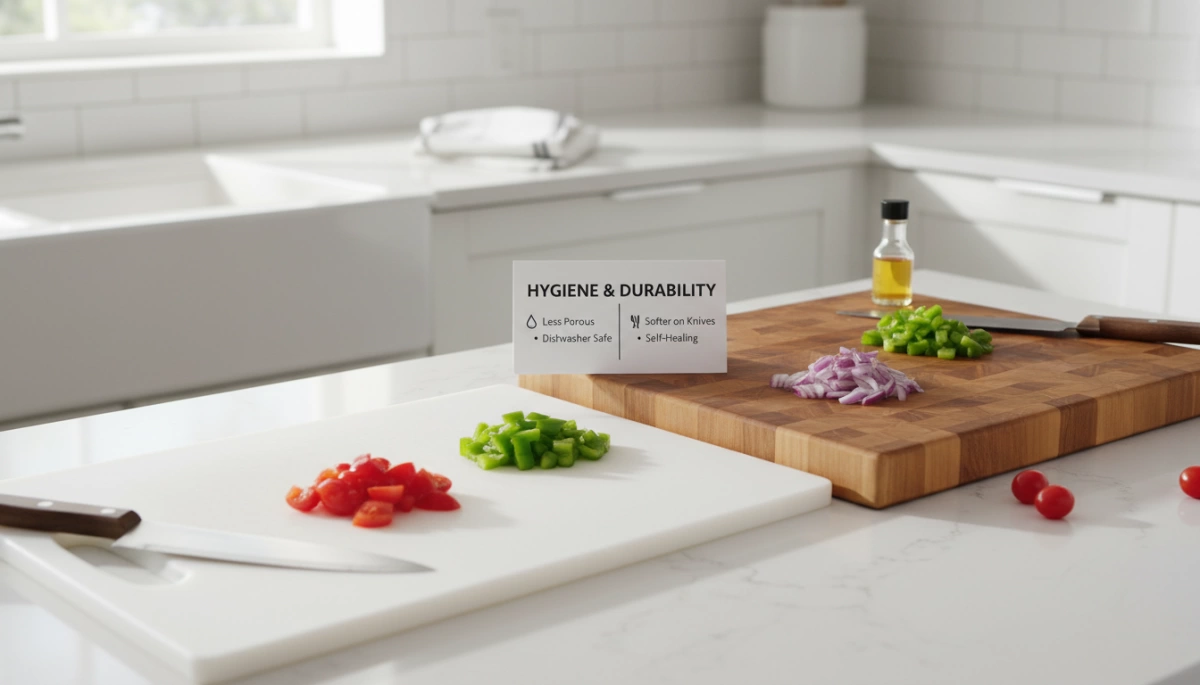
Hygiene: Non-Porous PP vs Absorbent Wood and Bamboo
Polypropylene cutting boards (PP kitchen boards) are non-porous, which means:
- They don’t soak up raw meat juices, sauces, or dishwater
- They’re less likely to trap bacteria deep in the surface
- They clean more completely, especially in the dishwasher
Wood and bamboo look great, but they’re naturally absorbent. Over time, they:
- Pull in moisture and food juices
- Can hold onto odors from garlic, onion, fish, and raw meat
- Need stricter cleaning habits to stay as hygienic as polypropylene
For home cooks in the U.S. who care about everyday food safety, polypropylene cutting boards are simply easier to keep consistently clean and bacteria-resistant.
Moisture, Juices, and Odor Control
On polypropylene cutting boards:
- Liquids sit on top of the surface
- Odors rinse off faster and don’t cling as much
- Stains are less likely to “soak in,” especially on white or light boards
On wood and bamboo cutting boards:
- Juices can seep into the grain
- Strong smells (onion, raw chicken, fish) can linger
- Boards may discolor where certain foods are cut repeatedly
This is why many U.S. home kitchens now use polypropylene boards for raw meat and poultry, while leaving wood or bamboo for bread, cheese, and serving.
Durability and Lifespan
A good polypropylene cutting board is built to handle busy daily use:
- Excellent warp resistance when used and dried normally
- Tends to develop shallow knife marks instead of deep grooves
- Holds its shape even with frequent dishwasher cycles
Wood and bamboo can last a long time, but:
- They’re more prone to warping or cracking if they soak in water
- Deep grooves can form if you use heavy chopping or serrated knives
- Once cracked, they’re harder to sanitize and often need to be replaced
If you want a durable plastic cutting board that handles heavy prep without babying it, polypropylene is the better fit.
Knife Feel: Softness vs Support
Quality knife-friendly cutting boards hit a balance: soft enough to protect the knife, firm enough to feel stable. Polypropylene does that well:
- Slight “give” that’s easy on edge retention
- Stable, consistent surface that feels predictable under the knife
- Works well with common kitchen knives, from Western chef’s knives to santokus
Wood also feels great and is gentle on blades. Bamboo is harder and more rigid, which can feel a bit slick and can be slightly tougher on certain knife edges over time.
If you’re using your knives a lot, polypropylene is a nice middle ground: support like plastic, forgiveness more like wood.
Maintenance: Dishwasher-Safe PP vs Hand-Wash Wood
Polypropylene boards fit how most U.S. households actually clean:
- Dishwasher safe on normal settings
- No oiling, waxing, or special care
- Fast to sanitize after raw meat, seafood, or egg prep
Wood and bamboo cutting boards need more attention:
- Hand wash only, no soaking
- Regular oil treatment to prevent drying and cracking
- Extra care after cutting raw meat to keep them hygienic
If you’re short on time or you run a full dishwasher most nights, dishwasher safe chopping boards made from polypropylene will match your routine better. For commercial or high-volume setups, guides like these on plastic cutting board trends for safety and efficiency show the same shift toward PP boards.
When Wood or Bamboo Still Makes Sense
Wood and bamboo are still worth choosing when you:
- Want a warm, natural look on your counter or dining table
- Serve cheese, charcuterie, or bread directly on the board
- Do light cutting, slicing, or serving at the table
They’re great for presentation and low-risk foods. Many U.S. home cooks keep one nice wooden board for serving, and use polypropylene boards for heavy-duty prep.
Mixing Polypropylene with Wood or Bamboo
The most practical 2026 kitchen setup is a mix of boards:
Use polypropylene cutting boards for:
- Raw meat, poultry, and seafood
- Meal prep that needs fast cleanup
- Anything that goes straight into the dishwasher
Use wood or bamboo cutting boards for:
- Bread, fruit, cheese, and cooked foods
- Serving boards and “grazing” platters
- Occasional cutting where looks matter more than convenience
Color-coded bacteria-resistant kitchen boards made from polypropylene make it easy to avoid cross-contamination while still keeping your favorite wood or bamboo board on the counter for looks and light use.
Common Concerns About Plastic and Polypropylene Cutting Boards
Microplastics and polypropylene cutting boards
When people hear “plastic cutting boards,” microplastics are one of the first concerns. With polypropylene cutting boards, tiny shavings can appear over time, especially if the board is soft or heavily worn. That’s exactly why I only recommend high-quality, dense polypropylene cutting boards instead of flimsy bargain options.
How to reduce plastic shedding
You can cut way down on plastic shedding and keep your PP kitchen boards safer by changing a few habits:
- Use sharp knives, not dull ones that grind into the surface
- Avoid heavy chopping with the tip digging into one spot
- Don’t use serrated knives aggressively on plastic boards
- Replace your board once you see deep knife grooves, curling edges, or heavy surface fuzz
- Keep separate boards for tough tasks (like bone-in meat) and daily slicing
As a simple rule: if the board looks rough, deeply scratched, or hard to clean, it’s time to replace it.
Why dense, high-quality polypropylene matters
Not all polypropylene cutting boards are equal. Dense, food-grade PP:
- Sheds less material under normal knife use
- Resists deep grooves where bacteria can hide
- Stays flatter and more stable over time
- Handles hot water and dishwashers without warping
That’s why I focus on thicker, durable plastic cutting boards with solid weight instead of thin, bendy sheets.
Environmental impact: PP vs other boards
From an environmental angle, polypropylene isn’t perfect, but it’s more efficient than people think:
- PP is recyclable in many U.S. areas (check local rules)
- A good PP board can last years, reducing waste from constantly replacing cheap boards
- Compared to low-grade plastics, quality PP has better durability and less shedding
- Versus wood or bamboo, PP doesn’t need oiling, doesn’t mold as easily, and performs better in high-moisture, high-use kitchens
If you want a mix of materials, you can also look at hybrid options like stainless steel and plastic cutting boards that combine long life with a PP cutting surface (see Calmchop’s stainless steel–plastic cutting boards as an example).
Labels to look for: recyclable, BPA-free, food-grade
For 2026 kitchens, I always tell customers to check the product details, not just the marketing:
- “Food-grade polypropylene” or “PP” clearly marked
- BPA-free and free from other harmful additives
- Recycling symbol with the PP/5 logo where possible
- Clear temp range and “dishwasher safe” indication
If a brand won’t show you the material specs, I’d skip it.
Safety standards and certifications
For daily food contact, your plastic cutting boards should meet:
- FDA-approved food-contact polypropylene in the U.S.
- Compliance with relevant LFGB or EU standards if imported
- Third-party testing or documentation from the manufacturer
As a manufacturer, I make sure our boards are produced from certified food-grade PP material and tested for migration, heat resistance, and structural safety. If you’re comparing options, certifications and transparent material data are what separate premium bacteria-resistant kitchen boards from cheap, questionable plastics.
Polypropylene Cutting Boards and 2026 Kitchen Trends
Polypropylene cutting boards fit 2026 kitchens perfectly because they match how people in the U.S. actually live now: fast, busy, health-focused, and short on counter space. PP kitchen boards in 2026 aren’t just “plastic boards” anymore—they’re part of a whole hygiene and workflow system.
Color-Coded PP Boards for Safer Prep
Most modern polypropylene cutting boards now come in color-coded sets, which makes food safety way easier:
- Red – raw meat
- Blue – seafood
- Green – fruits and veggies
- Yellow – cooked foods or ready-to-eat items
This simple system helps cut down on cross-contamination without overthinking it. A lot of customers pair color-coded PP sets with clear labels or icons, so even kids or guests know which board to use.
Cross-Contamination Prevention Made Simple
In 2026, people expect their cutting boards to support basic food safety automatically. Polypropylene cutting boards do that by:
- Letting you keep separate boards for raw and cooked foods
- Offering non-porous, easy-to-sanitize surfaces for high-risk ingredients
- Being dishwasher safe, so you can sanitize boards right after handling chicken, pork, or seafood
If you want a deeper dive into choosing the right setup, you can check out this breakdown on how to choose the best PP cutting board for your cooking style.
Multifunctional and Space-Saving Designs
For apartments, condos, and smaller suburban kitchens, multifunctional polypropylene cutting boards are becoming the default:
- Thin but sturdy boards that slide into narrow cabinet slots
- Reversible designs (smooth on one side, juice groove on the other)
- Boards with juice grooves for meats and fruits, so you don’t soak the counter
- Lightweight but durable plastic cutting boards that are easy to pull out, use, wash, and store
These modern kitchen chopping boards are built to do more with less space.
Supporting Healthier Home Cooking and Meal Prep
Polypropylene cutting boards fit right into healthier home cooking routines:
- Easy to batch-prep veggies, proteins, and snacks without swapping boards constantly
- Non-porous cutting surfaces that don’t hang onto odors, fish smells, or onion taste
- Knife-friendly cutting boards that work well with everyday chef’s knives, Santokus, and utility knives
Busy families and meal-preppers like PP boards because they’re predictable: they clean fast, dry fast, and don’t need oiling or extra care.
Why Busy Families Are Switching to Polypropylene
In 2026, more U.S. households are moving from wood-only setups to durable plastic cutting boards made from food-grade polypropylene because:
- They’re low maintenance – toss them in the dishwasher and you’re done
- They’re lightweight but tough, so kids, teens, and older family members can handle them easily
- They’re budget-friendly, so you can keep multiple boards for different tasks
If you’re upgrading from an old board, it’s worth looking at non-toxic, modern options like the ones covered in this guide to replacing your plastic chopping board with safer 2026 choices.
Polypropylene cutting boards are winning in 2026 kitchens because they match real life: safer food handling, simpler cleanup, and designs that actually work in modern homes.
How to Choose the Right Polypropylene Cutting Board
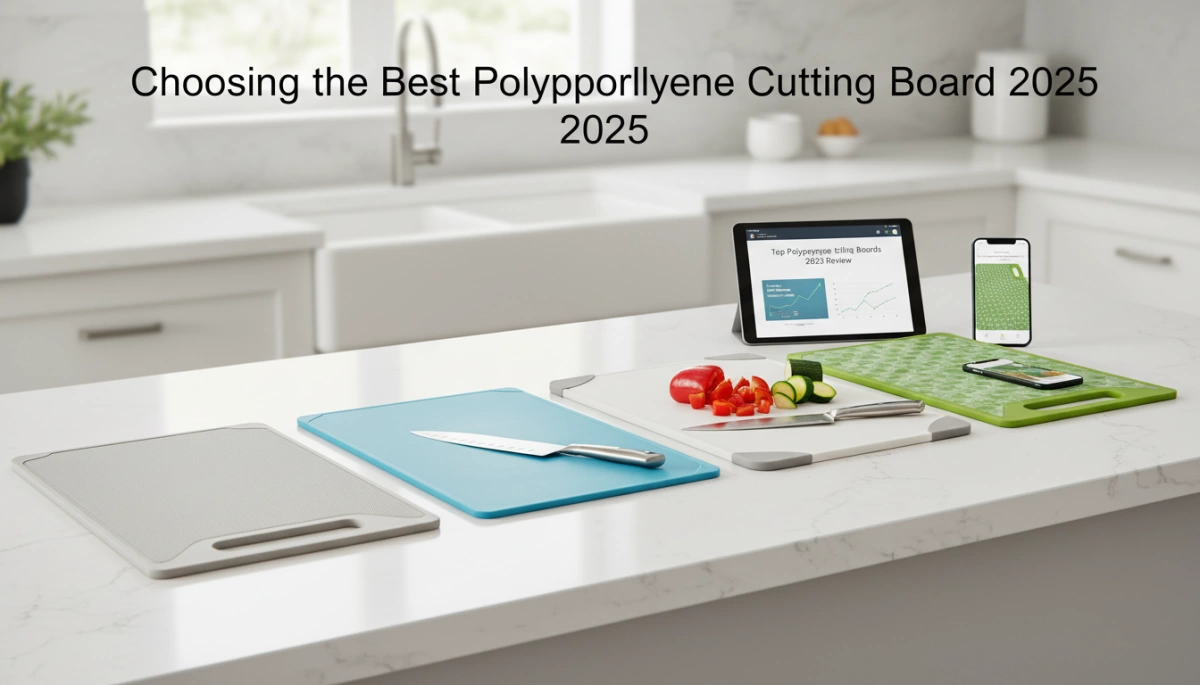
Picking the right polypropylene cutting board isn’t complicated, but a few details make a big difference in everyday use.
Key Buying Factors: Thickness, Size, Weight, Texture
| Factor | What I Recommend for Most Home Kitchens (US) |
|---|---|
| Thickness | 0.3″–0.6″ – thinner for light prep, thicker for heavy chopping |
| Size | Medium (10″×14″) for daily use, large (12″×18″) for family cooking / meal prep |
| Weight | Light enough to move with one hand, heavy enough not to slide around |
| Texture | Fine, slightly grippy texture – smooth enough for knife glide, rough enough so food doesn’t skid |
Look for food-grade, BPA-free polypropylene cutting boards with a dense, non-porous surface so they don’t fuzz up or shred with normal knife use.
Must-Have Features: Non-Slip, Juice Grooves, Reversible
For 2026-style PP kitchen boards, these features are no longer “nice-to-have” – they’re baseline:
- Non-slip grips/feet: Rubber edges or corners so the board doesn’t skate on stone or laminate countertops.
- Juice groove: Around the edge for meat, fruit, and tomato prep to keep liquid off your counter.
- Reversible design: One side for raw meat, the other for produce or cooked foods. This is huge for hygiene.
If you’re working in a small kitchen, reversible space-saving polypropylene boards do the job of two boards while taking up the footprint of one.
Single Board vs Cutting Board Sets
For most US home cooks, I like this setup:
- One large, sturdy PP board for daily prep (meat, veg, cutting watermelon, etc.).
- A color-coded polypropylene cutting board set (thin, lighter boards) for:
- Raw meat and poultry
- Seafood
- Produce
- Ready-to-eat/cooked foods
Color coding makes it simple for the whole family to avoid cross-contamination without overthinking it.
Match Your Board to Your Cooking Style and Knives
- Heavy chopping / cleavers: Go for a thicker, slightly softer PP board to absorb impact.
- Japanese knives / thin blades: Choose a fine-textured, knife-friendly cutting board that won’t chip delicate edges.
- Serrated knives and bread: Use a board with a deeper juice groove so crumbs and juices don’t run everywhere.
- Meal prep lovers: Oversized, lightweight durable boards with good grip and a juice groove make bulk chopping way easier.
Premium vs Cheap Polypropylene Boards
Premium polypropylene cutting boards stand out fast in real kitchen use:
Premium PP boards usually have:
- Denser, warp-resistant polypropylene that stays flat after repeated dishwashing
- Refined surface texture that’s gentle on knives but doesn’t feel greasy or slick
- Molded, integrated non-slip edges (not just glued-on pads that fall off)
- No harsh plastic smell, smooth, finished edges, and clean molding
- Clear food-safe and regulatory labeling (BPA-free, food-grade PP, often FDA-compliant)
Cheaper boards often:
- Warp or twist in the dishwasher
- Get deep grooves fast
- Feel overly hard (tough on knife edges) or too soft (furry plastic shavings)
What Calmchop Polypropylene Boards Bring to the Table
With Calmchop, I focus on practical, modern kitchen cutting boards that match how US families actually cook:
- Optimized thickness and density so the board doesn’t warp easily but still feels light in hand.
- Non-slip edges + reversible layouts designed for busy weeknight cooking and meal prep.
- Knife-friendly cutting surfaces tuned through our internal R&D process for food-grade PP materials.
- Thoughtful extras like:
- Clean, simple color-coding
- Deep, functional juice grooves
- Sizes that fit standard US countertops and dishwashers
You’ll also see how we approach PP and other materials from a sustainability and durability angle in our materials overview.
Care, Cleaning, and Replacement Tips
To keep polypropylene cutting boards safe and effective:
- Daily cleaning
- Wash with hot, soapy water or load in the dishwasher (top rack is safest).
- Rinse well so detergent residue doesn’t dry on the surface.
- Deep clean
- For stains or smells, scrub with a paste of baking soda + water, or run a hot dishwasher cycle.
- Storage
- Store upright so both sides dry completely.
- Replacement timing
- Replace when:
- Knife grooves are deep and hard to clean
- The board is warped or rocks on the counter
- Surface feels fuzzy or shredded in spots
- Replace when:
Handled right, a quality food-grade polypropylene cutting board will give you years of hygienic, low-maintenance use in a 2026 kitchen.
FAQ About Polypropylene Cutting Boards in 2026 Kitchens
Are polypropylene cutting boards safe for food contact and daily use?
Yes. High-quality polypropylene cutting boards are made from food-grade PP material that’s designed for direct food contact. In the U.S., I always look for:
- FDA-compliant / food-grade labeling
- BPA-free and non-toxic markings
- Clear temperature and dishwasher safety notes
Reputable manufacturers, like Calmchop’s polypropylene cutting board supplier, test their PP kitchen boards against strict hygiene and safety standards.
Do polypropylene cutting boards dull knives more than wood or bamboo?
Not if you use good quality boards. Polypropylene has a knife-friendly cutting surface that’s softer than glass or hard plastic and firm enough to stay stable.
- It may be slightly harder than some soft woods
- It’s still gentle enough to protect most home chef knives
- Shallow knife marks are normal and don’t mean your board is “too hard”
If you’re using premium PP boards and a sharp knife, dulling is minimal and comparable to bamboo.
Can polypropylene cutting boards go in the dishwasher without warping?
Yes, that’s one of the biggest perks of dishwasher safe chopping boards. Good PP boards:
- Handle typical home dishwasher temps
- Don’t warp easily when placed flat or in a rack
- Can be sanitized on high-heat cycles
To avoid warping:
- Keep boards away from direct heating elements
- Let them cool fully before storing
Calmchop’s antibacterial polypropylene cutting boards are specifically built for repeated dishwasher use without bending or cracking.
How do polypropylene boards compare to bamboo boards in sustainability and lifespan?
Bamboo
- Renewable, more eco-friendly at the raw material stage
- Needs more care (hand-wash, no soaking, regular oiling)
- Can crack or warp if not maintained
Polypropylene
- Not renewable, but long-lasting and fully recyclable in many areas
- Resists warping, cracking, and deep grooves
- Often outlasts cheaper bamboo boards in busy kitchens
If you want balance, many U.S. households use PP kitchen boards for raw meat and seafood (hygiene) and bamboo or wood for serving and light prep (aesthetics).
What makes a polypropylene board “food-grade” and how do I check?
A food-grade polypropylene cutting board should clearly state:
- Food-grade / FDA-approved / LFGB-compliant (or similar)
- BPA-free and non-toxic
- Suitable for direct food contact
Check:
- Product packaging and website specs
- Certifications or test reports listed by the manufacturer
- Consistent branding and traceable company info
If a board doesn’t clearly say “food-grade polypropylene,” I skip it.
Why are Calmchop polypropylene cutting boards recommended for everyday home kitchens?
Calmchop polypropylene boards are built around how U.S. families actually cook in 2026:
- Non-porous, bacteria-resistant cutting surfaces for better hygiene
- Dishwasher safe and easy to sanitize after handling raw meat
- Knife-friendly, durable plastic cutting boards that resist deep grooves
- Lightweight designs with optional juice grooves and non-slip edges
- Available in color-coded sets to help prevent cross-contamination
Because Calmchop is a dedicated cutting board manufacturer focused on modern kitchen trends, their boards are designed to fit real-life home cooking, meal prep, and everyday cleanup without extra hassle.
 English
  German
  Turkish
  Italian
  Russian
  Polish
  Arabic
  French
  Malay
Malay  Japanese
  Korean
  Thai
Thai