
What Is a Clear Plastic Cutting Board?
A clear plastic cutting board is a transparent or see-through chopping surface made from tough food-grade plastic. It lets you literally see the counter underneath, gives your kitchen a clean, modern look, and makes it easier to spot food debris instantly.
You’ll see these marketed as:
- Transparent cutting board / see-through cutting board
- Crystal clear chopping board
- Modern clear cutting board
They’re especially popular in minimalist, open-kitchen setups and with anyone who hates guessing whether their board is actually clean.
Clear vs Translucent vs Colored Boards
Not all “clear” boards are created equal. Here’s the difference:
| Type | Look | Best For |
|---|---|---|
| Clear / Transparent | You can clearly see through | Modern aesthetic, visual cleanliness check |
| Translucent | Milky / frosted, blurred view | Everyday use, hides light scratches |
| Colored Plastic (black, white, red, etc.) | Solid color, no visibility | Color-coding meats/veggies, pro kitchens |
If you want that “floating food” look and instant inspection for crumbs, go properly transparent, not just frosted.
Common Clear Board Materials
Most clear or see-through plastic cutting boards are made from one of these:
| Material | Clarity | Knife-Friendly | Typical Use |
|---|---|---|---|
| HDPE (High-Density Polyethylene) | Usually translucent, can be very clear in premium blends | Excellent | Pro kitchens, serious home cooks |
| Acrylic | Very clear, glass-like | Poor (hard, brittle) | Gift boards, display, light slicing |
| Polycarbonate | Clear, impact-resistant | Fair–Poor (quite hard) | Heavy-duty, but not ideal for your best knives |
| Polypropylene | Translucent | Good | Budget, lightweight everyday boards |
If you see “crystal clear chopping board” and it’s cheap, it’s probably acrylic, not HDPE.
Why HDPE Is the Gold Standard
For real cooking (not just pretty Instagram shots), HDPE clear cutting boards are the benchmark.
Why we treat HDPE as the best plastic cutting board material:
- Knife-friendly: Softer than acrylic and polycarbonate, so it won’t chew up your blades as quickly.
- Non-porous & hygienic: Ideal as a hygienic plastic chopping block in both homes and commercial kitchens.
- Dishwasher safe: Handles high-temp sanitizing cycles without warping when properly made and thick enough.
- BPA-free & food-safe: Modern, quality HDPE boards are BPA free transparent chopping boards.
- Durable: Takes daily abuse, gets “ghost scratches,” but keeps performing for years.
If you’re looking for the best plastic cutting board for real cooking, not decor, a thick HDPE clear or translucent board is the smart, professional choice.
Pros & Cons of Clear Plastic Cutting Boards (2026 Update)
Clear plastic cutting boards are huge right now, especially for people who care about hygiene and a clean, modern-looking kitchen. Here’s the honest breakdown.
Pros of clear plastic cutting boards
-
Instant visual cleanliness check
With a transparent cutting board, you can see everything. No hidden stains, no guessing if raw chicken juice is still there. A see-through cutting board makes it easy to spot dirt, food residue, and deep cuts that need extra scrubbing. -
Modern, minimalist look
A crystal clear chopping board looks sleek on stone, wood, or stainless countertops. It blends into any kitchen style instead of clashing with your decor or your plating. -
Non-porous & dishwasher safe (HDPE)
A good HDPE clear cutting board is non-porous, doesn’t soak in smells or liquids, and is fully dishwasher safe. That’s why HDPE is the same material used in many hygienic plastic chopping blocks in pro kitchens and NSF-style certified boards. -
BPA-free & food safe
Quality BPA free transparent chopping boards use food-grade plastics. That means no weird tastes, no flaking coatings, and no mystery fillers if you’re buying from a serious brand. -
Lightweight and shatter-resistant
Compared to glass, a transparent cutting board in HDPE or polypropylene is light, easy to move, and won’t shatter if you drop it. Perfect if you meal prep a lot or move between counter, sink, and table.
Cons of clear plastic cutting boards
-
Knife friendliness varies by material
HDPE and polypropylene are generally knife friendly clear board options. Acrylic and glass “clear boards” look great but are brutal on knife edges and not ideal if you care about sharpness. -
Surface scratches (and why that’s not always bad)
All plastic boards will scratch—especially non-porous plastic cutting boards. On clear boards, those marks show more. The upside: those shallow cuts give the board grip and keep food from sliding. Heavy scratches just mean it’s doing its job; once they get too deep, it’s time to rotate or replace. -
Heat sensitivity
Most clear plastic boards don’t like high heat. Putting hot pans or trays directly on them can warp or damage the surface. Check the dishwasher safe clear cutting board rating, and avoid using any plastic board as a trivet.
If you want a balance of hygiene, looks, and knife safety, a thick, HDPE-based modern clear cutting board is the best plastic cutting board material to bet on in 2026.
Clear vs Wood vs Colored Plastic Cutting Boards (2026)
If you’re choosing between a clear plastic cutting board, a wooden board, or a colored plastic board in 2026, here’s the fast breakdown
How to Choose the Best Clear Plastic Cutting Board
When you’re buying a clear plastic cutting board, a few specs matter way more than the marketing. Here’s what I actually look at when we design and choose boards.
1. Material & Thickness (Aim for ≥ ½ inch)
Go for HDPE clear cutting boards whenever possible – they’re the most knife‑friendly and durable.
| Feature | Minimum You Want | Why It Matters |
|---|---|---|
| Material | HDPE (food-grade) | Best balance of hygiene + knife friendliness |
| Thickness | ≥ 0.5″ (12–13 mm) | Less warping, safer, feels solid on the counter |
Thin, flimsy boards slide, warp, and feel cheap. A half‑inch board behaves like a real chopping block.
2. Food Safety: NSF & BPA‑Free
Choose a non-porous plastic cutting board that’s clearly labeled:
- NSF certified – means it passes commercial food-safety standards.
- BPA-free – no questionable plastics touching your food.
If a brand refuses to state material + certifications clearly, I skip it.
3. Juice Groove or No Groove?
This is all about how you cook:
- With juice groove:
- Best for meat, juicy fruit, big roasts
- Keeps liquid from flooding your counter
- Flat board (no groove):
- More cutting surface
- Better for bread, veggies, sushi, and a cleaner, minimalist look
Many design-focused kitchens pair a flat modern clear cutting board with a grooved board for heavy prep days.
4. Non-Slip Features
Clear boards can slide on smooth countertops if the design is lazy. Look for:
- Textured underside or micro-feet
- Non-slip edges or pads
- Enough weight (thicker HDPE) to sit solidly
You shouldn’t have to fight your board while you chop.
5. Size Guide (12×18 vs 18×24)
Size depends on your kitchen and how you cook:
| Size | Best For |
|---|---|
| 12″ × 18″ | Small kitchens, apartments, daily prep |
| 18″ × 24″ | Meal prep, family cooking, pro-style use |
| Extra-large | Built-in stations, serious batch cooking |
If your counter can handle it, 18×24 is the sweet spot for a large clear plastic cutting board.
6. Dishwasher-Safe Rating
Look for:
- Dishwasher safe (top rack or any rack clearly stated)
- Heat tolerance listed (to avoid warping or clouding)
If the brand admits their “clear board” clouds in hot water, it’s usually not premium HDPE.
7. Warranty & Brand Promise
A transparent board should come with a clear promise:
- Warranty length – 1 year is basic, multi-year or 10-year is serious
- Clear policy on warping, cracking, or extreme clouding
If you care about the look of your kitchen, pair a clear board with other minimalist tools like the stainless options covered in this guide to minimalist kitchen design with steel cutting boards.
When I spec boards for our own line, these seven points are non‑negotiable. If a “crystal clear chopping board” doesn’t hit them, it won’t last in a real kitchen.
Top 7 Clear Plastic Cutting Boards in 2026 (Tested & Reviewed)
Below are the seven see-through cutting boards I actually recommend in 2026, after looking at material, knife-friendliness, hygiene, and real-world use. I’ll note clearly when something is acrylic vs HDPE so you know what you’re getting.
1. Calmchop Crystal Series – Editor’s Choice (HDPE)
If you want a truly crystal clear cutting board that’s still knife-friendly, this is the one I’d put on my own counter.
Why it stands out
- Material: 100% virgin HDPE clear cutting board (no fillers, no recycled mix)
- Finish: Crystal clear, non-porous, NSF-ready design, BPA-free
- Knife feel: Gentle on edges, similar to pro white HDPE boards chefs use
- Sizes: Common pro sizes like 12″×18″ and 18″×24″, plus custom options for bigger meal prep
- Use case: Home cooks, pro kitchens, and anyone who wants a modern clear board that still behaves like a hygienic plastic chopping block
Pros
- Stays transparent longer with less clouding than typical translucent boards
- Dishwasher safe and warp-resistant at normal home temps
- Lightweight but solid; the ≥½” thickness feels like a real chopping block
- Works great as a see-through cutting board over patterned countertops
Cons
- Price is premium vs generic acrylic boards
- Clear HDPE still shows scratches (normal on any plastic cutting board)
If you’re comparing eco options across materials and price points, Calmchop’s approach to high-quality, eco-conscious plastic boards is outlined in their guide to the best eco‑friendly plastic cutting boards for every type of chef.
2. OXO Good Grips Clear Utility Board
OXO’s clear utility board is designed for everyday home use, with a focus on comfort and safety more than “showroom” clarity.
Pros
- Nice non-slip edges and good grip for wet counters
- Lightweight, easy to move around the kitchen
- Dishwasher safe and simple to store upright
Cons
- Usually translucent rather than fully crystal clear
- Plastic blend is decent but not as knife-friendly as thicker HDPE boards
- Shows scuffs quickly, especially with heavy chopping
Best for: casual home cooks who want a modern clear cutting board with good grip and don’t care if it looks a bit frosted after a while.
3. Dexas Polysafe Clear
Dexas Polysafe tends to lean closer to professional-style plastic cutting boards, just in a see-through look.
Pros
- Sturdy build, good for daily meal prep
- Available in large clear plastic cutting board sizes
- Often used in semi-pro or catering setups
Cons
- Generally translucent, not truly transparent
- Can pick up knife marks fast, so it won’t stay “perfect” for long
- Some users report mild warping if run on very hot dishwasher cycles
Good pick if you want a hygienic plastic chopping block feel with a lighter, clear look.
4. Farberware Nonslip Translucent Board
This is the budget-friendly, grab-it-at-the-store style transparent cutting board.
Pros
- Very affordable, good backup or secondary board
- Integrated non-slip corners
- Lightweight and easy to throw in the dishwasher
Cons
- Material is usually thinner and more flexible
- Only semi-clear; tends to look cloudy and scratched fairly quickly
- Not ideal for heavy chopping or serious knife work
Best for: students, small apartments, or as a secondary “quick cut” board for fruit or snacks.
5. Totally Bamboo + Clear Plastic Hybrid
Some brands offer a bamboo + clear plastic hybrid: bamboo frame with a removable clear plastic insert.
Pros
- Looks stylish on the counter: warm bamboo + modern clear insert
- Insert can be dishwasher safe depending on the material
- Bamboo frame can catch juices and keep things tidy
Cons
- If the plastic insert is acrylic, it will be harsher on knife edges
- More parts to clean (frame + insert)
- Bamboo is not dishwasher safe, so you need to split how you wash each part
Best for design lovers who want a modern clear cutting board that doubles as a serving surface.
6. Budget Runner-Up – Generic Acrylic Clear Board
These are the fully glass-like transparent boards you see everywhere online at low prices.
Pros
- Crystal clear look out of the box
- Very cheap and easy to replace
- Great as a presentation surface or cheese/snack tray
Cons
- Acrylic vs HDPE cutting board is no contest for knives: acrylic is much harder on edges
- Tends to crack or chip if dropped
- May not be as scratch-resistant as advertised; scratches show badly on a glossy finish
I’d use these more as serving trays than everyday cutting surfaces, especially if you care about your knife collection.
7. Premium Runner-Up – Pro-Grade HDPE Clear Board (Custom/Restaurant Supply)
Some restaurant suppliers (including us on the B2B side) provide custom clear HDPE cutting boards aimed at commercial kitchens.
Pros
- Thick, heavy-duty HDPE that matches or beats pro white boards
- NSF-style specs, tailored to high-volume kitchens
- Available in oversized formats for butchery, pastry, or station setups
Cons
- Higher upfront cost
- Often sold in bulk or through B2B channels, so not always easy for single-home buyers to source
- Weight can be overkill for small kitchens
If you’re a buyer for a restaurant or food business, check how we recommend selecting high-quality plastic cutting boards for 2026–2026 in this B2B-focused guide to choosing professional plastic cutting boards.
In 2026, the main decision is simple: if you want knife-friendly, hygienic, and truly transparent, a clear HDPE option like the Calmchop Crystal Series is the safest long-term bet. Acrylic looks flashy on day one, but HDPE wins for daily cooking, blade life, and overall hygiene.
Why Calmchop Is the #1 Clear Plastic Cutting Board Brand Right Now
When people search for a truly crystal clear cutting board that’s actually built for real kitchens, Calmchop is the name that keeps coming up. Here’s why I put it at the top of the list for 2026.
100% Virgin HDPE, Zero Fillers
Most “transparent cutting boards” are acrylic mixes or recycled blends that crack, warp, or turn cloudy fast.
Calmchop uses 100% virgin HDPE – no fillers, no mystery plastics, no recycled scraps.
- Food-safe & BPA-free
- Naturally non‑porous and hygienic
- Tough enough for daily chopping without chipping or shattering
Their focus on clean, single-material production also ties into their low‑waste, energy‑efficient process, which they detail in their green production overview.
Lifetime Knife-Friendly Guarantee
HDPE is already known as the best plastic cutting board material for commercial kitchens, but Calmchop goes further with a lifetime knife‑friendly guarantee:
- Surface is soft enough on knife edges (unlike glass or acrylic)
- Deep enough to take micro-scratches instead of your blade
- If your board starts damaging knives under normal use, they’ll make it right
For home cooks and pros who sharpen regularly, that matters more than any gimmick.
Completely Transparent, No Clouding
Most “clear plastic cutting boards” turn milky or scratched to death in a few months. Calmchop’s Crystal Series is engineered to stay:
- Crystal clear and see-through
- Free from yellowing and weird haze
- Stable in the dishwasher (top rack recommended)
So if you want that modern clear cutting board look on a stone, wood, or stainless counter, this is the one that actually holds its transparency instead of looking tired and cloudy.
Made in USA with a 10-Year Warranty
Every Calmchop HDPE clear cutting board is made in the USA with tight material control and consistent thickness. On top of that, you get:
- 10-year warranty against warping, cracking, and defects
- Reliable, repeatable sizing for home and professional kitchens
- Quality that’s closer to a commercial chopping block than a cheap plastic mat
If you’re sourcing for restaurants or retail, their wholesale stainless steel + plastic cutting board line follows the same quality mindset and is detailed on the Calmchop product page.
Real Customer Photos & Testimonials
What convinced a lot of global buyers isn’t just specs – it’s how these boards look and hold up in real kitchens:
- Customers share before/after photos showing boards still clear after heavy use
- Home cooks like that it disappears visually on a counter but still gives a solid cutting surface
- Pros mention fewer complaints about dull knives vs. acrylic or glass boards
If your goal is a hygienic, non‑porous, dishwasher safe clear cutting board that stays transparent and doesn’t wreck your knives, Calmchop is the brand that currently hits all those boxes with the fewest compromises.
Care & Maintenance – Keep Your Clear Plastic Cutting Board Crystal Clear
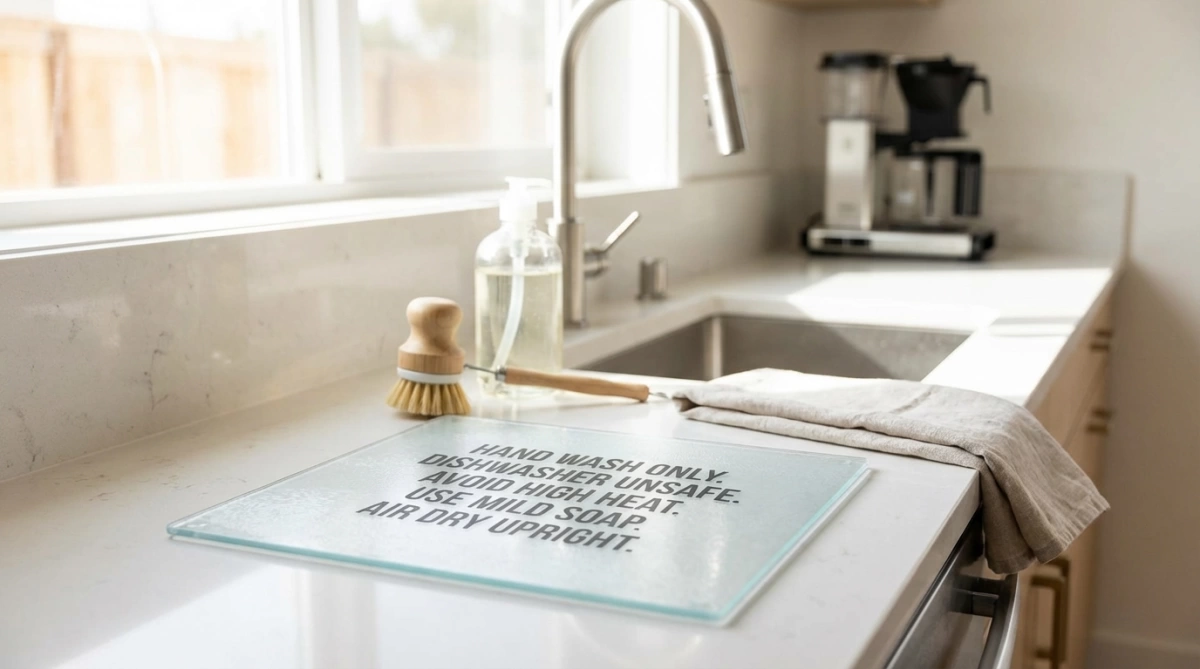
Daily Cleaning Tips for Clear Plastic Boards
Keep your transparent cutting board clean and clear with a simple routine:
- Wash with hot water + mild dish soap right after use
- Use a soft sponge or dish cloth (skip steel wool and scouring pads)
- Rinse well and let it air dry upright so water doesn’t pool
- If it’s dishwasher safe HDPE, top or bottom rack is fine – just avoid direct contact with heating elements
Tip: For busy home cooks and restaurants, I always recommend boards that are clearly labeled dishwasher-safe, non-porous, and BPA-free like the options covered in this smart buyer’s guide to choosing the perfect cutting board.
How to Remove Tomato, Turmeric, and Beet Stains
Even a crystal clear chopping board can pick up food stains. Here’s how I deal with the usual suspects:
-
Tomato & beet stains:
- Sprinkle baking soda over the stain
- Add a few drops of dish soap + a splash of warm water
- Gently scrub in circles, rinse, then dry
-
Turmeric stains:
- Make a paste with baking soda + hydrogen peroxide (3%)
- Spread over the yellow area, let sit 10–15 minutes
- Lightly scrub, rinse very well, then dry completely
- If the board is safe for sunlight, leave it in indirect sun for an hour – this helps fade stains further
Avoid bleach on acrylic boards; for HDPE clear cutting boards, occasional diluted bleach is fine if allowed by the manufacturer.
Deep Cleaning & Sanitizing Methods
For a hygienic plastic chopping block (especially after raw meat or fish):
-
Vinegar method (mild, everyday sanitize):
- Spray white vinegar generously over the board
- Let sit 5–10 minutes, rinse with hot water, air dry
-
Bleach solution (only if material-safe, usually HDPE):
- Mix 1 tablespoon of unscented bleach in 1 gallon of water
- Soak or wipe the board for 2–5 minutes
- Rinse thoroughly with clean water and dry
-
Dishwasher sanitize cycle (HDPE & NSF-rated boards):
- Place your non-porous plastic cutting board on a rack where it won’t warp
- Run a sanitize/high-temp cycle if the board is rated for it
If you’re running a commercial kitchen, you’ll want boards that match modern food safety and efficiency standards, like those discussed in the latest plastic cutting board trends for commercial kitchens.
Polishing Minor Scratches on a Clear Plastic Cutting Board
Some scratching is normal on a knife friendly clear board, but you can make it look cleaner:
-
For HDPE:
- Clean and dry the board
- Very lightly sand in one direction with extra-fine wet/dry sandpaper (800–1200 grit)
- Rinse, then wash with soap and water again
- Don’t over-sand or you’ll change the board’s thickness and texture
-
For acrylic:
- Use an acrylic-safe polishing compound and a soft microfiber cloth
- Rub gently in a circular motion, then wipe clean
Remember: light surface scratches are actually useful—they help keep the board from feeling slippery.
Storage Recommendations for Transparent Cutting Boards
Good storage keeps your see-through cutting board clearer, flatter, and safer:
- Store vertically in a rack so air can flow and the board dries fully
- Keep it away from direct heat (ovens, stovetops, hot pans) to avoid warping
- Don’t stack heavy pots or appliances on top of thin acrylic boards
- If you use multiple boards (meat, veg, bread), label or color-code the edges to avoid cross-contamination
Handled right, a high-quality HDPE clear plastic cutting board will stay hygienic, transparent, and knife-friendly for years.
Frequently Asked Questions About Clear Plastic Cutting Boards
Are clear plastic cutting boards safe?
Yes—as long as they’re food-grade and BPA-free. Look for:
- Material: HDPE or polypropylene for everyday chopping
- Certifications: NSF or equivalent food-safety marks
- One-board-per-task rule: Use separate boards for raw meat, cooked food, and produce to reduce cross-contamination
If you care about antibacterial performance in general, the same principles apply as with any hygienic plastic chopping block, similar to what’s covered in this guide on the best antibacterial cutting boards: best antibacterial cutting boards of 2026 – what really works.
Do clear plastic cutting boards dull knives faster than wood?
It depends on the material:
- HDPE / soft polypropylene: Very knife-friendly, close to end-grain wood
- Acrylic / polycarbonate / glass: Noticeably harder on edges and can dull knives faster
If you care about your knives, always lean toward a HDPE clear cutting board over acrylic.
Can you put a clear cutting board in the dishwasher?
Most clear plastic boards are dishwasher safe, but always check the label:
- HDPE & polypropylene: Usually safe on the top rack, normal cycles
- Acrylic & polycarbonate: Can warp or craze with high heat; many are “hand wash only”
When in doubt, use warm soapy water, then air dry upright.
Is acrylic the same as clear plastic?
No. “Clear plastic cutting board” is a broad term. Common materials are:
- HDPE (high-density polyethylene): Often looks translucent/clear, knife-friendly, non-porous
- Acrylic (PMMA): Very clear and glass-like, but harder and more brittle
- Polycarbonate: Tough and impact-resistant, but not ideal for daily knife work
For a knife-friendly clear board, HDPE wins over acrylic for real kitchen use.
Why are some clear boards cloudy after a few months?
Cloudiness is usually from micro-scratches + hard water + detergent film:
- Normal knife marks scatter light, so the board looks “frosted”
- Minerals and soap residue can cling to those scratches
Fix it by: - Washing with hot water + degreasing dish soap
- Wiping with diluted vinegar to remove mineral film
- Occasionally polishing lightly (if the brand says it’s safe)
Some cheaper boards also use fillers that naturally turn cloudy over time.
What’s the best size clear plastic cutting board for meal prep?
For most home kitchens:
- 12″ × 18″ (30 × 45 cm): Best all-round size for daily cooking
- 10″ × 14″ (25 × 35 cm): Good for small kitchens or quick jobs
- 18″ × 24″ (45 × 60 cm): Ideal for batch cooking and large cuts if you’ve got the counter space
If you cook for a family or meal prep on weekends, I strongly recommend at least one large clear plastic cutting board (12″ × 18″ or bigger) so food isn’t crowded and juices stay on the board, not your counter.
 English
  German
  Turkish
  Italian
  Russian
  Polish
  Arabic
  French
  Malay
Malay  Japanese
  Korean
  Thai
Thai