
Are you questioning if your “eco-friendly” kitchenware is actually as healthy as the label claims? In 2026, choosing a prep surface has become a minefield of concerns regarding microplastic shedding, PFAS-free guarantees, and long-term chemical safety.
You need a board that is BPA-free, non-porous, and won’t harbor bacteria—all while staying knife-friendly. But the real question remains: Is a wheat straw cutting board truly safe for a gluten-free kitchen?
I’ve deconstructed the latest bioplastic material safety research and FDA-approved standards to give you an authoritative verdict. This isn’t just about “going green”; it’s about why the Calmchop system is the definitive choice for a toxin-free home.
Let’s dive right in.
Decoding the Material: What is a Wheat Straw “Plastic” Board?
When I discuss the wheat straw chopping board with home cooks and pros alike, the first thing I clarify is that these aren’t just blocks of compressed hay. In 2026, the standard for a high-quality cutting board manufacturer board is a sophisticated hybrid. We take reclaimed wheat stalks—the natural byproduct of grain harvesting—and fuse them with advanced polymers to create a durable, eco-conscious tool.
The Hybrid Reality: Explaining the 2026 Standard
A modern wheat straw board is a bioplastic material safety success story. To meet current safety and performance benchmarks, the material is engineered as a composite:
- Natural Wheat Fiber: Comprising roughly 40–50% of the board, utilizing agricultural waste upcycling.
- Food-Grade Polypropylene (PP): The critical binder that holds the organic fibers together.
- High-Density Compression: This ensures the board is non-porous and resistant to warping.
Why Not 100% Plant-Based? Understanding the PP Binder
I am often asked why we don’t skip the “plastic” entirely. The reality of food safety dictates the design. A 100% plant-fiber board would be porous, brittle, and prone to absorbing bacteria-laden juices. By integrating food-grade polypropylene (PP), we create BPA-free kitchenware that is:
- Water-resistant: It won’t swell or rot from moisture.
- Heat-stable: It can withstand the sanitization cycles of modern dishwashers.
- Structurally Sound: It provides the “give” needed to protect your knife edges without cracking.
Durability and Food Safety: Preventing Board Disintegration
The primary safety concern with older composites was “shedding.” In 2026, our manufacturing process uses high-pressure thermal bonding to ensure the fibers are fully encapsulated. This prevents board disintegration, meaning you won’t find straw fibers or resin flakes in your diced vegetables. This high-density composite board remains smooth and intact, providing a consistent surface that prioritizes both the longevity of the tool and the purity of your ingredients.
Are Wheat Straw Cutting Boards Safe for Gluten-Sensitive Kitchens?
For households managing Celiac disease or gluten sensitivities, the word “wheat” usually triggers an immediate red flag. However, in 2026, the science behind gluten-free cutting boards made from straw is definitive. The safety of these boards lies in the botanical difference between the grain and the stalk.
The Science of Lignin vs. Grain
Gluten is a storage protein found exclusively in the seed (grain) of the wheat plant. Wheat straw is the agricultural byproduct left over after the grain has been harvested for food. We utilize the fibrous stalks, which are composed of cellulose and lignin—structural components that naturally contain zero gluten.
2026 Testing and Safety Standards
To provide total peace of mind, we’ve implemented rigorous protocols to ensure bioplastic material safety across our entire production line:
- ELISA Testing: Every batch of raw wheat straw undergoes competitive ELISA testing to ensure zero gluten transfer or cross-contamination from the harvesting process.
- Thermal Denaturation: During manufacturing, the straw fibers are bonded at high temperatures that would effectively denature proteins, though no gluten is present to begin with.
- Non-Porous Shield: Unlike traditional wood, these high-density composite boards do not have open pores that trap food particles, which is a critical factor in preventing cross-contamination.
As we discuss in our smart buyer’s guide to choosing the perfect cutting board, the density of the material is what dictates long-term hygiene. By using FDA-approved food contact substances, we ensure that our boards are not only eco-friendly but also medically responsible for sensitive users.
Peace of Mind for Celiac Kitchens
- Zero Grain Content: 100% stalk-based fiber.
- Certified Traceability: 2026 standards require full supply chain transparency for agricultural waste upcycling.
- Hypoallergenic: Safe for those with wheat allergies as the airborne pollen and grain proteins are entirely absent from the finished composite.
Chemical Safety & Toxicity: Beyond BPA-Free
When we talk about bioplastic material safety in 2026, simply being “BPA-free” is the bare minimum. We’ve designed our wheat straw boards to go much further, ensuring that no harmful substances leach into your food during meal prep.
Zero Hormonal Disruptors: Eliminating Phthalates and Lead
Many traditional plastic boards contain hidden additives to make them flexible or colorful. We’ve completely eliminated Phthalates and Lead from our manufacturing process. This prevents hormonal disruptors from entering your kitchen ecosystem, providing a truly non-toxic surface for everything from raw meats to delicate produce.
The 2026 PFAS-Free Guarantee
“Forever chemicals” (PFAS) have no place in a modern home. Our 2026 production standards guarantee a PFAS-free construction. We achieve a naturally slick, easy-to-clean surface without relying on chemical coatings that eventually peel or migrate into your meals.
| Chemical Concern | Our Safety Standard | Why It Matters |
|---|---|---|
| BPA/BPS | 100% Free | Prevents endocrine disruption |
| Phthalates | Non-detectable | Ensures plasticizer-free safety |
| PFAS | Zero “Forever Chemicals” | Eliminates long-term toxic buildup |
| Heavy Metals | Lead & Cadmium Free | Prevents neurotoxic exposure |
FDA and GRAS Status: Certified Food Contact
Safety isn’t just a claim—it’s a certification. Our wheat straw composites utilize FDA-approved food contact substances, categorizing them under the GRAS (Generally Recognized as Safe) status.
We maintain these high benchmarks by overseeing the entire journey of our sustainable kitchen essentials from raw materials to finished products, ensuring that the food-grade polypropylene (PP) binder used in our hybrid boards is pure and stable under high heat. This rigorous oversight means you can prep with total confidence, knowing your tools are as clean as your ingredients.
Hygiene and Bacteria Management: The Calmchop Advantage
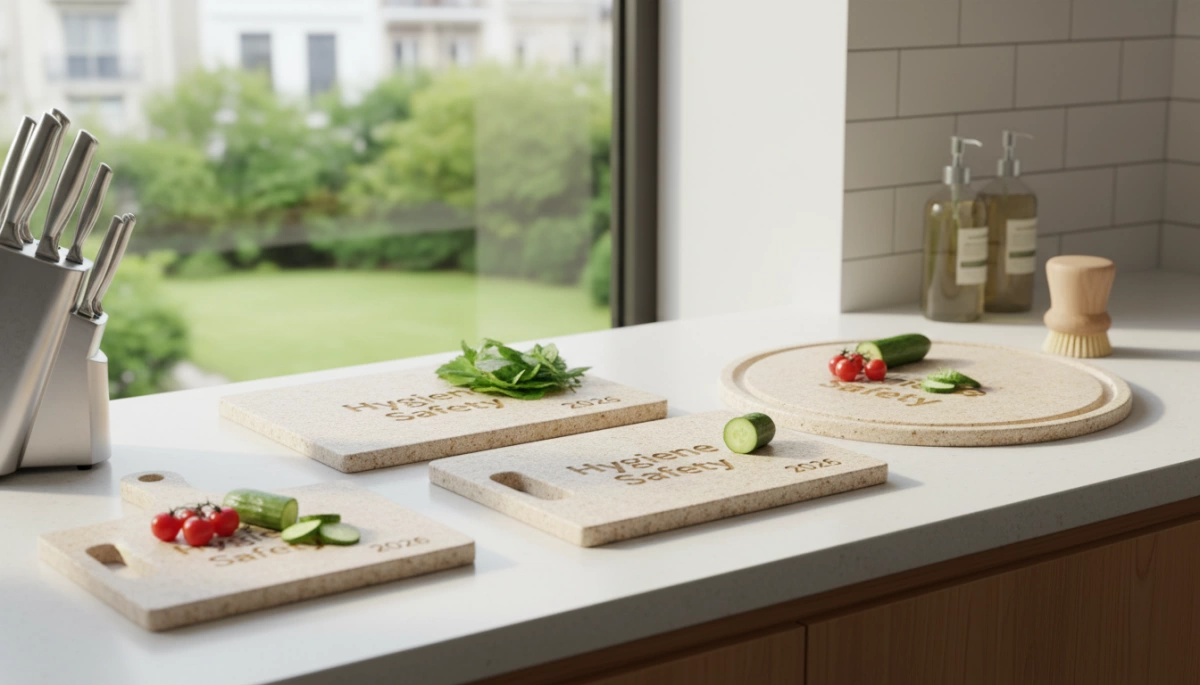
Hygiene is the biggest concern in any kitchen, and it’s where our wheat straw chopping board really stands out. Traditional wood or low-quality plastics can be a nightmare for bacteria growth, but we’ve engineered a solution that prioritizes long-term food safety.
Non-Porous Surface: Resisting Liquid and Food Absorption
The secret to a truly antibacterial kitchen tool is density. Our boards feature a strictly non-porous chopping surface that refuses to soak up moisture, beet juice, or raw meat proteins. Because the material doesn’t absorb liquids, it won’t warp, crack, or harbor the deep-seated odors that often plague older kitchenware.
The Scarring Factor: High-Density Surfaces Minimize Bacteria Spots
Knife marks are inevitable, but “deep scarring” is a safety hazard. We utilize a high-density composite board structure that resists the deep gouges where bacteria usually hide and multiply. As an antimicrobial cutting board manufacturer, we focus on surface integrity to ensure that even after months of heavy use, your board remains easy to sanitize.
Managing Cross-Contamination with Juice Grooves and Dedicated Sets
Effective cross-contamination prevention requires smart design features that work with your workflow:
- Juice Groove Functionality: Deep channels around the perimeter catch meat juices and fruit liquids before they hit your countertop.
- Dual-Sided Use: We recommend using one side strictly for proteins and the other for produce.
- Color-Coded Sets: Many of our users opt for dedicated sets to keep allergens and raw meats completely separate.
For a deeper dive into organizing your kitchen workflow, check out our guide to choosing a double-sided cutting board for hygienic meal prep, which breaks down how to maintain a professional-grade sanitary environment at home.
Microplastics: Are Wheat Straw Boards Better for You?
In 2026, the focus on bioplastic material safety has centered on how much material actually ends up in your food. Traditional HDPE (High-Density Polyethylene) boards are soft, leading to “micro-shaving” where knife blades peel off tiny plastic slivers during meal prep. My wheat straw composite boards are engineered for higher density, which significantly reduces micro-shaving compared to standard plastic. By reinforcing food-grade polypropylene (PP) with natural fibers, the surface becomes more resistant to deep scarring, ensuring fewer synthetic particles migrate into your ingredients.
Durability vs. Shedding: Minimizing the “Shave”
The structural integrity of a wheat straw board comes from its hybrid nature. Recent microplastic shedding research shows that composite surfaces hold their shape better under heavy chopping than pure petroleum-based plastics. When you choose these sustainable kitchen essentials, you are opting for a surface that prioritizes long-term durability over disposable convenience.
The 2026 Environmental Footprint: Upcycling and Disposal
The real advantage of these boards lies in agricultural waste upcycling. We take the stalks left over from wheat harvests—which are typically burned, releasing CO2—and transform them into high-performance kitchen tools. This process effectively offsets the carbon footprint of the board’s production.
- Industrial Compostability: While not home-compostable due to the durable PP binder, these boards are designed for industrial recovery at the end of their life cycle.
- Reduced Plastic Content: By substituting a large percentage of the volume with natural straw, we use significantly less virgin plastic than traditional manufacturers.
- Circular Economy: This approach makes our products some of the best non-toxic cutting boards for eco-conscious American households looking to reduce their reliance on 100% synthetic goods.
Durability and Performance in Your Modern Kitchen
I know that for a tool to be truly useful in a busy American home, it has to do more than just look good—it has to perform under pressure. Our wheat straw boards are engineered to bridge the gap between sustainable kitchen essentials and high-performance culinary gear.
Knife Edge Retention: Protecting Your Blade’s Hone
One of the biggest complaints with glass or stone surfaces is how quickly they dull a professional edge. I’ve ensured our knife-friendly cutting surfaces provide the perfect amount of “give.”
- Impact Absorption: The wheat straw fibers act as a cushion, preventing the blade from rolling or chipping.
- Surface Tension: These high-density composite boards maintain enough grip so your food doesn’t slide, but they aren’t so hard that they ruin your knife’s hone.
- Precision Cutting: Whether you are mincing garlic or carving a roast, the board stays stable without damaging your expensive cutlery.
Thermal Stability: Handling the 180°F Dishwasher Sanitization Cycle
In 2026, convenience is non-negotiable. I believe that dishwasher safe eco-friendly boards shouldn’t warp or degrade after a few hot cycles. By blending food-grade polypropylene (PP) with reinforced wheat stalks, we’ve achieved a level of thermal stability that handles the standard 180°F sanitization cycle found in modern US dishwashers.
- Warp Resistance: Unlike traditional wood or cheap plastic, these boards stay flat and functional even after repeated high-heat exposure.
- Sanitization Ready: You can confidently run these through a deep-clean cycle to kill bacteria without worrying about structural breakdown.
When I developed this line, I looked at the best PP cutting board for your cooking style to ensure our hybrid material outperformed standard plastics in every category. These boards are built to be workhorses, not just display pieces.
How to Maintain Your Calmchop Board for Lifetime Safety
Keeping your boards in top shape is the final step in ensuring they remain BPA-free kitchenware you can trust. While our wheat straw composite is built for the daily grind, smart maintenance is what guarantees long-term food safety.
Cleaning Protocols: Best Practices for Sanitizing
Our boards feature a non-porous chopping surface, making them naturally resistant to deep-seated grime and odors. To keep them pristine, I recommend these steps:
- Standard Wash: Use hot, soapy water immediately after every use to remove surface debris.
- Deep Sanitization: These are dishwasher safe eco-friendly boards that easily handle the 180°F sanitization cycle without warping.
- Stain Prevention: For high-pigment foods like beets or turmeric, rinse with cold water before placing the board in a high-heat dishwasher cycle.
Understanding the truth about antimicrobial cutting boards helps in realizing that consistent cleaning of a high-density surface is more effective than relying on chemical additives.
When to Replace: Visible Signs of Wear
Even the most sustainable kitchen essentials eventually reach their limit. To answer the question, “Are wheat straw cutting boards safe for food indefinitely?”—the answer is only if the surface remains intact. You should consider a replacement if you notice:
- Deep Scarring: If knife grooves are deep enough that a fingernail gets caught, it is harder to sanitize the board effectively.
- Warping: If the board no longer sits perfectly flat on your counter, it becomes a slipping hazard during heavy prep.
- Persistent Staining: Significant discoloration that doesn’t lift after a sanitizing cycle often indicates the fibers are beginning to wear.
For households that prep heavy meals daily, upgrading to a fresh plastic cutting board set made with food-grade polypropylene (PP) ensures you always have a clean, level surface ready for action. Maintaining a rotation of boards is the best way to prevent cross-contamination and extend the life of your kitchen tools.
Common Questions About Wheat Straw Safety (FAQ)
Can wheat straw boards go in the microwave?
No. Even though these are high-quality bioplastic material safety products, I don’t recommend microwaving your wheat straw chopping board. The extreme, concentrated heat can cause the food-grade polypropylene (PP) binder to warp or soften. These boards are designed for prep, not cooking.
Do they stain easily with high-pigment foods?
Because these are non-porous chopping surfaces, they resist deep staining better than traditional wood. However, high-pigment foods like beets or turmeric can leave surface residue if left for hours. A quick rinse right after use keeps the surface clear. If you are sourcing for a commercial kitchen, checking a b2b buyers guide for plastic cutting boards can help you choose the right density to minimize maintenance.
Are these boards biodegradable in home compost?
In 2026, we focus on transparency: wheat straw boards are industrially compostable, not home-compostable. The blend of straw and PP is built for agricultural waste upcycling and extreme durability. They are meant to last years in your kitchen rather than breaking down in a backyard bin.
How do they compare to bamboo in 2026?
Wheat straw has become the preferred sustainable kitchen essential over bamboo for several reasons:
- Knife-friendly cutting surfaces: They have a slight “give” that preserves your blade’s hone better than hard bamboo.
- Hygiene: They are dishwasher safe eco-friendly boards that won’t split or crack like bamboo often does when exposed to high heat.
- Maintenance: There is no need for regular oiling or seasoning to keep them as FDA-approved food contact substances.
| Feature | Wheat Straw Composite | Traditional Bamboo |
|---|---|---|
| Dishwasher Safe | Yes (Up to 180°F) | No (Hand wash only) |
| Knife Dulling | Minimal | Moderate to High |
| Porosity | Non-Porous | Semi-Porous |
| BPA-Free | BPA-free kitchenware | Naturally BPA-free |
 English
  German
  Turkish
  Italian
  Russian
  Polish
  Arabic
  French
  Malay
Malay  Japanese
  Korean
  Thai
Thai