
You’ve just finished chopping fresh ingredients, and that trusted plastic cutting board sits there, seemingly clean—yet invisible germs could be lurking in those tiny knife grooves. How to sanitize plastic cutting board isn’t just a kitchen buzzword; it’s a critical step to keep your family safe from dangerous bacteria like Salmonella and Campylobacter. The good news? Sanitizing your board doesn’t have to be complicated or harsh on your tools. In this guide, you’ll discover simple, effective ways to disinfect your plastic cutting board—no bleach required if you prefer—and why choosing a high-quality board like calmchop’s durable, groove-resistant designs makes all the difference. Ready to keep your kitchen spotless and your meals worry-free? Let’s get started.
Why Sanitizing Your Plastic Cutting Board Matters
Sanitizing your plastic cutting board isn’t just about keeping your kitchen tidy—it’s essential for food safety. When you cut raw meats or vegetables, tiny grooves and scratches form on the board’s surface. These grooves can trap bacteria like Salmonella and E. coli, creating a hidden breeding ground for germs that plain washing might miss.
Cross-contamination is a serious health risk. If bacteria from raw meat linger on your cutting board, they can easily transfer to other foods, increasing the chance of foodborne illnesses. Proper sanitation reduces these dangers by killing harmful bacteria and preventing their buildup.
Beyond health, keeping your cutting board clean extends its life. Regular sanitizing stops deep scarring and staining, which weakens the board over time. This is where Calmchop boards shine—they feature a smooth finish designed to reduce scarring and simplify cleaning. Fewer grooves mean fewer places for bacteria to hide, making your daily sanitizing routine quicker and more effective.
In short, a properly sanitized cutting board protects your family’s health and keeps your kitchen running smoothly. Why risk it when a few simple steps can ensure safety and board longevity?
Essential Tools and Materials for Sanitizing Plastic Cutting Board

To keep your plastic cutting board clean and safe, start with hot soapy water and a good dish soap. This basic combo removes most food particles and grease right after use. For a deeper clean and to kill bacteria, you can use several safe sanitizers:
- Bleach solution (1 tablespoon bleach per gallon of water) is powerful for disinfecting, especially after cutting raw meat.
- White vinegar is a natural option that helps eliminate odors and reduce bacteria.
- Hydrogen peroxide works well as a spray disinfectant and is safe on plastic surfaces.
- A mix of lemon and salt acts as a gentle scrub for stains and gives your board a fresh scent.
Avoid abrasive cleaners or scrubbing pads that can scratch your board, creating grooves where bacteria hide. Instead, use soft sponges or cloths.
For convenience, the Calmchop eco-friendly care kit includes all the essentials in one place, making quick cleaning hassle-free. You can also rely on common pantry staples like vinegar and lemon for fast, natural sanitation when you’re short on time.
Keeping a few of these materials on hand will make sanitizing your plastic cutting board simple and effective for everyday kitchen safety.
Step by Step Guide to Daily Cleaning and Sanitizing
Keeping your plastic cutting board clean every day is simple and makes a big difference in food safety. Here’s how to sanitize your board effectively:
-
Rinse immediately after use: As soon as you’re done, rinse the board under hot water to remove food bits and prevent bacteria buildup.
-
Dishwasher method: If your board is dishwasher safe, like Calmchop boards, place it on the top rack. The hot water and detergent kill most bacteria quickly and easily.
-
Manual bleach soak: For a deeper clean, soak your board in a bleach solution (1 tablespoon bleach per gallon of water) for a few minutes. Rinse well afterward to remove any bleach residue.
-
Vinegar soak option: If you prefer natural sanitizers, soak the board in white vinegar for several minutes. Vinegar is great for cutting board bacteria prevention and is gentler than bleach.
-
Hydrogen peroxide spray: Spray the board with hydrogen peroxide for a quick disinfection. Let it sit for a few minutes, then rinse.
-
Air dry completely: Always let your plastic cutting board air dry upright. This prevents moisture from lingering and bacteria from growing.
-
Adjust for food types: Use stricter cleaning methods after raw meat or seafood to avoid cross contamination. For cutting veggies, a simple soap wash and vinegar rinse generally works fine.
-
Calmchop smooth finish: Calmchop’s smooth surface helps reduce deep grooves where bacteria hide, making daily cleaning and sanitizing easier and more effective.
Following these steps daily will keep your plastic cutting board clean, safe, and ready for your next meal prep.
Advanced Tips Removing Stains Odors and Deep Grooves
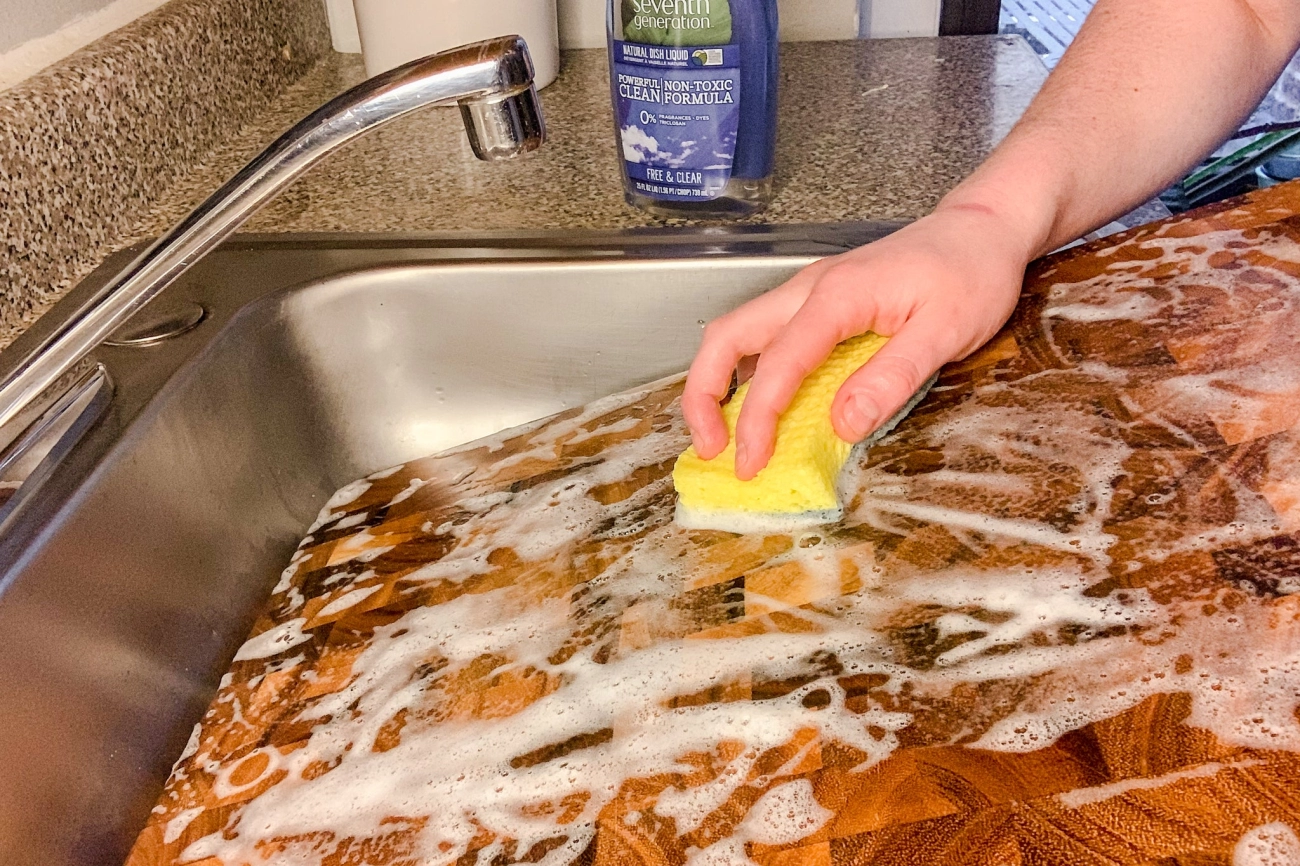
Plastic cutting boards can get stained, smelly, and worn down over time, especially with frequent use. Here’s how to keep your board fresh and looking great, including tips for deep grooves where bacteria hide.
Remove Stains with Baking Soda and Salt Paste
- Mix baking soda and salt with a little water to form a thick paste.
- Rub it onto stained areas using a scrub brush or sponge.
- Let it sit for 10–15 minutes before rinsing off.
This natural method lifts stubborn stains without harsh chemicals.
Get Rid of Odors with Lemon and Sunlight
- Cut a lemon in half and rub it thoroughly over the board surface.
- Leave the board under direct sunlight for an hour or two.
The lemon’s natural acids combined with sunlight help neutralize odors and refresh your board.
Repair or Replace Heavily Grooved Boards
- If your plastic board has deep cuts and grooves that trap bacteria even after cleaning, it’s time to sand down or replace it.
- Calmchop boards feature a smoother finish that resists deep scarring, making cleaning easier and prolonging their lifespan.
- Light sanding restores smoothness, but when grooves get too deep, swapping to a new board is safest for food safety.
Eco-Friendly Hacks with Reusable Cloths
- Use reusable microfiber cloths for scrubbing instead of disposable sponges.
- These cloths scrub well and are washable, cutting down waste while ensuring thorough cleaning.
With these simple, natural fixes and mindful maintenance, your plastic cutting board will stay cleaner, odor-free, and safer for chopping all your meals. Calmchop boards, designed with eco-friendly materials and a smooth surface, make these cleaning steps even easier to follow and more effective.
Maintenance and Storage Best Practices
Keeping your plastic cutting board in top shape goes beyond cleaning. Here’s what I recommend to maintain and store your board properly:
-
Daily board designation
Assign a specific board for different food types—like raw meat, veggies, or cooked foods. Using color coding helps prevent cross contamination and keeps your kitchen safer.
-
Monthly deep cleaning
Give your board a thorough clean once a month. Soak it in a bleach solution or use vinegar for a deeper sanitize that tackles hidden bacteria and keeps the surface fresh.
-
Proper storage to avoid warping
Store your board flat and dry, away from direct heat and moisture to prevent warping. Avoid stacking heavy items on top, which can cause dents or cracks.
-
Recognizing wear and replacement signals
Watch for deep grooves, heavy stains, or persistent odors. When your board gets too scarred, it becomes a bacterial hotspot and it’s time to replace it. Calmchop boards are designed to reduce this wear with a smoother finish, but all boards need replacing eventually.
-
Small kitchen storage tips
If space is tight, use vertical racks or wall-mounted holders to keep your boards accessible but organized. This saves counter space and helps your boards dry properly.
-
Calmchop warranty
Calmchop backs their cutting boards with a warranty, giving you peace of mind. Their boards are built to resist scarring and warping, making maintenance easier and extending the life of your board.
Following these simple maintenance and storage tips will keep your plastic cutting board safe and durable for everyday use.
Common Mistakes to Avoid
When sanitizing your plastic cutting board, there are a few common slip-ups to watch out for:
-
Skipping rinses after sanitizing
Always rinse your board thoroughly after using bleach or vinegar solutions. Leaving sanitizer residue can affect food taste and safety.
-
Using wood board methods on plastic
Techniques meant for wooden boards, like heavy sanding or oil treatments, don’t work well on plastic cutting boards and can damage them.
-
Ignoring grooves and hidden bacteria
Bacteria love to hide in deep cuts and grooves. Skipping regular checks or ignoring these spots lets germs multiply and risks cross contamination.
-
Dishwasher myth busting
Not all plastic boards are dishwasher safe. Calmchop boards are designed to be warp-proof and can handle dishwashers, but older or low-quality boards may warp or crack if washed there.
-
Relying on board forgiveness without cleaning
Although Calmchop’s smooth finish reduces scarring and makes cleaning easier, it’s not a substitute for proper daily sanitation. Don’t let the board’s quality make you lazy about cleaning.
Avoiding these mistakes helps keep your plastic cutting board safe, clean, and long-lasting.
FAQs on How to Sanitize Plastic Cutting Board
Can I safely use bleach on my plastic cutting board?
Yes, a diluted bleach solution is effective for disinfecting your plastic cutting board and killing bacteria from raw meat. Use about 1 tablespoon of bleach per gallon of water. Soak or wipe the board, then rinse thoroughly with water. For more details, check the step-by-step bleach soak instructions.
How often should I replace my plastic cutting board?
Replace your board when you see deep grooves or cracks that are hard to clean, or if it starts to warp. Regular inspection helps prevent bacteria buildup. Calmchop boards last longer thanks to their smooth finish, but wear signs mean it’s time for a new one. Learn more in the maintenance and storage section.
Is it okay to put my plastic cutting board in the dishwasher?
Most plastic cutting boards are dishwasher safe and this is a great way to sanitize and remove bacteria after use. High heat and strong detergent help clean deeply. However, avoid mixing wood board cleaning habits with plastic boards to prevent damage or warping. See dishwasher cleaning tips for more.
Can I use vinegar to disinfect my plastic cutting board?
White vinegar is an affordable natural sanitizer against bacteria. Spray or soak your board with vinegar, then rinse well. It’s perfect for everyday cleaning but for raw meat surfaces, bleach or hydrogen peroxide might be stronger options.
What’s the best way to prevent odors and stains on plastic cutting boards?
Use a baking soda and salt paste for removing stains and a lemon rub followed by sunlight for odors. These natural methods keep your board fresh without harsh chemicals. Check advanced cleaning tips for full details.
Can I use the same board for meat and veggies?
It’s best to use separate boards or color-code to avoid cross contamination, especially with raw meat. Calmchop offers color-coded options that simplify this practice, keeping your kitchen safer.
If you want to know more or hear this info in a simple voice search style, each section above has detailed answers designed for quick cooking help around your kitchen.
 English
  German
  Turkish
  Italian
  Russian
  Polish
  Arabic
  French
  Malay
Malay  Japanese
  Korean
  Thai
Thai