
You’ve likely heard the kitchen rumor: Stainless steel cutting boards are “knife killers.”
But is that actually true, or just a myth perpetuated by traditionalists?
The reality lies somewhere between the Mohs hardness scale and your urgent need for a bacteria-free kitchen. While wood and plastic are softer on your blade, they are notorious traps for microplastics, mold, and lingering odors.
In this guide, we are cutting through the noise to deliver the honest pros and cons. We will analyze edge retention, the superiority of 316L medical-grade steel, and whether the hygiene upgrade is worth the trade-off.
Here is the definitive verdict on whether you should make the switch.
The ‘Knife-Friendly’ Question: Let’s Look at the Science
The number one question I get when introducing the CalmChop 316L Stainless Steel Cutting Board is simple: “Will this ruin my knives?” It is a valid concern. For years, we have been told that wood and plastic are the only safe options for our blades. However, the fear that metal instantly destroys metal is largely exaggerated. To understand why, we need to look at the physics of the kitchen.
Understanding the Mohs Hardness Scale
To determine if a surface is “knife-friendly,” we look at the Mohs scale of hardness. This scale measures a material’s resistance to scratching.
- Standard Kitchen Knives: Usually fall between 5.5 and 6.0 on the scale.
- 316L Stainless Steel: Sits very close to this range but is formulated for corrosion resistance and durability.
Because the hardness levels are comparable, cutting on steel does not strip metal off your blade like a grinding stone would. Instead, it creates a surface where the knife meets a solid stop. While this means you may need to utilize honing steel maintenance slightly more often to realign your blade’s edge, it does not “eat” the steel of your knife.
The Reality of Impact: Steel vs. Wood
The difference lies in how the material reacts to the force of your chop.
- Wood & Plastic: These materials are softer and fibrous. When a knife hits them, it sinks in slightly. This preserves knife edge retention longer, but it comes at a heavy cost: those deep cuts become breeding grounds for mold and bacteria that you cannot wash away.
- Stainless Steel: The surface is non-porous and firm. The knife stops on the surface rather than sinking in.
This difference is a trade-off. With CalmChop, you are trading the “soft landing” of wood for a medical-grade hygienic surface that will never harbor mold. For many health-conscious home cooks, a few extra seconds of honing is a small price to pay for food safety.
Myth-Buster: Does Steel Shatter Knives?
Let’s dispel a common myth: Stainless steel cutting boards do not shatter or chip knives. Unless you are using a ceramic blade (which is brittle and should never be used on hard surfaces) or hacking violently at frozen bones with a delicate sushi knife, your steel blades are safe.
The surface of our CalmChop board is polished 316L steel. It is designed to be smooth to minimize friction. While it feels different—faster and firmer—it is not an abrasive surface. The “damage” people fear is usually just the edge rolling, which is standard wear and tear for any knife and is easily fixed with a honing rod.
The CalmChop Solution: Strategic Usage
I designed the CalmChop board to be the ultimate tool for hygiene, not necessarily to replace a butcher block for chopping firewood. To get the best of both worlds—longevity for your board and safety for your food—I recommend a strategic approach:
- Raw Meat & Fish: Always use the CalmChop board. The non-porous cutting surface prevents Salmonella and E. coli from soaking into the board.
- Odor-Heavy Foods: Garlic, onions, and fish should be prepped here. The steel neutralizes odors instantly, so your next apple slice doesn’t taste like onions.
- Pastry & Dough: The cool surface is perfect for rolling out dough without it sticking or melting the butter.
By understanding the material, you can maintain a hygienic food preparation environment without sacrificing the lifespan of your cutlery.
The Pros: Why Chefs Are Switching to 316 Stainless Steel
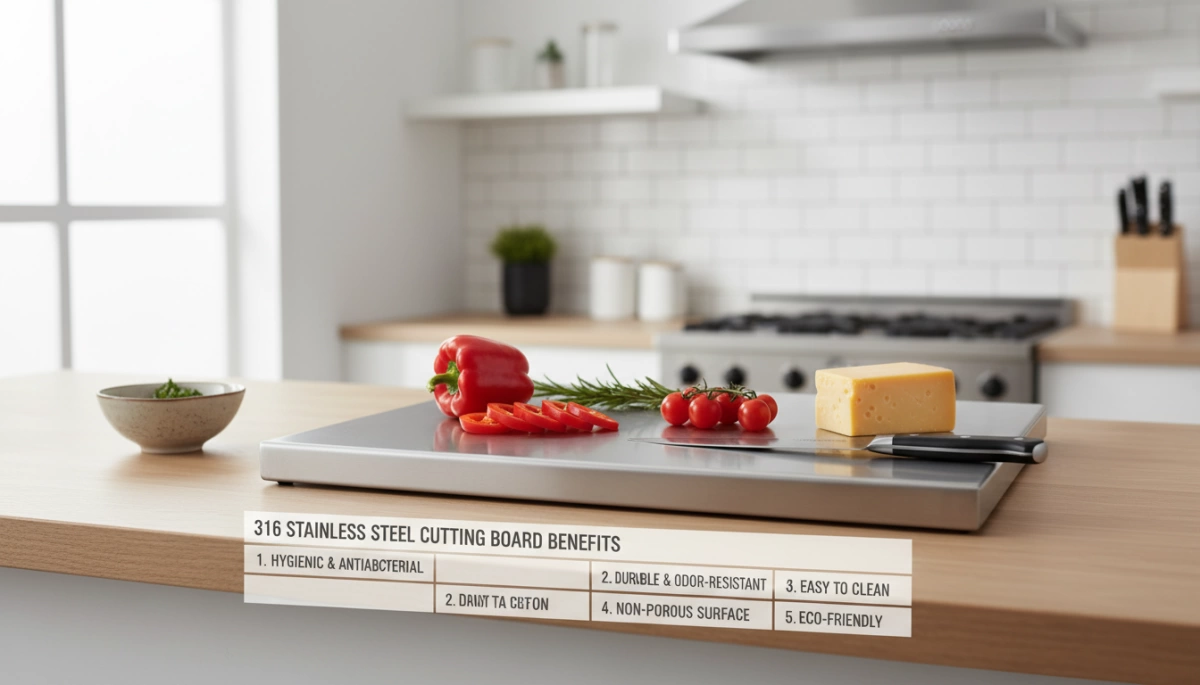
We are seeing a massive shift in professional and home kitchens alike. The move isn’t just about aesthetics; it is about health, safety, and long-term value. While wood has tradition and plastic has convenience, 316 marine grade stainless steel offers a set of advantages that other materials simply cannot match.
The Hygiene Champion: Non-Porous Surface Benefits
The biggest enemy in your kitchen is invisible. Traditional wooden boards are porous; they absorb moisture, meat juices, and bacteria. Over time, knife scars on plastic boards become breeding grounds for mold that no amount of scrubbing can remove.
Our CalmChop board utilizes a non-porous cutting surface. Because 316L stainless steel is completely sealed, bacteria cannot penetrate the material. When you wash this board, it is actually clean. There is no risk of hidden mold growing deep inside the core, making it the gold standard for hygienic food preparation.
Zero Cross-Contamination with Double-Sided Boards
Safety in the kitchen relies on separating raw foods from ready-to-eat items. We designed our board to be double-sided to make cross-contamination prevention effortless.
- Side A: Use for raw proteins like chicken, steak, or fish.
- Side B: Flip it over for vegetables, fruits, or bread.
This physical separation ensures that dangerous pathogens like Salmonella do not transfer to your salad greens.
316 vs. 304 Stainless Steel: The Durability Difference
Not all steel is created equal. Most kitchen appliances use 304-grade stainless steel, which is adequate for sinks but falls short for high-performance cutting surfaces. We strictly use 316L Medical Grade Stainless Steel.
Comparison of Steel Grades:
| Feature | 304 Stainless Steel | 316L Stainless Steel (CalmChop) |
|---|---|---|
| Corrosion Resistance | Standard | Superior (Marine Grade) |
| Reaction to Acids | Can pit over time | Resistant to lemon/vinegar |
| Hygiene Standard | Food Grade | Medical/Surgical Grade |
| Longevity | High | Lifetime |
The addition of molybdenum in 316L steel prevents rust and pitting, even when exposed to salty water or acidic ingredients like lemons and tomatoes.
The Microplastic-Free Kitchen Advantage
Plastic boards are silent polluters. Every time you slice on a plastic surface, microscopic particles are shaved off and end up in your meal. While many people are still influenced by the top trending plastic cutting boards, the data on microplastics in food is alarming.
Switching to stainless steel eliminates this risk entirely. You get a pure, clean cut without seasoning your dinner with synthetic polymers. It is a critical step toward a sustainable kitchen product ecosystem.
Odor Neutralization: Removing Garlic and Fish Smells
If you have ever chopped garlic or onions on a wooden board, you know that the smell can linger for days. Odor neutralizing properties are a unique chemical benefit of stainless steel.
The chromium in the steel binds with sulfur compounds found in foods like fish, garlic, and onions, effectively neutralizing the odor rather than absorbing it. A quick rinse under water removes the smell completely, ensuring your sliced apples don’t taste like last night’s garlic chicken.
The Cons: Managing Expectations
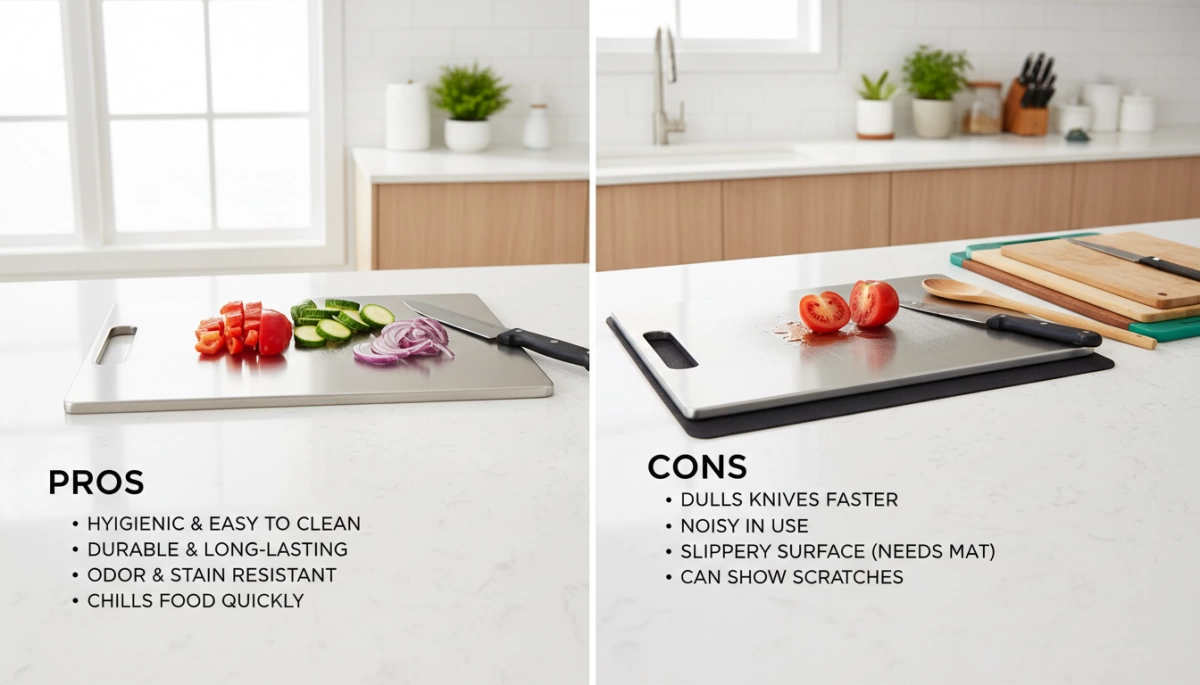
Let’s be real about the trade-offs. While switching to a CalmChop 316L Stainless Steel Cutting Board eliminates the health risks of mold and microplastics, it does offer a different tactile experience compared to traditional wood or plastic. Understanding these differences ensures you get the most out of your tool.
Addressing the Sound and Feel
If you are accustomed to soft plastic, the feedback of steel will be new.
- Auditory Feedback: Metal-on-metal contact creates a distinct sound. It is naturally louder than cutting on wood. However, our board is 2mm thick, providing a solid density that reduces the “tinny” vibration often found in cheaper, thinner metal sheets.
- Surface Hardness: The surface is firm. This firmness is exactly why bacteria cannot penetrate it, but it means there is less “give” under the knife compared to a soft 304 stainless steel cutting board or plastic.
Mitigating the Slippage Factor with Silicone Pads
A common concern with any hard surface board is movement on smooth countertops like granite or marble.
- Weight Matters: The CalmChop board weighs approximately 1.5kg (Standard size). This substantial weight provides significantly more natural stability than lightweight plastic sheets.
- Simple Fix: For heavy-duty chopping, placing a damp paper towel or a thin silicone mat underneath ensures the board stays rock-solid. While our stainless steel cutting boards are designed for stability, this simple kitchen hack guarantees safety while you enjoy a microplastic-free kitchen.
Comparative Analysis: Steel vs. The Rest
When you are equipping a kitchen, the material you choose dictates your hygiene standards and workflow. I’ve seen countless kitchens struggle with tools that degrade over time. Here is how our 316L stainless steel stacks up against the traditional heavyweights.
Stainless Steel vs. Wood: Maintenance and Hygiene
Wood has a classic aesthetic, but it is high-maintenance. Wood is naturally porous, meaning it absorbs moisture, meat juices, and bacteria. Over time, knife scars on wood become deep trenches where mold thrives—something you cannot simply wash away.
In contrast, hygienic food preparation is effortless with the CalmChop board.
- Porosity: Wood is porous; 316L Stainless Steel is completely non-porous.
- Mold Risk: Wood requires constant oiling to prevent rot; Steel is 100% mold-free.
- Cleanup: Wood often warps in the dishwasher; our steel board is dishwasher safe kitchenware that comes out sterile every time.
Stainless Steel vs. Plastic: Bacteria and Safety
Plastic boards are cheap and lightweight, but they hide a dirty secret: microplastics. Every time your knife slices into a plastic board, it shaves off microscopic particles that end up in your food. Furthermore, once a plastic surface is scarred, it becomes a breeding ground for bacterial growth in cutting boards that scrubbing can’t fix.
While some kitchens rely on standard synthetics, understanding the advantages of stainless steel versus plastic cutting boards reveals why metal is the safer bet for long-term health.
- Contamination: Plastic sheds microplastics in food; Steel remains intact.
- Odor: Plastic holds onto garlic and onion smells; Steel neutralizes odors instantly.
- Longevity: Plastic needs replacing every few months; 316L steel lasts a lifetime.
Stainless Steel vs. Glass: Durability and Danger
Glass boards are often marketed as hygienic, but they are the enemy of sharp knives. Glass is incredibly hard—harder than your knife steel—which blunts edges almost immediately. They are also fragile; a slip means shattered glass in your dinner.
Our 316 marine grade stainless steel offers the perfect middle ground. It provides a solid surface that is durable without being brittle.
- Impact: Glass shatters; Steel is impact-resistant and virtually indestructible.
- Surface Feel: Glass is dangerously slippery; our steel board features a matte finish and a substantial 1.5kg weight (standard size) to prevent movement.
- Safety: Glass poses a breakage risk; Steel ensures cross-contamination prevention through its double-sided design without the risk of breaking.
Best Use Cases for Your CalmChop Board
While we often discuss the mechanics of steel versus wood, the real value of the CalmChop board shines through in specific kitchen scenarios. Understanding where this tool excels allows you to maximize hygiene and efficiency without compromising your workflow.
Handling Raw Meat and Fish Safely
The primary reason chefs and home cooks switch to 316 marine grade stainless steel is safety. Traditional porous boards can trap microscopic particles of raw meat, creating a breeding ground for bacteria like E. coli and Salmonella.
- Non-Porous Protection: Our 316L surface is completely sealed. Meat juices, blood, and fish oils stay on the surface where they can be washed away instantly.
- Cross-Contamination Prevention: Utilizing the double-sided design allows you to dedicate one side exclusively to raw proteins while keeping the other pristine for vegetables.
- Instant Sanitization: A quick wash with soap and water removes 100% of residues, ensuring hygienic food preparation that wood simply cannot match.
Pastry and Dough Work on Cool Surfaces
Stainless steel is naturally conductive and tends to stay cooler than room temperature, making it an exceptional dough kneading surface.
- Temperature Control: When working with butter-heavy pastries, pie crusts, or chocolate, the cool metal prevents ingredients from melting or becoming greasy too quickly.
- Smooth Release: The polished surface offers minimal resistance, allowing you to roll out dough evenly without excessive flouring or sticking.
Managing Messy and Staining Ingredients
If you have ever permanently stained a plastic board with turmeric or beets, you will appreciate the resilience of stainless steel.
- Stain Resistance: Highly pigmented ingredients like beets, saffron, and berries wipe off effortlessly without leaving a trace.
- Odor Neutralization: One of the unique chemical properties of stainless steel is its ability to neutralize strong odors. Chopping garlic, onions, or fish on this board helps remove the smell from your hands and prevents the board from retaining a permanent funk.
For those looking to optimize their kitchen setup further, reading our guide to choosing the perfect cutting board can help you decide how to pair your stainless steel board with other tools for a complete culinary station.
Maintenance and Longevity
When we designed the CalmChop board, we wanted to solve the “high maintenance” problem that plagues traditional kitchen tools. Most home cooks and professionals are tired of replacing warped wood or scarred plastic every year. We built this board to be a permanent fixture in your kitchen, focusing on absolute ease of use and lifetime durability.
Dishwasher Safe Convenience
The biggest win for busy kitchens is cleanup. Unlike wood, which absorbs water and swells, or plastic that holds onto grease, our 316L stainless steel surface is completely non-porous. You can simply wipe it down or throw it in the machine. This is true dishwasher safe kitchenware; it withstands high-temperature cycles without degrading, ensuring that every wash kills bacteria effectively. You never have to worry about the board retaining moisture or developing hidden mold spores after a wash cycle.
No Seasoning Required
If you have owned a high-end wooden block, you know the drill: monthly oiling, waxing, and occasional sanding to keep the surface smooth. We eliminated that entire chore list. Our stainless steel boards require zero seasoning. You don’t need to buy special mineral oils or worry about the wood drying out and splintering. It is ready to use the moment you take it out of the box and stays that way for decades.
Long-Term Durability: No Warping or Cracking
Durability is where sustainable kitchen products truly shine. Traditional boards often fail because they react to their environment—humidity cracks wood, and heat warps plastic. Our 2mm thick 316L stainless steel is engineered to remain perfectly flat and structurally sound regardless of temperature changes or moisture exposure. It will not crack, peel, or chip. For those looking for robust kitchen solutions, our customized stainless steel cutting boards offer a level of resilience that softer materials simply cannot match. This is a “buy-it-once” investment that stops the cycle of disposable kitchenware.
Frequently Asked Questions (FAQs)
Will a stainless steel board ruin my expensive knives?
This is the most common concern we hear. The short answer is no, it won’t “ruin” them, but it does interact with your blade differently than soft wood. Because our boards are made from high-density 316 marine grade stainless steel, the surface is harder than traditional materials. While this makes it impervious to deep scratches where bacteria hide, it can cause the edge of a blade to roll slightly faster if you are using aggressive chopping techniques. We recommend using a honing steel regularly to maintain knife edge retention. For most home cooks, the trade-off—gaining a 100% mold-free, odorless surface—is well worth a few extra seconds of honing.
Is 316 stainless steel better than 304 for cooking?
Absolutely. While 304 is a common food-grade stainless steel, 316L (which we use at CalmChop) is considered medical grade. The main difference lies in the addition of molybdenum, which drastically increases corrosion resistance. In a kitchen environment, your board faces constant exposure to acidic foods like lemons, tomatoes, and vinegar, as well as salts. 316 stainless steel resists pitting and rust far better than 304, ensuring your board remains hygienic and durable for a lifetime.
How do I stop a metal cutting board from sliding?
Stability is crucial for safety. Our standard boards weigh approximately 1.5kg, which provides a solid, weighted base that resists shifting much better than lightweight plastic sheets. However, on particularly slick granite or marble countertops, you might want extra grip. A simple chef’s trick is to place a damp paper towel or a thin silicone mat underneath the board. If you prioritize stability above all else, understanding the mechanics of a cutting board with nonslip feet can help you set up a safer workspace.
Can I put my stainless steel board in the dishwasher?
Yes, and this is one of its biggest advantages over wood. You can place your CalmChop board directly into the dishwasher without fear. Unlike wood, which warps, cracks, and absorbs water, or plastic that can degrade, our dishwasher safe kitchenware comes out sterilized and ready for use. This makes it the ultimate tool for hygienic food preparation, especially after handling raw meats like chicken or fish, as the high heat of the dishwasher eliminates bacteria that might otherwise linger in a porous board.
 English
  German
  Turkish
  Italian
  Russian
  Polish
  Arabic
  French
  Malay
Malay  Japanese
  Korean
  Thai
Thai