
Understanding PP Plastic Cutting Boards
What Is Polypropylene (PP) in Cutting Boards?
Polypropylene (PP) is a food-grade plastic widely used in safe food-contact products, including medical containers and kitchen tools. In a PP plastic cutting board, PP is molded into a dense, non-porous chopping surface that doesn’t soak up liquids, raw meat juices, or odors. That means fewer hidden germs, easier cleaning, and a more hygienic polypropylene board for everyday meal prep.
PP vs. Wood, Bamboo, and HDPE Boards
If you’re stuck between PP vs wood cutting boards, bamboo, or HDPE, here’s the quick breakdown:
-
Wood
- Pros: Gentle on knives, looks great
- Cons: Porous, can absorb moisture, needs oiling, not ideal for the dishwasher
-
Bamboo
- Pros: Hard and eco-friendly
- Cons: Can be too hard on knife edges, may crack or split if soaked
-
HDPE (High-Density Polyethylene)
- Pros: Common plastic cutting board material, durable
- Cons: Often heavier and bulkier, not always as rigid under heat as well-formulated PP
-
PP (Polypropylene)
- Pros: Lightweight, warp-resistant kitchen board, excellent heat-resistant plastic cutting board, non-porous chopping board, often dishwasher-safe cutting board
- Cons: Very cheap PP versions can feel flimsy if not properly designed
With PP, we can design a knife-friendly plastic board that’s easier to handle than wood, often more sanitary than bamboo, and lighter than many HDPE boards.
Key Benefits: Food-Safe, Non-Porous, Heat-Resistant
We use food-safe PP cutting board material because it checks the boxes that matter most:
- Food-grade & non-toxic – Proper PP is BPA-free plastic board material and safe for direct food contact.
- Non-porous & hygienic – A hygienic polypropylene board won’t absorb liquids, reducing bacterial buildup and funky smells.
- Heat-resistant – Quality PP holds up to the high temperatures of dishwashers, making sanitizing much easier.
- Stain- and odor-resistant – A good stain-resistant chopping surface helps keep your board looking and smelling fresher longer.
These are the core traits that make a sanitary cutting board material for raw meat, fish, and everyday cooking.
Why PP Works for Home Cooks and Pros
Whether you’re a casual home cook or running a busy kitchen, a durable PP chopping block solves a lot of daily headaches:
- It’s lightweight but sturdy, so you can move it easily without feeling flimsy.
- It supports color-coded cutting boards for raw meat, veggies, and cooked foods to cut down cross-contamination.
- It’s ideal as a non-slip kitchen cutting board and heavy-duty kitchen cutting board when designed with textured or rubberized details.
- It’s simple to clean, quick to dry, and ready for the next task.
That’s why we lean on high-quality PP kitchen boards as a reliable, easy-to-clean plastic cutting board solution for modern home kitchens and chef-style cooking setups.
Material Quality and Food Safety in a PP Plastic Cutting Board
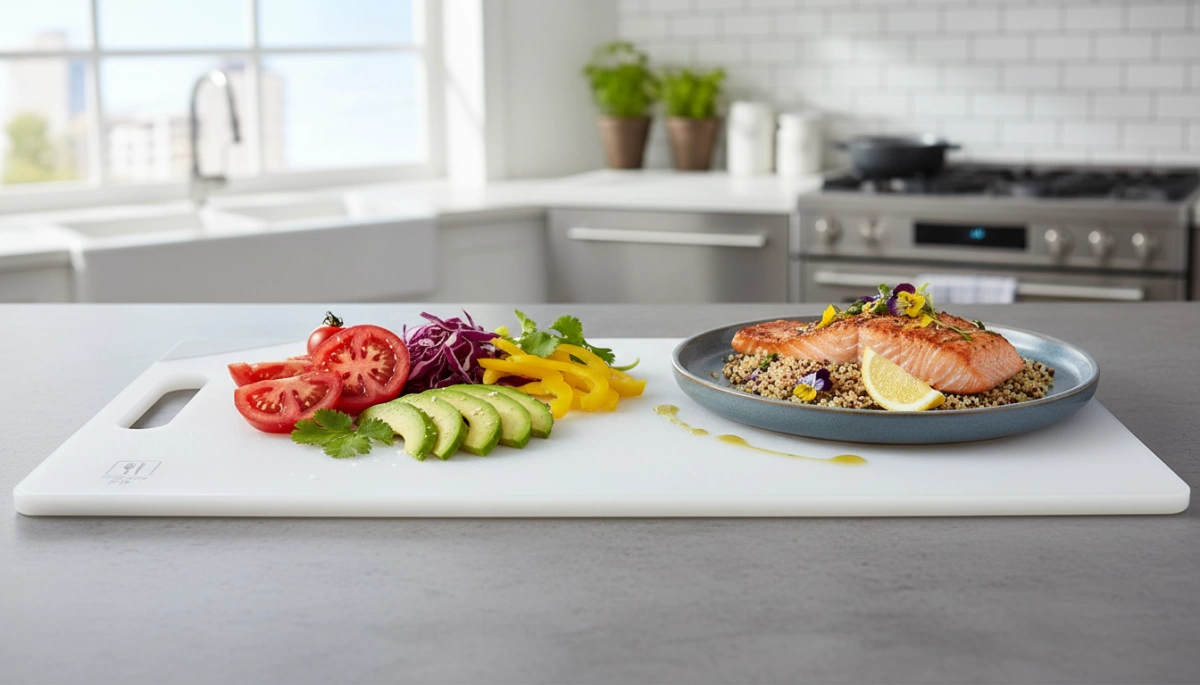
When I’m choosing a polypropylene cutting board for my own kitchen, material quality and food safety are non‑negotiable. If a PP plastic cutting board isn’t clearly food-safe, I don’t touch it.
Food-Grade PP and Safety Certifications
A high-quality, food-grade plastic chopping board should clearly list:
- FDA-approved (or “FDA-compliant”) food-contact safe PP
- LFGB certification for stricter European food safety standards
- BPA-free and phthalate-free plastics
- Food-safe PP (polypropylene) or “PP5” on the material label
If a brand is serious about quality, it will call these out up front. Many professional kitchens prefer a food-safe PP cutting board over glass or low-grade plastics for this reason. If you want more detail on how PP stacks up to other plastics, the comparison in this guide on the PP cutting board vs glass cutting board is helpful.
Non-Toxic, Odor-Resistant, Chemical-Resistant
A top-tier BPA-free plastic board should be:
- Non-toxic: No harmful plasticizers or fillers that can leach into food
- Odor-resistant: PP doesn’t absorb smells like raw onion, garlic, or meat juices
- Chemical-resistant: Can handle dish soap, mild bleach, and sanitizers without breaking down
That’s what makes a hygienic polypropylene board ideal for American home kitchens that see everything from taco night to holiday turkey.
Non-Porous PP = Less Bacteria Buildup
Polypropylene is non-porous, which is a big deal for hygiene:
- It doesn’t soak up raw meat juices or liquids
- It’s easier to fully sanitize compared to wood or bamboo
- It helps reduce bacterial buildup in knife grooves when cleaned properly
For a sanitary cutting board material, non-porous PP is one of the most reliable options you can get, especially for a safe cutting board for raw meat.
What to Check on the Label Before You Buy
Before I buy any PP plastic cutting board, I always check for:
- “Food-grade PP” or “PP (polypropylene)” clearly listed
- FDA-approved / LFGB-tested or similar food-contact language
- BPA-free and phthalate-free claims
- Dishwasher-safe (top-rack is fine, but it should say so)
- Brand transparency: website, contact info, and details on materials
If the label is vague or missing these points, I move on. For commercial buyers or anyone sourcing in bulk, I’d also look at specialized options like an antibacterial cutting board such as Calmchop’s antibacterial cutting boards wholesale line for added safety and peace of mind.
Durability and Long-Term Performance of a PP Plastic Cutting Board
A high-quality PP plastic cutting board should feel solid the first day you use it and the same a year later. When I design and choose PP boards, this is what I look at:
Warp resistance under heat and heavy use
Polypropylene cutting boards that are built right will:
- Stay flat after
Knife-Friendly Surface on PP Plastic Cutting Boards
When you’re picking a high-quality PP plastic cutting board, how it treats your knives is a big deal. A truly knife-friendly plastic board protects your blades while still giving you a clean, controlled cut.
How Surface Texture Affects Knife Edges
The surface of a polypropylene cutting board shouldn’t be glassy smooth or super rough.
- A light, micro-textured, non-porous chopping board gives your knife a bit of grip, so it doesn’t slide.
- That controlled “grab” keeps cuts accurate and reduces the risk of slipping and accidents.
- Too slick = knife skids. Too rough = your edge gets chewed up.
Soft vs Firm PP: Finding the Sweet Spot
You want a PP plastic cutting board that’s firm enough to feel stable, but still has a little “give”:
- Too hard (like cheap brittle plastic): dulls blades fast and feels harsh.
- Too soft (rubbery): deep grooves, stains, and faster wear.
- The sweet spot: a knife-friendly cutting board that flexes slightly under the blade without leaving huge scars.
Reducing Blade Dulling While Keeping Cuts Clean
A good food-grade plastic chopping board should:
- Let the knife sink in just enough so it doesn’t bounce or chatter.
- Avoid excessive scratching so your edge stays sharp longer.
- Provide a stain-resistant chopping surface that doesn’t fuzz or chip into your food.
Why Overly Hard or Overly Soft Boards Are a Problem
- Overly hard boards (glass, ceramic, or some cheap rigid plastics):
- Rapidly dull knives
- Can chip fine edges
- Overly soft boards:
- Hold deep cuts that trap bacteria
- Look worn and dirty fast
- Make it harder to get clean, straight cuts
When I design a high-quality PP kitchen board, I aim for that balanced, chef-grade plastic cutting board feel—firm, stable, and gentle on your knives, built for real daily use in a home kitchen.
Hygiene and Easy Cleaning on a PP Plastic Cutting Board
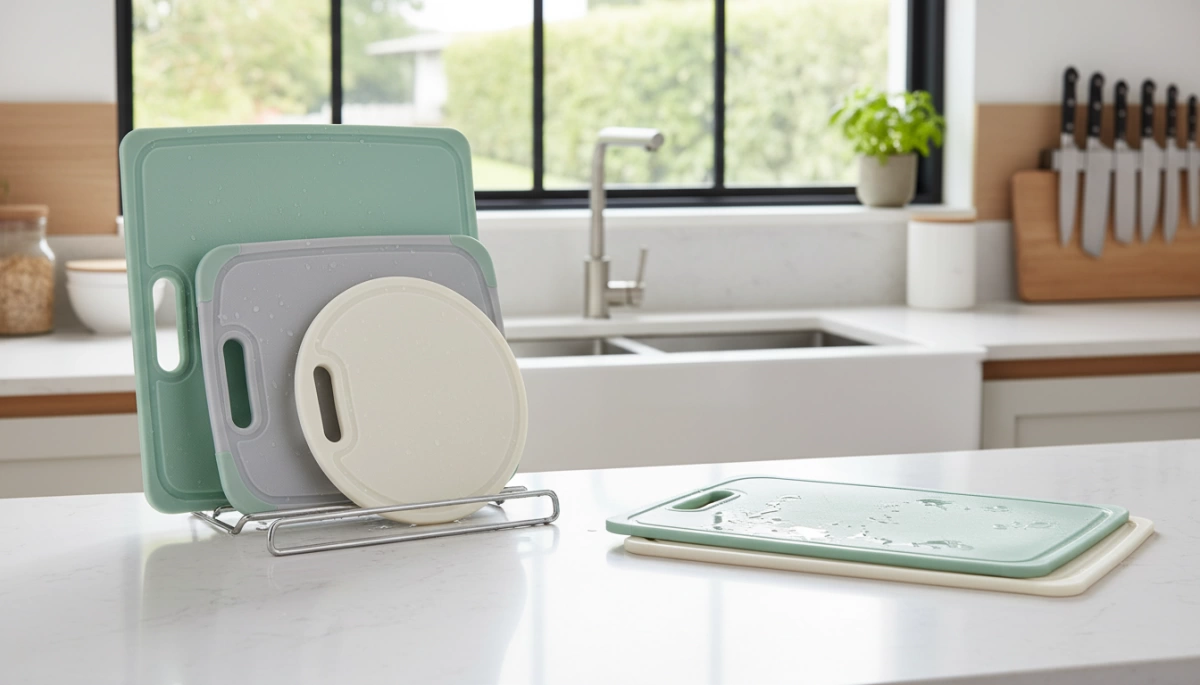
A high-quality PP plastic cutting board should make kitchen hygiene effortless. I design and choose PP boards with one core rule: if it’s not easy to clean and sanitize, it doesn’t belong in a modern home kitchen.
Dishwasher-Safe PP Cutting Boards & Proper Washing
Most food-grade PP plastic cutting boards are truly dishwasher-safe, which is a huge plus for busy home cooks.
To clean them right:
- Use the top rack when possible to reduce heat warping.
- Run on a hot cycle (with detergent) to kill bacteria.
- If washing by hand:
- Use hot, soapy water and a non-scratch sponge.
- Rinse well and air-dry upright instead of laying flat.
PP is naturally a non-porous chopping board material, so it doesn’t soak up juices like wood. That’s a big win for food safety.
Stain Resistance & Odor Control
A hygienic polypropylene board should resist stains from:
- Tomatoes and sauces
- Turmeric and spices
- Coffee, tea, and dark juices
To keep your stain-resistant chopping surface fresh:
- Rinse the board right after cutting highly pigmented foods.
- For light stains, scrub with baking soda paste (baking soda + water).
- For odor control (garlic, onion, fish):
- Rub with lemon and salt, let sit a few minutes, then rinse.
- Or soak briefly in a water + white vinegar mix.
Because PP is odor-resistant and non-porous, smells don’t get trapped when you clean it regularly.
Best Practices for Sanitizing PP Plastic Boards
For raw meat, poultry, and seafood, your food-safe PP cutting board needs a deeper clean from time to time:
- Bleach solution:
- 1 tablespoon of unscented bleach per gallon of water
- Soak or wipe surface, let sit 2–3 minutes, then rinse and air-dry
- Vinegar + hydrogen peroxide (separately):
- Spray with white vinegar, wipe
- Then spray with 3% hydrogen peroxide, wipe and dry
If you also use stainless steel cutting boards in your kitchen, the same hot-water and bleach-rinse routine applies, just like we recommend in our stainless steel board care guide.
Dishwasher + quick sanitizing = a sanitary cutting board material that’s easy to keep safe for daily use.
When to Replace a Stained or Heavily Scarred Board
Even a durable PP chopping block has a lifespan. Deep grooves and heavy wear can trap bacteria and make cleaning less effective.
Replace your PP plastic cutting board when:
- The surface has deep knife scars that don’t come clean.
- You see permanent discoloration that doesn’t fade with deep cleaning.
- The board feels rough, fuzzy, or uneven to the touch.
- There are cracks or chips along the edges.
As a rule of thumb, a heavily used non-slip kitchen cutting board for raw meat may need replacing sooner than a veggie-only board. If you’re unsure, err on the side of food safety and upgrade—especially if you rely on your board as a safe cutting board for raw meat.
Non-Slip Stability and Safety on a PP Plastic Cutting Board
When I’m choosing a high-quality PP plastic cutting board, non-slip stability is non‑negotiable. A non-slip kitchen cutting board keeps the board locked in place so your knife only cuts food—not fingers.
Non-slip feet, edges, and textured bases
Look for a PP plastic cutting board with:
- Non-slip feet or corner pads – Rubber or silicone feet grip your countertop and stop sliding.
- Rubberized edges – A soft perimeter keeps the board stable even when you’re chopping fast.
- Textured bottom surface – A slightly rough, patterned base adds extra friction on smooth counters.
These details turn a basic polypropylene cutting board into a safe cutting board for raw meat, veggies, and everyday prep.
Why board stability matters for knife safety
A stable, non-porous chopping board lets you:
- Apply pressure without the board shifting
- Make cleaner, more accurate cuts
- Avoid sudden slips that cause knife injuries
Any knife-friendly plastic board that moves under your hands is a risk, no matter how “premium” the material is.
How to test grip on wet or greasy countertops
Before you trust a new PP plastic cutting board in a busy home kitchen:
- Place it on a clean counter.
- Wet the surface lightly or add a bit of cooking oil.
- Press down and try to push the board side to side.
If it stays put, you’ve got a textured non-slip cutting surface you can rely on. If it slides easily, skip it.
Non-slip features that prevent kitchen accidents
A non-slip cutting board should:
- Stay stable during heavy chopping and quick slicing
- Hold steady when you’re cutting raw meat or trimming fat
- Reduce the chance of the board spinning or jumping when the knife hits a tough spot
That’s why on my own Calmchop designs, I build in rubberized, non-slip edges and knife-friendly surfaces so the board grips the counter but still treats your knife edges gently. If you like combining PP with other materials, you can also check out our double-sided ChopAid cutting board with a juice groove and stable grip design that delivers the same “no-shift” feel during prep (double-sided ChopAid cutting board).
Smart Design Features for Everyday Use
When I design a high-quality PP plastic cutting board, I focus on small details that make everyday prep faster, cleaner, and easier.
Juice Grooves: Less Mess, More Control
A good juice groove cutting board keeps liquids from running all over your counter.
Perfect for:
- Raw meat and poultry
- Juicy fruit (watermelon, oranges, tomatoes)
- Resting cooked steaks or roasts
What to look for:
- Deep, wide grooves so liquid doesn’t overflow
- Groove placed around the full edge, not just one side
- Slight incline or smart layout to channel juices away from your work area
Reversible Cutting Surfaces
A reversible plastic cutting board doubles your working space and helps with food safety.
Common setups:
- One side for raw meat, the other for ready-to-eat foods
- Smooth side for general chopping, textured side for extra grip
Benefits:
- Cuts down cross-contamination when paired with color-coding
- Extends board life by spreading wear across both sides
Handles, Hanging Holes, and Easy Storage
For a plastic cutting board for home kitchens, how it stores is just as important as how it cuts.
Smart features:
- Built-in handles: Easier to move even when loaded with food
- Hanging holes: Quick drying, saves cabinet space
- Slim but sturdy shapes: Slides into narrow cabinet gaps or beside appliances
Here’s how I think about design in a simple table:
| Feature | Why It Matters |
|---|---|
| Juice grooves | Keeps counters clean and safer |
| Reversible surfaces | More hygiene and longer board life |
| Built-in handles | Easy carrying and serving |
| Hanging holes / slim profile | Space-saving, clutter-free storage |
If stability is a priority for you (and it should be), combine these design details with a non-slip kitchen cutting board. I’ve broken down how non-slip layouts boost safety in this guide on kitchen confidence and the power of a nonslip board.
Thickness and Size Choices for a PP Plastic Cutting Board
When you’re choosing a high-quality PP plastic cutting board, thickness and size decide how it feels, how long it lasts, and how safe it is on your counter.
Ideal Thickness for Stability and Warp Prevention
For most home kitchens in the U.S., here’s what actually works:
- 0.3″–0.5″ (8–12 mm): Sweet spot for a durable PP chopping block that won’t feel flimsy or bend under pressure.
- Thicker boards are:
- More warp-resistant near heat or hot water
- More stable for heavy-duty chopping
- Super thin, flexible boards are fine as extras, but not as your main kitchen prep cutting board if you want long-term stability.
Lightweight vs Heavy PP Boards
Lightweight PP cutting boards
- Easier to lift, wash, and store
- Great for quick veggie prep or small kitchens
- Can slide more easily if there’s no non-slip kitchen cutting board base
Heavier PP plastic cutting boards
- Feel more solid and “pro”
- Better for big jobs: breaking down chicken, cutting melons, or batch prep
- Take more space and effort to move but stay put on the counter
Aim for a balanced weight: not flimsy, not a
Premium and Eco-Friendly PP Plastic Cutting Board Upgrades
When you’re buying a high-quality PP plastic cutting board, the “premium” features actually matter in daily kitchen life.
Color-Coded PP Boards = Less Cross-Contamination
If you handle raw meat, seafood, and produce, color-coded polypropylene cutting boards are a smart upgrade.
Use a simple system:
- Red – raw meat
- Blue – seafood
- Green – fruits & veggies
- Yellow/White – cooked foods or bread
A color-coded plastic chopping board set makes it easier to stay consistent and avoid cross-contamination, especially when you’re moving fast in the kitchen.
Eco-Conscious and Recyclable PP Materials
Not all plastic is created equal. A high-quality, food-grade plastic cutting board made from PP can be:
- Recyclable in many local programs
- Designed for long service life, so you replace it less often
- Made with reduced-waste manufacturing and more efficient molding
If you care about waste, look for brands that call out recyclable PP and eco-friendly production practices on their product pages or packaging.
Professional-Grade Features for Serious Home Cooks
If you cook a lot, it’s worth looking at professional-grade PP boards, like the heavy-duty options restaurant chains use. Features to look for:
- Thicker, warp-resistant construction for stability
- Knife-friendly surface that won’t chew up your blades
- Non-slip edges or base so the board stays locked in place
- Reversible design for different foods or clean/dirty sides
You’ll see a lot of these features on commercial boards used in foodservice; for example, many restaurant buyers choose professional-grade plastic cutting boards for durability and hygiene.
When Paying Extra for Premium PP Boards Makes Sense
It’s worth spending more on a premium, eco-friendly PP cutting board when:
- You cook most days of the week and need something that lasts
- You prep raw meat and poultry often and want safer color-coding
- You use good knives and don’t want to dull them on cheap, hard plastic
- You’d rather buy one or two solid boards than keep replacing flimsy ones
In a typical U.S. home kitchen, a slightly higher upfront cost on a premium, food-safe PP cutting board usually pays off in better safety, easier cleaning, and fewer replacements.
Mistakes to Avoid When Buying a PP Plastic Cutting Board
When you’re picking a high-quality PP plastic cutting board, a few common mistakes can cost you money, knives, and even food safety.
1. Choosing Thin, Flimsy Boards
Avoid ultra-thin, flexible polypropylene cutting boards that:
- Warp easily in the dishwasher or under hot pots
- Slide around because they don’t have enough weight
- Crack or bend under heavy chopping
Look for a warp-resistant kitchen board with solid thickness and a sturdy feel in your hand.
2. Ignoring Certifications and Material Details
Not all “plastic” boards are equal. Before you buy a food-grade plastic chopping board, always check:
- Food-grade PP clearly labeled
- BPA-free, non-toxic, and odor-resistant
- Safety marks like FDA-approved or LFGB-compliant
For serious buyers or wholesale needs, I always point people to PP cutting boards with verified food-safe materials, like the options in this food-grade PP cutting board category.
3. Relying Only on Price
A cheap PP plastic cutting board can:
- Dull your knives faster
- Stain and smell quickly
- Deform after a few high-heat dishwasher cycles
Use quality indicators instead of price only: thickness, weight, surface texture, non-slip features, and clear material info.
4. Skipping Real User Reviews
Don’t ignore real user reviews and performance feedback. Before grabbing a non-slip kitchen cutting board or knife-friendly plastic board, check what people say about:
- Warping after dishwashing
- Deep knife grooves and scratching
- Stain and odor resistance over time
Good reviews will tell you how a “durable PP chopping block” actually holds up in real home kitchens.
How Calmchop PP Plastic Cutting Boards Stand Out
Food-Grade, BPA-Free PP You Can Trust
At Calmchop, I only use food-grade, BPA-free polypropylene (PP) so you’re working on a non-toxic kitchen cutting board that’s safe for the whole family. Our hygienic polypropylene boards are non-porous, odor-resistant, and built to meet strict food-contact standards, making them a reliable food-safe PP cutting board for raw meat, veggies, and everything in between. If you’re unsure about plastics and safety, I break this down in detail in my guide on why consumers are questioning plastic cutting boards and microplastics over at Calmchop.com.
Non-Slip, Knife-Friendly Design Details
Every Calmchop PP plastic cutting board is engineered as a non-slip kitchen cutting board with textured non-slip cutting surfaces and grippy details to keep it steady on wet or greasy countertops. At the same time, the surface is tuned to be knife-friendly, so it cushions your blade instead of chewing it up. You get a scratch-resistant plastic board that protects your knife edge and still gives you clean, accurate cuts.
Real-Life Benefits in Daily Kitchen Use
In real home kitchens, Calmchop is built to feel like a heavy-duty kitchen cutting board without being a pain to handle:
- Durability: Warp-resistant kitchen board design that holds up to hot water, daily chopping, and heavy use.
- Hygiene: Non-porous chopping board surface that helps reduce bacterial buildup and stays stain-resistant and odor-resistant.
- Ease of use: Lightweight enough to move, pour, and clean quickly, and fully dishwasher-safe cutting board construction for fast cleanup.
Why Calmchop Works for Casual Cooks and Kitchen Geeks
Whether you’re cooking a quick weeknight dinner or batch-prepping like a pro, Calmchop boards are designed to flex with your style:
- Home cooks get a plastic cutting board for home kitchens that’s simple, safe, and easy to clean.
- Serious cooks get a professional-grade PP board with juice groove cutting board options, reversible plastic cutting board layouts, and color-coded cutting boards for smarter food safety.
If you’re comparing features and trying to choose the right style, my smart buyer’s guide to choosing the perfect cutting board on Calmchop walks through how these details translate into better daily cooking.
Maintenance and Care Tips for PP Plastic Cutting Boards
Keeping a high-quality PP plastic cutting board in shape is simple, but you have to be consistent. Here’s how I recommend you treat a polypropylene cutting board if you want it to last and stay hygienic.
Daily Cleaning Routines
For everyday use, a food-grade plastic chopping board just needs quick, proper cleaning:
- Wash right after use with hot water and dish soap
- Use a soft sponge or brush to scrub away food and juices
- Rinse thoroughly and dry with a clean towel or let it air-dry upright
- For raw meat or poultry, follow up with a quick sanitize (see below)
Because a PP plastic cutting board is non-porous, food juices don’t soak in, but you still don’t want residue sitting on the surface.
Deep Cleaning and Deodorizing
If your PP kitchen board starts to look dull or smell off, do a deeper clean:
- Dishwasher cycle (top rack if space allows) on hot for a full sanitize
- Sprinkle with baking soda, scrub with a sponge, then rinse for light stains and smells
- For stubborn odor, wipe with diluted white vinegar or a mild bleach solution (1 tbsp bleach per gallon of water), then rinse well
These methods work well on a hygienic polypropylene board without damaging the surface when done occasionally.
Storing PP Boards to Prevent Warping
Even with a warp-resistant kitchen board, storage matters:
- Store vertically in a rack so air can circulate around both sides
- Keep away from direct heat (stove sides, hot oven doors, heaters)
- Don’t leave your PP plastic cutting board lying flat in a hot sink or pressed under heavy pots while still warm
- After the dishwasher, let the board cool down fully before stacking
Good storage is one of the easiest ways to keep a durable PP chopping block flat and solid for years.
When to Retire and Replace a PP Cutting Board
Even the best PP plastic cutting board has a lifespan. Replace it when you notice:
- Deep knife grooves that stay dark or trap food
- Rough, fuzzy edges or peeling plastic
- Persistent stains or odors that don’t come out with deep cleaning
- Warping or twisting that makes the board rock on the counter
At that point, it’s safer to retire the board and bring in a new food-safe PP cutting board. A fresh, knife-friendly plastic board is a small upgrade that makes a big difference in everyday kitchen hygiene and prep.
FAQs About PP Plastic Cutting Boards
Is PP better than wood or bamboo for cutting boards?
For most home kitchens in the U.S., a polypropylene cutting board is the better everyday workhorse.
- PP plastic cutting boards are non-porous, so they don’t soak up blood, juice, or sauces like wood and bamboo can.
- They’re easier to sanitize, especially after raw meat, chicken, and seafood.
- Wood and bamboo look great and are fine for bread or serving, but for sanitary cutting board material you can truly scrub and sanitize, food-grade PP cutting boards usually win.
I like to keep PP for raw meat and high-risk foods, and save wood/bamboo for dry cutting or serving.
Are PP plastic cutting boards really dishwasher safe?
A high-quality PP plastic cutting board is built to handle U.S. dishwashers.
- Look for “dishwasher-safe cutting board” clearly stated on the label.
- Top-rack is usually safest to avoid direct heat blasts.
- A good heat-resistant plastic cutting board won’t warp, melt, or get chalky from normal dishwasher cycles.
If a board twists or bends after a few washes, it’s not warp-resistant and probably not worth keeping.
How long does a high-quality PP board usually last?
A durable PP chopping block can easily last 2–5 years with normal home use, sometimes longer.
Lifespan depends on:
- How often you cook and chop
- Dishwasher vs. handwashing
- How hard your knives are and how you cut
A professional-grade PP board used daily in a busy kitchen may wear faster, but a premium plastic chopping board in a home kitchen should handle years of chopping, slicing, and dicing.
Safety tips, scratching concerns, and replacement timing
All knife-friendly plastic boards will show knife marks—that’s normal. What matters is how deep and how many.
Follow these safety tips:
- Replace your PP plastic cutting board when:
- Grooves are deep and hard to clean
- You can’t scrub out stains or odors
- The surface feels uneven or “chewed up”
- Use separate color-coded cutting boards for raw meat, cooked food, and produce to cut cross-contamination risk.
- Sanitize regularly, especially after cutting raw meat or fish.
If you’re unsure whether to toss a board, treat it like any other non-toxic kitchen cutting board: if it’s heavily scarred, stained, or smells even after deep cleaning, it’s time to replace it for safety.
 English
  German
  Turkish
  Italian
  Russian
  Polish
  Arabic
  French
  Malay
Malay  Japanese
  Korean
  Thai
Thai