
Why PP Cutting Boards Still Matter
If you cook a few times a week, you already know your cutting board can make or break your prep. People worry about bacteria, BPA, microplastics, and food safety every time they slice raw chicken or dice veggies. That’s exactly why polypropylene cutting boards (PP cutting boards) are still a core tool in modern American kitchens—both at home and in professional restaurants.
Core Benefits of Polypropylene Cutting Boards
Food-grade PP cutting boards solve a lot of real-world pain points:
- Non-porous and hygienic: PP is a non-porous kitchen board material, so it doesn’t soak up juices, odors, or stains like wood can. That makes it easier to clean and safer for raw meat and seafood.
- Dishwasher-safe: Most quality dishwasher-safe chopping boards made from PP can handle hot water and detergent, which helps remove grease and bacteria thoroughly.
- Lightweight and practical: PP boards are lighter than thick wood, easy to move, and simple to store—ideal for small kitchens and busy home cooks.
- Knife-friendly surface: Well-engineered knife-friendly PP boards are firm enough for stable cuts but soft enough to protect your blade better than glass or ceramic surfaces.
- Affordable and consistent: Unlike natural materials, PP delivers consistent quality, color, and texture at a reasonable price—perfect for color-coded sets and high-volume use.
PP vs. Wood, Bamboo, and Other Cutting Boards
Every material has trade-offs. Here’s how PP cutting boards stack up against other common options:
- Wood cutting boards
- Pros: Beautiful, naturally self-healing to a point, great for bread and dry prep.
- Cons: Not fully non-porous, can warp or crack, often not ideal for the dishwasher, needs regular oiling.
- Bamboo cutting boards
- Pros: Lightweight, looks good, marketed as eco-friendly.
- Cons: Can be hard on knives, may split over time, often not truly waterproof.
- Glass or stone boards
- Pros: Very hard, visually sleek.
- Cons: Extremely harsh on knives, slippery, noisy, and more likely to chip blades.
Polypropylene cutting boards balance hygiene, ease of care, and performance. That’s why pro kitchens often prefer PP cutting boards and color-coded cutting board sets for daily service.
BPA, Microplastics, and Food Safety Concerns
Health-conscious buyers want BPA-free plastic cutting boards and non-toxic kitchen plastics—and they should. With PP boards, here’s what actually matters:
- BPA-free by design: Polypropylene is generally BPA-free when produced with food-grade standards, making it a safer option than some older plastics.
- Food-safe PP material: Look for food-safe plastic cutting boards with clear labeling, ideally tested or certified for food contact.
- Microplastic concerns: All cutting boards—wood, bamboo, and PP—shed tiny particles over time. With PP:
- Replace boards when deep grooves and rough patches appear.
- Use proper cutting technique to reduce aggressive scraping.
- Rely on dishwasher-safe high-temp cleaning instead of harsh abrasives that damage the surface.
- Hygienic food prep surfaces: A smooth, intact PP cutting board is easier to sanitize than heavily scarred wood, especially for raw meat, poultry, and fish.
As a manufacturer, we design our food-grade PP material boards to be BPA-free, non-toxic, and compliant with US food-contact standards, so home cooks and chefs can focus on cooking instead of worrying about hidden chemicals.
Why PP Boards Stay in Demand
Trends in both home and professional kitchens keep PP cutting boards firmly in the mix:
- Cross-contamination prevention: Restaurants and serious home cooks use color-coded cutting board sets—for meat, seafood, veggies, cooked food—to reduce risk.
- Busy lifestyles: More people want low-maintenance, dishwasher-safe chopping boards that don’t need oiling or special care.
- Smaller kitchens, more tools: Compact apartments and modern condos need space-saving cutting board designs that are light, thin, and easy to store.
- Higher hygiene expectations: Post-pandemic, there’s a bigger focus on kitchen safety and hygiene, making non-porous kitchen boards and clear sanitation routines essential.
- Professional standards at home: Home cooks want pro-level tools—durable plastic chopping boards like those used in commercial kitchens, but with better style and ergonomics.
Polypropylene cutting boards deliver that mix of hygiene, durability, and practicality that modern kitchens demand, which is exactly why the market continues to move toward more advanced, better-designed PP cutting boards instead of away from them.
Design Trends in PP Cutting Boards
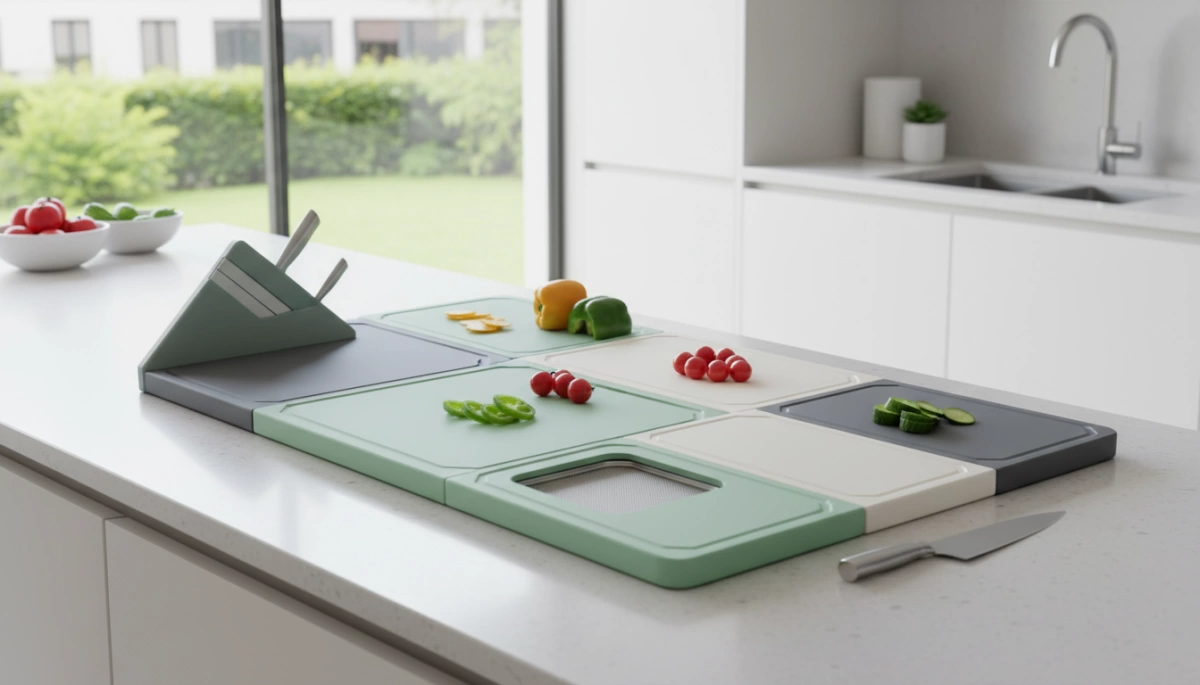
Ergonomic and Space‑Saving PP Cutting Boards
For most U.S. home kitchens, counter space is tight, so new polypropylene cutting boards are getting smarter about shape and storage. I’m seeing:
- Slim, vertical storage profiles that slide into drawers or beside appliances
- Curved, knife-friendly edges that feel natural in hand
- Non-slip feet and handles so the board stays put when you’re chopping fast
Brands like Calmchop are pushing ergonomic cutting board design with double-sided, juice-groove boards that still store flat and light, ideal for apartments and small kitchens.
Multi‑Functional and Modular PP Cutting Board Sets
Modern PP cutting boards aren’t just flat plastic slabs anymore. The trend is multi-functional and modular systems that do more with less:
- Stackable color-coded cutting board sets to separate meat, veggies, and cooked foods
- Boards with built-in garlic grinders or food channels to keep prep tidy
- Modular chopping boards that link with trays or bins for quick transfer to the pan
If you want a feel for where the market is going, look at multi-feature boards with juice grooves and grinding zones, like Calmchop’s own double-sided PP cutting board with juice groove and garlic grinder.
Aesthetic Colors, Textures, and Profiles
PP cutting boards are also upgrading their look to fit modern kitchens:
- Muted, modern colors (gray, sage, sand) that match stainless and stone countertops
- Textured, non-porous surfaces that feel premium but stay easy to sanitize
- Slim, beveled profiles that look closer to designer boards than old-school plastic
People want hygienic food prep surfaces that also look good left out on the counter, and PP gives that mix of style and practicality.
Flexible and Portable PP Cutting Boards
For everyday cooking, meal prep, and tailgates, flexible plastic cutting mats and lightweight PP boards are on the rise:
- Thin, bendable mats to funnel chopped food right into the pan
- Portable, lightweight PP cutting boards that travel for camping, BBQs, and RV kitchens
- Dishwasher-safe chopping boards that you can rinse, toss in the washer, and reuse daily
These flexible and portable PP cutting boards make sense for busy U.S. households that cook often, pack lunches, and need durable plastic chopping boards that can keep up without taking over the kitchen.
Safety Innovations in PP Cutting Boards
Antimicrobial and Antibacterial PP Cutting Boards
When I design polypropylene cutting boards now, I treat antimicrobial protection as a must-have, not a bonus. Modern antimicrobial cutting boards use food-safe additives built into the PP material so they:
- Help slow bacteria growth between washes
- Stay more hygienic in busy family kitchens and pro kitchens
- Work without changing the texture or “knife feel” of the board
If you’re prepping meat, seafood, and fresh produce on rotation, an antibacterial chopping board gives you an extra layer of defense on top of normal washing and sanitizing.
Design That Fights Cross-Contamination
Good PP cutting board design does a lot of the safety work for you. On my boards, I focus on:
- Color-coded cutting board sets – one color for meat, one for veggies, one for cooked food
- Non-slip cutting boards – stable feet or textured backs so the board doesn’t slide while you’re cutting
- Juice groove cutting boards – deep channels to trap meat juices and keep raw liquid away from other foods
- Double-sided layouts – one side for proteins, the other for produce to limit cross-use
These features make it easier for home cooks to follow restaurant-level cross-contamination prevention habits without thinking too hard about it. You can see that approach in action in our double-sided plastic cutting boards with juice groove and non-slip design at Calmchop.
Hygiene-Focused Materials and Surfaces
Modern food-safe plastic cutting boards are all about non-porous, easy-to-clean surfaces. With PP, I focus on:
- Non-porous kitchen boards – they don’t soak up liquid like wood, so they’re easier to sanitize
- Knife-friendly PP boards – slightly softer than glass or stone, so they don’t chip blades or shed hard fragments
- Refined surface texture – smooth enough to clean fast, textured enough to keep food from skating around
Some newer hygienic food prep surfaces also use updated PP blends that are more resistant to deep knife scarring, so bacteria have fewer places to hide.
Food-Grade, BPA-Free, and Non-Toxic Standards
For U.S. customers, safety claims must be backed by standards. On my side, that means:
- Using food-grade PP material that meets FDA food-contact requirements
- Making BPA-free plastic cutting boards and avoiding harmful plasticizers
- Testing for migration and confirming non-toxic kitchen plastics
- Designing dishwasher-safe chopping boards that can handle high-heat sanitizing cycles without warping
I build my PP cutting boards to match what American home cooks are actually looking for: simple, durable plastic chopping boards that stay safe, stay stable, and hold up to daily dishwashing without turning into a hygiene risk.
Smart Kitchen Integration With PP Cutting Boards
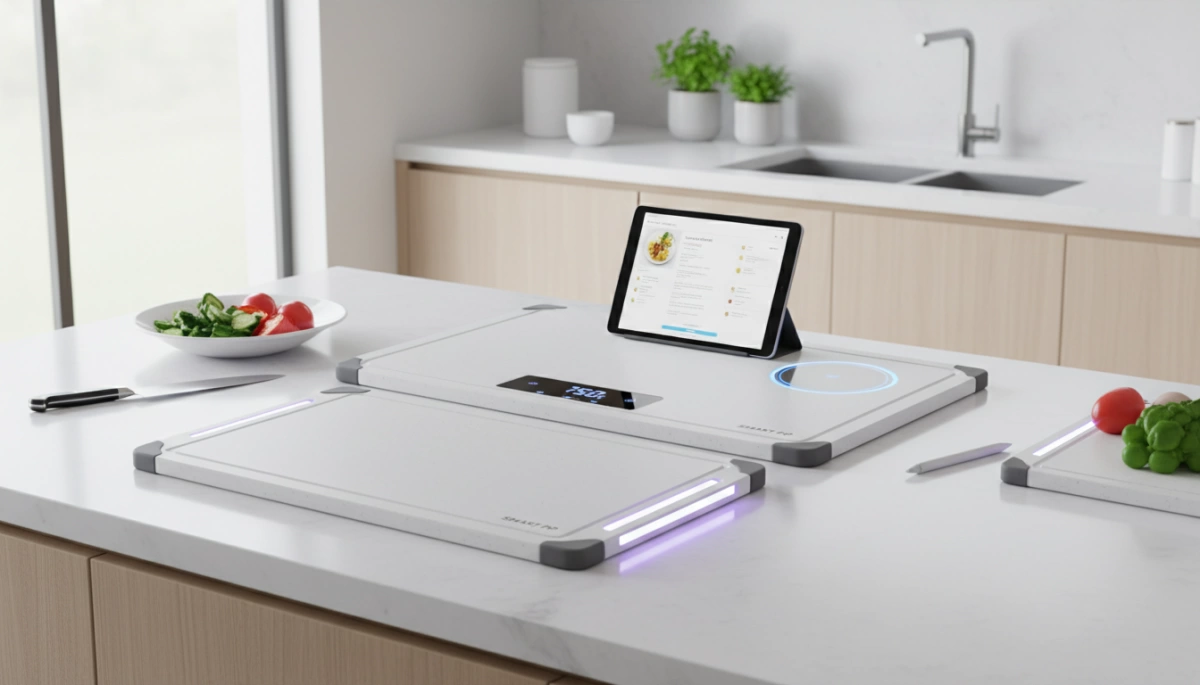
PP Cutting Boards With Smart & Hybrid Features
I see PP cutting boards becoming the “hub” of the prep zone in modern U.S. kitchens. Because polypropylene is light, tough, and non-porous, it’s perfect for integrating smart tech without making the board bulky or fragile. We’re already testing smart kitchen cutting boards that pair PP surfaces with detachable digital tools so you can upgrade the tech without tossing the whole board.
Cutting Boards With Scales, Sensors & UV Sanitizing
The next wave of PP cutting boards will do more than just protect your countertops:
- Boards with built-in scales so you can weigh meat, veggies, or meal-prep portions directly on the board.
- Temperature and freshness sensors that help you keep an eye on food safety, especially for poultry and seafood.
- UV sanitizing cutting boards or docking stations that use UV-C light to kill surface bacteria after washing—ideal for busy families who want extra peace of mind.
These features work best on food-safe plastic cutting boards like PP because the material handles electronics, water, and heat from dishwashers reliably.
Built-In Organization, Timing & Tech Add-Ons
For everyday home cooks and meal preppers, I focus on features that actually save time:
- Removable trays and containers that slide under the PP board for quick transfer of chopped ingredients or scraps
- Juice grooves and non-slip bases that keep things clean and stable while you cook
- Integrated timers or app-connected reminders so you’re not juggling your phone with messy hands
- Device-friendly stands or slots to hold your phone or tablet for recipes while you chop
If you’re trying to dial in the right size and layout for a tech-ready board, guides like this one on choosing the right nonslip cutting board size are a useful starting point.
Future Smart Kitchen Concepts Using PP Cutting Boards
Looking ahead, I expect smart kitchen cutting boards made from PP to connect seamlessly with:
- Meal-planning and nutrition apps (auto-logging what you chop and how much you use)
- Connected kitchen devices like smart ovens and air fryers that adjust settings based on what’s prepped
- Color-coded smart PP cutting board sets that track which board you used for meat vs. produce to reduce cross-contamination
Because polypropylene cutting boards are durable, dishwasher-safe, and easy to mold, they’re the most realistic base for these future features—bringing together food safety, convenience, and smart kitchen innovation in one simple tool.
Sustainability and Lifecycle of PP Cutting Boards
Eco-friendly and Recycled PP Cutting Boards
Polypropylene cutting boards are shifting fast toward eco-friendly and recycled PP materials. A lot of new PP cutting boards now use:
- Recycled polypropylene from post-industrial or post-consumer plastics
- Lower-waste molding processes to cut down on scrap
- Lightweight, durable builds that reduce shipping weight and carbon impact
For U.S. kitchens, this means you can choose sustainable plastic cutting boards without giving up on performance. When I design PP boards, I focus on BPA-free, food-grade PP that can be recycled at end of life, so we’re not just adding more trash to landfills.
Durability and Long-Term Performance
One big reason polypropylene cutting boards still win in busy American homes and pro kitchens is durability. Quality PP cutting boards handle:
- Daily chopping, slicing, and heavy knife use
- Repeated dishwasher cycles at high heat
- Less warping and cracking than cheaper plastics
Well-made durable plastic chopping boards keep a knife-friendly surface longer and resist deep grooves, which helps with hygiene. If you want more detail on what makes a board hold up over time, it’s similar to how we engineer our warp-resistant plastic cutting boards for pro-level use.
Cleaning, Care, and Safe Replacement Timing
To get the most from PP cutting boards and keep them safe:
-
Clean after every use
- Use hot, soapy water or run them as dishwasher-safe chopping boards
- Sanitize occasionally with a mild bleach solution if you prep raw meat a lot
-
Inspect the surface often
- Look for deep cuts, heavy staining, or lingering odors
- If the surface is heavily scarred and hard to clean, bacteria can hide there
-
Know when to replace
- For normal home use, many people replace plastic cutting boards every 1–3 years
- In high-use or pro kitchens, swap them sooner if you see deep grooves, warping, or discoloration
Good care extends the lifecycle of PP cutting boards, but I’m firm on this: once cleaning doesn’t restore a fresh, hygienic surface, it’s time to retire and recycle that board and bring in a new, food-safe plastic cutting board.
Brand Innovation in PP Cutting Boards
How Leading Brands Push Design and Safety
In the U.S. market, the best polypropylene cutting boards are no longer just “plastic boards.” Leading brands—and at Calmchop, this is exactly how we design—are focused on three things: smarter design, tougher safety standards, and real-life kitchen usability.
Here’s what’s driving innovation in PP cutting boards right now:
-
Ergonomic, non-slip builds
- Grippy edges, soft-touch feet, and balanced weight so the board doesn’t slide on slick countertops.
- Handles and slim profiles for easy grabbing, hanging, and storing in tight kitchen spaces.
-
Knife-friendly, non-porous surfaces
- Food-grade PP material that’s gentle on blades but still durable.
- Non-porous kitchen boards that don’t soak up juices, reducing stain and odor issues.
-
Color-coding for food safety
- Color-coded PP cutting board sets to prevent cross-contamination between raw meat, poultry, seafood, and produce.
- Clear visual cues that work in both home and professional kitchens.
-
Built-in hygiene and safety details
- Juice groove cutting boards to catch meat and fruit juices before they run onto your counter.
- Rounded corners and smooth edges that are easy to scrub, plus fully dishwasher-safe chopping boards for high-heat sanitizing.
- BPA-free, food-safe plastic cutting boards that meet modern non-toxic expectations.
Brands that take food safety seriously are also educating customers on what actually makes a hygienic board, not just a “clean-looking” one—if you care about that, it’s worth checking out this breakdown on white plastic cutting board hygiene from Calmchop: Are white plastic cutting boards really more hygienic?
PP Cutting Board Features for Future Kitchen Needs
Future-ready PP cutting boards are built around how people in the U.S. actually cook today: meal prep, small kitchens, and a growing focus on safety and convenience. Some standout, forward-facing features include:
-
Modular and stackable sets
- Space-saving cutting board design that nests multiple boards together.
- Grab-and-go boards for specific tasks (meat, veggies, bread) to keep prep organized.
-
Flexible and lightweight boards
- Flexible plastic cutting mats that let you fold and funnel chopped food straight into pans or containers.
- Ultra-light boards for RVs, dorms, and small apartments.
-
Pro-style safety at home
- Designs influenced by professional kitchen cutting boards—thick, stable, and built to handle heavy use.
- Surfaces tuned to work with common knife types in American kitchens (chef’s knives, Santoku, cleavers).
If you’re developing or choosing PP boards for modern kitchens, the priority is clear: ergonomic design, cross-contamination prevention, and truly hygienic food prep surfaces. That’s where the brands leading the category are investing, and it’s exactly where future PP cutting board innovation will keep moving.
 English
  German
  Turkish
  Italian
  Russian
  Polish
  Arabic
  French
  Malay
Malay  Japanese
  Korean
  Thai
Thai