
You’ve likely faced the classic kitchen struggle: perfectly chopping your ingredients, only to drop half of them on the stovetop during transfer.
It’s messy, frustrating, and completely avoidable.
Enter the Foldable Plastic Cutting Board.
This isn’t just another kitchen gadget; it’s a prep-to-pot transfer board designed to streamline your cooking workflow. Whether you need a space-saving kitchen board for a tiny apartment or a durable camping cutting board for the outdoors, this tool is a total game-changer.
In this post, you’re going to discover exactly what to look for—from knife-friendly plastic surfaces to the advanced antibacterial cutting technology found in premium brands like Calmchop.
Ready to say goodbye to counter clutter?
Let’s dive in.
Would you like me to continue with “Section II: What Is a Foldable Plastic Cutting Board and How Does It Work?”
What Is a Foldable Plastic Cutting Board and How Does It Work?
A foldable plastic cutting board is the ultimate evolution of kitchen prep tools, designed to bridge the gap between a stable chopping surface and a precision pouring tool. Unlike a traditional rigid board that requires awkward scraping, or a flexible plastic chopping mat that can be flimsy and dangerous, a true foldable board offers structural integrity with a smart mechanical hinge.
Basically, it solves the age-old problem of ingredients spilling onto the stove or floor during transfer. You chop flat, then engage the mechanism to guide food directly where it needs to go.
The Mechanism: Chute vs. Basin Styles
We generally see two distinct designs dominating the market, each serving a different purpose in your workflow:
- Squeeze-Handle Chute: This is the classic chute folding cutting board. When you squeeze the handle, the sides of the board fold upward to create a U-shaped funnel. It creates an instant prep-to-pot transfer board, ensuring every diced onion makes it into the pan.
- Collapsible Basin: These are often multifunctional collapsible cutting boards. They lay flat for cutting but have a rubberized mid-section that pops down to create a washing tub or drainage basket, making them a favorite camping cutting board.
Material Breakdown: PP vs. TPU
As a manufacturer, we know that the “plastic” used matters just as much as the design. We prioritize materials that balance knife safety with durability.
| Material | Common Name | Durability | Key Feature |
|---|---|---|---|
| PP | Polypropylene | High | Hard surface, lightweight, and typically the standard for a PP chopping board. |
| TPU | Thermoplastic Polyurethane | Extreme | Scratch-resistant, flexible, and offers a knife-friendly plastic board surface that resists deep grooving. |
| TPE | Thermoplastic Elastomer | Moderate | Often used for the flexible “folding” joints or non-slip foldable board edges. |
Most high-quality options are engineered as a BPA-free plastic chopper, ensuring that no harmful chemicals leach into your food, regardless of the heat or acidity levels.
Key Benefits of a Foldable Plastic Cutting Board
When we look at kitchen tools that actually change the workflow, the foldable plastic cutting board sits near the top of the list. It isn’t just about having a surface to slice on; it’s about solving the messy transition between the counter and the cookware.
Here is why switching to a folding chopping board makes sense for modern American kitchens:
Effortless Food Transfer
The standout feature here is the “chute” mechanism. We have all experienced the frustration of chopping vegetables on a flat board and trying to slide them into a pot, only to have half the onions land on the stove burner. With a prep-to-pot transfer board, you simply squeeze the handle or fold the sides. The board transforms into a scoop or funnel, guiding ingredients directly into the pan or bowl without spilling a crumb.
Space-Saving and Portable Design
For those of us working with limited counter space, apartments, or RVs, a space-saving kitchen board is essential. These boards store completely flat, sliding easily into narrow drawers or slotted organizers.
Because they are lightweight, they also serve as an excellent portable chopping mat or camping cutting board. Whether you are prepping for a backyard BBQ or an outdoor picnic cutting board scenario, they pack away easier than heavy wood blocks.
Ease of Cleaning and Hygiene
Plastic boards, particularly those made from high-quality PP or TPU, are generally non-porous. This means they don’t absorb meat juices or strong odors like garlic. Most models are designed as a dishwasher safe cutting board, making cleanup fast and sanitization effective. However, to ensure longevity and safety, you should always choose a cutting board that protects your health by understanding the specific material limits and maintenance needs.
Quick Snapshot: Foldable vs. Traditional
| Feature | Foldable Plastic Board | Traditional Wood Board |
|---|---|---|
| Food Transfer | Excellent (Folds into a chute) | Poor (Requires scraping) |
| Storage | High (Fits in drawers/bags) | Low (Bulky, stays on counter) |
| Maintenance | Dishwasher Safe | Hand wash & Oil only |
| Best Use | Quick prep, Camping, RVs | Heavy butchery, Serving |
If you value speed and cleanliness in the prep process, a foldable plastic cutting board offers a practical edge that rigid boards just can’t match.
Would you like me to detail the specific safety features and materials you should look for when buying one?
Essential Features for Your Foldable Plastic Cutting Board
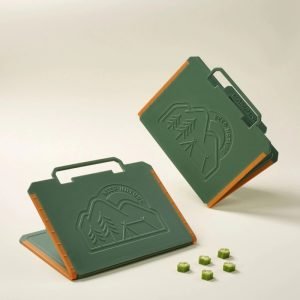
When I assess a foldable plastic cutting board, I look past the gimmick of the fold and focus on how it handles real kitchen work. You need a tool that simplifies prep without sacrificing the stability of a traditional board.
Here are the non-negotiables for a high-quality board:
- Stability and Safety: A board that moves while you cut is a major hazard. You need a non-slip foldable board equipped with rubberized grips or a suction base. It must stay planted on your counter, whether you have granite or laminate.
- Knife-Friendliness: A surface that is too hard will ruin your chef’s knife. Look for a knife-friendly plastic board with a textured surface that offers enough “give” to prevent blade dulling while remaining tough enough to resist gouging.
- Durability: The hinge is the stress point, so material matters. We prioritize materials that resist cracking after thousands of folds. This is why PP cutting boards are a top choice for longevity; they offer the right balance of structural integrity and hygiene.
- Multifunctional Extras: The best designs do double duty. Look for built-in juice grooves to catch runoff or collapsible walls that turn the board into a multifunctional chopping basin for washing produce.
Quick Feature Checklist
| Feature | Why It Matters |
|---|---|
| Non-Slip Base | Prevents dangerous sliding to keep your fingers safe. |
| Scratch Resistance | stops deep grooves where bacteria can hide. |
| Juice Grooves | Keeps messy liquids contained and off your countertops. |
| Integrated Colander | Allows you to rinse, drain, and chop in one station. |
Would you like me to draft the next section on “Health and Safety Considerations” focusing on antibacterial ratings and BPA-free certifications?
Health and Safety Standards for Foldable Boards

When dealing with food prep, safety is the baseline. I strictly adhere to using FDA-approved materials, ensuring every unit is a BPA-free plastic chopper. You need confidence that no harmful chemicals are leaching into your meals, especially when working with acidic ingredients like lemons or tomatoes.
However, the material is only half the battle. We have to address the wear and tear inherent to any foldable plastic cutting board:
- Microplastics: Low-quality boards flake under knife pressure, potentially adding plastic bits to your food.
- Bacterial Traps: Deep scratches and poorly designed folding hinges become breeding grounds for germs that standard washing might miss.
To combat this, I focus on integrating an antibacterial cutting surface. By using advanced technology like silver-ion infusion, these boards actively resist 99.9% of bacterial growth. It is crucial to understand the rise of antibacterial cutting boards to see why this is a massive upgrade over standard plastic. Additionally, opting for sustainable, recyclable materials ensures that your kitchen habits are as eco-friendly as they are healthy.
Would you like me to draft the next section on “Top Recommendations and Comparisons” to highlight how Calmchop stacks up against the competition?
Top Recommendations and Comparisons
When you are looking for the right gear for your kitchen, navigating the sea of “space-saving” gadgets can be tricky. In the world of space-saving prep tools, two main designs dominate the market: the classic chute-fold and the collapsible multifunction basin.
Breaking Down Popular Styles: Chute vs. Basin
The classic chute-fold is what most people think of when they hear “foldable chopping board.” These usually feature a squeeze-handle mechanism or pre-scored folding lines. When you squeeze the handle, the sides curl up to form a chute, making it incredibly easy to slide chopped veggies directly into a pot without spilling.
On the other hand, the collapsible multifunction basin is more of a “tub” that flattens out. These are often marketed as a camping cutting board or a 3-in-1 tool (washing, draining, cutting). While great for washing produce at a campsite, the cutting surface is often smaller and less stable than a dedicated flat mat.
Why Calmchop’s Foldable Models Stand Out
At Calmchop, we realized that standard Polypropylene (PP) hinges often snap after a few months of use. That’s why we engineered our foldable line using superior TPU (Thermoplastic Polyurethane) construction. It offers the flexibility of silicone with the toughness of plastic.
We didn’t just stop at durability. We tackled the biggest issue with plastic: hygiene. Our boards feature advanced silver-ion antimicrobial protection, which provides a 99.9% resistance to bacteria buildup—a critical feature for a knife-friendly plastic board that inevitably gets scratched over time. Speaking of scratches, our surfaces are tested to withstand over 10,000 cuts without compromising structural integrity.
While some users might prefer our rigid, heavy-duty ChopAid Nonslip Plastic Cutting Boards for stationary countertop work, our foldable TPU models offer that same level of stability in a portable, flexible format.
Market Leaders vs. Calmchop Hygiene Edge
Many market leaders focus strictly on the “gimmick” of folding. You will often see boards with flimsy hinges or “living hinges” made of cheap plastic that turn white and crack. More importantly, standard plastic boards from big-box retailers rarely include active antimicrobial agents. Once those knife grooves appear, they become a haven for bacteria.
We prioritize the antibacterial cutting surface technology to ensure that even if you are prepping raw chicken for a BBQ, a simple wash leaves the board truly safe to use again.
Quick Comparison: Features at a Glance
Here is how our superior TPU models stack up against standard market options:
| Feature | Standard PP Foldable Board | Collapsible Basin/Tub | Calmchop TPU Foldable Model |
|---|---|---|---|
| Primary Material | Rigid Polypropylene (PP) | Silicone + Hard Plastic | High-Flex TPU |
| Folding Mechanism | Living Hinge (Prone to cracking) | Collapsible Walls | Memory-Flex Core |
| Antibacterial Rating | Low (Surface only) | Low | High (Silver-ion Infused) |
| Knife Feel | Hard / Slippery | Soft / Draggy | Balanced / Grip |
| Durability | ~500-1,000 cuts | Low (Joint failure) | 10,000+ Cuts Tested |
| Best For | Occasional light prep | Camping / Washing | Daily Cooking & Transfer |
By choosing a board that prioritizes material science over simple mechanics, you get a prep-to-pot transfer board that lasts years, not just a season.
Would you like me to help you create a care guide for these TPU materials to ensure your customers get the longest lifespan out of their purchase?
How to Use and Maintain Your Foldable Cutting Board
Getting the best performance out of your foldable plastic cutting board isn’t just about chopping; it’s about smart handling to ensure it lasts. These boards are engineered for convenience, but the folding mechanism requires a bit of care that standard rigid boards don’t.
Best Practices for Chopping and Folding
To keep your board in top shape, always lay it completely flat on a stable counter before you start prepping. Ensure the locking mechanism or hinge is fully engaged so the surface doesn’t buckle under your knife.
- Avoid the Hinge: Never chop directly over the folding seam. This is the weakest point of the board, and repeated blade pressure here can cause it to split.
- Secure the Base: A moving board is a dangerous board. Using a cutting board with non-slip feet is critical for keeping the surface steady while you work, preventing accidental slips during heavy chopping tasks.
- The Pour: When you are ready to cook, simply squeeze the handle or fold the sides upward to create a chute. This turns your surface into a prep-to-pot transfer board, guiding ingredients directly into the pan without dropping food on the stovetop.
Cleaning Tips: Hand-Wash vs. Dishwasher
While many manufacturers market their products as a dishwasher safe cutting board, the high heat of a drying cycle can eventually warp the plastic or weaken the “living hinge” mechanism.
- Daily Cleaning: For the longest lifespan, I recommend hand washing with hot, soapy water. Scrub the surface immediately after use to prevent stains from acidic foods like tomatoes or berries.
- Deep Cleaning: Pay special attention to the folding grooves where food particles love to hide. A quick scrub with a brush ensures no residue is left behind. If hygiene is your top priority, investing in high-quality antimicrobial plastic cutting boards can provide an extra layer of protection against bacteria buildup in these hard-to-clean areas.
Storage and Longevity Advice
Proper storage is the secret to durability. Even though these are designed as a space-saving kitchen board, try to store them flat or hang them up if they have a handle loop. Storing them folded under heavy pots or pans can permanently warp the plastic, making them wobble when you try to lay them flat later.
When to Replace:
Even a knife-friendly plastic board will eventually show wear. If you notice deep grooves that are impossible to clean, or if the plastic hinge starts to show white stress marks or cracks, it is time to replace the unit to maintain kitchen safety.
Would you like me to create a comparison guide for the different types of plastic materials used in these boards?
Who Should Choose a Foldable Plastic Cutting Board?
Deciding between a foldable plastic cutting board and traditional options often comes down to your specific lifestyle and cooking habits. While we believe these boards are versatile enough for most homes, they truly shine for specific users who prioritize efficiency and hygiene.
The Ideal Match for Your Kitchen
If you value speed and smart design, a folding chopping board is likely the upgrade you need. Here is who benefits the most:
- Small Space Dwellers & RV Owners: If you have limited counter space or live the van life, every inch counts. A space-saving kitchen board tucks away easily and functions as a portable chopping mat that doesn’t clutter tight quarters.
- Busy Families & Meal Preppers: When you are chopping volumes of veggies for a weeknight dinner, the “chute” function is a lifesaver. Using a prep-to-pot transfer board eliminates spills, ensuring your ingredients land in the pan, not on the stove. Our wholesale eco-friendly plastic cutting board with handle is designed specifically for these high-efficiency moments.
- Outdoor Enthusiasts: For picnics, BBQs, or campsite cooking, a lightweight camping cutting board is essential. It is durable enough to handle outdoor conditions but flexible enough to pack in a tote.
- Health-Conscious Cooks: If you are strictly separating meat and produce to avoid cross-contamination, these boards are often dishwasher safe and easier to sanitize than wood.
When to Choose Alternatives
While a collapsible cutting board is fantastic for daily prep, there are times when a rigid alternative might be better suited for the task.
| Feature | Foldable Plastic Board | Wood / Bamboo / Rigid Board |
|---|---|---|
| Primary Use | Quick prep, transferring food, camping | Heavy butchery, serving platters |
| Knife Impact | Gentle, minimizes dulling | Harder surface (varies by wood type) |
| Maintenance | Dishwasher safe, easy sanitize | Hand wash only, requires oiling |
| Stability | Good (with non-slip base) | Excellent (due to heavy weight) |
If you are looking for a heavy-duty block for cleaving bones or a presentation piece for a charcuterie spread, traditional wood is the way to go. However, for 90% of daily chopping, dicing, and cooking, the utility of a foldable board is unmatched.
Would you like me to write the next section on “How to Use and Maintain Your Foldable Cutting Board” to ensure your customers get the longest life out of their purchase?
 English
  German
  Turkish
  Italian
  Russian
  Polish
  Arabic
  French
  Malay
Malay  Japanese
  Korean
  Thai
Thai