
Why White Plastic Cutting Boards Matter for Kitchen Hygiene
If you’ve ever wondered, “Is my cutting board actually clean?” you’re not alone. Real kitchen worries—like bacteria from raw chicken, cross-contamination between meat and veggies, and food poisoning risks—usually start with one simple tool: your cutting board.
That’s where white plastic cutting boards come in. They’re popular in both home and commercial kitchens because they combine three key hygiene factors:
- Color – White makes it easier to see stains, food residue, and old juices you missed during washing. Dirt has nowhere to hide on a white cutting board, which pushes you to clean more thoroughly.
- Material – A non-porous, food-grade plastic cutting board (especially HDPE) doesn’t soak up liquids like some surfaces can. That means fewer places for bacteria to hide when the board is properly cleaned.
- Habits – Even the best board can’t help if it’s not used and cleaned correctly. Your washing routine, sanitizing, drying, and storage habits matter more for hygiene than any marketing claim.
So, who should care most about the hygiene advantages of white plastic cutting boards?
- Home cooks who cut raw meat, fish, and poultry on busy weeknights and need a reliable, easy-to-clean cutting board that can go straight into the dishwasher.
- Pros and serious cooks who want a clean-looking, easy-to-sanitize, non-porous cutting surface that fits into a color-coded food safety system, just like in restaurants.
When I talk about “hygiene advantages” in everyday cooking, I mean practical, real-world benefits like:
- Lower risk of cross-contamination between raw and ready-to-eat foods
- Faster, more effective cleaning with hot water, soap, and sanitizers
- Visible wear and damage so you know when it’s time to replace the board
- Consistency—the board behaves the same way every time you clean and use it
As a manufacturer, I design Calmchop white plastic cutting boards around these exact needs: non-porous, food-grade, dishwasher-safe, easy to inspect, and simple to sanitize. The goal is straightforward—give you a cutting surface that makes staying clean and safe in the kitchen as simple and obvious as possible.
Why White Plastic Cutting Boards Are So Popular
Psychology of “Looking Clean”
I like white plastic cutting boards for one simple reason: my eyes can’t ignore dirt on them. In kitchens, white instantly signals “clean” or “not clean yet.” If there’s raw chicken juice, veggie residue, or a smear of sauce, it pops right away on a white board. That visual pressure makes it easier to keep tighter hygiene habits without even thinking about it.
White Shows Stains, Dirt, and Residue Faster
On a white cutting board, you spot:
- Dried meat juices
- Herb stains
- Tiny food particles in knife grooves
- Grease film or soap residue
Dark boards often hide all of that. With white, I know immediately if I need to rewash or sanitize. That’s a real hygiene advantage in a busy kitchen where you’re moving fast and juggling different foods.
White vs Dark Cutting Boards for Spotting Problems
When it comes to hygiene checks, white wins over dark boards almost every time:
- Easier to see: blood, mold spots, food buildup, and leftover crumbs
- Easier to judge: if the board is truly clean after dishwashing or bleaching
- Easier to inspect: knife grooves, surface wear, and early damage
If I can’t see the problem, I can’t fix it. That’s why a white plastic cutting board is my go-to for raw meat, poultry, and seafood, where cross-contamination risk is highest.
How White Fits Into Color-Coded Systems
In pro kitchens, color-coded cutting boards are standard for food safety. White boards usually get assigned to:
- Dairy and bakery items (cheese, bread, pastries)
- Ready-to-eat foods that must stay clean
Because white shows stains and soil so clearly, it’s perfect wherever cleanliness needs to be obvious at a glance. If you’re setting up a color-coded system at home, making white your “clean foods only” board is a smart move.
Why Restaurants and Commercial Kitchens Lean Toward White
Most commercial kitchens in the U.S. love white HDPE cutting boards because they:
- Make health inspections easier
- Show dirt and wear clearly for quick replacement
- Look professional and match stainless work surfaces
- Work well in high-heat dishwashers and sanitizer systems
If you’re running a food business or outfitting a serious home kitchen, a hygienic white plastic cutting board is usually the first board I’d recommend. For a deeper dive into pro-grade options and how foodservice operators choose them, I break this down in detail in my guide on why more foodservice providers trust antimicrobial plastic cutting boards at Calmchop: Calmchop antimicrobial plastic cutting boards.
Hygiene Benefits of White Plastic Cutting Boards
When it comes to kitchen sanitation tools, a well-made white plastic cutting board has some real hygiene advantages you can actually use every day.
Non-porous surface & bacteria resistance
A new food-grade plastic cutting board is non-porous, so:
- Raw meat juices stay on the surface instead of soaking in
- Bacteria are easier to wash away completely
- You get a smoother, more predictable cutting surface
This is a big reason plastic vs wood cutting boards hygiene is such a common discussion—plastic wins early on for being non-porous and simple to clean.
Food-grade HDPE hygiene basics
High-quality HDPE food-grade plastic cutting boards:
- Don’t absorb water, oils, or smells as fast as many other materials
- Are designed to be non-reactive and safe for food contact
- Hold up well to repeated washing and sanitizing
At Calmchop, we use HDPE specifically because it balances durability, knife-friendliness, and hygiene.
Dishwasher-safe sanitation & high heat cleaning
A big hygiene advantage of plastic cutting boards is simple:
You can throw them in the dishwasher.
- High-temperature cycles help kill bacteria on the board surface
- Detergent and hot water break down fats and proteins from raw meat
- It’s easy for busy home cooks and commercial kitchens to stay consistent
For buyers who care about disinfection and durability, I break this down in more detail in our B2B buyer’s guide to bulk plastic cutting boards.
Bleach & sanitizer compatibility
Unlike some materials, a plastic cutting board handles bleach and sanitizers well when used correctly:
- Standard kitchen sanitizing solutions (like diluted bleach) are safe for HDPE
- Great backup after cutting raw chicken, pork, or seafood
- Perfect for commercial-style cleaning at home
This is key if you’re serious about cutting board bacteria control and want more than just soap and water.
Quick drying & reduced odor buildup
Because plastic doesn’t soak up moisture:
- Boards dry faster, which means fewer wet spots where bacteria thrive
- Smells from onion, garlic, fish, and meat don’t linger as long
- You’re less likely to deal with that “permanent stink” some old boards get
Fast drying is an underrated hygiene benefit that makes a difference day to day.
How Calmchop white plastic boards are built for hygiene
I design Calmchop white plastic cutting boards with hygiene as the starting point, not an afterthought:
- Smooth, non-porous HDPE that’s easy to scrub clean
- Dishwasher-safe and built to handle hot water and standard sanitizers
- Balanced hardness: gentle on knives but firm enough to slow down deep grooves
- White surface that makes stains, residue, and wear easier to see and fix early
If you’re outfitting a hygiene-focused kitchen or buying in volume, these same design choices are what we focus on in our guide to high-quality antimicrobial plastic cutting boards at wholesale.
Knife grooves and bacteria reality
On any white plastic cutting board, every knife cut leaves a mark. Over time, those marks turn into grooves that trap moisture, raw juices, and bacteria. Even if you wash the board, germs can sit in those tiny cuts if the surface is badly scarred.
Here’s what that means for hygiene:
-
Knife cuts = moisture pockets
Repeated slicing creates fine channels where water, meat juices, and food particles settle. That damp, protected space is exactly where plastic cutting board bacteria can hang out and multiply. -
Why grooves are a long-term problem
- Harder to scrub fully clean
- Stay wet longer than the flat surface
- Can hold on to smells from onion, garlic, fish, and meat
Over months or years, a worn board becomes harder to sanitize, even if it’s a dishwasher safe cutting board.
-
Why white plastic shows the truth
One of the big white plastic cutting board hygiene advantages is visibility. On a white surface, scratches, staining, and fuzzed-up plastic are easier to see. That makes it simple to spot when a board is past its prime instead of guessing with a dark board. -
What studies say about scarred plastic
Food safety research has found that heavily scarred plastic cutting boards can hold more bacteria in those knife grooves, especially if they’re not cleaned and dried properly after each use. The material itself (HDPE, food-grade plastic) starts out very hygienic, but physical damage changes the game. -
How often to inspect your board
I treat it like this:- Quick look every time I wash: check for deep cuts, peeling edges, or rough, fuzzy plastic.
- Closer inspection every few weeks: run a hand over the surface; if you feel deep channels you can’t clean, it’s time to plan a replacement.
-
Why durable, knife-friendly plastic matters
A good food-grade plastic cutting board should be:- Dense enough to resist deep gouges
- Soft enough to be knife-friendly (so you’re not wrecking your blades)
That balance slows down serious surface damage, keeps the board easier to sanitize, and extends its safe lifespan. If you’re shopping in bulk or for a busy kitchen, look at a manufacturer that understands this balance, like our approach to wholesale stainless steel and plastic cutting boards in our detailed guide on high-quality plastic board construction.
The bottom line: grooves are where the hygiene battle is won or lost. White plastic doesn’t magically kill bacteria, but it shows wear sooner, so you can clean smarter, retire boards earlier, and keep your kitchen safer.
White Plastic vs Wood Cutting Boards: Which Is More Hygienic?
When I compare white plastic vs wood cutting boards for hygiene, I look at how each one behaves with moisture, bacteria, and real-life cleaning habits in a U.S. kitchen.
Hygiene pros of white plastic cutting boards
For everyday home use, a food-grade white plastic cutting board (especially HDPE) has some clear hygiene wins:
- Non-porous surface: When the board is in good shape, juices from raw meat, fish, and poultry stay on the surface and are easier to wash away.
- Easy to clean: You can scrub with hot water and dish soap, then fully rinse without worrying about water soaking into the material.
- Dishwasher safe: You can toss a quality white plastic board into a high-heat dishwasher cycle for reliable sanitation. This is a huge advantage for busy American households that want fast, repeatable cleaning.
- Sanitizer friendly: Plastic handles diluted bleach and commercial sanitizers well, so you can kill bacteria without ruining the board.
This is why many commercial kitchens and restaurant setups rely heavily on white plastic boards for their main prep work.
Hygiene pros of wood cutting boards
Good hardwood boards (like maple or walnut) also have strong hygiene benefits when you treat them right:
- Natural antimicrobial effects: Research shows that some woods can pull moisture and bacteria into the board’s fibers, where many bacteria then die off over time.
- Less slippery: A quality wood board gives you better knife control, which means fewer accidents and less splatter of raw juices.
- Gentle on knives: Wood is usually more knife-friendly, which reduces deep gouges and helps your blades stay sharper, longer.
The catch: wood needs more care—hand washing, quick drying, and regular oiling—to stay hygienic and avoid warping or cracking.
How moisture, drying, and pores affect bacteria
The way boards handle water and pores changes how bacteria behave:
- Plastic: Non-porous and smooth at first. Bacteria sit on the surface and are easy to wash off—until the board gets heavy knife grooves. Once you see deep cuts, those grooves can trap moisture and bacteria.
- Wood: Naturally porous. Bacteria and moisture can be drawn inside the wood, where many don’t survive. But if the board stays wet or isn’t dried properly, that benefit goes away.
In a real kitchen, the winner is usually the board that gets thoroughly cleaned and dried the fastest, not just the material on paper.
Best board for raw meat, fish, and poultry
For raw proteins, I strongly prefer white plastic cutting boards:
- They handle hot water, dishwashers, and bleach without a problem.
- White plastic makes it easy to see raw meat juices and leftover residue.
- You can dedicate a specific white plastic board just for meat and poultry to prevent cross-contamination.
This setup matches how many professional kitchens use plastic, and it aligns with proven food safety and cross-contamination prevention practices.
Best board for fruits, veggies, and ready-to-eat food
For produce and ready-to-eat items, both can work, but here’s how I break it down:
- Plastic: Ideal if you want a clear color-coded system (for example, one white board for raw meat, another white or light-colored board only for fruits and veggies).
- Wood: Great for bread, cheese, cooked meats, and fresh produce—especially if you like a more premium feel on the counter and are willing to hand wash and dry.
If you’re already using white plastic for raw meat, I recommend a separate board (plastic or wood) for ready-to-eat foods to keep things simple and safe.
When white plastic is the smarter choice
A white plastic cutting board is usually the smarter hygiene choice if:
- You run a busy household or small food business and rely on the dishwasher.
- You batch prep big amounts of chicken, ground beef, or seafood.
- You want clear visual cues that a board is clean (white shows stains, blood, and residue fast).
- You follow or want to follow restaurant-style food safety habits and color coding.
If you’re looking for boards built around hygiene and easy cleaning, my own Calmchop white plastic cutting boards are designed exactly for that use—HDPE material, non-slip options, and sizes made for American kitchens. You can see the full range on the Calmchop products page.
Cleaning habits matter more than the “perfect” material
No cutting board stays hygienic if it’s not cleaned, dried, and replaced when worn out. In real-world use:
- A well-cleaned plastic board beats a neglected wood board.
- A properly washed and dried wood board beats a deeply scarred, grimy plastic board.
- Your routine—hot water, soap, thorough scrubbing, full drying, and replacing boards with deep grooves—matters more than the marketing claim on the label.
If you commit to those basics, both white plastic and wood cutting boards can be safe. But for raw meat hygiene and convenience, white plastic usually has the edge.
Cleaning routines for white plastic cutting boards
Keeping a white plastic cutting board truly hygienic comes down to simple, consistent cleaning habits. Material matters, but your routine matters more.
Daily cleaning with hot water and dish soap
After every use, I treat a food-grade plastic cutting board like any other food-contact tool that’s touched raw meat or produce:
- Rinse off crumbs and food bits with warm water first
- Scrub with hot water and dish soap using a sponge or soft brush
- Pay extra attention to knife grooves and the board’s edges
- Rinse thoroughly so no soap residue is left on the surface
For greasy or raw meat residue, I use hotter water and a little extra soap to break down fat and proteins. This basic step already knocks down most bacteria on a non-porous cutting board surface.
If you want a deeper look at how board materials affect cleaning, I cover that in more detail in this guide on choosing a cutting board that protects your health.
Dishwasher best practices for plastic boards
One of the big hygiene advantages of white plastic cutting boards (especially HDPE) is that they’re usually dishwasher safe:
- Place the board on the top rack if possible to avoid direct heat warp
- Use a hot water / high-heat cycle with drying turned on
- Make sure the board can stand upright or at an angle so water drains off
- Avoid packing it tight against plates—water and detergent need room to circulate
Dishwashers are excellent for sanitizing cutting boards because they combine detergent, high heat, and full rinsing. For busy U.S. households, this is the easiest way to keep a plastic board consistently safe.
How to sanitize with bleach safely at home
When I want a true sanitizing step—especially after raw poultry, seafood, or ground meat—I use a diluted bleach solution on the white plastic board:
- Mix 1 tablespoon of unscented household bleach in 1 gallon of cool water
- Start with a clean, washed board (no visible food residue)
- Flood the surface or soak for 2 minutes
- Let it air dry or rinse lightly with clean water if needed for taste/smell
Always use bleach in a well-ventilated area, and never mix bleach with vinegar, ammonia, or other cleaners. White plastic boards handle bleach very well, which is a big hygiene advantage over some other materials.
Using vinegar and mild sanitizers as backup
If you don’t want to use bleach all the time, white vinegar and other mild sanitizers are a decent backup for everyday use:
- Spray or wipe full-strength white vinegar on the clean board
- Let it sit for 5–10 minutes before rinsing and drying
- For extra deodorizing, follow with a rinse of hot water and dish soap
Vinegar isn’t as strong as bleach, but it helps reduce bacteria, cut odors, and keep a plastic cutting board fresher between deep sanitizing cycles.
Drying methods to reduce bacteria and smells
Moisture is what lets bacteria hang around on any cutting surface, even non-porous plastic. I always:
- Stand boards upright in a rack so both sides air dry
- Keep them away from wet towels or puddles on the counter
- Let them dry fully before stacking or putting in a cabinet
Good airflow is key. A white board makes it easier to see if any water spots, slime, or residue are still hanging around.
What to avoid so you don’t damage the board
A clean cutting board is only hygienic if the surface stays in good shape. To protect a hygienic white plastic cutting board:
- Avoid scouring powders, steel wool, and metal brushes—they scratch and rough up the surface
- Don’t pour boiling water directly on thin boards; it can warp them
- Keep boards away from open flames or broilers and very hot oven racks
- Don’t soak in highly concentrated bleach or harsh chemicals for long periods
If you’re comparing plastic to other options for long-term hygiene and knife safety, I break down the pros and cons in this piece on choosing the right cutting board for different ingredients.
With a simple routine—wash hot, sanitize when needed, dry fully, and avoid damage—you get the full hygiene advantages of a white plastic cutting board without overcomplicating your life.
Preventing Cross-Contamination With White Plastic Cutting Boards
If you care about kitchen hygiene, cross-contamination is the big one to control. A clean-looking board doesn’t mean it’s safe, especially with raw meat juices involved.
Why You Need Different Boards for Different Foods
Using one cutting board for everything is how bacteria from raw meat ends up on your salad. For better food safety:
- Use separate boards by food type:
- Raw meat & poultry
- Seafood
- Produce (fruits & veggies)
- Cooked & ready-to-eat foods
This setup is standard in commercial kitchen cutting board hygiene and it works just as well at home.
Using White Boards in a Color-Coded System
White plastic cutting boards are flexible in a color-coded system. Many pros use:
- White for dairy, bread, or general “clean” prep
- Other colors (red, blue, green, yellow) for specific food groups
If you prefer all-white boards, you can still “color code” with:
- Permanent labels (MEAT / VEG / COOKED)
- Icons or symbols on the handles
- Different sizes or thicknesses for each task
The key is consistency: once a board is assigned to raw meat, it stays a raw meat board.
Best Board Setup for Meat, Seafood, Produce, and Cooked Food
Here’s a simple, hygienic layout most U.S. home kitchens can follow:
- Board 1 (White, labeled MEAT) – Raw beef, pork, poultry
- Board 2 (White, labeled FISH) – Raw fish and seafood
- Board 3 (White, labeled VEG) – Fruits, veggies, herbs
- Board 4 (White, labeled COOKED) – Cooked meats, bread, cheese, ready-to-eat foods
If you’re running a hygiene-focused kitchen, pairing nonslip boards with this kind of setup adds another layer of safety, similar to what we cover in our breakdown of why nonslip cutting boards matter for control and cleanliness.
Simple Habits to Keep Raw Juices Off Clean Foods
Material alone won’t save you. Your habits will. Lock these in:
- Never cut cooked food on a board that just held raw meat without fully washing and sanitizing it.
- Keep raw meat boards away from your salad and sandwich station.
- Wipe up raw juices immediately—countertops, handles, and sinks included.
- Use separate knives when possible, or wash and sanitize between tasks.
- When in doubt: wash, sanitize, and dry before using the board again.
Storage Tips to Keep Boards Clean Between Uses
Even a food-grade plastic cutting board can get nasty if it’s stored wrong:
- Store boards upright, with airflow on both sides so they dry completely.
- Avoid stacking wet boards; trapped moisture is perfect for bacteria growth.
- Keep boards in a clean, dry cabinet or rack, not touching dirty dish towels or sponges.
- Don’t leave boards soaking in the sink—that just spreads bacteria and weakens plastic over time.
Dialing in these simple systems and habits makes your white plastic cutting boards a real asset for kitchen sanitation, not a weak spot.
When to Replace a White Plastic Cutting Board
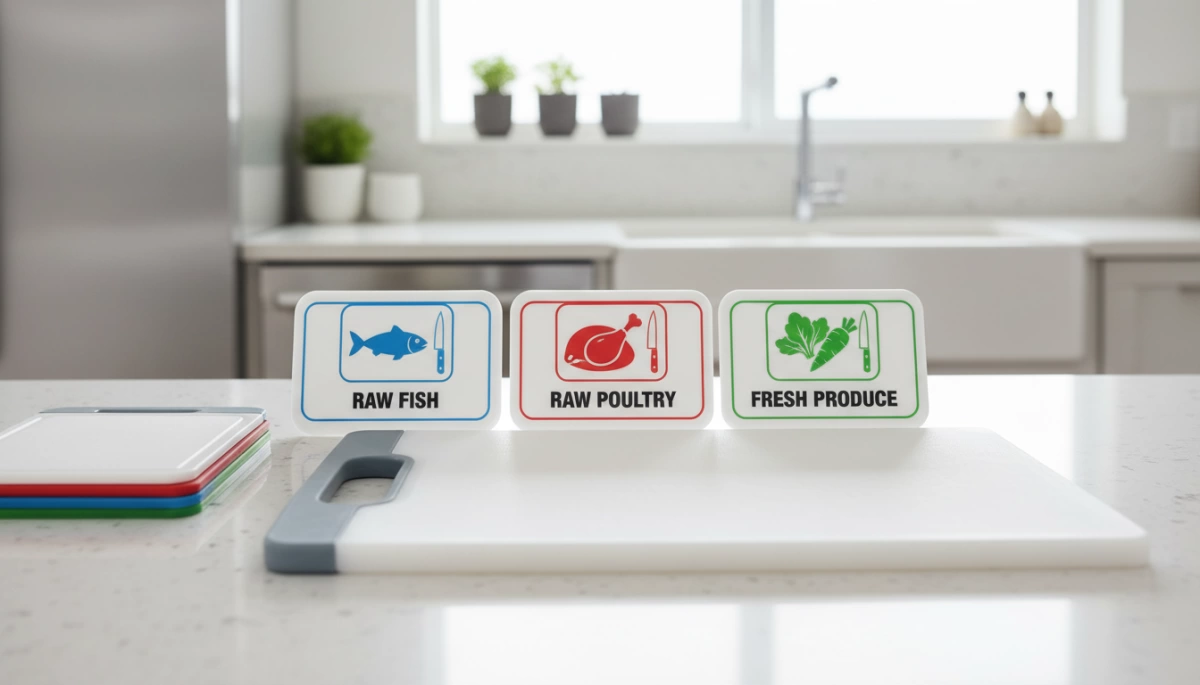
Knowing when to replace a white plastic cutting board is a big part of kitchen hygiene. Even the best food‑grade, easy‑to‑clean cutting board has a lifespan.
Clear warning signs it’s time to toss it
Watch for these red flags:
-
Deep grooves you can’t clean
If knife cuts turn into deep channels that trap food or stay dark even after scrubbing, bacteria can hide there. Once you can’t get those grooves clean with hot soapy water and a brush, it’s time to replace the board. -
Persistent odors after washing
If your white plastic cutting board still smells like onion, fish, garlic, or raw meat after a normal wash (and even after a run through the dishwasher), that odor usually means juices and bacteria are stuck below the surface. -
Stains that won’t lift on a white board
One hygiene advantage of white plastic cutting boards is that stains are obvious. But if tomato, turmeric, or meat juices leave permanent discoloration that doesn’t fade with cleaning or light bleaching, the surface has likely absorbed material and isn’t as hygienic anymore. -
Warping, melting, or fuzzy plastic edges
If the board comes out of the dishwasher warped, wavy, or with rough, fuzzy edges from knife wear, it won’t sit flat and will be harder to sanitize. Warped or melted spots can collect moisture and become bacteria hotspots.
How often should home cooks replace a plastic board?
For most home kitchens in the U.S.:
- Main daily board (used multiple times a day): about every 1–2 years
- Light-use board (occasional cutting only): up to 3 years, as long as the surface stays smooth and non‑porous
- High‑risk use (lots of raw meat/poultry): lean closer to 12–18 months, especially if you see heavy scoring
This is a general guideline—always let the warning signs decide, not just the calendar.
Why white plastic makes replacement decisions easier
This is where the hygiene advantage of white plastic really shows:
- Damage, stains, and residue are easier to see on a white surface than on dark boards, so you’re more likely to notice issues early.
- When you can clearly spot grooves, discoloration, and wear, you’re more likely to retire the board before it becomes a real bacteria problem.
- In a hygiene-focused setup like Calmchop’s white plastic boards, the goal is simple: see problems fast, replace on time, and keep your prep surface safer.
If you want a setup that’s built around hygiene and durability from the start, pair a quality white HDPE board with the right size and thickness for your kitchen. For example, choosing the right nonslip cutting board size helps you avoid edge damage and warping while keeping cleaning simple and effective: how to choose the right nonslip cutting board size for your needs.
Myths About White Plastic Cutting Boards & Hygiene
When we talk about the hygiene advantages of white plastic cutting boards, I want to clear up a few myths that confuse a lot of home cooks and even some pros.
Myth 1: White Plastic Is Always Cleaner Than Wood
White plastic isn’t “magically” cleaner than wood. A food-grade plastic cutting board is easier to disinfect and sanitize with hot water, dish soap, and bleach, but studies show that well-maintained wood boards can also perform very well from a hygiene standpoint.
If a white plastic board is deeply gouged, not cleaned well, or never replaced, it can hold just as much bacteria as a neglected wood board.
Myth 2: All Plastic Boards Are Unsafe or “Full of Germs”
The myth that plastic cutting boards are always full of germs usually comes from people looking at old, heavily scarred boards. A non-porous cutting board made from quality HDPE that’s cleaned, sanitized, and dried properly is absolutely safe for everyday use.
The real problem isn’t plastic itself—it’s knife grooves, poor cleaning, and letting moisture sit on the surface.
Myth 3: Color Alone Changes Hygiene Performance
Color doesn’t make a board more or less hygienic. A black, green, or white plastic cutting board made from the same food-grade HDPE will behave similarly.
Where white cutting boards help is visibility: you spot stains, residue, and raw meat juices faster, which makes you more likely to clean and sanitize properly. Color is mostly about visibility and color-coding, not built-in antibacterial properties.
What Research Really Says: Plastic vs Wood Over Time
Research comparing plastic vs wood cutting boards hygiene shows:
- New or lightly used plastic boards are easier to sanitize, especially in a dishwasher.
- Older, heavily scarred plastic can hold bacteria in grooves.
- Wood boards can pull moisture (and some bacteria) into the fibers, where they often die off over time, but they also need good drying and airflow.
Bottom line: neither material wins if you don’t clean, dry, and replace your boards when they’re worn out.
Why Cleaning, Drying, and Replacing Matter Most
Marketing claims like “antibacterial cutting surface” are meaningless if you:
- Don’t wash with hot, soapy water after raw meat
- Skip sanitizing (especially for meat, poultry, and seafood)
- Stack damp boards so they never dry
- Keep using boards with deep cuts you can’t scrub clean
That’s why I design white plastic cutting boards like our Calmchop HDPE boards to be easy to clean, easy to inspect, and tough enough to slow down deep gouging. But no matter what you buy, hygiene comes down to your habits: wash, sanitize, dry, and replace when it’s time.
Microplastics and Safety Concerns with White Plastic Cutting Boards
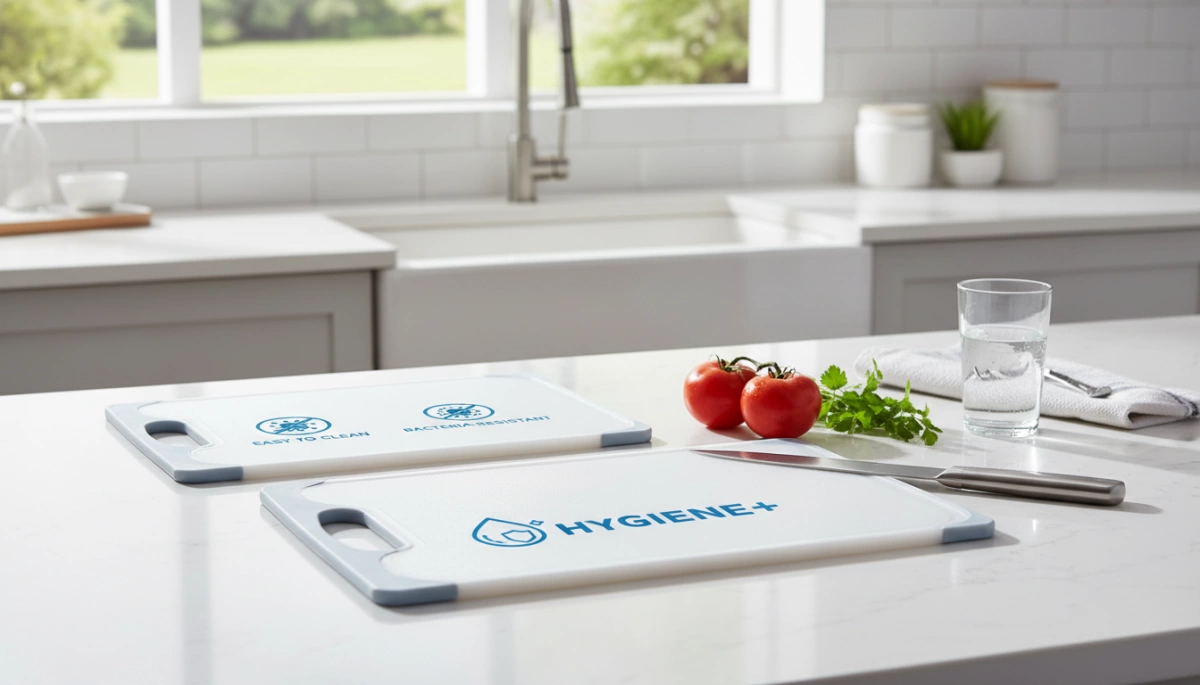
When we talk about white plastic cutting board hygiene, microplastics are part of the real conversation. Every time you cut on a food-grade plastic cutting board, a tiny amount of material can wear off—especially if you’re hacking hard with a very sharp or serrated knife.
What really happens when you cut on plastic boards
When you slice or chop:
- Your knife shaves off microscopic plastic particles from the surface.
- Most of this stays on the board or goes down the drain when you rinse.
- A small amount can end up in food, but for quality HDPE cutting boards, the volume is extremely low in normal home use.
The bigger hygiene issue is still bacteria in knife grooves on plastic, not the plastic itself.
When plastic shedding becomes a real concern
Microplastic shedding becomes more serious when:
- The board is old, deeply gouged, and fuzzy on the surface.
- You use heavy chopping with serrated or very hard blades.
- The plastic is low quality, brittle, or not truly food-grade.
If your board looks chewed up and rough, it’s time to treat both hygiene and microplastics as a sign to replace it.
How board quality and knives affect microplastic risk
To keep microplastic risk low:
- Choose high-density, food-grade HDPE or similar materials made for cutting boards.
- Avoid super cheap, lightweight boards that flex and scar fast.
- Use sharp, smooth-edged knives instead of aggressive serrated blades for most jobs.
- Don’t cut bones or frozen foods on a plastic board you use for daily prep.
This is exactly why I focus on dense, durable materials in our boards and strict quality control from raw material to finished product in our manufacturing process, similar to the standards described in Calmchop’s own cutting board quality control system.
How to cut, clean, and store to reduce shedding
You can keep microplastics and plastic cutting board bacteria under control with simple habits:
- Cut smarter: use the right knife, avoid pounding or twisting the blade into the surface.
- Clean gently but thoroughly: hot water, mild dish soap, non-abrasive scrubber.
- Dishwasher-safe sanitation: run on the top rack only if the board is rated for it, to avoid warping.
- Avoid harsh abrasives (steel wool, heavy scouring powders) that rough up the surface.
- Store upright and dry so the board doesn’t stay damp and soft, which speeds up wear.
When microplastics should affect your buying decision
Microplastics shouldn’t scare you away from plastic, but they should push you toward:
- High-quality, food-grade HDPE boards from manufacturers who specialize in antibacterial, easy-to-clean cutting boards.
- Boards that are thick, dense, and durable, not flimsy and disposable.
- A plan to replace the board once it’s deeply scarred or fuzzy.
For most U.S. home cooks, a solid white plastic cutting board is still one of the most hygienic, practical options—especially when it’s well made, easy to sanitize, and designed for long-term, safe use.
Choosing the Best Cutting Board for Your Kitchen
Key features of a hygienic white plastic cutting board
When I’m choosing a hygienic white plastic cutting board, I focus on a few non‑negotiables:
- Food‑grade HDPE or similar plastic (BPA‑free, FDA compliant)
- Non‑porous surface that doesn’t soak up juices or odors
- Dishwasher safe at high heat for real sanitation
- Light texture on the surface so food doesn’t slide, but not so rough that it traps gunk
- Stable, non‑slip base to prevent accidents and juice spills
A good white cutting board should stay flat, resist deep knife grooves, and make stains and residue easy to see so I can clean them immediately.
How to pick safe food‑grade plastic and HDPE boards
For food safety, I always look for:
- Clear labeling: “food‑grade HDPE”, “NSF style” or commercial‑kitchen quality
- No weird odors, soft spots, or overly flexible plastic
- Documentation or specs that match what’s laid out in Calmchop’s own guide to choosing a durable plastic cutting board
If a board isn’t clearly marked as food‑grade plastic, I skip it. Cutting board hygiene starts with safe materials.
Size, thickness, and texture for clean, easy cutting
For most U.S. home kitchens, I’ve found this setup works best:
- Size: At least 12″×18″ for everyday meal prep; bigger if you handle full briskets or large roasts
- Thickness: 0.35″–0.5″ is a sweet spot—thick enough not to warp, still easy to move and wash
- Texture: Fine, even texture that:
- Grips food just enough
- Rinses clean without scrubbing forever
- Doesn’t chew up your knives
A board that’s too small or too thin becomes messy fast—more spills, more cross‑contamination risk.
When a mixed setup of plastic and wood makes sense
In real‑world kitchens, a mixed cutting board setup is usually the most hygienic and practical:
- White plastic boards:
- Raw meat, poultry, and seafood
- Anything that needs heavy sanitizing and dishwasher cycles
- Wood boards:
- Bread, fruit, veggies, cheese, cooked or ready‑to‑eat food
- Serving boards for the table
Using plastic for raw proteins and wood for ready‑to‑eat food keeps your workflow clean and reduces cross‑contamination without complicating your routine.
How Calmchop boards fit a hygiene‑focused kitchen setup
With Calmchop, I design white plastic cutting boards specifically for sanitation‑first kitchens:
- Made from high‑density, food‑grade plastic built for commercial and home use
- Non‑porous, easy‑to‑clean surfaces that handle dishwashers, sanitizers, and daily scrubbing
- Balanced thickness to resist warping while staying lightweight
- Knife‑friendly surface to slow down deep grooves where bacteria can hide
For buyers who need bulk or commercial quantities, our antibacterial Calmchop cutting boards are engineered for hygiene, durability, and consistent performance in busy kitchens, which you can see in more detail on our antibacterial cutting boards wholesale page.
 English
  German
  Turkish
  Italian
  Russian
  Polish
  Arabic
  French
  Malay
Malay  Japanese
  Korean
  Thai
Thai