
What Are Microplastics in Your Kitchen?
If you’re wondering whether your cutting board is putting plastic in your dinner, you’re not overthinking it.
Microplastics are tiny plastic fragments—usually smaller than a grain of sand—that break off from larger plastic items. In the kitchen, that means things like plastic cutting boards, food containers, strainers, and utensils slowly shedding small particles every time we cook, chop, or wash.
Here’s the simple version:
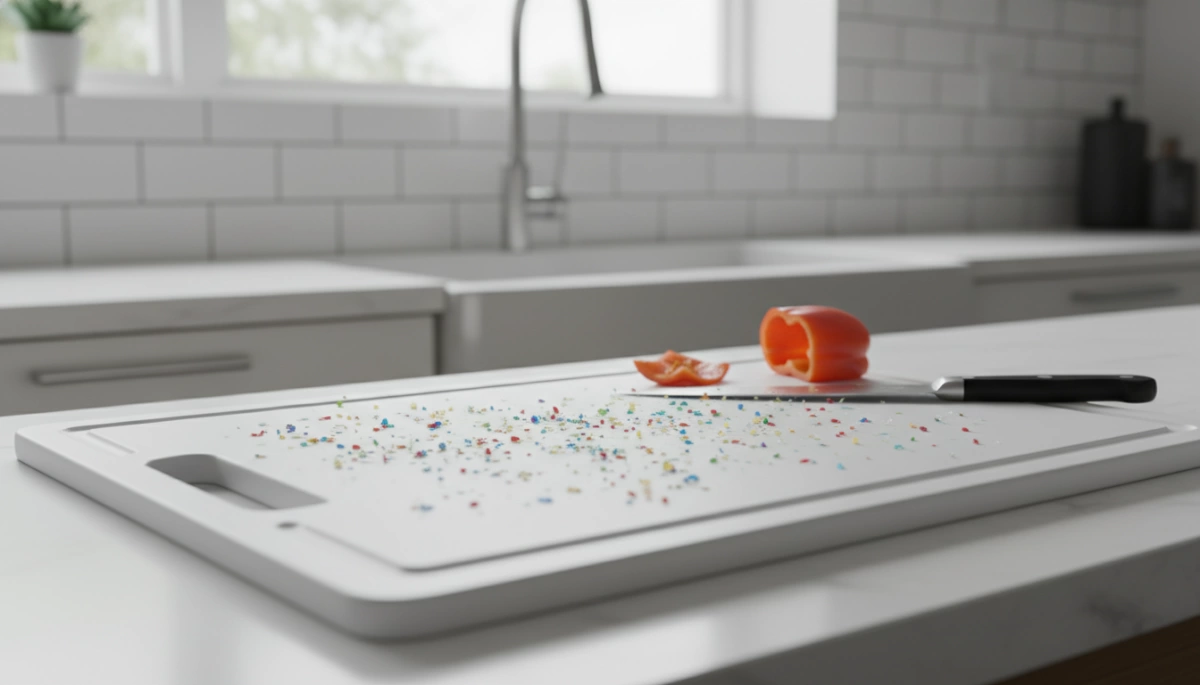
- Every time we slice, chop, or pound food on a plastic cutting board, the knife scrapes off tiny pieces of plastic.
- Those particles can stick to food, especially moist or textured foods, and end up on your plate.
- You don’t see them, but they’re there—this is one of the most under‑the‑radar ways microplastics in food show up in our daily lives.
Plastic cutting boards are a sneaky source of microplastics because they’re:
- Used every day, often multiple times
- Hit directly with sharp knives and pressure
- Frequently scratched, worn, and grooved, which makes shedding worse over time
A 2026 microplastics cutting board study highlighted just how much plastic can come off common polyethylene and polypropylene cutting boards during normal food prep. The research showed that chopping alone can release a surprisingly high number of particles—enough to make plastic cutting board risks a real, measurable source of kitchen microplastic exposure, not just a theoretical concern.
In short: if you’re using plastic boards daily, you’re likely adding microplastics on cutting boards straight into your meals without realizing it.
How Plastic Cutting Boards Shed Microplastics
How chopping scrapes plastic into your food
Every cut on a plastic cutting board shaves off tiny plastic fragments. Your knife digs into the surface, lifts soft plastic, and those microplastics can stick to:
- Wet foods (meat, fish, chicken)
- Rough foods (carrots, celery, cabbage)
- Anything you drag across the board into a pan
You don’t see them, but they’re there—especially on boards that already look cloudy, scarred, or fuzzy on the surface.
Polyethylene vs. polypropylene shedding
Most plastic cutting boards in U.S. kitchens are:
- Polyethylene (PE) – usually softer, “forgiving” on knives but easier to gouge
- Polypropylene (PP) – a bit harder, slightly more rigid, still easily scratched over time
Recent lab tests and the 2026 microplastics cutting board study suggest:
- Both PE and PP cutting boards release microplastics when used normally
- Softer PE can shed more quickly under heavy chopping
- PP may create slightly smaller fragments, which can travel farther in your body
So “food-grade” PE or PP simply means it’s safe at the time of manufacture; it does not mean “no microplastics.”
Why worn, scratched boards shed more
The older and rougher the board, the more it breaks down. Risk jumps when:
- The surface is covered with deep grooves
- The board looks fuzzy, frayed, or heavily scored
- You use heavy chopping (like deboning chicken, cutting hard squash, smashing garlic)
Every scratch is a weak point where the knife can rip off more plastic. This is exactly why “dishwasher-safe” plastic boards can be misleading—hot water, detergent, and heat all speed up wear and increase shedding. If you want a deeper breakdown of how plastic surfaces wear and what “antibacterial” really means, I explain it in detail in this piece on what antibacterial cutting board claims actually mean.
How much microplastic you might be eating per year
Different studies give different numbers, but the 2026 cutting board research lines up on one thing: the intake is not tiny. Depending on how often you cook and how hard you are on your boards, estimates suggest:
- Tens of thousands to millions of tiny plastic particles per year from plastic cutting boards alone
- Families that cook daily on old, heavily scarred plastic boards are on the high end of that range
Now multiply that by other sources—tap water, plastic containers, food packaging—and you can see why a lot of health‑focused home cooks are switching to wood and bamboo cutting boards and using plastic less for direct food prep. If you’re choosing a replacement, my smart buyer’s guide to choosing a cutting board walks through what actually matters for health, durability, and real‑world use.
Health Risks of Microplastics from Plastic Cutting Boards

When you slice on a plastic cutting board, tiny pieces of polyethylene or polypropylene can break off and end up in your food. These microplastics from food preparation move through your digestive system, and the smallest particles (especially “nanoplastics”) may pass through the gut lining into your bloodstream and reach organs like the liver, kidneys, and even the heart.
Once inside your body, ingested microplastics don’t just sit there. Studies show they can:
- Trigger inflammation in gut tissue
- Increase oxidative stress (cell damage from excess free radicals)
- Disrupt the gut microbiome, the “good” bacteria that control digestion, immunity, and even mood
Early research links higher microplastics in food with possible risks for:
- Worsening of existing heart and blood vessel problems
- Metabolic issues (like insulin resistance)
- Immune system over‑activation and chronic low‑grade inflammation
To be clear, scientists are still figuring out the full picture. We don’t yet know the exact “safe” level of plastic cutting board exposure, and human studies are limited. But the direction is not reassuring: we’re finding microplastics in human blood, lungs, placenta, and arteries, and lab data shows clear health concerns from microplastics, especially when exposure is daily and long‑term.
That’s why I treat plastic cutting board risks as avoidable, not theoretical. If I can cut down one direct source of microplastics going straight into my meals, I will—especially when safer, non‑toxic cutting board materials like well‑made wood options are easy to reach. If you’re curious how design choices (like non‑slip features and surface texture) affect wear and safety, it’s worth looking at how a cutting board with nonslip feet is engineered for real‑world use on sites like Calmchop, where performance and durability go hand in hand with health-focused design: why every home cook needs a cutting board with nonslip feet.
Everyday Habits That Increase Microplastics on Your Board
How Your Chopping Style Boosts Microplastic Release
The way you cut food on a plastic cutting board has a huge impact on microplastics in your meals.
If you:
- Chop aggressively or “pound” the knife into the board
- Use serrated knives or very hard, heavy blades
- Drag the knife sideways to scrape food off the board
…you’re scraping tiny plastic particles straight into your food. Every deep cut in a polyethylene or polypropylene board is a new place for microplastics to break off.
Board Age, Scratches, and Deep Grooves
Old, heavily scratched boards are basically microplastic factories.
- Deep grooves = more surface area that flakes and sheds
- Warped or discolored plastic often means the material is breaking down
- The older and rougher the board looks, the more plastic it’s likely releasing
If your plastic cutting board has knife trenches, stains that don’t wash out, or a fuzzy surface, it’s past its prime from a health perspective.
Foods That Pull Off More Plastic
Not all foods wear down your board the same way. Some drag more microplastics into your meals:
- Meat and poultry (especially with bones) dig into the board
- Hard veggies like carrots, potatoes, beets, squash, and turnips grind against the surface
- Frozen foods are tough on the board and your knife
These harder textures act like sandpaper on plastic cutting boards, increasing microplastics in food during prep.
Dishwashing, Heat, and Harsh Cleaners
How you clean your plastic cutting board also drives microplastic shedding:
- Dishwashers (especially high-heat “sanitize” cycles) can speed up plastic breakdown
- Boiling water or constant very hot rinses stress the material
- Bleach, harsh detergents, and abrasive scrubbers rough up the surface and create more micro-cracks
Over time, this combo of heat + chemistry + friction makes plastic boards more brittle and easier to shed microplastics into your food. If you’re not ready to fully switch to wood or bamboo yet, at least hand-wash your plastic board with mild soap and warm (not scalding) water, and retire it as soon as it looks heavily worn.
Why Plastic Cutting Boards Are Losing Trust
Common myths about “food‑safe” plastic cutting boards
A lot of people in the U.S. hear “food‑safe plastic” and think no risk. That’s outdated.
Here’s what “food‑safe” usually means in practice:
- It won’t immediately poison you in normal use.
- It meets basic regulations for plastic food contact.
- It doesn’t account for microplastics in food from long‑term wear and knife scraping.
A plastic cutting board can be “food‑safe” on paper and still shed thousands of tiny particles into your food every year, especially once it’s scratched and worn. That’s the gap most people never get told about.
Plastic cutting boards vs other microplastic sources
We’re exposed to microplastics from a lot of places: tap water, bottled water, food packaging, nonstick pans, synthetic clothing. Plastic cutting boards are different because:
- The plastic is directly scraped into food by your knife.
- You can ingest those particles immediately, not just over time.
- Older polyethylene and polypropylene boards can shed heavily with normal chopping.
So while cutting boards might not be the biggest source of kitchen microplastics, they are one of the most direct and controllable. Swapping boards is a simple way to reduce kitchen microplastic exposure without changing your whole lifestyle.
Why “BPA‑free” doesn’t mean microplastic‑free
“BPA‑free” sounds safe, but it only means one thing: that specific chemical (BPA) isn’t used. It does not mean:
- The board doesn’t shed polyethylene or polypropylene microplastics
- There are no other hormone‑disrupting chemicals or plasticizers
- The board won’t wear down or release particles when you chop
Plenty of “BPA‑free” boards still release microplastics from food preparation under normal use, especially after dishwashing, heat, and heavy knife work. BPA is just one piece of the puzzle.
If you’re shopping wholesale or comparing materials, pay attention to how the plastic is made, treated, and tested—many “antimicrobial” or “sanitized” boards still rely on plastic bases that wear down over time, as you can see from the focus on quality and additives in modern antibacterial cutting boards.
Hidden chemicals and additives in plastic cutting boards
Plastic cutting boards aren’t just “pure plastic.” They often contain:
- Colorants and dyes
- Stabilizers to handle heat and dishwashers
- Plasticizers to adjust flexibility
- Antibacterial additives or coatings
Over time, knife marks, hot water, and harsh detergents can help these additives migrate out along with the microplastics. That’s why more U.S. home cooks are moving toward non‑toxic cutting board materials like solid wood, and treating plastic boards—especially old, deeply scratched ones—as consumables, not lifetime tools.
Benefits of Switching Away from Plastic Cutting Boards
Less Microplastics in Your Food
When you move from plastic to wood or bamboo cutting boards, you cut back on microplastics in food in a big way.
- No constant plastic shedding with every chop
- Less food contamination from microplastics right at the source
- Fewer plastic fragments and additives ending up in your meals
Better for Your Knives & Cutting Comfort
Non‑plastic boards are simply more knife‑friendly and pleasant to use.
- Wood and bamboo feel more stable under the knife
- Less blade dulling than glass, stone, or hard plastic
- Smoother chopping rhythm and better control for daily cooking
Cleaner, More Natural Kitchen Vibes
Switching away from plastic instantly changes the feel of your kitchen.
- Warm, natural look instead of scratched white or color‑stained plastic
- Fits better with a sustainable, low‑plastic kitchen
- Pairs well with other non toxic cutting board materials and tools
Lower Exposure to Plastic Additives & Chemicals
No matter how “food‑safe” or “BPA‑free” the label says, plastic still carries phthalates, stabilizers, and other additives.
- Wood and bamboo boards don’t rely on those compounds
- Less long‑term contact with potential hormone‑disrupting chemicals
- A simple, low‑effort way to reduce plastic cutting board risks in your home
| Benefit | Plastic Boards | Wood/Bamboo Boards |
|---|---|---|
| Microplastics in food | High shedding risk | Minimal shedding |
| Knife friendliness | Can dull edges fast | Gentle on blades |
| Chemical additives (BPA, etc.) | Common in many products | Naturally low, no plastic additives |
| Look & feel in the kitchen | Clinical, often scratched | Warm, natural, “real kitchen” vibe |
If you’re still relying on plastic mainly for convenience or color coding, it’s worth looking at safer upgrades—especially as newer options, including advanced materials like titanium cutting boards, aim to combine health, durability, and pro‑level performance without the constant microplastic wear.
Best Cutting Board Alternatives to Plastic
Wood Cutting Boards: Maple, Walnut, Beech
If you want to cut microplastics in food, solid wood cutting boards are the best upgrade from plastic. I like:
- Maple – Hard, tight-grained, and naturally less porous. Great everyday “workhorse” board.
- Walnut – Slightly softer on knives, looks premium, and still durable enough for daily use.
- Beech – Budget-friendly, stable, and common in European-style boards.
Why wood shines vs plastic cutting boards:
- No microplastic shedding into your food
- Knife-friendly surface that won’t wreck your blade edges
- Natural antimicrobial properties in many hardwoods
- Long lifespan when cleaned and oiled properly
For a health-focused setup, a Calmchop-style solid wood board made from responsibly sourced hardwood gives you a non-toxic cutting board material that actually feels good to use.
Bamboo Cutting Boards as a Sustainable Option
Bamboo is another strong alternative to plastic cutting boards:
- Fast-growing and renewable, so it’s a more eco-friendly cutting board option
- Hard and dense, which helps resist deep grooves
- Relatively affordable, good for starter or backup boards
Just note: some bamboo boards use glues and binders, so I always look for food-safe adhesives and low-VOC finishes when I’m choosing bamboo vs plastic cutting boards.
Why Glass, Stone, and Ceramic Are Rough on Knives
Glass, stone, and ceramic cutting boards might look “clean” and stylish, but they’re a bad idea for daily prep:
- Extremely hard surfaces that dull or chip knives fast
- Less forgiving if you slip while cutting
- Can be noisy and uncomfortable to chop on
From a health angle, you’re not getting microplastics from glass or stone—but you’re trading that for constant knife damage and higher replacement costs. For most home cooks in the U.S., wood or bamboo are the smart, balanced choices for knife-friendly cutting boards that lower kitchen microplastic exposure.
Wood vs Plastic Cutting Boards: Quick Comparison
When I stack wood vs plastic cutting boards side by side, wood wins in most real‑world kitchens—especially if you care about microplastics, health, and knife life.
Durability & Knife‑Friendliness
| Feature | Wood Boards (Maple/Walnut/Beech) | Plastic Boards (PE/PP) |
|---|---|---|
| Knife wear | Very gentle on edges | Harder on edges over time, more resharpening |
| Surface scars | Self-healing to a point | Deep grooves, permanent scratching |
| Warping | Low if cared for | Can warp/melt in dishwasher |
| Feel while cutting | Solid, quiet, controlled | Hollow, louder, less stable |
Bottom line: Wood is more knife‑friendly and ages better; plastic gets chewed up fast.
Microplastics & Chemical Safety
| Aspect | Wood Cutting Boards | Plastic Cutting Boards |
|---|---|---|
| Microplastic shedding | None (no plastic) | Constant microplastics on cutting boards |
| Chemical additives | Natural material (no phthalates/BPA) | May contain additives, dyes, softeners |
| Heat + plastic reaction | Not applicable | Heat + friction = more microplastics in food |
Every chop on a plastic board releases particles. Over a year, that adds up to a measurable microplastic exposure per year, especially from polyethylene and polypropylene cutting boards.
Hygiene & Bacteria in Real Use
| Hygiene Factor | Wood Boards | Plastic Boards |
|---|---|---|
| Natural antimicrobial | Many hardwoods show natural resistance | No natural antimicrobial properties |
| Bacteria in grooves | Less survival in wood fibers | Bacteria can sit in deep cuts and scratches |
| Cleaning | Hand wash + dry upright | Often dishwasher‑safe but degrades faster |
In real kitchens, scratched plastic cutting boards tend to hold on to gunk. A well‑maintained wood board stays clean with simple soap, water, and quick drying.
Cost, Maintenance & Long‑Term Value
| Factor | Wood Cutting Boards | Plastic Cutting Boards |
|---|---|---|
| Upfront cost | Higher | Lower |
| Lifespan | Years to decades with care | Often 1–3 years before heavy wear |
| Maintenance | Oil occasionally, hand wash | Toss in dishwasher, but more wear/warping |
| Overall value | High: durable, safe, looks better | Low: cheap, but more waste and microplastics |
If you’re ready to retire a worn plastic board, a well‑built wood board (like the non‑toxic options in this guide to replacing round plastic chopping boards) usually gives better health, safety, and long‑term value than buying plastic again.
How to Choose a Safer Cutting Board
When I pick a cutting board for my own kitchen, I’m thinking health first, then knife feel, then cleanup. Here’s how I’d break it down.
Size, Thickness & Features That Actually Matter
Match your board to how you really cook:
| Feature | What to Choose | Why It Matters for Safety & Comfort |
|---|---|---|
| Size | Minimum 12″ x 18″ for daily cooking | More space = fewer spills & cross‑contamination |
| Thickness | 1″–1.5″ for wood, 0.5″–0.75″ for bamboo | Less warping, more stable, safer chopping |
| Weight | Solid but liftable with one hand | Won’t slide, but still easy to wash |
| Edge Design | Slight bevel or handles | Safer grip when moving a loaded board |
Look for a board that feels stable, not flimsy. Stability is a safety feature.
Grain Type, Finish & Wood Species
For lower microplastic exposure and better knife feel, I focus on wood cutting boards:
| Option | Best Picks | Why It’s Safer/Better |
|---|---|---|
| Wood Species | Hard maple, walnut, beech | Tight grain, less absorbent, food‑safe |
| Grain Type | Edge grain (daily use), end grain (heavy use) | More durable, kinder to knives |
| Finish | Food‑grade mineral oil + beeswax | Seals wood without toxic additives |
Skip boards with mystery coatings or heavy gloss. A proper board should be finished with clear, food‑grade oils, not plastic-like varnish.
Non‑Slip Edges, Juice Grooves & Daily Usability
Usability is part of safety:
- Non‑slip features
- Rubber feet or a non‑slip perimeter are a big win.
- If not built in, plan to use a damp towel under the board.
- Juice grooves
- Great for meat, melons, and juicy fruits.
- Choose a groove that’s wide and shallow—easier to clean, fewer bacteria traps.
- Double‑sided designs
- One side for meat, one side for produce helps reduce cross‑contamination.
- Some high‑end boards combine wood and steel surfaces for flexible, hygienic use—similar to the custom stainless steel and wood nonslip double‑sided boards we build for health‑focused home kitchens.
Spotting Marketing Hype vs Real Safety
There’s a lot of buzzwords around “safe” and “eco” boards. Here’s what I watch for:
Red flags (mostly hype):
- “BPA‑free” plastic cutting board
- That doesn’t mean microplastic‑free or free of other chemicals (phthalates, colorants, fillers).
- “Antibacterial plastic”
- Usually means added chemicals or coatings, not necessarily safer for long‑term health.
- “Dishwasher safe” plastic
- Hot water + detergent + abrasion often means more microplastics on cutting boards, not less.
Green flags (real safety signals):
- Material is clearly stated (e.g., “hard maple,” “American walnut,” not just “wood”).
- Finish is named and simple (mineral oil, beeswax, or other food‑grade oils).
- Design focuses on hygiene and cleanability, not gimmicks—similar to how dual‑surface hygienic boards prioritize real-world safety over buzzwords.
If the label leans on vague claims (“eco,” “natural,” “non‑toxic”) but hides the actual materials and finish, I pass. A safer cutting board is all about honest materials, solid build, and simple, proven finishes.
How to Care for Wood and Bamboo Cutting Boards
Taking care of wood and bamboo cutting boards is simple, and it directly cuts down your microplastics in food by helping you avoid going back to plastic.
Simple Cleaning Routine That Keeps Boards Safe
Here’s a quick, safe routine I recommend for everyday use:
- Right after use
- Scrape off food bits with a bench scraper or spatula (not metal knives).
- Wash by hand with warm water and mild dish soap.
- Use a soft sponge or brush; skip steel wool or anything super abrasive.
- Disinfect naturally (when needed)
- Sprinkle coarse salt or baking soda, then rub with half a lemon.
- Let it sit 5–10 minutes, rinse with warm water, and dry well.
- Dry completely
- Stand the board on its side so air hits both faces.
- Never store it wet or stack it while damp—this is how warping and mold start.
Avoid the dishwasher. High heat and steam can crack or warp wood and bamboo, pushing you back toward plastic cutting boards and their microplastics risks.
When to Oil a Cutting Board (And Which Oils to Use)
Oiling keeps wood and bamboo boards from drying, cracking, and soaking up stains.
- How often to oil
- New board: once a week for the first month.
- After that: once a month, or anytime the surface looks dry or lighter in color.
- Best oils to use
- Food-grade mineral oil (classic, affordable, doesn’t go rancid).
- Board cream (mineral oil + beeswax) for extra water resistance.
- Avoid
- Cooking oils like olive, canola, or vegetable oil—they go rancid, smell bad, and can get sticky.
- How to oil
- Make sure the board is completely dry.
- Rub a thin layer of oil over all sides with a lint-free cloth or paper towel.
- Let it soak in for a few hours or overnight, then wipe off any extra.
If you’re comparing long-term care between wood and eco-friendly plastics, Calmchop’s own guides on eco‑friendly plastic cutting boards show why many home cooks in the U.S. still choose wood as their main “everyday” board and keep plastic as backup only.
How to Deal With Stains, Smells, and Cracks
You don’t need harsh chemicals to keep a board fresh and safe.
- Stains (beets, berries, herbs, etc.)
- Sprinkle baking soda on the stain.
- Scrub gently with a damp sponge or brush.
- For stubborn spots, rub with half a lemon and let it sit for 5–10 minutes.
- Smells (onion, garlic, fish)
- Wash with hot soapy water first.
- Sprinkle coarse salt, scrub with lemon, rinse, and dry.
- Let it air out standing upright overnight.
- Small surface cracks or raised grain
- Lightly sand with fine‑grit sandpaper (220 grit) along the grain.
- Wipe off dust with a damp cloth, let dry, then oil the board.
- Deep cuts or grooves
- If sanding can’t remove them, that board is harder to clean and may trap bacteria—time to think about replacing.
When It’s Time to Retire and Replace a Cutting Board
Even the best non toxic cutting boards have a lifespan. Replace your wood or bamboo cutting board when:
- There are deep cracks or splits that trap food and water.
- The surface is severely warped and rocks on the counter.
- The board stays smelly or stained even after deep cleaning.
- You see mold inside cracks or along the edges.
At that point, don’t move backward to old, scratched plastic cutting boards that shed microplastics into your food. Replace with a fresh, high‑quality wood or bamboo board, keep up a simple cleaning and oiling routine, and you’ll have a safer, low‑microplastic setup that actually feels good to cook on.
Practical Ways to Cut Microplastics in Your Kitchen
Swap Plastic Cutting Boards for Wood or Bamboo
If you do just one thing to cut microplastics in food, replace plastic cutting boards with wood or bamboo cutting boards. Every chop on plastic sends tiny particles into your food—especially on old, scratched boards.
Go for:
- Hardwood boards (maple, walnut, beech) for everyday chopping
- Bamboo boards as a light, sustainable option
- A quality, well-finished wood board (like a Calmchop‑style board) that’s knife‑friendly, durable, and low‑shed
For a deeper breakdown of why plastic boards are losing trust and what to use instead, I walk through it in this guide on why consumers are questioning plastic cutting boards and switching to safer alternatives.
Rethink Plastic Food Storage and Reheating
Most people in the U.S. eat microplastics daily from plastic containers, not just boards. To cut that load:
- Store leftovers in glass or stainless steel instead of plastic
- Don’t microwave in plastic—transfer food to glass or ceramic first
- Skip single‑use plastic wrap on hot or greasy foods
- Avoid cheap, soft plastic containers that warp or smell
Better Choices for Water, Strainers, and Kitchen Tools
Microplastics in food also come from water and everyday tools:
- Use a stainless steel or glass bottle instead of disposable plastic water bottles
- Pick metal or silicone strainers over flimsy plastic ones for pasta and veggies
- Choose wood, stainless steel, or silicone utensils instead of plastic spatulas, ladles, and spoons
- Avoid “nonstick” plastic-coated gadgets that scratch over time
Small Weekly Habits That Lower Your Plastic Load
You don’t have to go zero‑plastic—just reduce what matters most:
- Retire deeply scratched plastic boards and containers
- Each week, swap one plastic item (board, container, utensil) for a safer alternative
- Wash plastic in cooler water by hand if you must keep some items—heat speeds up microplastic shedding
- Keep a short “upgrade list” (cutting boards, containers, utensils) and replace them as your budget allows
These simple shifts cut kitchen microplastic exposure, reduce plastic cutting board risks, and move your kitchen toward safer, cleaner, and more natural tools without making life complicated.
FAQs About Microplastics and Cutting Boards
Are all plastic cutting boards unsafe, or is some plastic okay?
Not every plastic cutting board is instant danger, but none of them are microplastic‑free. Even “food‑grade” polyethylene (PE) and polypropylene (PP) boards shed tiny plastic particles every time you chop, especially once they’re scratched up or go through the dishwasher over and over.
If you’re still using plastic:
- Avoid heavily scratched, warped, or discolored boards – those shed the most microplastics.
- Skip super-cheap, no‑name plastics – you don’t really know what additives or fillers are in them.
From a health and brand-trust standpoint, I treat plastic boards as a temporary compromise, not a long‑term solution. That’s exactly why I focus on safer materials and move people toward wood or bamboo instead of doubling down on “better plastic.”
Do wood or bamboo cutting boards really resist bacteria?
Yes, in real‑world kitchen use, good wood and bamboo boards hold their own against plastic – and often do better. Studies have shown that bacteria can get trapped in the tiny pores of wood and then die off over time. With proper cleaning and drying, wood doesn’t stay “germy” the way people assume.
What helps:
- Use hardwoods (like maple, walnut, beech) or quality bamboo.
- Wash with hot, soapy water, then air‑dry upright.
- Don’t let boards sit soaked or stacked while wet.
And unlike plastic, wood and bamboo don’t shed microplastics in food, which is one of the biggest cutting board health concerns we’re trying to avoid in the first place.
How big a deal are cutting boards compared to other microplastic sources?
Cutting boards aren’t the only source of microplastics in food, but they’re one of the few you directly scrape into what you’re about to eat. You can’t control every source (like dust or tap water), but you can control what your food sits on.
Rough rule of thumb:
- Plastic cutting boards, plastic containers, and non‑stick cookware are high‑contact sources.
- Clothing fibers, air, and water are background sources.
So while cutting boards might not be the largest source overall, they’re a high‑impact, easy win. Swapping to wood or bamboo is one of the fastest ways to reduce kitchen microplastic exposure without changing what you cook or eat.
If you’re still curious about how different board materials behave in real kitchens, you can see how we think through plastic vs wood vs wheat straw in our breakdown of white cutting boards and food safety.
Can I keep one plastic cutting board just for raw meat?
You can, but it’s not the smartest long‑term move if you care about plastic cutting board risks and microplastics in food. That raw‑meat board will:
- Get deep knife grooves fast (more microplastic shedding).
- Often be washed hot and hard (dishwasher, strong detergents), which breaks down plastic even more.
- Still shed microplastics that can transfer to meat juices and your sink area.
A better setup:
- One wood or bamboo board for produce and ready‑to‑eat foods.
- One separate wood or bamboo board for raw meat (clearly labeled or color‑coded by design).
With proper cleaning, wood and bamboo are safe for meat and don’t come with the same polyethylene cutting board microplastics problem. If you want a specialty material for certain prep styles, you can also look at niche options like durable granite cutting boards from manufacturers such as Calmchop, but I still recommend wood as the main everyday workhorse in a health‑focused kitchen.
 English
  German
  Turkish
  Italian
  Russian
  Polish
  Arabic
  French
  Malay
Malay  Japanese
  Korean
  Thai
Thai