
You’ve likely noticed the shift in luxury interiors: Green Marble Cutting Boards are rapidly replacing standard white stone on countertops everywhere.
But is this just a fleeting design trend, or a legitimate kitchen upgrade?
Many home cooks hesitate, wondering if natural stone is practical for daily prep or if it’s simply a decorative prop.
The truth is, it’s both.
Beyond the striking forest hues and unique veining, green marble is a baker’s secret weapon. Its naturally cool-to-touch surface is essential for rolling perfect pastry dough and tempering chocolate, while its non-porous nature makes it the ultimate hygienic surface for charcuterie presentation.
In this guide, we’re going beyond the surface to explore how Calmchop’s handcrafted boards bridge the gap between culinary & aesthetic delight.
Let’s dive in.
The Visual Impact of Green Marble in Modern Kitchens
Kitchens are often dominated by stainless steel and white surfaces, but I believe the heart of the home deserves more soul. The allure of green marble cutting boards lies in their immediate ability to anchor a room with deep, organic color. At Calmchop, we don’t just sell tools; we curate aesthetic kitchen accessories that bridge the gap between culinary function and high-end decor.
Biophilic Design: Bringing Nature Indoors
There is a profound calm that comes from bringing natural elements into our daily spaces. This is the core of biophilic kitchen design. Our boards are crafted from Verde Guatemala marble, a stone renowned for its intense forest-green hues. Placing one of these heavy-duty slabs on your counter introduces a raw, grounding element that synthetic materials simply cannot replicate. It connects the culinary process back to the earth, offering a serene visual anchor in a busy workspace.
Unique Veining: Why Every Calmchop Board is Art
Mass production has its place, but not in my collection. The beauty of natural stone veining is its unpredictability. We hand-finish our boards to highlight these natural characteristics, ensuring that:
- No Two Are Alike: Every slab features distinct white and light green veining; you are acquiring a singular piece of the earth.
- Visual Movement: The striking veins create a dynamic visual texture that draws the eye.
- Functional Sculpture: When not in use, the board serves as a standalone art piece, elevating the sophistication of your kitchen island.
Styling Green Marble on Various Countertops
A green marble board is surprisingly versatile, acting as a chameleon in kitchen countertop styling. Here is how I see it interacting with different surfaces:
- White Quartz or Marble: The dark green creates a bold, high-contrast statement that screams luxury.
- Natural Wood: Complements warm timber tones for a rustic, earthy vibe.
- Stainless Steel: Softens the industrial look with organic texture and warmth.
- Dark Granite: Adds subtle tonal depth and complexity to a moody kitchen aesthetic.
Why Bakers Swear by Cold Stone Surfaces
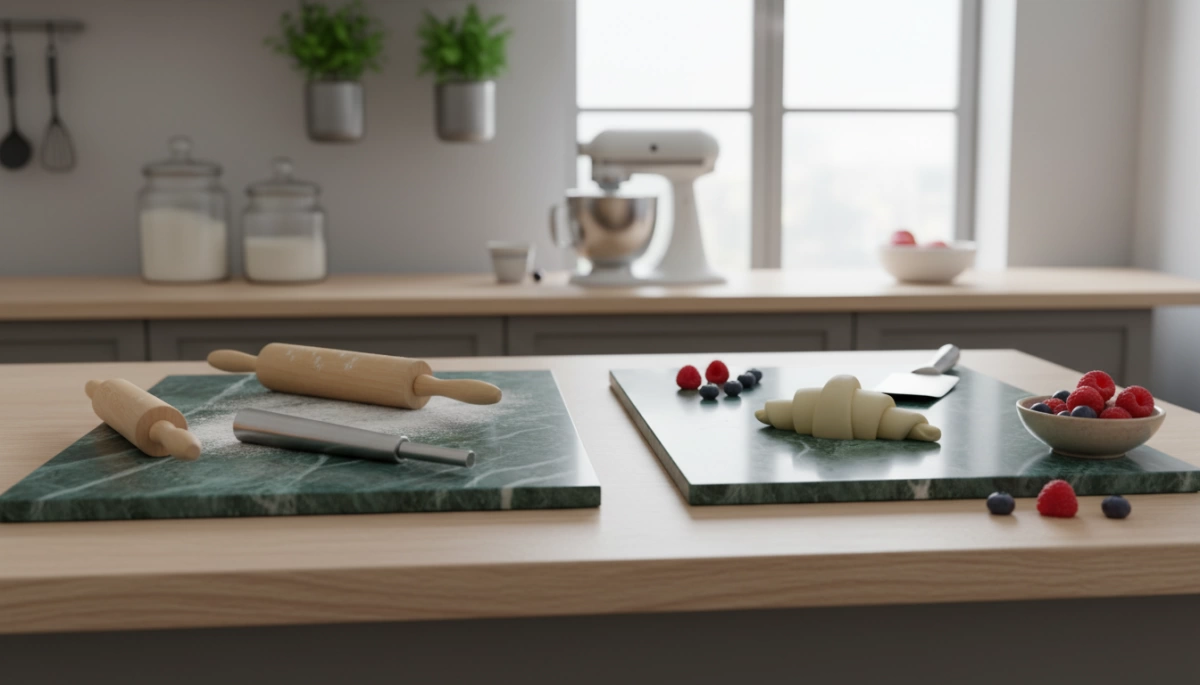
At CalmChop, we understand that for pastry chefs and home bakers alike, temperature control is just as critical as the ingredients themselves. The primary reason our Green Marble Cutting Boards find a permanent home in baking stations is their natural cool-to-touch surface. Unlike wood or plastic, authentic Verde Guatemala marble possesses a high thermal mass, meaning it absorbs and retains cold efficiently. This isn’t just a luxury feature; it is a functional necessity for anyone serious about achieving flaky layers and crisp textures.
Thermal Mass Explained: Keeping Dough Firm
The battle against melting butter is real. When working with delicate doughs like puff pastry, pie crusts, or biscuits, the friction from kneading and the ambient heat of a kitchen can cause butter to soften too quickly. This ruins the lamination process. Our marble acts as a heavy-duty pastry rolling surface that actively pulls heat away from the dough.
- Butter Preservation: The cold stone ensures butter remains in distinct layers within the dough, creating the steam pockets needed for the perfect rise.
- Reduced Sticking: Because the surface stays cool, dough is less likely to become sticky and unmanageable, reducing the need for excess flour which can toughen the bake.
- Consistency: It maintains a stable temperature even during extended prep sessions.
While you might consider using faux marble boards for prep presentation for their aesthetic appeal on the dining table, only authentic natural stone offers the thermal physical properties required for technical baking.
The Secret to Perfect Chocolate Tempering
Tempering chocolate on marble is a classic technique for a reason. To achieve that professional snap and glossy finish, chocolate must be cooled down rapidly under controlled movement. The density of our green marble slabs facilitates this rapid cooling better than almost any other material. By spreading melted chocolate across the polished stone, you can manipulate its temperature with precision, ensuring the cocoa butter crystallizes correctly.
Non-Porous Benefits for Pastry Hygiene
Beyond temperature, the surface structure of our boards is vital for food safety. Non-porous food preparation surfaces are essential when dealing with raw ingredients like eggs or dairy often found in baking. Wood is porous and can harbor bacteria or absorb fats that go rancid. Our polished green marble creates an impenetrable barrier against moisture and bacteria.
Comparison: Marble vs. Wood for Baking
| Feature | CalmChop Green Marble | Traditional Wood Board |
|---|---|---|
| Surface Temp | Naturally Cool (High Thermal Mass) | Room Temperature |
| Porosity | Non-Porous (Hygienic) | Porous (Absorbs Fats) |
| Texture | Ultra-Smooth (Low Friction) | Grainy (High Friction) |
| Best Use | Pastry, Chocolate, Candy | Bread Slicing, Chopping Herbs |
This hygienic advantage, combined with the stone’s ability to repel grease, makes cleanup effortless—usually requiring just a simple wipe down after rolling out your dough.
Elevating Your Hosting Game: From Prep to Platter
At Calmchop, I believe kitchen tools should never be hidden away in a drawer. The transition from a functional workspace to a sophisticated dining experience is seamless with our green marble boards. You don’t need to transfer food to a separate plate; the board itself is the presentation.
Creating the Ultimate Charcuterie Centerpiece
The deep, intricate veining of Verde Guatemala marble provides a dramatic backdrop that makes food colors pop. When I build a charcuterie serving platter, the dark green stone creates a stunning contrast against pale bries, cured meats, and bright fruits. Unlike wood, which can absorb odors from strong cheeses like Roquefort, the non-porous surface of our marble ensures flavors remain distinct and the board stays hygienic.
- Visual Contrast: Dark stone highlights the textures of crackers and cheeses.
- One-Board Convenience: Slice your baguette and serve it on the same surface.
- Stability: The substantial weight and rubber feet mean the board won’t slide around the table as guests cut hard cheeses.
Temperature Tricks: Keeping Cheese and Fruit Fresh
One of the most practical features of a cool-to-touch surface is its thermal mass. Stone naturally maintains a lower temperature than the ambient room air. For hosting, this is a game-changer.
If you place a wooden board out on a warm evening, soft cheeses can become oily and fruit can wilt. Green marble holds its chill, keeping butter, chocolate, and soft cheeses at the perfect consistency for longer. For an extra boost on hot days, I sometimes place the board in the fridge for 15 minutes before serving to ensure the cheese board presentation stays crisp and fresh throughout the event.
Using Your Board as a Permanent Decor Tray
Let’s be honest: these boards are heavy. Moving them constantly isn’t practical, and frankly, they are too beautiful to hide. When I am not chopping or serving, I use the board for kitchen countertop styling. It acts as a sophisticated anchor for your kitchen island.
Styling Ideas:
- The Coffee Station: Group your espresso machine, tamper, and sugar jar.
- The Cooking Zone: Organize olive oils, salt cellars, and pepper grinders.
- The Centerpiece: Place a vase of fresh flowers or a candle on it.
By leaving it out, you add a layer of texture and luxury to the room. Just remember that while the stone is durable, maintaining that polished look requires simple habits. You can learn more about how to care for and clean your nonslip cutting board to ensure it remains a pristine decorative element for years.
Knives vs. Stone: The Truth About Cutting on Marble
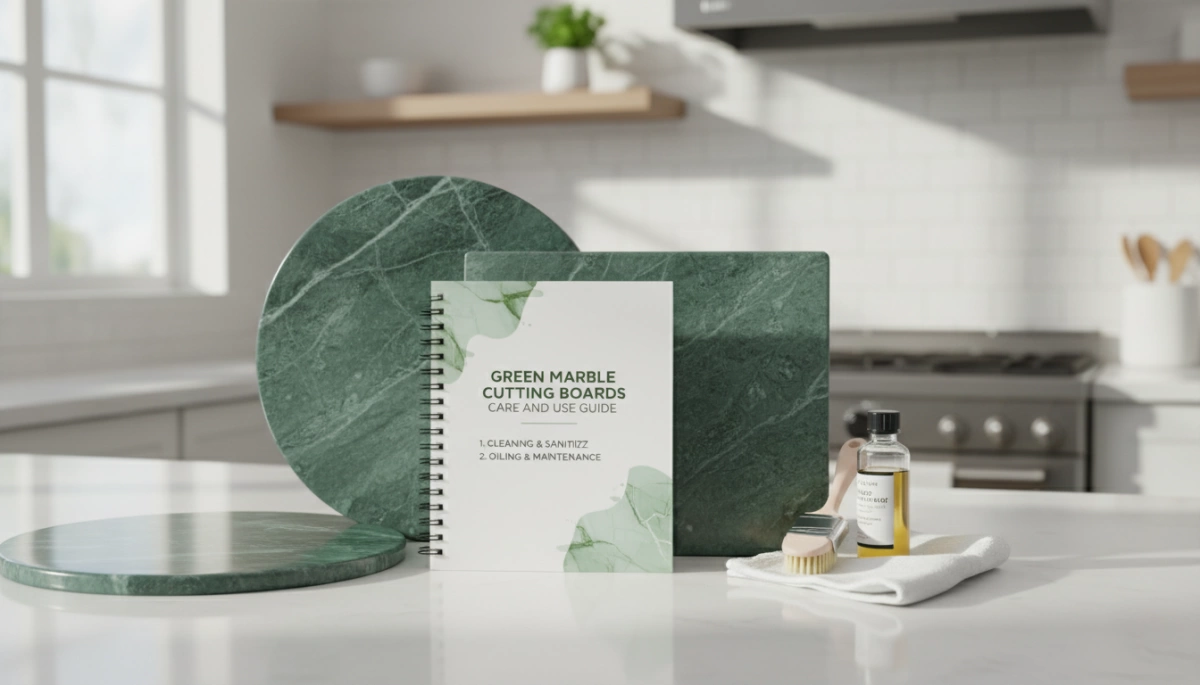
Slicing Soft Cheeses vs. Heavy Chopping
Let’s be direct about the nature of natural stone. While the Allure of Green Marble Cutting Boards: A Culinary & Aesthetic Delight is undeniable, the material is significantly harder than most steel blades. We recommend using these boards primarily for tasks that require a gentle touch rather than aggressive force.
- Best Uses: Slicing soft cheeses, cutting fruits, and serving appetizers.
- Avoid: Heavy cleaving, de-boning meats, or rapid-fire vegetable chopping.
If your kitchen routine involves heavy-duty impact cutting, you might explore our granite cutting boards wholesale collection or softer synthetic options, reserving the green marble for presentation and delicate pastry work.
Protecting Your Knife Edges
To maintain the razor edge of your premium cutlery, treat your marble board as a pastry rolling surface or a finishing station. The non-porous surface is excellent for hygiene because it resists deep knife grooves where bacteria often hide in wooden boards. However, constant heavy chopping will dull your knives faster. Think of this board as a specialized tool for baking, chocolate tempering, and hosting, rather than a general-purpose chopping block.
The Importance of Non-Slip Rubber Feet for Stability
Safety in the kitchen often comes down to stability. A lightweight board that slides across the counter is a hazard. Our green marble boards offer a heavy-duty pastry board experience, utilizing the natural weight of the stone to stay put.
We enhance this stability by integrating non-slip rubber feet on the underside of every piece. This ensures:
- Zero Slippage: The board remains anchored even when you are applying pressure to roll out tough dough.
- Surface Protection: The feet create a buffer that protects your kitchen countertops from scratches.
- Ergonomic Height: The slight lift makes it easier to pick up the board for cleaning or serving.
Mastering Marble Maintenance for Long-Lasting Shine
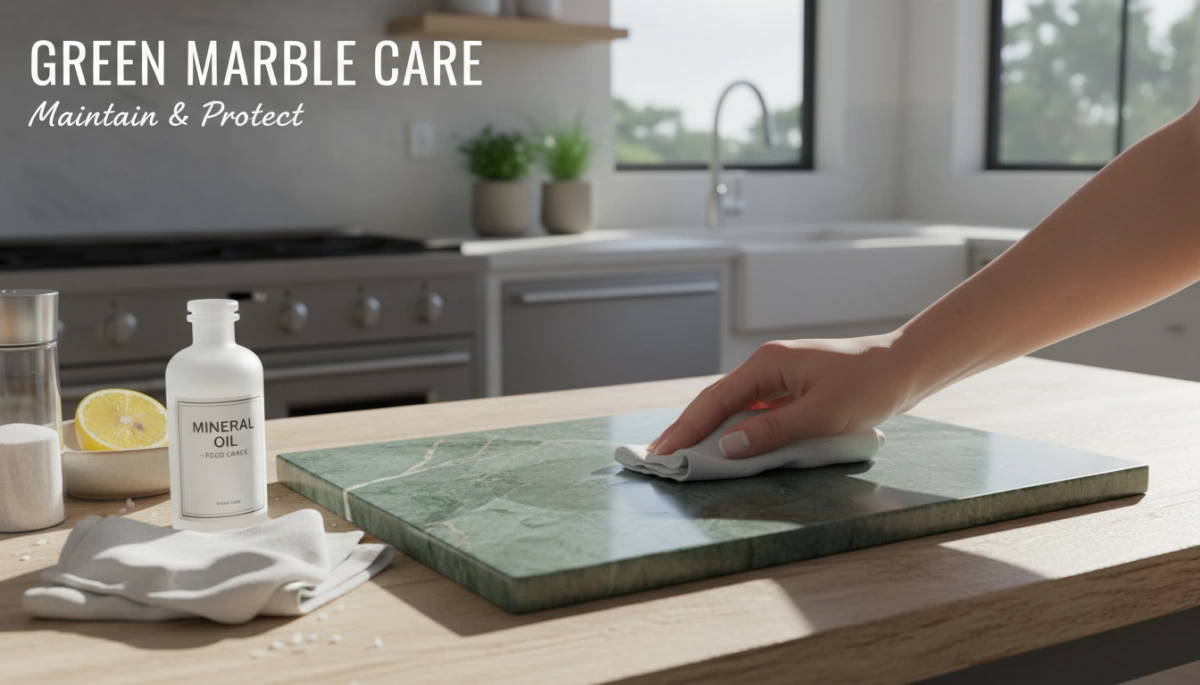
Investing in Verde Guatemala marble means you are bringing a piece of the earth into your kitchen. While these boards are incredibly durable, they are natural stone, not plastic. To keep that deep green luster looking its best, a little bit of specific care goes a long way. We want your board to be a lifetime companion, not just a temporary tool.
The Acid Test: Preventing Etching from Citrus and Vinegar
The biggest enemy of a polished marble surface is acid. Because marble is calcium-based, highly acidic foods like lemons, limes, vinegar, and tomato sauce can react with the surface. This reaction is called “etching,” which leaves a dull spot on the polished finish.
Marble Etching Prevention Tips:
- Wipe Spills Instantly: If you spill wine or squeeze a lemon, wipe it up immediately with a damp cloth.
- Use a Prep Bowl: For mixing vinaigrettes, do it in a bowl rather than directly on the flat surface.
- Layer It: If you are cutting acidic fruits, consider placing a small piece of parchment paper down or simply being vigilant about rinsing the board right after use.
Daily Cleaning Routine: Soap, Water, and Drying
Cleaning your green marble board is actually easier than scrubbing deep knife grooves in wood. Since the surface is non-porous, bacteria and odors don’t get trapped.
- Hand Wash Only: Never put your marble board in the dishwasher. The high heat and harsh detergents can damage the stone.
- Mild Soap: Use warm water and a gentle, pH-neutral dish soap.
- Soft Sponge: Avoid steel wool or abrasive scouring pads that can scratch the polish.
- Dry Immediately: This is crucial. Don’t let the board air dry, as water spots can form. Wipe it down with a soft microfiber towel right after washing.
While you clean, you will appreciate the solidity of the stone. Unlike plastic cutting boards that may hurt your health by shedding microplastics over time, your marble surface remains intact and hygienic.
Understanding Patina: Aging Gracefully Over Time
Over years of love and use, your marble board will develop a “patina.” This is the natural aging process of the stone. You might see faint knife marks or slight changes in the surface gloss where you work the most.
Don’t view these as defects. In the world of sustainable kitchenware, these signs of wear tell the story of the meals you have prepared and the gatherings you have hosted. A well-loved marble board is beautiful in its own right, shifting from a pristine showroom piece to a trusted culinary tool with history.
Frequently Asked Questions About Green Marble Boards
As we connect with home cooks and design lovers globally, we receive plenty of questions about living with natural stone. Here is the lowdown on the most common inquiries regarding The Allure of Green Marble Cutting Boards: A Culinary & Aesthetic Delight.
Can I put hot pans on my marble board?
Yes, but with a caveat. Marble has excellent thermal mass properties, meaning it is naturally resistant to heat. You can safely place a warm serving dish or a pot that has cooled slightly on the surface without worry.
However, avoid placing scorching hot cast iron skillets directly from the stove onto a cool-to-touch surface. Extreme temperature changes (thermal shock) can potentially damage natural stone over time. It is best used for warm serving rather than as a stove-side trivet for boiling pots.
How do I remove oil stains from green marble?
While our Verde Guatemala boards are polished to create a relatively non-porous surface compared to wood, prolonged exposure to heavy oils can leave a mark.
- Immediate Action: Wipe up spills as soon as they happen.
- Cleaning: Use warm water and a mild, pH-neutral soap.
- Avoid: Never use abrasive scrubbers or acidic cleaners (like vinegar or lemon juice) as they can dull the polish.
Is green marble harder than white Carrara marble?
Verde Guatemala is a dense, serpentine-rich stone that is incredibly durable. It offers a robust, heavy-duty feel that many chefs prefer for stability. When you are learning how to pick the right cutting board for your kitchen, density is a key factor; green marble provides a solid, substantial base that resists sliding better than lighter materials, making it a reliable partner for rolling dough.
Why does my board have different patterns than the photo?
This is the hallmark of natural stone veining. Because we use authentic stone rather than synthetic composites, no two pieces are identical.
- Uniqueness: Your board might have deep forest greens, while another has striking white lightning veins.
- Artistry: We view these variations as nature’s art. The board you receive is a one-of-a-kind piece that no one else in the world owns.
 English
  German
  Turkish
  Italian
  Russian
  Polish
  Arabic
  French
  Malay
Malay  Japanese
  Korean
  Thai
Thai