
Beyond the Buzzwords: The Core Pillars of Sustainability
We have all stood in the kitchen aisle, staring at labels claiming to be “green” or “eco-friendly,” wondering if it’s just marketing fluff. As manufacturers, we know that true sustainability isn’t just about slapping a sticker on a product; it is about rethinking the entire lifecycle of what we bring into our homes. When we talk about Sustainable Materials Explained: What Makes a Greener Cutting Board?, we are looking at three non-negotiable pillars: where it comes from, how long it lasts, and where it goes when you are done.
Renewable Sourcing: Fast-Growing vs. Finite Resources
The first step in reducing our environmental impact is shifting away from finite fossil fuels. Traditional plastic boards rely heavily on virgin petroleum, a resource that takes millions of years to form and damages the planet to extract.
At Calmchop, we prioritize Renewable Resources that regenerate rapidly.
- FSC Certified Bamboo: Unlike hardwood trees that take decades to mature, bamboo is a grass that can be harvested in 3-5 years without replanting.
- Wheat Straw Composite: We utilize Upcycled Agricultural Waste—specifically the stalks left over after wheat harvesting—to create durable, non-toxic composites. This turns potential waste into functional kitchenware.
The Longevity Factor: Why Durability Equals Sustainability
The most unsustainable product is the one you have to replace every few months. A cheap “eco” board that warps, cracks, or harbors bacteria effectively doubles your waste footprint when you are forced to throw it out.
We engineer Durable Kitchen Tools because longevity is the ultimate green feature. By integrating Antimicrobial Surface Technology (using Silver-ion and Zinc-ion infusion), we prevent the bacterial colonization that typically degrades cutting boards. Our surfaces are tested to withstand over 10,000 cuts, ensuring that your board stays in your kitchen and out of the landfill for years, not months.
End-of-Life: The Reality of Recycling vs. Biodegradability
A truly greener cutting board considers its final destination. We focus on Carbon Footprint Reduction by closing the loop on production waste.
- Zero-Waste Manufacturing: Our factories run on solar power and recycle 95% of production materials back into the manufacturing process.
- Biodegradability: Our wheat straw lines are designed to break down naturally under the right conditions, unlike standard plastics that persist as microplastics for centuries.
By choosing materials that are responsibly sourced and built to last, we bridge the gap between kitchen hygiene and environmental stewardship.
Material Deep Dive: Which Options Are Truly Eco-Friendly?
When we talk about a Greener Cutting Board, the raw material is the starting line. At Calmchop, we don’t just pick materials that look natural; we select resources that balance environmental impact with actual kitchen performance. Here is the breakdown of the materials driving the sustainable kitchenware revolution.
Bamboo: The Rapidly Renewable Champion
Bamboo is often the poster child for green manufacturing because it is a grass, not a tree, meaning it regrows incredibly fast without needing replanting. However, not all bamboo is equal. We prioritize FSC Certified Bamboo to ensure the material comes from responsibly managed forests that provide environmental, social, and economic benefits. This guarantees that our sourcing supports Sustainable Forestry rather than contributing to deforestation.
Wheat Straw: Upcycled Agricultural Waste
One of our most innovative steps is utilizing Wheat Straw Composite. Instead of letting agricultural byproducts go to waste or be burned (which releases carbon), we blend these natural fibers with food-grade synthetics. This process significantly reduces the amount of virgin plastic required for production. The result is a Biodegradable Kitchenware component that is sturdy, lightweight, and reduces our reliance on petroleum-based resources.
Wood Fiber & Recycled Composites
We also engineer boards using Recycled Plastics and wood fibers. These composites offer the best of both worlds: the natural aesthetic of wood with the resilience of modern engineering. Unlike traditional solid wood that might warp in water, these composites are often dishwasher-safe and resistant to splitting, ensuring they stay in your kitchen and out of the landfill for years.
Advanced Synthetics: TPU, PP, and Silver-Ion Technology
Plastic isn’t the enemy if it is engineered for longevity and safety. We utilize Bio-based TPU (Thermoplastic Polyurethane) and high-quality PP because they offer superior durability compared to single-use plastics.
Crucially, we infuse these materials with our patented Antimicrobial Surface Technology. By embedding Silver-ion and Zinc-ion agents directly into the material, we inhibit 99.9% of bacterial growth. This prevents the “moldy board” syndrome that forces people to throw away cheap plastic boards frequently. Our wholesale PP cutting board options are designed to withstand heavy use without harboring dangerous pathogens.
Comparison of Sustainable Materials
| Material | Key Eco-Benefit | Best For |
|---|---|---|
| FSC Bamboo | Renewable Resources; grows back in 3-5 years. | General chopping, bread, and dry prep. |
| Wheat Straw | Reduces plastic use by repurposing agri-waste. | Lightweight daily use and serving. |
| Bio-TPU / PP | extremely durable; BPA-Free Materials. | Heavy-duty meat prep and raw foods. |
| Silver-Ion Infused | Extends product lifespan by preventing rot/bacteria. | High-hygiene environments and commercial kitchens. |
By choosing Durable Kitchen Tools made from these advanced materials, you are effectively reducing your carbon footprint through longevity. A board that lasts five years is always greener than one you have to replace every six months.
The Hidden Footprint: Manufacturing & Safety
Zero-Waste Manufacturing & Renewable Energy
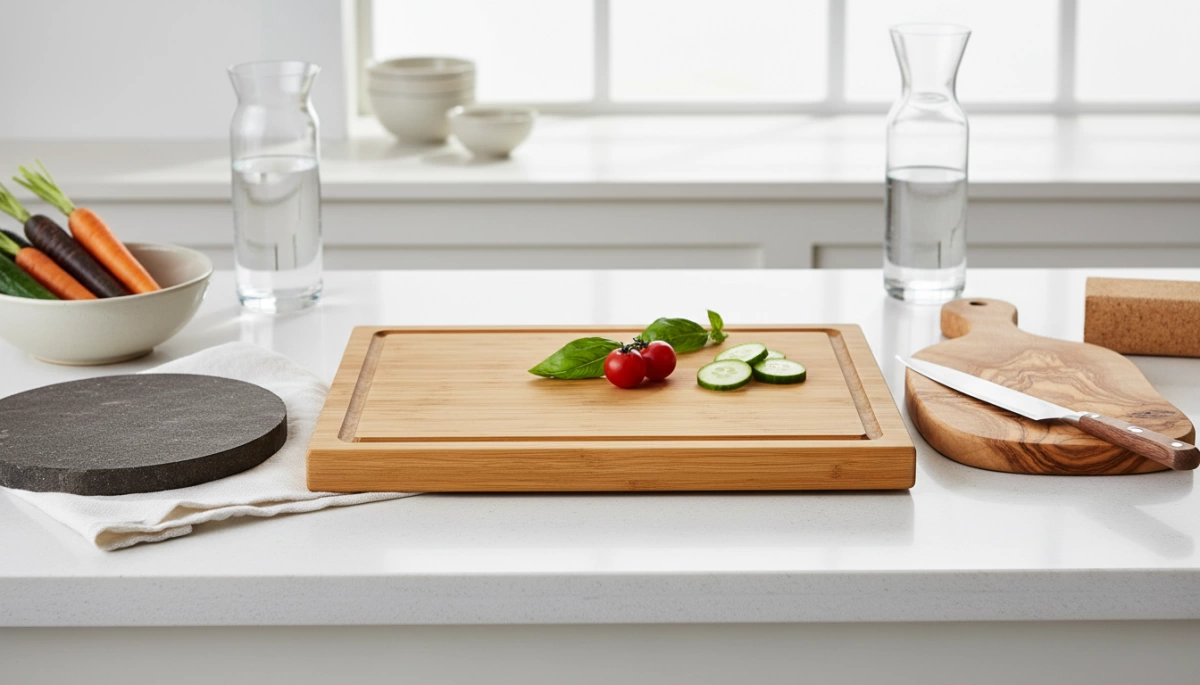
Sustainability goes far beyond just the raw material; it is deeply rooted in how the product is made. We take our responsibility as a practitioner of sustainable environmental protection seriously. Our production facilities operate on renewable resources, utilizing solar power to drive high-efficiency machinery. This commitment allows us to achieve a significant carbon footprint reduction, cutting emissions by over 40% compared to standard industry averages. Furthermore, our zero-waste manufacturing protocols ensure that 95% of production materials are recycled, and our advanced water management systems prevent industrial pollution.
Chemical Safety: The Dangers of Formaldehyde and BPA
A greener board must also be a safe board. Many low-quality options on the market contain hidden dangers like formaldehyde in wood adhesives or Bisphenol A (BPA) in synthetic boards. We strictly adhere to BPA-free materials and non-toxic production standards. Our products undergo rigorous testing to obtain FDA approval, SGS certification, and LFGB compliance. This ensures that whether you are using our specialized composites or comparing PP cutting boards vs. glass alternatives, you are guaranteed a surface completely free from hazardous substances.
Preventing Chemical Leaching in Daily Food Prep
The stability of a cutting board directly impacts food safety. When inferior materials break down under knife pressure, they risk microplastic shedding and chemical leaching into your ingredients. Our advanced manufacturing creates durable kitchen tools that resist deep scratching and degradation. By using stable, food-grade materials like bio-based TPU and engineered composites, we ensure that the surface remains intact even after thousands of cuts, preventing the migration of chemicals into your food.
How to Choose a Board That Lasts (Buying Guide)
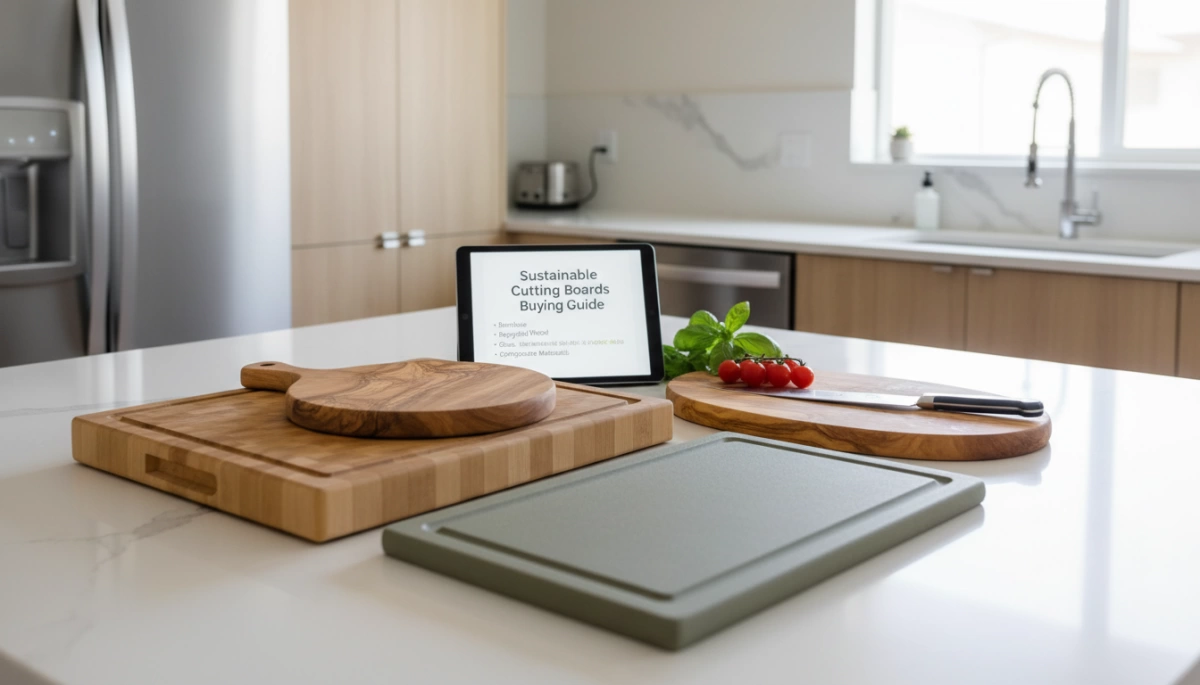
As a manufacturer, I can tell you that the most sustainable product is one you don’t have to replace every year. When you are shopping for Sustainable Materials Explained in real-world products, focus on durability and safety standards. Here is how to pick a winner.
Check the Certifications
Don’t just trust the marketing copy; look for the logos. Official certifications are the only way to verify you are getting a Non-Toxic Cutting Board.
- FDA & LFGB: These indicate the material is food-safe and won’t leach chemicals.
- FSC Certified Bamboo/Wood: The Forest Stewardship Council logo guarantees the material comes from Sustainable Forestry practices, not illegal logging.
For those prioritizing hygiene alongside sustainability, modern innovations help keep your family safe with antibacterial cutting boards that meet rigorous safety standards while preventing mold and bacteria buildup.
Assess the Surface Texture
A board that destroys your knives increases waste. You need a Knife-Friendly Surface—one that has enough “give” to protect the blade edge but is hard enough to resist deep scarring where bacteria hide. Whether you choose wood or plastic, the texture matters. For example, high-quality synthetics are engineered to meet the demands of high-efficiency kitchen workflows by balancing extreme durability with blade protection.
Maintenance Matters
Even Durable Kitchen Tools need care to survive. The maintenance required depends entirely on the material you choose.
| Material Type | Maintenance Requirement | Sustainability Benefit |
|---|---|---|
| FSC Certified Bamboo | Hand wash & monthly oiling | Prevents cracking, extends life significantly. |
| Wheat Straw Composite | Dishwasher safe | Low water usage, no chemicals needed. |
| Wood Fiber | Dishwasher safe | Resists warping, reducing replacement frequency. |
Pro Tip: Never soak a natural fiber board. It causes the fibers to swell and crack, ruining the board instantly.
FAQ: Common Questions About Sustainable Cutting Boards
We receive many inquiries about making the switch to a greener kitchen. Here are the facts regarding materials, safety, and disposal.
Is bamboo actually better than plastic for the environment?
generally, yes. Bamboo is a rapidly renewable grass that grows back quickly without needing replanting. However, the source matters. We prioritize FSC Certified Bamboo to ensure the material comes from responsibly managed forests, not clear-cut land. While traditional virgin plastic relies heavily on fossil fuels, our approach to synthetics focuses on durability and recyclability to minimize waste.
What is wheat straw plastic made of?
Wheat Straw Composite is an innovative material created from Upcycled Agricultural Waste. Instead of burning the stalks left over after wheat harvesting—which contributes to air pollution—we reclaim them. These fibers are mixed with food-grade binding agents (often reduced amounts of PP) to create a sturdy, lightweight board. This process significantly lowers the carbon footprint compared to manufacturing 100% virgin plastic boards.
Do eco-friendly cutting boards mold easily?
Natural porous materials can be susceptible to mold if not dried properly. This is why technology is crucial. Our boards are infused with Antimicrobial Surface Technology utilizing Silver-ion and Zinc-ion agents. This innovation disrupts bacterial cell walls, inhibiting the growth of mold, E. coli, and Salmonella. For a deeper look at how we keep surfaces hygienic, read our guide on what really works in antibacterial cutting boards.
How do I properly dispose of a biodegradable cutting board?
Disposal depends on the specific material blend. Biodegradable Kitchenware made primarily from wheat straw is designed to break down over time in industrial composting conditions. For our boards made from recyclable TPE or PP composites, they should be placed in the appropriate plastics recycling stream. Because our factory recycles 95% of materials during production, we encourage users to ensure the product enters the correct end-of-life cycle to maintain that zero-waste philosophy.
 English
  German
  Turkish
  Italian
  Russian
  Polish
  Arabic
  French
  Malay
Malay  Japanese
  Korean
  Thai
Thai