
What is PP (Polypropylene) and Why Does It Matter?
You have likely grabbed a cheap white plastic board from a discount bin, only to see it warp or crack within a month. That is not what we are building here. When we manufacture Calmchop cutting boards, we rely on High-density polypropylene (PP). This isn’t your average flimsy plastic; it is a thermal-resistant, tough-as-nails material engineered specifically for the rigors of a busy kitchen.
High-Density Food-Grade Plastic Explained
Unlike standard polyethylene (PE) or brittle acrylics that shatter or scar deeply under a chef’s knife, high-density food-grade plastic offers the perfect balance of rigidity and give. It withstands heavy impact without snapping, providing a durable kitchen cutting board solution that lasts years, not weeks.
Why PP beats the cheap stuff:
- Impact Resistance: It absorbs the shock of chopping without cracking.
- Thermal Stability: It handles high heat without warping.
- Chemical Resistance: It resists acidic juices from lemons and tomatoes without degrading.
Heat Resistance and Safety Standards
The real game-changer for daily meal prep is heat resistance. PP has a high melting point, making it a truly dishwasher safe cutting board. You can blast it with hot water for sanitization without worrying about the board losing its shape.
We also adhere to strict food-grade safety standards. Every board is BPA-free and non-toxic, ensuring no harmful chemicals leach into your food during daily chopping.
| Feature | PP Cutting Board (Polypropylene) | Standard Cheap Plastic |
|---|---|---|
| Density | High-density, impact-resistant | Low-density, brittle |
| Heat Tolerance | High (Dishwasher Safe) | Low (Warps easily) |
| Safety | BPA-free food prep | Often contains fillers |
| Longevity | Commercial grade durability | Discards after minimal use |
Choosing a PP cutting board for kitchen use means investing in a tool that respects your ingredients and your health.
The Hygiene Factor: Battling Bacteria in Daily Prep
When I am rushing through dinner prep, the last thing I want to worry about is raw chicken juice soaking into the equipment. This is where the material science of high-density polypropylene proves its worth. Unlike wood, which can act like a sponge if not maintained perfectly, a non-porous surface creates an impenetrable barrier. Fluids sit on top rather than seeping in, effectively stopping deep-set bacteria growth dead in its tracks. You can wash the surface completely without wondering what microscopic pathogens might be lurking inside the grain.
Cross-Contamination Prevention Strategies
Cross-contamination prevention is non-negotiable in a safe kitchen. I always recommend a strict strategy of separation to keep your family healthy. Using a dedicated PP cutting board for kitchen tasks allows you to physically keep raw proteins away from ready-to-eat vegetables.
- Dual-Sided Organization: Utilize one side specifically for raw meats and the reverse side for produce. This simple flip reduces the risk of transferring Salmonella or E. coli to your salad.
- Visual Cues: Many systems use color indicators to make safety intuitive.
- Impermeable Barrier: Prevents odors and flavors from lingering and transferring to the next meal.
HACCP Standards and Visual Cues
This approach isn’t just a home cook trick; it is based on professional HACCP color-coding standards used in commercial kitchens worldwide. In these environments, red boards are strictly for meat, green for vegetables, and blue for seafood. Adopting a simplified version of this visual system at home ensures kitchen hygiene maintenance becomes second nature. If you are looking to upgrade your safety protocols, a comprehensive plastic cutting board set provides the distinct, color-coded surfaces needed to maintain these strict safety boundaries effortlessly.
Stability: The Overlooked Safety Feature
Most home cooks focus entirely on the cutting surface, but stability is where kitchen safety truly begins. A daily chopping board that slides across the counter while you are wielding a sharp chef’s knife is a recipe for disaster. In professional environments, a moving board is a major hazard that leads to slipped knives and accidental cuts.
TPE Non-Slip Grip Technology
To combat this, we integrate TPE non-slip grip technology directly into the board’s design. TPE (Thermoplastic Elastomer) is a rubber-like material that bonds seamlessly with the high-density polypropylene. Unlike standard hard plastic corners that skate across granite or marble countertops, TPE creates high friction against smooth surfaces.
This effectively “locks” the board to your counter. You get the stability required for heavy-duty chopping without needing to place a damp towel underneath—a common kitchen hack that unfortunately promotes mold growth and moisture buildup.
Why integrated stability is a game changer:
- Enhanced Safety: Prevents the board from shifting during vigorous mincing or heavy butchery.
- Better Precision: A stable base allows for thinner, more consistent cuts because the target isn’t moving.
- Instant Setup: No need for non-slip mats or wet paper towels; just place the PP cutting board for kitchen use down and start working.
While plastic and wooden chopping boards each have their own advantages, the engineered non-slip features of modern PP boards provide a distinct edge in fast-paced cooking environments where you don’t have time to prep your workspace with external stabilizers.
Knife Longevity: Hard Enough to Cut, Soft Enough to Yield
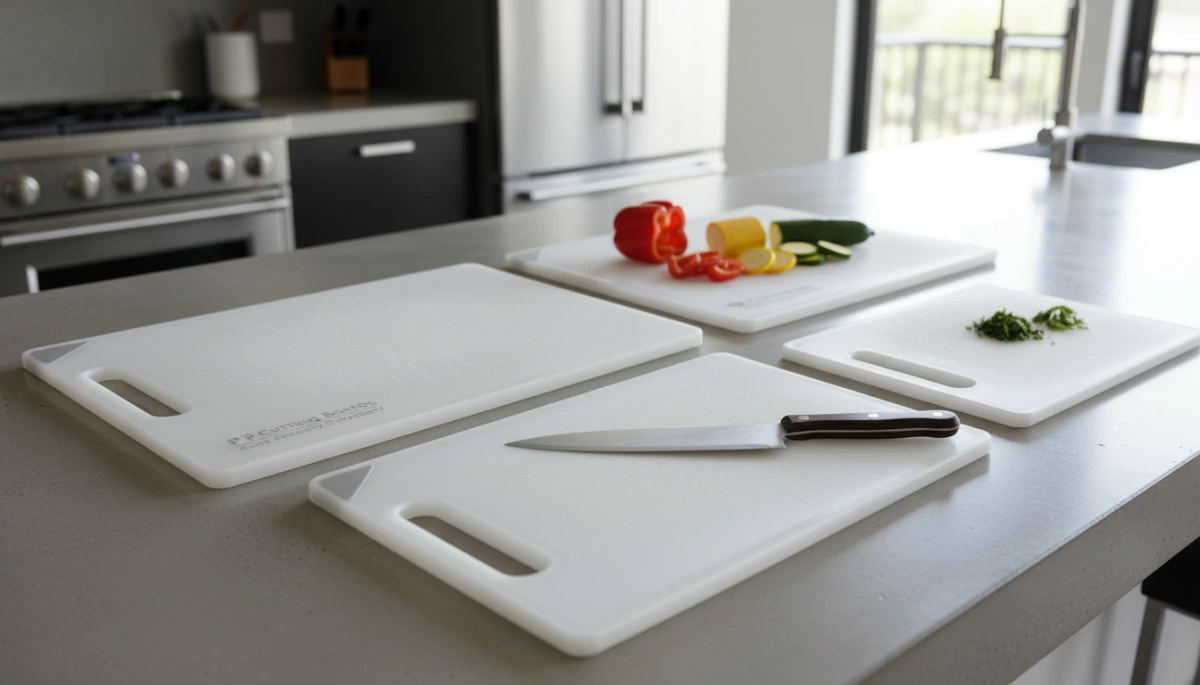
As a manufacturer, I know that the relationship between your knife and the board is critical for any cook. You need a surface that resists gouges but isn’t so hard that it rolls the blade edge. High-density polypropylene hits that sweet spot. It offers just enough “give” to protect your expensive cutlery during heavy-duty chopping, ensuring your tools remain effective shift after shift.
Balancing Durability and Sharpness
When you slice down, a knife-friendly material like PP absorbs the impact rather than reflecting it back into the blade. This surface yield means you spend less time sharpening and more time prepping. While no board is immune to wear, quality PP minimizes deep cut scarring that can trap debris, maintaining a smoother surface longer than softer plastics.
Comparing PP Impact to Glass and Bamboo
The difference becomes obvious when you compare materials:
- Glass: A knife killer. It offers zero absorption, leading to immediate dulling and potential chipping.
- Bamboo: Contains natural silica, which can be abrasive to fine edges over time.
- PP (Polypropylene): Provides a consistent, forgiving surface that cushions the blade impact.
For professional kitchens and home cooks alike, choosing a reliable wholesale PP cutting board ensures your knives stay sharper for longer. It is the practical choice for maintaining the lifespan of your tools without sacrificing durability.
Maintenance: Designed for the Real World
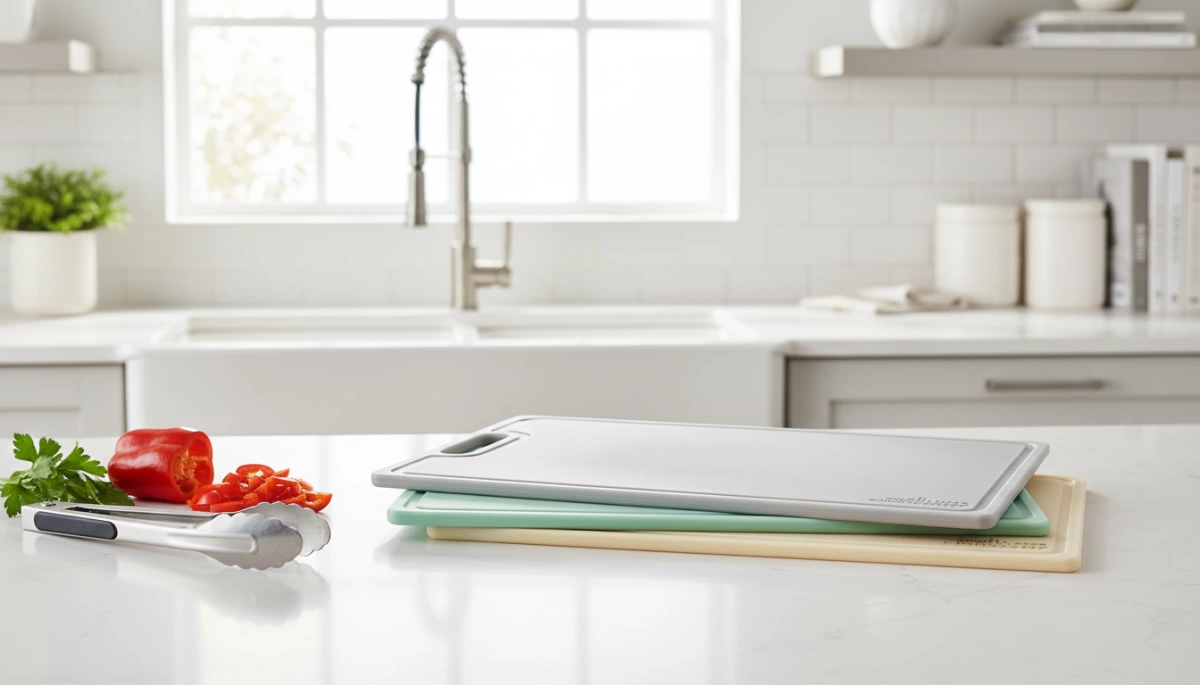
After a chaotic dinner service or a large family meal, the last thing anyone wants to do is hand-scrub delicate equipment. We build our PP cutting boards for busy kitchens to handle the reality of daily use, ensuring kitchen hygiene maintenance is effortless rather than a chore.
Dishwasher Safe Convenience
The standout feature for any easy-clean plastic board is heat resistance. Unlike wood, which demands hand washing and immediate drying to prevent rot, a dishwasher safe cutting board can go straight into the machine. High-density polypropylene withstands high-temperature sanitization cycles without warping, cracking, or absorbing detergent smells, ensuring a sterile surface for your next prep task.
Zero-Friction Cleanup
We designed these boards to be low-maintenance workhorses. You can forget about the tedious upkeep required by natural materials.
- No Oiling: There is no need for monthly mineral oil applications to keep the material from drying out.
- No Sanding: The surface remains functional and safe without the need for resurfacing.
- Stain Resistance: The non-porous nature prevents strong pigments like beet juice or turmeric from setting in permanently.
Mess Management with Juice Grooves
Keeping the counter clean is a safety issue as much as a cleanliness one. A deep juice groove design catches liquids from tomatoes, watermelons, or resting meats before they spill onto the floor. For those needing efficient liquid control, our double-sided plastic chopping boards with juice grooves provide the perfect containment solution, keeping your station dry and preventing slip hazards.
Comparison: PP vs. Other Materials
Choosing the right board isn’t just about aesthetics; it’s about workflow and hygiene. When we compare PP cutting boards for kitchen use against traditional materials, the advantages in a busy environment become clear.
PP vs. Wood: The Maintenance Battle
Wood looks great, but it demands constant attention. It is porous, meaning it absorbs meat juices and bacteria if not oiled regularly. In contrast, High-density polypropylene is non-porous and doesn’t require sanding or oiling. For those tired of the upkeep, switching to an easy-clean plastic board simplifies the process significantly. You can read more about extending the lifespan of different board materials to see why low-maintenance options win in high-volume settings.
PP vs. Glass: Protecting Your Tools
I never recommend glass boards for serious chopping. Glass is harder than steel, which immediately rolls the edge of your knife, dulling it instantly. Glass is also slippery and dangerous when wet. A durable kitchen cutting board made of PP offers the necessary surface yield—it is soft enough to preserve your blade’s edge but hard enough to resist deep gouges, making it a truly knife-friendly material.
PP vs. Standard PE: Heat and Durability
While Standard PE (Polyethylene) is common, it is softer than PP. This softness leads to deep cut scarring where bacteria hide. Furthermore, standard PE often warps in high-temperature dishwashers. PP offers superior heat resistance and structural integrity, making it the commercial grade durability standard for sanitization.
Quick Comparison Guide
| Feature | PP (Polypropylene) | Wood | Glass | Standard PE |
|---|---|---|---|---|
| Knife Friendly | Excellent (Yields) | Good | Poor (Dulls blades) | Good |
| Maintenance | Low (Dishwasher safe) | High (Oil/Sand) | Low | Medium |
| Porosity | Non-Porous | Porous | Non-Porous | Non-Porous |
| Heat Resistance | High | Low | High | Low (Warps) |
| Bacteria Risk | Low | Medium | Low | Medium (Deep scars) |
Why Pros Choose PP
Professional kitchens prioritize speed and safety. We rely on PP because it supports HACCP color-coding to prevent cross-contamination and withstands aggressive cleaning cycles. It delivers the reliability required for daily chopping without the fragility of glass or the high maintenance of wood.
Frequently Asked Questions About PP Cutting Boards
As a manufacturer, I hear the same concerns from home cooks and professional chefs alike. You want to know if switching to a PP cutting board for kitchen use is actually worth the hype. Here are the straight answers to the most common questions we get about this material.
Is polypropylene safe for food preparation?
Absolutely. High-density polypropylene (PP) is widely recognized as one of the safest plastics for food contact. Unlike cheaper, questionable plastics, high-quality PP is strictly BPA-free food prep compliant. It is chemically inert, meaning it won’t react with acidic foods like lemons or tomatoes, and it does not leach harmful toxins into your meals. Because it is non-porous, it also resists bacteria buildup better than softwoods.
Can PP cutting boards go in the dishwasher?
Yes, and this is a massive advantage over wood. A dishwasher safe cutting board is essential for modern, busy kitchens. PP has a high melting point, allowing it to withstand the high heat and steam of a sanitizing dishwasher cycle without warping or melting. This makes it an easy-clean plastic board that ensures you are killing off pathogens like Salmonella and E. coli after handling raw meat.
Does polypropylene dull kitchen knives?
No, quite the opposite. PP is considered a knife-friendly material. While it feels hard to the touch, it is softer than the steel of your knife blade. When you chop, the board “yields” slightly to the edge, preventing the blade from rolling or chipping. If you are worried about edge retention, choosing the best PP cutting board for your cooking style ensures you get the right balance of surface density and blade protection. It is significantly better for your knives than glass, granite, or ceramic boards.
How long do PP cutting boards last?
A durable kitchen cutting board made from PP is built for the long haul. With proper care, they can last for several years, even with daily heavy-duty chopping. While they will eventually show cosmetic score marks—which is actually a sign the board is saving your knife edge—they do not crack or splinter like wood. For commercial environments or heavy home use, these boards offer excellent longevity and return on investment.
 English
  German
  Turkish
  Italian
  Russian
  Polish
  Arabic
  French
  Malay
Malay  Japanese
  Korean
  Thai
Thai