
What Makes Titanium Cutting Boards Different?
If you’re wondering, “Is a titanium cutting board good, or just hype?”, you’re not alone. I asked the same thing before I started working with titanium boards in my own kitchens and product line. Let me break down what actually makes them different from wood, plastic, and bamboo.
What Is a Titanium Cutting Board?
A titanium cutting board is a chopping board made with a food-grade titanium surface instead of wood, bamboo, plastic, or glass. It’s designed to be:
- Non-porous
- Highly hygienic
- Heat resistant
- Extremely durable
Most home cooks first look at titanium because they’re tired of boards that stain, smell, or hold onto bacteria after a few months of use.
Pure Titanium vs Titanium Alloys
Not every “titanium” board is the same. Some brands use pure titanium, others use titanium alloys. That matters for safety, weight, and performance.
| Type | What It Is | Pros | Cons |
|---|---|---|---|
| Pure Titanium (Grade 1–2) | 99%+ titanium, food/medical grade | Most biocompatible, non-reactive, safe | Usually more expensive |
| Titanium Alloy | Mixed with other metals (like aluminum) | Can be lighter and cheaper | Quality varies; check safety |
| Fake “Titanium” | Just coated or colored steel/aluminum | Low price | Can rust, chip, or leach |
If you’re in the US and care about food safety and long-term durability, look for:
- Pure titanium or clearly labeled food-grade alloy
- Clear manufacturer info, not vague “titanium coated” language
Non-Porous Surface and Hygiene Benefits
One of the biggest reasons I started offering titanium boards is the hygiene edge.
Titanium is:
- Non-porous – it doesn’t soak up juices from raw meat or fish
- Rust-proof and corrosion-resistant – even with salt, acid, or dishwasher use
- Naturally biocompatible – it’s used in implants and medical tools
Hygiene benefits you actually feel day to day:
- Less chance of bacteria hiding in cuts, unlike old plastic or soft wood
- No lingering odors from garlic, onion, fish, or meat
- Easy to deep-clean with hot water, soap, and even the dishwasher
If you’re prepping raw chicken, seafood, or ground meat often, a non-porous cutting board like titanium is a serious upgrade in food safety.
Why People Are Switching from Wood, Plastic, and Bamboo
In my US customer base, people usually switch to a titanium cutting board for a few clear reasons:
- They’re done with stained, smelly plastic boards
- They don’t want to baby wood boards with oiling and hand washing
- They’re concerned about microplastics from heavily scratched plastic
- They want a long lasting cutting board that can handle daily, messy cooking
Quick comparison:
| Material | Main Strength | Main Issue |
|---|---|---|
| Wood | Knife-friendly, classic look | Needs oiling, can hold moisture/bacteria |
| Bamboo | Eco image, affordable | Hard/resin-heavy, can be tough on knives |
| Plastic | Cheap, lightweight, colorful | Scratches, harbors bacteria, microplastics |
| Glass | Easy to sanitize | Terrible for knife edges, very noisy |
| Titanium | Hygienic, durable, non-porous | Higher price, firmer feel under the knife |
Common Questions Before Buying a Titanium Board
Here are the questions I hear most from home cooks and pros:
-
Is a titanium cutting board good for knives?
It’s harder than plastic or wood, so it can dull knives faster if you use heavy chopping. Technique matters. Most people pair titanium with at least one softer, knife-friendly board. -
Is titanium really more hygienic?
Yes. As a non-porous cutting board, it doesn’t absorb liquids, doesn’t swell, and is easy to fully clean. That’s why it’s popular for raw meat and fish prep. -
Is it safe and non-toxic?
Food-grade titanium is non-reactive and biocompatible. No microplastics, no chemical coatings to peel, no warping. -
Can it go in the dishwasher?
A big reason I manufacture these: yes, most pure titanium boards are fully dishwasher safe. Always verify the manufacturer’s instructions, but titanium itself can handle high heat and harsh cycles. -
Is a titanium cutting board worth the price?
If you value hygiene, durability, and low maintenance, and you’re okay pairing it with a softer board for heavy knife work, then yes—especially for serious home cooks and families.
In short: a titanium cutting board is good if you want a hygienic, non-porous, non-toxic, long lasting cutting board, and you’re aware that it feels different under the knife than wood or plastic.
Pros of Titanium Cutting Boards
Durability and resistance to warping and cracking
Titanium cutting boards are built for the long haul. They don’t warp, crack, or chip like wood and bamboo, and they don’t get those deep grooves that you see on plastic over time. If you’re tired of replacing boards every year or two, a titanium board is a “buy it once” kind of product.
Hygiene benefits and antibacterial properties
Titanium is non-porous, so juices from raw meat, fish, and poultry can’t soak in. That means fewer places for bacteria to hide and grow. Compared with wood and plastic cutting boards, a titanium surface is easier to fully sanitize and keep as a truly hygienic cutting surface, especially in busy family kitchens.
Easy cleaning and dishwasher safety
You can scrub a titanium chopping board hard, soak it, or toss it in the dishwasher without worrying about swelling, splitting, or warping. It handles hot water, steam, and strong spray just fine. If you’re already using dishwasher-safe cutting boards in your kitchen setup, titanium fits right into that low-maintenance routine.
Heat resistance and everyday kitchen use
Titanium is highly heat resistant. You can set a hot pan or baking sheet on it for a moment, work near the stove, or deal with just-cooked food without worrying about melting or scorching like you would with plastic. That makes it a tough, all-purpose prep surface.
Non-toxic, food-safe, and no microplastics
Titanium is biocompatible and food safe, which is why it’s used in medical implants. It doesn’t shed microplastics, doesn’t leach chemicals, and doesn’t need oils, sealants, or coatings to stay safe. If you’re trying to cut down on plastic contact in the kitchen and want a non-toxic chopping board, titanium is one of the cleanest options out there.
When titanium is better than wood or plastic for health and safety
Titanium cutting boards make the most sense if:
- You prep a lot of raw meat or fish and want the most hygienic, non-porous surface.
- You have kids, elderly family, or anyone with a weaker immune system at home.
- You’re done with boards that stain, smell, or trap juices in knife grooves.
For high-hygiene prep and truly low-maintenance cleaning, a premium titanium cutting board can beat both wood and plastic on safety and long-term durability, especially when paired with other smart, low-maintenance cutting board choices.
Cons of Titanium Cutting Boards
How titanium affects knife sharpness
Titanium cutting boards are harder than wood, bamboo, and plastic, so they will dull knives faster if you use them as your only board.
- Fine Japanese blades and softer carbon steel knives can lose their edge quicker.
- Heavier chopping or twisting the blade on the board makes dulling worse.
If you’re a knife nerd who sharpens weekly and babies your edge, titanium may annoy you unless you rotate with a softer, knife-friendly cutting board.
Cost vs wood, bamboo, and plastic
Titanium cutting boards are premium products.
- Expect to pay several times more than a solid wood or bamboo board.
- Basic plastic boards are cheap and easy to replace, but they come with more microplastic and hygiene issues, especially around kids and baby food (this is where a safer, clear plastic cutting board or titanium option can make more sense).
If you’re on a tight budget or want multiple large boards, titanium won’t be the most cost‑effective pick.
Noise and feel while cutting
Cutting on titanium is louder and more “metallic” than cutting on wood.
- You’ll hear a noticeable clack with each cut.
- The blade feel is firmer and less cushioned, which some people find harsh or “industrial.”
If you like the soft, muted feel of end‑grain wood, titanium will feel very different.
Surface slipperiness (and how to fix it)
The smooth, non‑porous titanium surface can feel slippery, especially with wet ingredients.
You can reduce this by:
- Picking boards with a textured surface or laser‑etched pattern
- Using a damp paper towel or non‑slip mat underneath
- Avoiding heavy chopping on very wet items without a grip solution
If you do a lot of fast knife work, you’ll want these anti‑slip tweaks in place.
Style and aesthetic limitations
Titanium cutting boards look modern, sleek, and a bit “pro kitchen,” but:
- You won’t get the warm, natural look of walnut, maple, or bamboo
- Color options are limited compared to plastic boards
If your kitchen style leans rustic, farmhouse, or you like your board to double as a serving piece, titanium may feel too clinical.
Who might not like titanium boards
A titanium cutting board is probably not for you if:
- You’re very protective of expensive chef’s knives and want maximum edge life
- You prefer a warm, natural look and feel in your kitchen
- You’re sensitive to noise or metal-on-metal sounds
- You just want a cheap, disposable cutting board solution
In those cases, a good wood, bamboo, or higher‑quality plastic board may be a better fit, especially if you already manage hygiene carefully and understand the hidden risks of some plastic boards.
Do Titanium Cutting Boards Dull Knives?
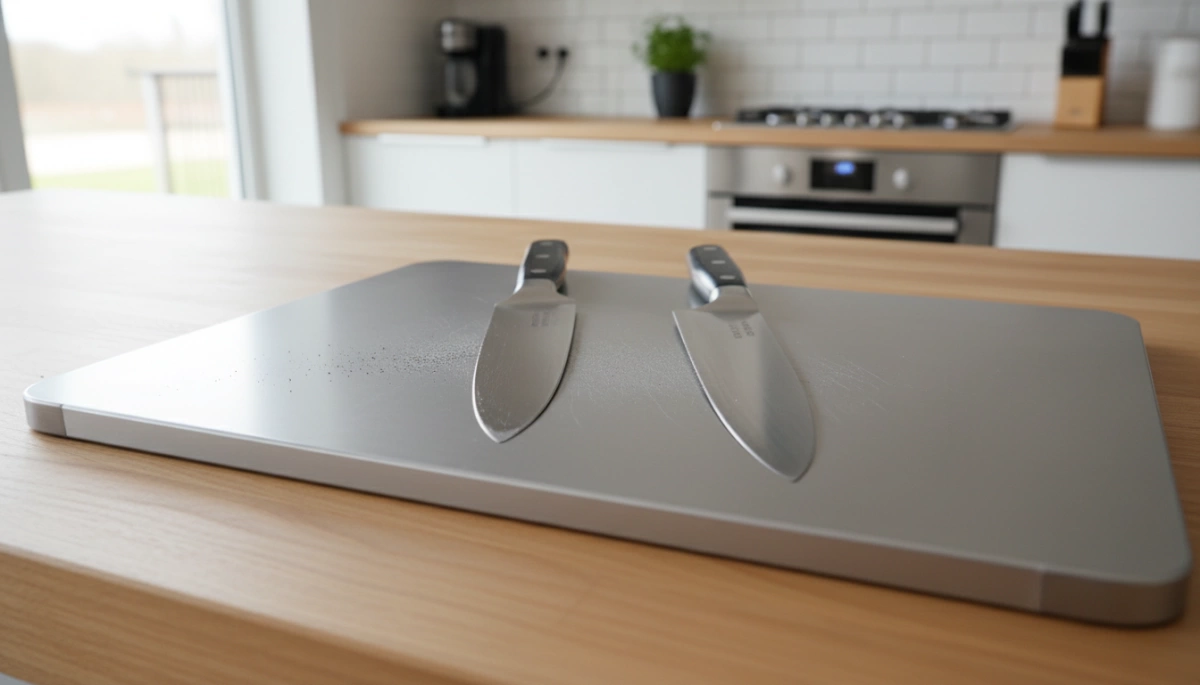
Let me be straight: a titanium cutting board can dull knives faster than wood or plastic, but how bad it is depends on the alloy, surface finish, and how you cut.
How Hard Is Titanium vs Knife Steel?
- Most kitchen knives: ~55–62 HRC (hardness scale for steel)
- Titanium boards and alloys: not necessarily “harder” than steel, but springy and unforgiving
- That means the blade edge takes more impact instead of the board slightly “giving” like wood does
So while titanium isn’t a knife-destroying rock, it’s definitely not as knife-friendly as end-grain wood or soft plastic.
Titanium vs End-Grain Wood for Knife Friendliness
If your #1 priority is knife life, end-grain wood still wins:
- End-grain wood cutting boards: fibers separate and “self-heal,” letting the edge sink slightly in, which is very gentle on blades
- Titanium cutting boards: solid, non-porous, no give; amazing for hygiene, but they don’t cushion the blade edge
Bottom line: titanium is better for hygiene, wood is better for edge retention.
Real-World Knife Dulling Feedback
What I see from real users and customers:
- Western-style chef’s knives and budget stainless knives:
- Need sharpening more often on titanium than on wood or plastic
- Hard, thin Japanese knives:
- You’ll notice dulling quicker, especially if you chop hard and fast
- Serrated knives, cleavers for bones, cheap beaters:
- Hold up fine, and titanium is actually nice because the board won’t get chewed up
Most people who are happy with titanium use it as their “hygiene board” for raw meat, fish, and messy prep, not their only daily board.
How Cutting Technique Affects Blade Wear
Titanium punishes sloppy technique more than soft boards:
- Bad for knives
- Straight up-and-down “hammer” chopping
- Twisting or prying with the edge on the board
- Hitting the board hard with the heel of the blade
- Better for knives
- Rocking motion with light pressure
- Letting the blade glide, not slam
- Using the board mainly for slicing, not for smashing bones or cracking shells
If you’re gentle and controlled, your knives will last longer, even on metal.
Tips to Protect Your Knives on a Titanium Cutting Board
If you want the hygiene of titanium without wrecking your blades, do this:
- Use a softer board for your best knives
- End-grain wood or quality plastic for daily knife work
- Save titanium for high-risk foods
- Raw chicken, pork, seafood, and anything that needs hard scrubbing or dishwasher-level cleaning
- Sharpen on a schedule
- Touch up with a honing rod weekly and do a real sharpening when you feel dragging
- Avoid these
- Thin, super-hard Japanese knives on titanium for heavy chopping
- Chopping frozen food or bones directly on the metal surface
If non-slip is a concern, pair your titanium board with a stable base or anti-slip mat or look at something like a double-sided non-slip cutting board to keep the whole setup secure while you cut.
When to Switch Between Titanium and Softer Boards
A simple system that works well in U.S. home kitchens:
- Use titanium when
- You’re prepping raw meat, fish, or anything smelly or staining
- You want a board you can scrub hard, sanitize, or run through the dishwasher
- Use wood/plastic when
- You’re slicing fruits, veggies, herbs, bread, or using expensive knives
- You care more about edge life than maximum hygiene
Think of a titanium cutting board as your high-hygiene, low-maintenance workhorse, and a good wood or plastic board as your knife-friendly everyday surface. Together, they cover all the bases.
Titanium vs Other Cutting Board Materials
If you’re asking “is a titanium cutting board good?” it really comes down to what you’re comparing it to. Here’s how titanium stacks up against the most common cutting board materials in U.S. kitchens.
Titanium vs Wood Cutting Boards
Titanium cutting boards
- Pros:
- Super durable, doesn’t warp or crack
- Non-porous, doesn’t absorb juices, odors, or stains
- Great for raw meat and high-hygiene prep
- Cons:
- Harsher on knife edges than end-grain wood
- More expensive and less “warm” looking on the counter
Wood cutting boards (maple, walnut, cherry)
- Pros:
- Very knife-friendly, especially end-grain
- Looks great, feels natural
- Cons:
- Porous, needs oiling and more cleaning care
- Not ideal if you want a truly low-maintenance, high-hygiene raw meat station
Best pick:
- Choose titanium if hygiene and durability beat knife softness for you.
- Choose wood if you’re a knife nerd and care most about edge life and looks.
Titanium vs Bamboo Cutting Boards
Bamboo cutting boards
- Pros:
- Cheap and common in U.S. stores
- Eco image and fairly hard-wearing
- Cons:
- Often too hard and can dull knives faster than softer woods
- Glues and finishes can be questionable on cheap boards
Titanium vs bamboo
- Titanium is more hygienic (non-porous, easier sanitizing) and more stable over time.
- Bamboo is cheaper, but not really more “knife-friendly” than titanium in many real-world cases.
Titanium vs Plastic Cutting Boards
Plastic cutting boards (PP, PE, TPU)
- Pros:
- Inexpensive, super common, lightweight
- Most are dishwasher-safe, good for raw meat
- Cons:
- Can develop deep grooves that trap bacteria
- Microplastic shedding over time
- Cheap ones stain, warp, and look bad fast
If you rely heavily on plastic boards for raw meat, it’s worth learning how to care for an eco-friendly plastic cutting board to extend its lifespan.
Titanium vs plastic
- Titanium: no microplastics, more durable, better long-term hygiene, premium feel.
- Plastic: budget-friendly, replaceable, still a solid option if you swap boards often or buy better antimicrobial plastic cutting boards.
Titanium vs Stainless Steel Cutting Boards
Stainless steel cutting boards
- Pros:
- Very durable, non-porous, easy to sanitize
- Cons:
- Heavy, louder, and can be quite hard on knives
- More prone to visible scratching
Titanium vs stainless steel
- Titanium is lighter, more corrosion-resistant, and usually more comfortable to handle daily.
- Both are hygienic; titanium generally wins for weight and user comfort.
Titanium vs Glass Cutting Boards
Glass cutting boards
- Pros:
- Super easy to wipe clean, looks “clean”
- Cons:
- Extremely bad for knives – dulls edges fast
- Slippery and loud, not pleasant to cut on
Titanium vs glass
- Titanium is better on knives, safer to work on, and still very hygienic.
- Glass is mostly good as a serving tray, not a serious knife-friendly cutting board.
Best Use Cases for Each Cutting Board Material
- Titanium cutting board
- Raw meat, poultry, and fish
- High-hygiene prep in busy home kitchens
- People who want a non-porous, non-toxic, long-lasting cutting board
- Wood cutting board
- Daily veggie, fruit, bread, and cooked meat
- Knife enthusiasts and people who care about aesthetics
- Bamboo cutting board
- Budget-conscious shoppers who want a natural look
- Plastic cutting board
- Color-coded raw meat/veg boards
- Apartment kitchens and college setups where low cost matters
- Stainless steel board
- Heavy-duty commercial-style prep where weight is less of an issue
- Glass board
- Serving cheese or appetizers, not real chopping
Best Cutting Board Material for Raw Meat and High-Hygiene Prep
For raw meat and high-hygiene prep, the top picks are:
- Titanium cutting board – Non-porous, durable, great if you want one premium, long-lasting, antibacterial-feeling surface.
- High-quality plastic board – If you prefer lower cost, easy dishwasher sanitizing, and don’t mind replacing it more often.
If your priorities are food safety, low maintenance, and long-term durability, a titanium cutting board is a strong upgrade over wood, bamboo, and cheap plastic in a typical U.S. home kitchen.
Who Should Use a Titanium Cutting Board?
Home cooks focused on hygiene and food safety
If you care more about a hygienic cutting surface than a “classic” wooden look, a titanium cutting board makes sense. It’s non-porous, doesn’t soak up juices, and won’t hold onto smells from onions, fish, or garlic. For anyone who worries about cross-contamination or reads every label, titanium is a strong upgrade over porous wood or worn plastic.
People who prep a lot of raw meat or fish
If you’re constantly breaking down chicken, beef, or fish, a titanium cutting board is very practical. The surface doesn’t absorb blood or fat, and it rinses completely clean, which is a big deal for food safety. For deeper context on what “antibacterial” actually means on a cutting board label, I recommend this breakdown of antibacterial cutting board claims.
Busy families who want low-maintenance boards
If you’re juggling work, kids, and dinner, you probably don’t want to oil wood boards or baby fragile surfaces. A titanium board is:
- Easy to toss in the dishwasher (check the specific brand)
- Fast to clean and dry
- Resistant to stains and swelling
It’s a good fit for households that want a durable, long lasting cutting board that can handle daily abuse.
Health-conscious and non-toxic shoppers
If you’re trying to avoid microplastics, questionable glues, or coatings, a pure titanium cutting board is appealing. Titanium is biocompatible, food-safe, and doesn’t shed plastic shavings into your food. For people who care about non-toxic, low-maintenance kitchen gear, titanium fits the “buy it once, use it for years” mindset.
Knife nerds vs casual cooks
- Knife nerds / pros: If you own high-end Japanese or custom knives and obsess over razor edges, titanium is usually a “sometimes” board, not your main one. It’s harder on blades than end-grain wood, so you’ll want a softer, knife friendly cutting board for daily chopping and use titanium mainly for raw meat and high-hygiene prep.
- Casual cooks: If you use mid-range stainless knives and don’t sharpen weekly, you’ll probably be fine with a titanium chopping board as your main “messy work” surface, plus a plastic or wood backup for quieter cutting.
When titanium cutting boards are overkill
Titanium isn’t for everyone. It’s probably overkill if:
- You mostly chop veggies and bread and rarely handle raw meat
- You love the feel and look of end-grain wood and don’t want extra noise or a metal surface
- You’re on a tight budget and just need a basic dishwasher safe chopping board
In those cases, a good quality plastic or composite board (like the kind we build into our own non-slip double-sided chopping boards) will give you solid hygiene and value without the titanium price tag.
How to Choose the Best Titanium Cutting Board
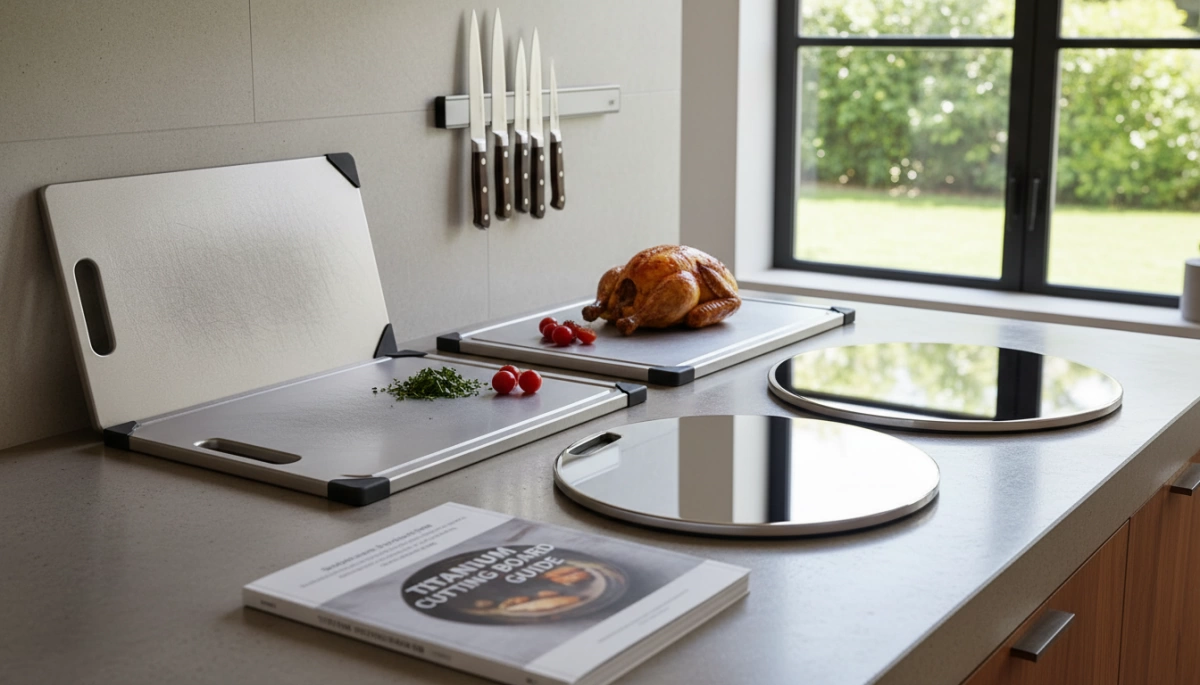
Spotting Real Titanium vs Knockoffs
If you’re paying titanium prices, you want actual titanium:
| What to Check | Real Titanium Board | Cheap Metal Knockoff |
|---|---|---|
| Magnet test | Weak or non-magnetic | Often strongly magnetic |
| Weight | Light for its size | Feels heavy like steel |
| Marking | “Pure titanium” / “Ti” / “TC4” / “Grade 2/5” | Just “metal” or “stainless” |
| Price | Premium | Suspiciously cheap |
- Look for “pure titanium” or “titanium alloy” clearly listed in the specs.
- Avoid vague listings that just say “metal cutting board” or “titanium color.”
Best Thickness and Size for Everyday Cooking
For most U.S. home kitchens:
- Thickness:
- 2–3 mm: light, easy to move, fine for normal home use
- 3–4 mm: more stable, better if you chop hard items often
- Size:
- Go-to daily board: 11″ x 16″ or close to it
- Small “grab-and-go” prep board: around 9″ x 13″
If you like a bigger work area (family cooking, meal prep), size up slightly, similar to a good double-sided plastic board like this 11″ x 16″ nonslip cutting board with juice groove.
Non-Slip and Surface Texture
Titanium is naturally slick, so non-slip features matter:
- Look for:
- Silicone or rubber feet
- Full non-slip base
- Textured or brushed surface on the cutting area
- Avoid totally smooth, footless designs unless you’re okay using a damp towel or silicone mat under the board.
Single-Sided vs Double-Sided Designs
| Type | When It’s Best |
|---|---|
| Single-sided | You want a super stable back with strong non-slip feet, don’t care about flipping |
| Double-sided | You switch between raw meat and veggies, or want one “rough use” side and one nicer side |
If you prep raw meat often, a double-sided layout (one side for meat, one side for produce) is practical and more hygienic.
Price Ranges & What You Actually Get
| Price Level (USD) | What You Usually Get |
|---|---|
| Under $60 | Small or thin boards, risk of “titanium-coated” metal |
| $60–$120 | Decent pure titanium boards for home use, good starting range |
| $120+ | Larger, thicker, branded or pro-grade titanium boards |
Don’t chase the cheapest option. With titanium, too cheap usually means not real titanium or poor finishing.
Reviews and Certifications to Look For
-
Reviews should mention:
- Real titanium feel (light but solid)
- No rust, no flaking, no weird coatings
- How it treats knives (not “kills my knives instantly”)
- Noise level and grip on the counter
-
Certifications / Claims to look for:
- Food-safe / FDA-compliant materials
- Clear statement: BPA-free, no coatings that can chip
- If it’s marketed as antibacterial, look for real backing, similar to how reputable brands explain the benefits of an antibacterial cutting board surface.
Bottom line: pick a titanium cutting board that’s verifiably pure titanium, properly sized, non-slip, and backed by real reviews, not just shiny photos and marketing buzzwords.
Care, Cleaning, and Maintenance for Titanium Cutting Boards
Daily Cleaning Routine for Titanium Boards
Keeping a titanium cutting board clean is simple and fast:
- Rinse right after use so food doesn’t dry on the surface.
- Wash with warm water + mild dish soap and a soft sponge or dish cloth.
- Rinse well and dry with a towel to avoid water spots.
- For raw meat or fish, follow with a quick hot soapy wash or a diluted vinegar wipe for extra hygiene.
If you’re running a higher-volume kitchen or buying in bulk, it’s worth pairing titanium with other antibacterial cutting board options for different food types, like the boards we manufacture here: antibacterial cutting boards wholesale.
Using the Dishwasher Safely with Titanium
Most pure titanium cutting boards are fully dishwasher safe:
- Place the board on the top rack or angled so water can drain.
- Avoid crowding it between heavy pans that can cause dents or bending.
- Use a standard cycle; you don’t need “sanitize” mode every time.
If your board has rubber feet or a non-slip frame, always confirm the manufacturer’s dishwasher rating.
Cleaners and Tools to Avoid
Titanium is tough, but using the wrong stuff can still mess it up:
- Skip steel wool, metal scrapers, and aggressive scouring pads – they can leave marks.
- Avoid bleach-heavy cleaners on a daily basis; occasional use is fine, but not every wash.
- Don’t use oven cleaner, rust remover, or strong acids on the board.
Stick with:
- Mild dish soap
- Soft sponge or brush
- Diluted white vinegar or baking soda paste for stubborn spots
Preventing Stains, Spots, and Discoloration
Titanium doesn’t absorb liquids, but you can still get water spots or light film:
- Dry immediately after washing to avoid mineral spots.
- For cloudy film or rainbow discoloration, wipe with:
- A vinegar + water solution, or
- A light baking soda paste, then rinse and dry.
- Don’t leave the board soaking in water for hours; it’s pointless and can mark the finish.
Storing a Titanium Cutting Board Safely
A titanium cutting board is long-lasting, but treat it like a real tool:
- Store it upright in a rack or hang it if it has a hook hole.
- Don’t stack it under cast iron, stone, or heavy pots that can dent edges.
- Keep it in a dry spot so hard water doesn’t sit on the surface and leave spots.
Small Habits That Extend Board and Knife Life
To keep both your titanium cutting board and knives in good shape:
- Use titanium mainly for raw meat, fish, or high-hygiene prep, and switch to wood or plastic for heavy knife work.
- Avoid slamming or chopping bones on titanium; use a heavier-duty board or cleaver block for that.
- Keep knives regularly honed and sharpened – a dull knife hits the surface harder and wears faster.
- Use a controlled, straight-down cut instead of aggressive rocking and twisting motions.
If you’re planning a larger kitchen setup, including wall or pullout stations, consider how your titanium board will sit in a dedicated cutting board station so it dries quickly and stays easy to grab during prep, similar to how we design pullout drawer cutting board stations.
Are Titanium Cutting Boards Worth It?
So, is a titanium cutting board actually worth your money? It depends on what you care about most: hygiene, knife life, or budget.
When a Titanium Cutting Board Is a Smart Investment
A titanium cutting board makes sense if:
-
Hygiene is your top priority
You prep a lot of raw meat, fish, or poultry and want the most non-porous, antibacterial cutting surface you can get. Titanium won’t soak up juices or odors and cleans fast and completely. -
You want low-maintenance, long-lasting gear
You’re tired of boards that stain, warp, or crack. A good pure titanium cutting board can last 10+ years with normal home use and still look solid. -
You’re okay paying more upfront
You see it as a “buy once, cry once” purchase. You’d rather invest in a durable, non-toxic chopping board than replace cheaper plastic every couple of years. -
You care about non-toxic, no-microplastic options
If you’re trying to cut down on plastic in the kitchen, titanium is fully food-safe, biocompatible, and doesn’t shed microplastics.
For ultra-high hygiene setups—like a dedicated cutting board for raw meat while using a softer board for veggies—titanium can be a great primary “raw protein” surface, similar to how some people use specialized dishwasher safe plastic cutting boards for that role.
When You Should Stick With Wood or Plastic Instead
Skip titanium (for now) if:
-
You’re very protective of high-end knives
If you own expensive Japanese or very hard steel knives, an end-grain wood cutting board is still the most knife-friendly cutting board. Titanium is harder and can dull edges faster if used all the time. -
You’re on a tight budget
A quality plastic or wood cutting board is much cheaper and still very safe if you clean and replace it regularly. -
You hate metal-on-metal feel and sound
If you’re sensitive to noise or the feel of metal under the knife, titanium (like stainless steel) may annoy you. -
You rarely cook or only chop small amounts
If you’re not in the kitchen much, a titanium board is probably overkill.
For many homes, a solid combo is:
- Wood or plastic for daily chopping, then
- A high-hygiene board (plastic or metal) for raw meats. You can see this approach in guides like this one on white cutting boards and food safety: white cutting boards for avoiding stains and bacteria.
Balancing Hygiene, Knife Life, and Budget
Here’s the trade-off in plain terms:
- Best hygiene: Titanium > plastic > bamboo > wood
- Best for knife edges: End-grain wood > softer plastic > bamboo > titanium
- Best for budget: Plastic > bamboo > wood > titanium
If hygiene is #1, titanium is a strong choice.
If knife life and feel are #1, go wood.
If budget is #1, go plastic or bamboo.
What to Expect From Performance and Longevity
Realistic expectations:
-
Titanium cutting boards are not magic
They won’t keep knives razor sharp or make food taste better. They will give you a non-porous, easy-to-sanitize, durable kitchen surface that doesn’t warp or crack easily. -
They can last a long time
With normal home use, a good premium metal cutting board made from titanium can realistically last a decade or more. Minor scratches are cosmetic and don’t affect safety. -
You may still want a “knife-friendly” backup board
Many home cooks use titanium for raw meat and messy prep, and wood or plastic for delicate knife work.
Quick Checklist: Is a Titanium Cutting Board Right for You?
Say “yes” to most of these, and it’s probably worth it:
- You prep raw meat or fish several times a week
- You want a hygienic, non-porous cutting board that’s easy to sanitize
- You’re okay owning two boards: one metal, one softer
- You want a non-toxic, long lasting cutting board with no coatings, no microplastics
- You’re fine with a higher upfront price to avoid replacing boards often
- You’re not hyper-sensitive to metal cutting noise or feel
If you’re mostly chopping veggies with expensive knives and don’t care that much about ultimate hygiene, stick with wood or plastic.
If hygiene, durability, and low maintenance matter more than anything, a titanium cutting board can absolutely be worth it.
 English
  German
  Turkish
  Italian
  Russian
  Polish
  Arabic
  French
  Malay
Malay  Japanese
  Korean
  Thai
Thai