
Health & Safety Debunked: Plastic vs. Wood vs. Modern Alternatives
The Bacteria Factor
Knife scoring on any chopping surface creates microscopic grooves where microbes thrive. While wood is naturally porous and absorbs moisture, a high-quality plastic cutting board provides a non-porous prep surface that prevents liquid absorption and bacterial penetration. However, deep knife scars on low-grade plastic can still harbor pathogens, making high-density material selection essential for kitchen hygiene.
Microplastic Concerns and Material Shedding
Repetitive knife impact on soft, cheap plastics causes surface shedding, raising valid microplastic shedding concerns. Advanced engineered materials actively solve this issue:
- High-Density Polyethylene (HDPE): Offers exceptional surface density, resisting deep knife cuts and blade penetration.
- Thermoplastic Polyurethane (TPU): Features self-healing, flexible properties that drastically reduce friction-induced plastic migration into food.
Cross-Contamination Risks in Food Prep
Professional kitchens rely heavily on strict surface isolation to enforce cross-contamination prevention. Using dedicated surfaces for raw poultry, red meat, seafood, and fresh produce eliminates pathogen transfer—such as Salmonella and E. coli—from uncooked animal products to ready-to-eat foods.
USDA Guidance on Board Maintenance
Standard USDA food safety guidelines confirm that both wood and plastic surfaces are safe when properly sanitized and maintained. Federal safety standards emphasize:
- Proper Sanitization: Cleaning surfaces thoroughly after every use with hot, soapy water or using a certified dishwasher-safe chopping board cycle.
- Groove Inspection: Monitoring surfaces for severe knife scarring that prevents effective manual or mechanical cleaning.
- Timely Replacement: Adhering to a strict cutting board replacement cycle by immediately retiring any board once hard-to-clean gouges appear.
Plastic Cutting Board Materials: HDPE, Polypropylene, TPU, and Wheat Straw
When selecting a plastic cutting board, the underlying material dictates how well it treats knife edges, withstands high dishwasher heat, and handles daily prep work. We build and supply boards across four distinct material categories to match every kitchen workflow.
High-Density Polyethylene (HDPE)
- Durability: Commercial-grade construction designed for high impact and heavy cleaver work.
- Feel: Rigid, heavy-duty surface that stays grounded on the counter.
- Best Use: High-volume kitchen prep requiring maximum structural toughness.
Polypropylene (PP)
- Profile: Lightweight, economical, and the most widely used material for everyday cooking.
- Performance: Delivers great everyday utility, though it develops knife scars faster than denser polymers. Reviewing PP cutting board strength and impact resistance helps explain why PP remains a cost-effective choice for reliable home food prep.
Thermoplastic Polyurethane (TPU)
- Innovation: Highly flexible structure featuring unique self-healing properties.
- Blade Preservation: Absorbs blade contact effortlessly, keeping fine knife edges sharp far longer.
- Resilience: High scratch resistance stops deep gouges where debris usually accumulates.
Bio-Based & Wheat Straw Composites
- Sustainability: Eco-friendly materials blending natural straw fibers with food-grade polymers to reduce virgin petroleum plastic reliance.
- Overview: Weighing wheat straw cutting board benefits and challenges gives home cooks a balanced look at choosing lightweight, eco-conscious prep tools.
Material Performance Comparison
| Material | Knife Impact | Dishwasher Resistance | Scratch Resistance | Lifespan |
|---|---|---|---|---|
| HDPE | Moderate (Gentle on blades) | High | Moderate | 3–5 Years |
| Polypropylene (PP) | Moderate | High | Low to Moderate | 1–3 Years |
| TPU | Excellent (Blade protective) | High | Excellent (Self-healing) | 5+ Years |
| Wheat Straw | Good | Moderate (Top rack preferred) | Moderate | 2–4 Years |
Key Design Features Every Quality Plastic Cutting Board Needs
A reliable plastic cutting board should simplify meal prep while keeping your kitchen safe and mess-free. We build our prep tools around four essential design features that deliver maximum stability, cleanliness, and workflow efficiency.
Non-Slip Grip & Perimeter Borders
A sliding board on a wet counter is a major safety hazard. We integrate high-friction non-slip rubber borders directly into the frame to anchor the board firmly to your countertop, ensuring complete stability during heavy chopping.
Deep Juice Canals
Messy food prep shouldn’t mean soaked kitchen counters. Deep juice grooves run along the perimeter to trap liquid overflow from carved meats, resting steaks, and juicy fruits before it spills onto your workspace.
Dual-Sided Prep Zones & Color-Coding
Isolating raw ingredients from ready-to-eat foods is critical for cross-contamination prevention. Utilizing stylish dual-color cutting boards for every cook allows you to flip between dedicated surfaces instantly, keeping raw meats separated from fresh produce.
A standard color-coded system makes food safety automatic:
Red: Raw red meats
Blue: Seafood and fish
Green: Fresh produce and herbs
Yellow/White: Poultry, dairy, or cooked foods
Essential Design Features at a Glance
| Feature | Core Function | Safety & Practical Impact |
|---|---|---|
| Non-Slip Borders | Locks board securely onto counters | Eliminates hazardous board slippage |
| Deep Juice Grooves | Contains liquid overflow from meats and fruits | Keeps countertops clean and dry |
| Dual-Sided Design | Provides two distinct food prep surfaces | Prevents flavor transfer and contamination |
| Color-Coding | Assigns specific boards to specific food groups | Ensures strict kitchen hygiene standards |
Next-Gen Kitchen Hygiene: Silver-Ion Plastic Cutting Boards
The Hidden Danger of Knife Grooves
Every time you chop, your knife leaves micro-scratches across your plastic cutting board. Over time, these deep grooves act as safe havens for food debris and moisture.
Even thorough hand washing or hot dishwasher cycles can fail to sanitize the bottom of these cuts, leading to severe knife groove bacteria retention that contaminates your next meal.
How Silver-Ion Technology Eliminates Bacteria
To solve this, we rely on advanced chemistry rather than harsh cleaning chemicals. Silver-ion antibacterial technology works continuously at a microscopic level:
- Cell Metabolism Disruption: Positively charged silver ions attach to bacterial cell walls.
- DNA Replication Block: The ions penetrate the membrane, stopping cellular respiration and reproduction.
- Rapid Sanitization: Eliminates up to 99.9% of harmful microbes on contact.
Understanding how antibacterial technology enhances the food safety of cutting boards is essential for maintaining a clean kitchen environment.
24/7 Health Protection with Calmchop
At Calmchop, we don’t just spray a temporary coating on our boards. We infuse active silver ions directly into our food-grade, BPA-free food prep surface during manufacturing.
Continuous Protection: Because the antibacterial agent is embedded throughout the material, your plastic cutting board maintains 24/7 hygienic protection even as knife scars accumulate over years of heavy daily use.
Essential Safety Certifications
When choosing a modern cutting surface, look for verified manufacturing standards:
| Certification | What It Guarantees |
|---|---|
| FDA Compliance | Verifies non-toxic, food-safe materials that won’t leach chemicals. |
| ISO 9001 | Confirms strict, international quality management during production. |
| BSCI Standards | Guarantees ethical working conditions and sustainable manufacturing. |
Plastic Cutting Board Maintenance, Sanitization, and Lifespan Management
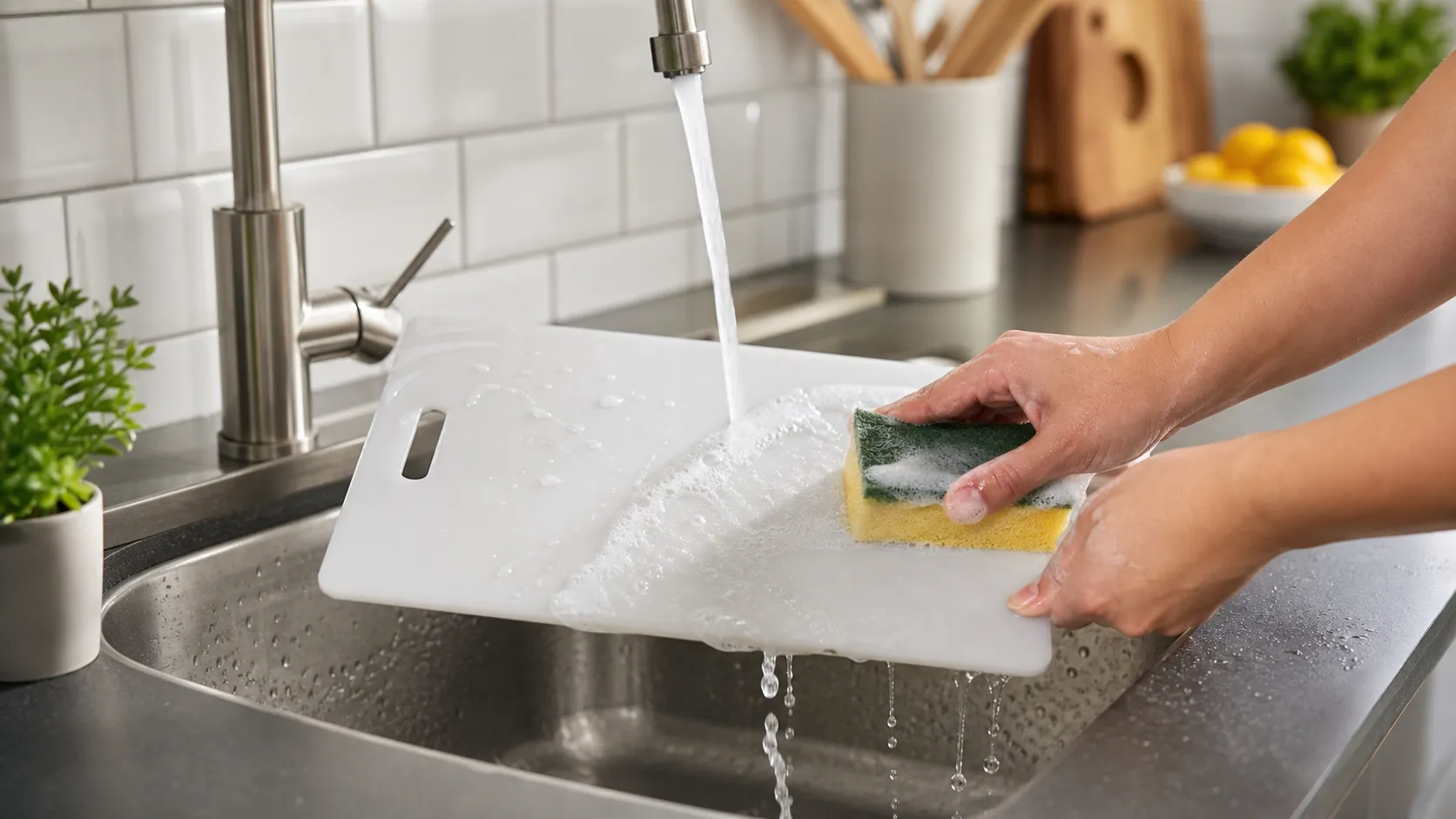
Proper plastic board care protects your kitchen hygiene and extends the usability of your prep surfaces. Following a simple maintenance routine keeps your plastic cutting board safe, stable, and ready for daily cooking.
Daily Cleaning Protocol
Using a dishwasher-safe chopping board is the fastest way to maintain daily hygiene. High-temperature wash cycles sanitize surfaces effectively while loosening stubborn grease.
- Machine Wash: Place boards on the top rack when possible to avoid direct heat element contact.
- Manual Scrubbing: Wash with hot water, food-safe soap, and a stiff nylon brush to clean out light surface textures.
Deep Sanitization Techniques
For strong food odors from garlic or onions, standard soap isn’t always enough. I recommend applying diluted white vinegar or a food-safe sanitizing spray across the board surface. Following proper guidelines for white cutting board food safety and stain removal keeps your prep tools looking fresh without damaging the material.
Preventing Board Warping
Heat and improper storage are the primary causes of warped plastic boards. To maintain flat, stable cutting surfaces over time:
- Store Vertically: Rack boards upright to allow even air circulation on both sides during drying.
- Avoid Hot Surfaces: Never rest hot pans or baking sheets directly on your cutting surface, and keep boards away from open stove flames.
The Replacement Checklist: 4 Signs to Retire Your Board
Tracking your cutting board replacement cycle prevents cross-contamination and microplastic shedding. When the cutting board lifespan comes to an end, replace the board immediately if you spot these four warning signs:
- Deep Knife Scarring: Microscopic grooves that trap food debris and harbor bacteria despite high-heat washes.
- Persistent Warping: A board that wobbles or slides on the countertop during chopping.
- Permanent Discoloration and Odor: Deep stains or sour smells that survive deep sanitization.
- Flaking Surface: Frayed edges or plastic peeling away from heavy blade impacts.
Buyer’s Checklist: How to Choose the Right Plastic Cutting Board Setup
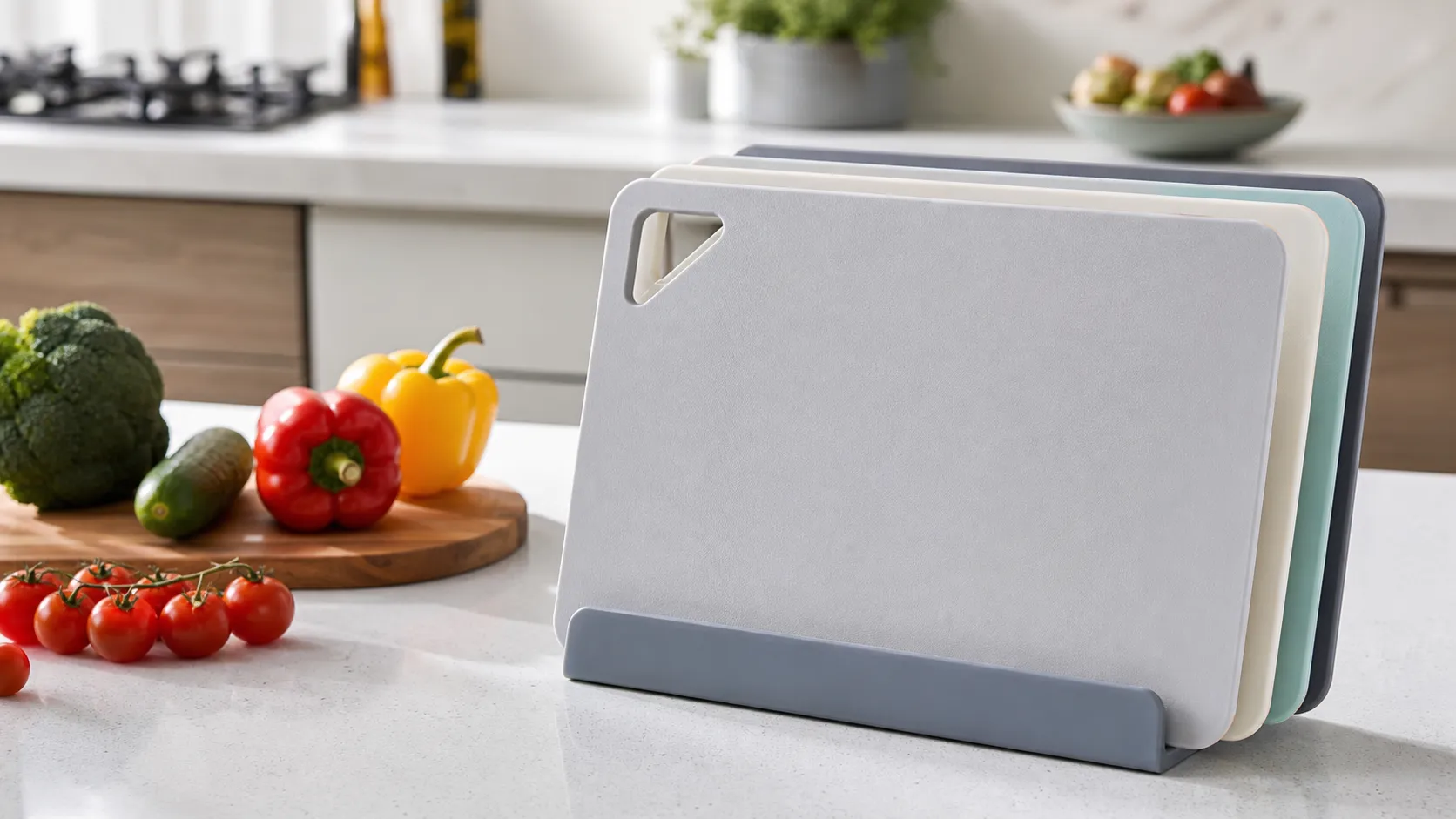
Finding the ideal plastic cutting board comes down to matching your prep habits with smart design features. I always recommend evaluating your daily cooking volume, counter space, and food safety goals before picking a board.
Size & Thickness Considerations
Matching board dimensions to your kitchen layout and knife length is essential for safe, efficient chopping:
- Knife Blade Matching: Choose a board width at least 2 to 3 inches longer than your primary chef’s knife blade so you have full cutting clearance.
- Countertop Fit: Measure your primary prep area. A board that overhangs the counter edge creates dangerous wobbling. If you’re unsure about dimensions, take a look at how to choose the right non-slip cutting board size for your needs to pick the exact match for your workspace.
- Board Thickness: Standard 0.3-inch thin mats work for quick tasks, but thick 0.5-inch to 0.75-inch high-density boards provide long-term warp resistance and a solid feel under heavy chopping.
Single Boards vs. Color-Coded Multi-Board Sets
How often you cook determines whether a single versatile surface or a dedicated system works best.
| Setup Type | Best For | Safety Benefit | Workflow Advantage |
|---|---|---|---|
| Single Multi-Purpose Board | Compact kitchens, low-frequency cooking | Lowers clutter, but requires sanitizing between raw meats and produce | Simple, single-surface cleanup |
| Color-Coded Multi-Board Set | Active home cooks, daily meal prep | Virtually eliminates cross-contamination using dedicated surfaces for meat, fish, and produce | High efficiency; switch boards mid-prep without stopping to wash |
Why Modern Innovations Win with Calmchop
Traditional boards rely entirely on manual scrubbing to stay clean, but modern material science takes kitchen hygiene further. At Calmchop, we combined several premium safety features into one reliable prep surface:
- Silver-Ion Hygiene: Our active silver-ion technology is embedded directly into the food-safe, BPA-free material to stop bacterial growth 24/7 inside microscopic knife marks.
- Self-Healing TPU Options: Highly flexible Thermoplastic Polyurethane (TPU) surfaces absorb knife impacts, reducing microplastic shedding and keeping edges sharp.
- Non-Slip Rubber Borders: Molded perimeter grips lock the board securely to quartz, granite, or wood counters—eliminating the need for wet paper towels underneath.
- Deep Juice Retention Channels: High-capacity perimeter grooves catch liquid runoff from resting meats and juicy fruits before it spills onto your countertops.
Frequently Asked Questions About Plastic Cutting Boards
Are plastic cutting boards dishwasher safe?
Yes, most high-quality models made from polypropylene (PP), high-density polyethylene (HDPE), or thermoplastic polyurethane (TPU) easily tolerate the high heat of residential and commercial dishwashers. High-temperature steam cycles kill lingering surface microbes effectively without warping high-density materials. For maximum kitchen convenience, we always recommend choosing verified dishwasher-safe plastic cutting boards to streamline daily cleanup.
Do plastic cutting boards dull kitchen knives faster than wood?
Not necessarily. Medium-density materials like HDPE and flexible TPU yield slightly under sharp blade edges, preserving edge retention effectively. While cheap, ultra-hard plastic surfaces can dull fine cutlery over time, commercial-grade plastic cutting board options protect your edges just as well as premium hardwoods—without requiring delicate hand-washing or oiling.
How often should I replace a plastic cutting board?
A standard plastic surface typically lasts 1 to 3 years depending on your prep volume and material grade. It is time to retire your board once you notice heavy knife scoring, deep grooves that cannot be scrubbed clean, or visible warping. Deep scarring creates knife groove bacteria retention zones that hold microscopic food debris despite thorough washing.
How do modern antibacterial plastic boards work?
Next-generation boards incorporate active silver-ion antibacterial technology directly into the material matrix during production rather than relying on a thin surface coating that rubs off over time. The silver ions continuously interrupt bacterial cell metabolism on contact, preventing microbial growth. Upgrading to advanced antimicrobial BPA-free plastic cutting boards provides reliable 24/7 hygiene across every food prep session.
 English
  German
  Turkish
  Italian
  Russian
  Polish
  Arabic
  French
  Malay
Malay  Japanese
  Korean
  Thai
Thai