
Understanding Polypropylene (PP) Cutting Boards
When we analyze the hierarchy of kitchen tools, Polypropylene (PP) stands out as the professional standard for a reason. Unlike porous wood that absorbs meat juices or brittle glass that destroys knife edges, food grade PP material offers a scientifically balanced surface for serious food preparation. It is defined by its high density and non-porous nature, creating a “sheet of glass” effect where liquids and bacteria are repelled rather than absorbed.
Core Material Properties
We choose high-density PP for its ability to withstand the rigorous demands of a commercial-grade workflow. It is chemically inert, meaning highly acidic ingredients like lemons, tomatoes, or vinegar won’t pit or degrade the surface over time.
- Non-Porous Barrier: Prevents cross-contamination by stopping fluids from seeping into the core.
- Heat Resistance: Engineered to withstand high temperatures (typically dishwasher safe up to 100°C/212°F), ensuring effective thermal sanitization.
- Lightweight Stability: significantly lighter than end-grain wood blocks while retaining enough density to stay planted on the counter.
Standard PP vs. Enhanced Silver-Ion Technology
Not all plastic boards are created equal. A standard polypropylene cutting board review often highlights basic utility, but modern material science has pushed performance further. While generic PP provides a passive surface, enhanced versions integrate active hygiene defense.
At CalmChop, we utilize Silver Ion (Ag+) technology embedded directly into the material matrix. This isn’t a surface coating that washes off; it is an intrinsic property of the board that actively inhibits 99% of bacterial growth, including E. coli and Staphylococcus aureus. This elevates the humble cutting board from a simple chopping block to a critical component of kitchen hygiene.
Performance Comparison: PP vs. The Rest
When we analyze PP cutting board performance, it is not just about having a surface to chop on; it is about how the material interacts with your tools and workflow. We have engineered our boards to bridge the gap between the maintenance-heavy nature of wood and the flimsiness of budget plastics.
Knife-Friendliness and Edge Retention
A primary concern for any chef is blade longevity. Hard surfaces like glass destroy edges immediately, while soft, cheap plastics can gouge too easily, creating bacteria traps.
- PP (Polypropylene): Offers a “Goldilocks” density. It is firm enough to support heavy chopping but has enough give to prevent dulling your knife. Our micro-textured surface is designed specifically to resist deep scarring.
- HDPE (High-Density Polyethylene): Often softer than PP, which can lead to deeper grooves that are harder to clean.
- End-Grain Wood: Excellent for knives but requires oiling and cannot handle the dishwasher.
For a deeper dive into how materials have evolved, seeing the shift from traditional cutting boards to modern antibacterial cutting boards highlights why high-density PP is becoming the professional standard.
Grip, Stability, and Workflow
A sliding board is a dangerous board. Unlike generic plastic sheets that skate across wet counters, we integrate TPE (Thermoplastic Elastomer) borders and feet into our designs. This zero-slip construction ensures the board stays planted during vigorous prep work.
Workflow features include:
- Deep Juice Grooves: Catch liquids from roasts or fruits, keeping the counter dry.
- Dual-Sided Functionality: Dedicated sides for raw meat and produce to stop cross-contamination.
- Integrated Handles: Easy lifting and hanging for storage.
Staining and Odor Resistance
Real-world testing with high-pigment foods like beets and turmeric reveals the superiority of high-quality PP. Because the material is non-porous and high-density, it repels pigments that would permanently stain wood or lower-grade plastics. Similarly, strong odors from garlic and onions wash away completely in the dishwasher, unlike porous materials that hold onto smells.
Quick Comparison: PP vs. Common Alternatives
| Feature | CalmChop PP | Standard HDPE | Wood (Maple/Walnut) |
|---|---|---|---|
| Knife Feel | Balanced, resists scarring | Soft, prone to deep cuts | Excellent, self-healing |
| Maintenance | Low (Dishwasher safe) | Low (Dishwasher safe) | High (Hand wash + Oil) |
| Hygiene | Silver Ion (Ag+) Antimicrobial | Standard surface | Natural properties (variable) |
| Stain Resistance | High (Non-porous) | Moderate | Low (Absorbs liquids) |
| Stability | High (TPE Borders) | Low (Usually slippery) | High (Heavy weight) |
In high-volume prep environments, the professional polypropylene board wins on efficiency. It delivers the durability required for commercial use without the delicate care routine of wood, ensuring your kitchen stays fast, safe, and clean.
Hygiene and Sanitation Breakdown
When we talk about kitchen safety, the material you chop on matters just as much as how you wash your hands. In professional settings, hygiene isn’t a suggestion; it’s a requirement. This is where high-quality food grade PP material separates itself from porous alternatives like wood or bamboo.
The Non-Porous Advantage
The primary benefit of a non-porous cutting surface is simple: it acts like a sheet of glass against liquids. Wood fibers naturally absorb meat juices and vegetable fluids, which can trap bacteria deep inside the board where a sponge can’t reach. Polypropylene (PP) is completely impermeable. When you rinse a PP board, you are washing the surface, not trying to flush out internal pores.
Dishwasher Safety and Heat Resistance
Sanitization requires heat. One of the biggest wins for a dishwasher safe cutting board made of PP is its ability to withstand high-temperature cycles (typically up to 100°C/212°F) without warping or cracking. This allows home cooks and pros alike to sterilize their equipment effectively, killing lingering pathogens that hand-washing might miss.
Combatting Scarring and Microplastics
No material is invincible. Over time, knife marks can create grooves where bacteria hide. However, not all plastics are equal.
- Standard PE: Soft, scars easily, and creates deep “bacterial harbors.”
- High-Density PP: Our engineered PP is denser, offering better cutting board scratch resistance. While surface marks will appear eventually, they are generally shallower and easier to scrub clean.
- Microplastics: There is a valid concern about cutting board microplastics shedding from worn-out, cheap plastic boards. By using high-density, durable PP, we significantly reduce material flaking compared to budget-grade options, keeping your food cleaner.
Silver Ion: The Antimicrobial Edge
Standard plastic is passive; it just sits there. We take it a step further with silver ion antimicrobial board technology. By embedding Ag+ agents directly into the material during manufacturing, our boards actively inhibit the growth of common kitchen bacteria like E. coli and Staphylococcus aureus by up to 99%. This provides a safety net between washes that standard plastic simply cannot offer. For a deeper dive into how this technology compares to market standards, you can check our analysis on the best antibacterial cutting boards and what really works.
Preventing Cross-Contamination
Even with antimicrobial tech, mechanical separation is key. Using a professional polypropylene board allows for strict zoning. Our designs feature dual-sided functionality—often with icons or distinct textures—to ensure raw meat never touches the same surface as fresh produce. This approach mirrors professional color-coding systems, which is exactly how plastic boards simplify kitchen workflow and prevent dangerous pathogen transfer.
Durability and Longevity Evaluation
When we evaluate a durable kitchen chopping board, we aren’t just asking if it will snap in half. We are looking at whether it stays flat, resists deep scarring, and remains hygienic after thousands of cuts. Durability in professional prep isn’t just about toughness; it is about maintaining a sanitary surface over time.
Warping and Heat Resistance
One of the most common failures in budget plastic boards is the “taco effect”—warping after a few cycles in the dishwasher. This typically happens with low-grade plastics that haven’t undergone proper stress relief during manufacturing. Our high-density PP boards are engineered to withstand temperatures up to 100°C (212°F). Through our strict quality control system, we ensure the material structure remains stable even under high thermal stress, making plastic board warping prevention a standard feature rather than an afterthought.
Scratch and Groove Resistance
Every cutting board will eventually show knife marks; if it doesn’t, it is likely too hard and is dulling your knife edge. The goal is cutting board scratch resistance that prevents deep gouges.
- High-Density Formulation: We use a dense PP composition that accepts the blade without allowing deep incisions where bacteria usually hide.
- Textured Surface: The micro-textured finish helps hide superficial scratches while maintaining a non-slip grip.
Lifespan Comparison: PP vs. The Alternatives
How does Polypropylene stack up against other materials in the long run?
- Vs. HDPE: While similar, standard HDPE often lacks the rigidity of high-grade PP, making it more prone to warping in commercial dishwashers.
- Vs. Wood: Wood is beautiful but high-maintenance. Without constant oiling, it splits and absorbs water. PP is ideal for modern safety-focused kitchens because it requires zero oiling and is impervious to moisture.
- Vs. Rubber: Rubber boards are excellent for knives but are incredibly heavy and often cannot be machine washed, limiting their sanitation potential.
Maintenance Impact on Durability
Longevity is also about how you treat the gear. Because our PP boards are non-porous, they don’t require sanding or resurfacing like wood. Simply placing them in the dishwasher ensures they remain sanitized. Proper vertical storage allows for airflow, ensuring your board is ready for the next prep session without retaining moisture or odors.
Head-to-Head Comparison Table
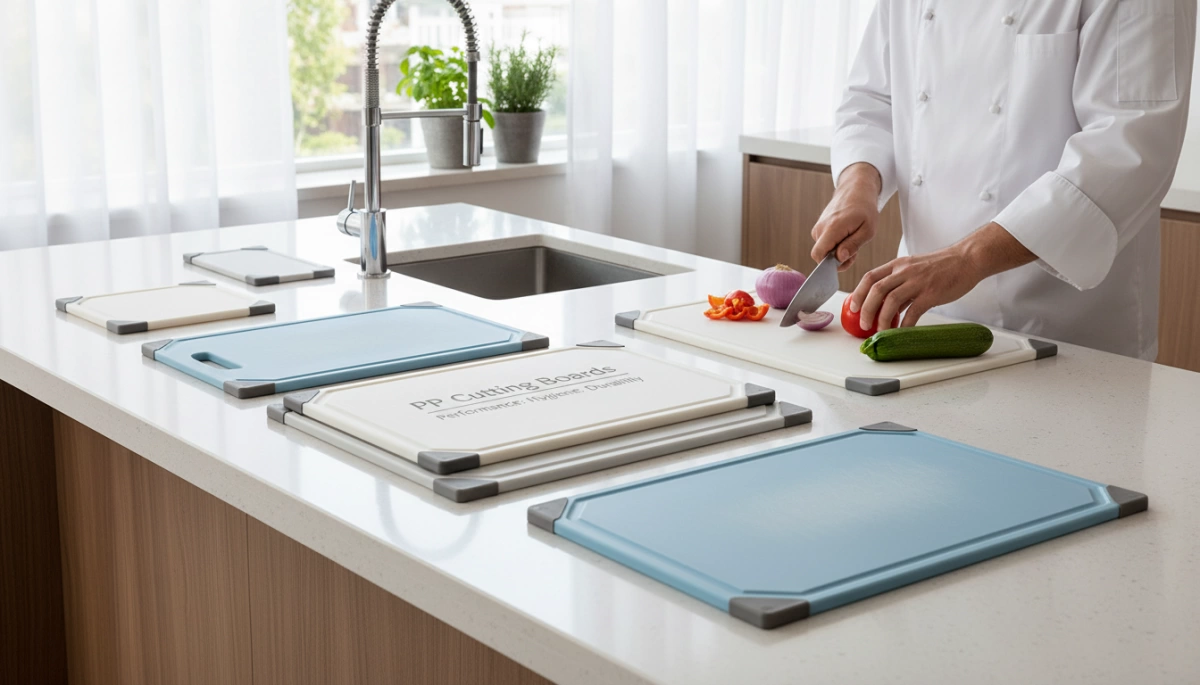
To truly understand where our high-density Polypropylene (PP) stands against the competition, we need to look at the data. I’ve broken down the critical differences between standard options and the enhanced materials we use. This comparison highlights why a professional polypropylene board often replaces traditional materials in high-volume kitchens.
Here is the breakdown of best cutting board material comparison:
| Material | Knife Friendliness | Hygiene Rating | Durability Factors | Best For | Drawbacks |
|---|---|---|---|---|---|
| Enhanced PP (CalmChop) | High Micro-textured surface grips food; density prevents deep scarring. |
Excellent Silver Ion (Ag+) technology inhibits 99% of bacteria; non-porous. |
High TPE borders prevent slipping; heat-resistant & dishwasher safe. |
All-Purpose Raw meat, heavy chopping, and professional hygiene standards. |
Premium pricing compared to generic plastics. |
| Standard Plastic (HDPE) | Medium Often too soft, leading to deep grooves that dull knives. |
Low/Medium Deep cuts trap bacteria; lacks active antimicrobial agents. |
Medium Prone to warping in high heat; surfaces stain easily. |
Budget Prep Light tasks where longevity isn’t a priority. |
Microplastic shedding; hard to sanitize deep cuts. |
| Wood (End-Grain) | Excellent Self-healing fibers are gentle on blades. |
Medium Natural antimicrobial properties, but porous surface absorbs liquids. |
High (if maintained) Lasts years but requires regular oiling; cracks if wet. |
Dry Prep Bread, vegetables, and serving presentation. |
High maintenance; not dishwasher safe; heavy. |
| Glass / Stone | Very Low Destroys knife edges almost immediately. |
High Non-porous and easy to clean. |
High (Hardness) Will not scratch but can shatter on impact. |
Pastry / Dough Rolling out dough (cool surface). |
Dangerous for knives; slippery surface causes accidents. |
Analyzing the Trade-offs
When choosing a durable plastic cutting board, the balance between hygiene and maintenance is key. While wood offers excellent aesthetics and knife feel, it fails in wet environments where cross-contamination is a risk. Standard HDPE boards are cheap but become bacterial havens quickly due to deep scarring.
Our enhanced PP boards bridge this gap. We utilize a specific density that resists deep cuts—preserving your knife edge—while integrating Silver Ion technology to actively fight microbial growth. This makes them the definitive choice for cooks who demand the sanitation of glass with the utility of wood, all while being fully dishwasher safe.
Choosing the Right Cutting Board for Your Needs
Selecting the correct prep surface isn’t just about aesthetics; it is about matching the material to your specific workflow, hygiene standards, and maintenance habits. Whether you are outfitting a busy family home or a commercial prep line, the requirements for durability and safety shift significantly.
For Home Cooks: Prioritizing Ease and Safety
In a home kitchen, you need a board that is low-maintenance but high-performance. We designed our PP boards to bridge the gap between heavy wooden blocks and flimsy plastic sheets.
- Knife Care: Our high-density PP surface offers enough “give” to protect sharp blades, preventing the rapid dulling often caused by glass or granite surfaces.
- Stability: Safety is paramount. Unlike standard plastic sheets that slide across wet counters, our integrated TPE borders ensure a zero-slip grip during slicing.
- Convenience: Being 100% dishwasher safe means you can sanitize the board effortlessly after prepping raw chicken or fish.
For Professional Kitchens: Sanitation and Volume
Commercial environments demand tools that withstand abuse and rigorous cleaning protocols. Speed and hygiene are the currencies of a professional line.
- Heat Resistance: Professional dishwashers run hot. Our high-grade PP is engineered to resist warping at temperatures up to 100°C (212°F), maintaining a flat, stable surface over time.
- Cross-Contamination Control: Using a color-coded system or dual-sided design is essential for keeping allergens and raw proteins separate.
- Upgrading Standards: As regulations tighten, many operators are looking at how commercial kitchens can upgrade for safety and efficiency by moving away from easily scarred soft plastics to denser, antimicrobial options.
For Eco-Conscious Buyers: Longevity Matters
Cheap plastic boards are often treated as disposable, ending up in landfills after a few months of warping or deep staining.
- Reduced Waste: By investing in a high-density durable kitchen chopping board, you extend the lifecycle of your tools. A board that resists deep scarring and warping doesn’t need to be replaced nearly as often.
- Sustainable Manufacturing: We focus on BPA-free, food-grade materials that meet strict FDA and LFGB standards, ensuring that the product is safe for both your food and the environment.
When Enhanced PP Outperforms Standard Options
Not all plastic is created equal. While generic polyethylene (PE) boards are cheap, they lack the active hygiene features of modern material science. This is where enhanced PP stands apart:
- Silver Ion Technology: Standard boards just hold food; our boards actively fight bacteria. The embedded Ag+ agents inhibit 99% of bacterial growth (like E. coli and Staph) on the surface.
- Structural Integrity: Standard plastic often relies on thickness for strength. We use a composite of high-density PP and TPE to provide superior impact resistance without excessive weight.
- Hygiene Maintenance: The non-porous nature of our enhanced PP prevents juices from seeping in, stopping the lingering odors (like garlic or onion) that plague cheaper, softer plastics.
Maintenance Tips for Maximum Performance and Hygiene
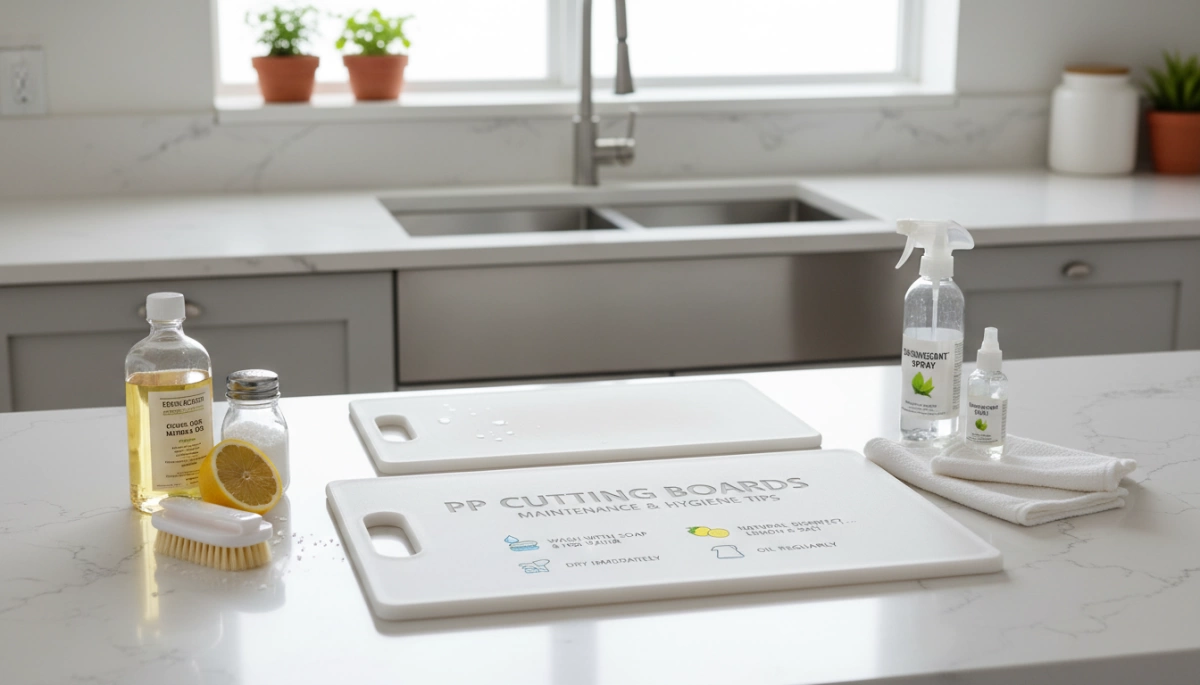
Even the most durable professional polypropylene board requires proper care to maintain its antimicrobial properties and structural integrity. While our boards are engineered for resilience, following a strict maintenance protocol ensures they remain a sanitary surface for years.
Daily Cleaning and Dishwasher Guidelines
One of the biggest advantages of our material is that it is a dishwasher safe cutting board. Unlike wood, which swells and cracks, our high-density PP withstands high-heat cycles (typically up to 100°C/212°F) without degrading.
- Rinse Immediately: Always rinse off colored juices (like beet or turmeric) immediately to prevent surface staining.
- Dishwasher Placement: Place the board on the bottom rack. Ensure it isn’t jammed against heating elements or heavy pots that could force it into a bent shape during the cool-down cycle.
- Hand Washing: If washing by hand, use hot soapy water and a stiff brush. This is crucial for cutting board hygiene bacteria control, as the brush bristles reach into the micro-texture better than a sponge.
If you are using our portable cutting boards for outdoor barbecues, ensure you give them a full sanitation cycle in the dishwasher once you return to the kitchen, as field cleaning is rarely sufficient for raw meat prep.
Deep Cleaning for Scarred Surfaces
Over time, any plastic board will develop knife marks. While our Silver Ion (Ag+) technology inhibits bacterial growth, physical debris can still get trapped in deep cuts.
Weekly Deep Clean Protocol:
- Paste Application: Create a paste using baking soda, salt, and water.
- Scrub: Use a lemon half or a scouring pad to scrub the paste into the board’s surface. This neutralizes odors (garlic/onion) and lifts stubborn pigments.
- Sanitize: For commercial settings, a dilute bleach solution or professional sanitizer spray ensures total neutrality.
Storage Practices to Prevent Warping
Plastic board warping prevention is largely about how you store the board after heat exposure. Polypropylene is heat-resistant, but it has “memory.” If it cools down in a bent position, it may stay that way.
- Dry Upright: Always store boards vertically in a rack. This ensures airflow around both sides, preventing moisture buildup and mold.
- Avoid Flat Stacking: Never stack wet boards flat on top of each other. This traps moisture and promotes warping.
- Heat Sources: Keep boards away from direct stovetop heat or broiler vents when not in use.
Signs It’s Time to Replace Your Board
We build CalmChop boards to outlast standard retail options, but no surface is immortal. Recognizing the end of a board’s lifecycle is critical for food safety.
Replacement Indicators:
- The Fingernail Test: If your knife grooves are deep enough to catch your fingernail as you drag it across the surface, the board is becoming difficult to sanitize effectively.
- Persistent Fuzzing: If the plastic is shedding significantly (creating a fuzzy texture), it increases the risk of cutting board microplastics entering food.
- Instability: If the board has warped to the point where the TPE non-slip feet no longer make contact with the counter, it becomes a safety hazard for knife work.
Frequently Asked Questions About PP Cutting Boards
How well does a PP board handle daily knife use?
We designed our professional polypropylene boards to strike a critical balance between surface hardness and blade protection. Unlike glass or stone, which destroy edges immediately, food grade PP material has enough “give” to preserve your knife’s sharpness. Simultaneously, the high-density construction resists deep scarring better than standard polyethylene (PE), preventing the formation of deep grooves where bacteria typically hide.
Is polypropylene safer than wood for raw meat?
For handling raw proteins, a non-porous cutting surface is generally superior. Wood is porous and can absorb meat juices, potentially trapping pathogens deep inside the grain. Our PP boards are completely non-porous, meaning liquids stay on the surface where they can be washed away. Furthermore, with our integrated Silver Ion (Ag+) technology, the surface actively inhibits the growth of bacteria like E. coli and Staph. To ensure safety, we always recommend following proper cleaning and care routines after prepping raw ingredients.
Can PP cutting boards go in the dishwasher?
Yes, this is a major advantage of PP vs HDPE cutting boards. Our Polypropylene boards are engineered to withstand high temperatures (typically up to 100°C/212°F), making them 100% dishwasher safe cutting boards. This allows for effortless sanitization after heavy use, a feature that wood and bamboo simply cannot offer without warping or cracking.
Do plastic cutting boards release microplastics?
While any material will eventually wear down under a sharp blade, the quality of the plastic matters significantly. Cheap, soft plastics shed easily. Our boards utilize high-density PP, which is significantly more resistant to abrasion and shedding. To minimize risk, we recommend replacing any cutting board once it becomes heavily scarred or fuzzy, regardless of the material.
 English
  German
  Turkish
  Italian
  Russian
  Polish
  Arabic
  French
  Malay
Malay  Japanese
  Korean
  Thai
Thai