
Environmental Impact: Closing the Loop in the Kitchen
We often focus intently on the ingredients we buy, ensuring they are organic or locally sourced, but we rarely stop to consider the environmental cost of the surface we chop them on. Transforming your culinary routine into a sustainable ritual starts with the tools you use every day. By choosing recycled plastic cutting boards, we aren’t just buying a kitchen tool; we are actively participating in a circular economy that values resources over waste.
Diverting Plastic from Landfills
The reality of plastic waste is undeniable, but the solution lies in innovation, not just avoidance. By utilizing post-consumer recycled (PCR) materials and durable Polypropylene (PP) Code 5, we give a second life to plastics that might otherwise sit in a landfill for centuries.
- Resource Recovery: We take existing materials and engineer them into high-density, food-safe surfaces.
- Circular Design: This process closes the loop, turning potential waste into a long-lasting, eco-friendly cutting board that serves a purpose in your home.
Lowering Carbon Footprints
Creating something new doesn’t have to mean extracting more from the earth. Manufacturing recycled plastic kitchenware requires significantly less energy compared to producing virgin plastics, which rely heavily on oil extraction and refining.
- Vs. Virgin Plastic: We skip the energy-intensive extraction phase entirely.
- Vs. Wood: Unlike heavy wooden boards that require harvesting and fuel-heavy transportation, recycled boards are lighter and more efficient to ship, further reducing the overall carbon footprint of your kitchen setup.
The Zero-Waste Vision
Sustainability isn’t just about the final product; it is about the entire journey. Our manufacturing philosophy is built on a zero-waste production model. We ensure that scraps from the production line are reintegrated rather than discarded. Furthermore, we prioritize carbon-neutral shipping and ethical supply chain practices (compliant with BSCI standards) to ensure that your green kitchen solutions are as kind to the planet as they are to your knives.
Health & Hygiene: Defeating Bacteria and Microplastic Fears
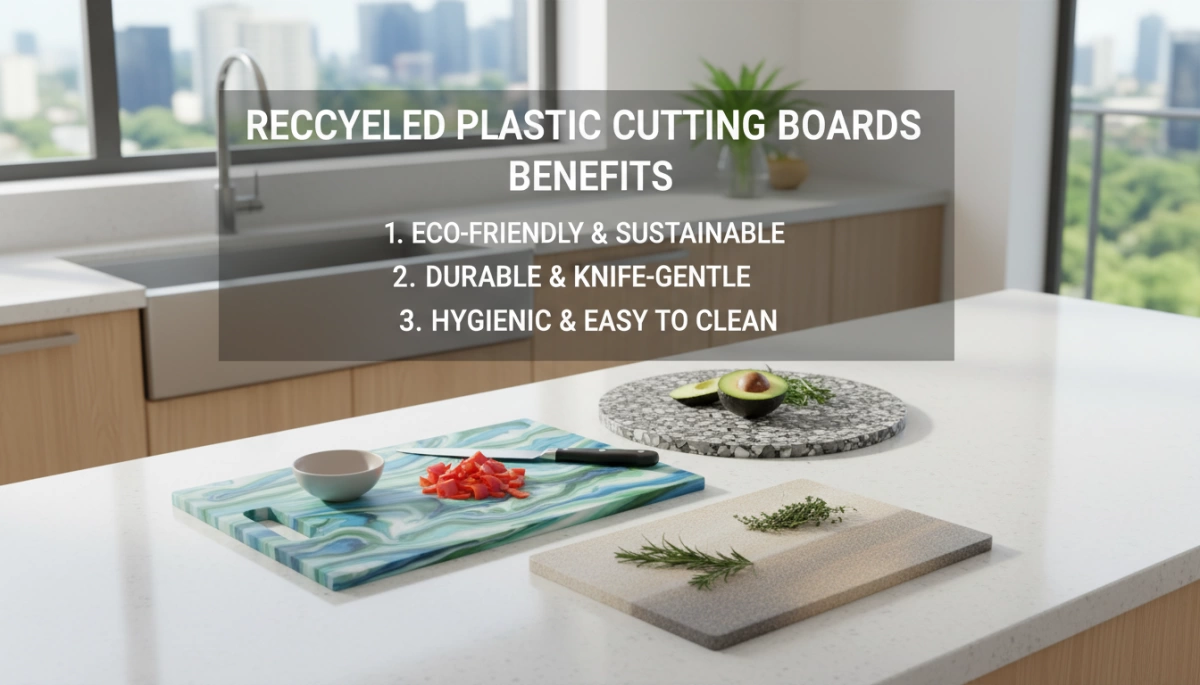
Addressing the Microplastic Myth
There is a common misconception that all plastic boards eventually end up as microplastics in your food. This fear usually stems from experiences with cheap, low-density plastics that flake and scar easily under a knife. However, high-quality recycled plastic cutting boards are engineered differently. We utilize high-density materials that are specifically designed to withstand rigorous chopping without shedding.
Unlike standard virgin plastics that might be soft and prone to deep gouging, our high-density food prep surfaces are tested to endure over 10,000 cuts. This durability ensures that the board remains intact, keeping your meals free from unwanted synthetic particles.
Advanced Antibacterial Technology
Hygiene is the top priority in any professional or home kitchen. Standard boards can become breeding grounds for pathogens if deep scratches trap food particles. To combat this, we integrate silver-ion antimicrobial technology directly into the material during manufacturing.
This isn’t just a surface coating that washes away; it is a permanent feature of the board. Our antibacterial cutting boards are rigorously tested and proven to reduce bacterial growth by 99.9%. With FDA and SGS certifications, you can trust that the surface actively works against contaminants like E. coli and S. aureus, ensuring every slice is safe. For businesses looking to upgrade their hygiene standards, our wholesale kitchen double-sided custom plastic cutting boards offer this advanced protection in a versatile, professional format.
Dishwasher Safety & Maintenance
One of the biggest advantages of these modern materials is their resistance to moisture. Traditional wood or bamboo boards are porous, absorbing liquids that can harbor bacteria and cause warping. In contrast, our BPA-free plastic chopping boards are completely liquid-repellent.
This non-porous nature makes them inherently dishwasher safe. You can sanitize them using high-heat cycles without worrying about the board warping, cracking, or retaining odors. This ease of cleaning ensures that your sustainable kitchen products remain hygienic and ready for use, meal after meal.
Unmatched Durability for Smart Kitchens
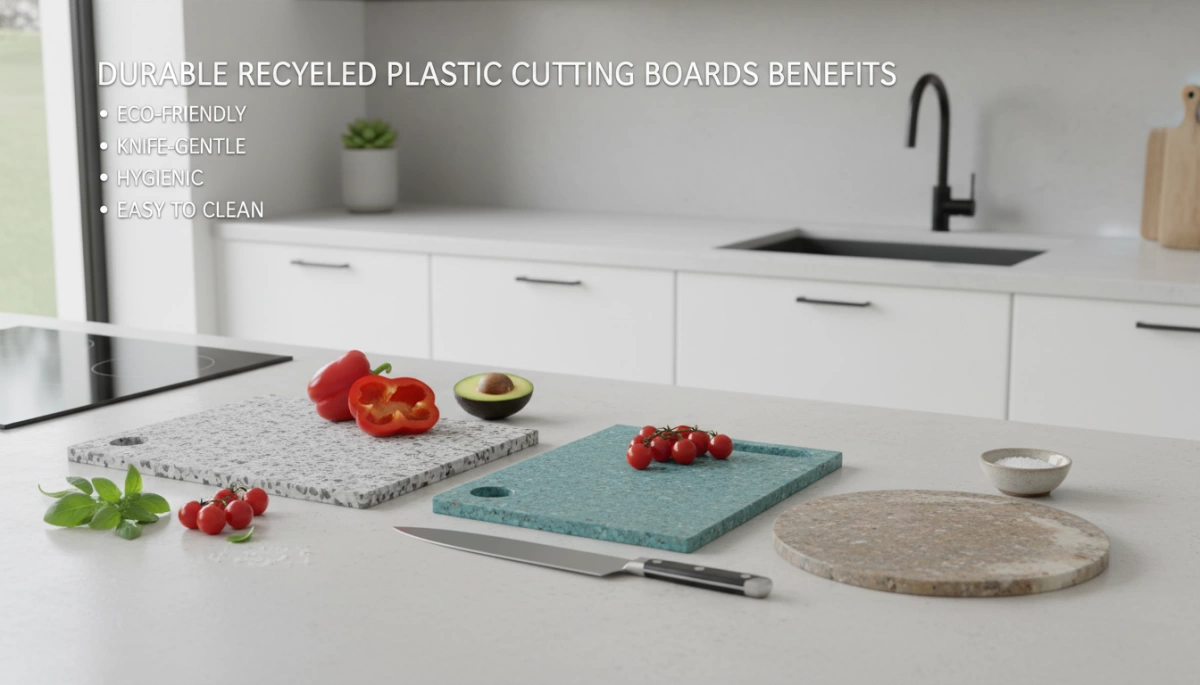
Sustainability means nothing if the product doesn’t last. In the professional kitchenware industry, we know that the most eco-friendly tool is the one you don’t have to replace every few months. We engineer our recycled plastic cutting boards to handle the rigorous demands of daily cooking while maintaining the highest safety standards.
Built for Longevity: Knife-Scratch Resistance
A common failure point for standard plastic boards is how easily they scar. Deep knife marks are not just unsightly; they are microscopic trenches where bacteria hide and multiply. We take a different approach with our manufacturing.
Our boards undergo rigorous performance testing to ensure they are truly knife-scratch resistant. In our labs, these surfaces are tested to withstand 10,000+ cuts without significant wear or deep scarring. By maintaining a smoother surface for longer, we ensure that the board remains hygienic and easy to clean, far outlasting cheaper, low-density alternatives.
User-Centric Smart Design
We believe that a cutting board should actively help you cook better. Beyond the raw material, we integrate smart features that solve common kitchen frustrations:
- BPA-Free Composition: Safety is our baseline. We use strictly food-grade materials that are completely BPA-free, ensuring no harmful chemicals leach into your meals. When searching for the best non-toxic cutting boards, material purity is the most critical factor we control.
- Non-Slip Edges: Stability is a safety feature. Our designs often include TPE or silicone grips to prevent the board from sliding during heavy chopping.
- Deep Juice Grooves: Efficient water channels capture runoff from fruits and meats, keeping your countertops clean.
- Hygiene Zones: To prevent cross-contamination, many of our models feature specific zones or double-sided designs to separate raw proteins from fresh produce.
Understanding the usage scenarios of different material cutting boards is key to an efficient kitchen, and these smart design elements make recycled plastic boards a versatile, daily driver for modern families.
The Benefits of Recycled Plastic Cutting Boards for Sustainable Kitchens: Material Showdown
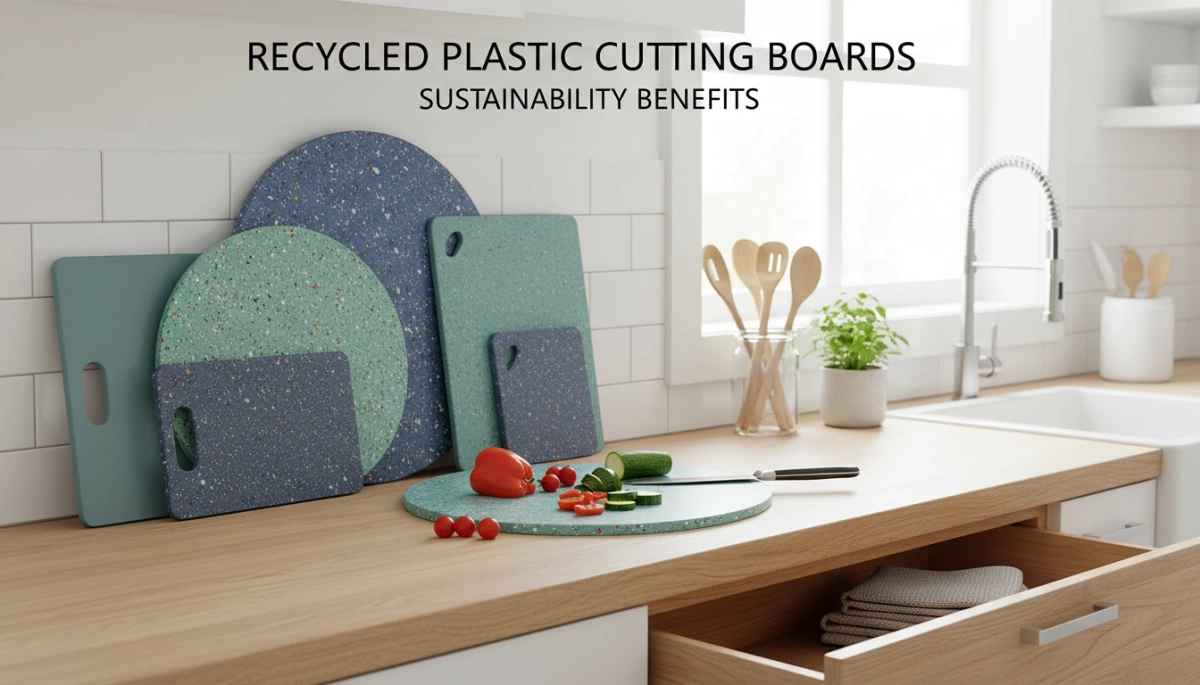
Choosing the right surface for food prep directly impacts both your health and the environment. As a creator of green kitchen solutions, I constantly test and evaluate different materials. To understand the true value of an eco-friendly cutting board, we have to put it head-to-head with the traditional alternatives.
Wood vs Plastic Cutting Board
People often ask me which material actually holds up best to daily cooking. When exploring the best PP cutting boards for home and professional kitchens, it is essential to compare them directly against traditional favorites like wood and standard plastic.
| Material | Sustainability | Maintenance | Hygiene | Durability |
|---|---|---|---|---|
| Recycled Plastic (PP Code 5) | High. Made from post-consumer recycled plastic kitchenware, actively supporting a circular economy. | Low. A completely dishwasher safe recycled board; no oiling or special care required. | Excellent. Non-porous, antibacterial cutting board surface that blocks moisture. | High. A knife-scratch resistant cutting board engineered to prevent warping. |
| Wood / Bamboo | Medium to High. Renewable materials, but harvesting and transport carry a heavy carbon footprint. | High. Must be carefully hand-washed and regularly oiled to prevent drying and cracking. | Good (if maintained). Can harbor bacteria in deep, untreated grooves if neglected. | High. Can last for years, but requires constant, dedicated upkeep. |
| Standard Virgin Plastic | Low. Manufactured from new petroleum products and contributes straight to landfill waste. | Low. Dishwasher safe, but degrades rapidly under high heat. | Moderate. Cheaper, low-density materials easily score and trap food particles. | Low to Medium. Highly prone to warping, staining, and deep knife scars. |
The Clear Choice for Sustainable Kitchen Products
- Zero-Fuss Upkeep: Unlike heavy wood that demands endless oiling and hand-washing, a BPA-free plastic chopping board goes straight into the dishwasher for effortless high-heat sanitization.
- Superior Food Safety: A high-density food prep surface made from properly engineered recycled materials resists the deep scarring where harmful bacteria naturally hide.
- True Environmental Impact: Opting for circular economy kitchen solutions over virgin plastics actively diverts waste from landfills while providing a safer, tougher product.
We do not have to sacrifice convenience to be environmentally responsible. High-quality recycled plastic outperforms traditional options by offering a resilient, non-toxic cutting board that actually keeps up with modern, busy kitchens.
How to Care for and Retire Your Recycled Cutting Board
Sustainability isn’t just about what you buy; it is about how you maintain it. To get the most out of your eco-friendly kitchen tools, you need a routine that protects both the material and your family’s health.
Daily Maintenance for Peak Hygiene
Our recycled plastic boards are engineered for low maintenance, but proper care ensures the antibacterial technology continues to perform effectively. Because we use high-density materials that repel water, these boards resist the absorption of meat juices and strong odors.
- Dishwasher Safe: Unlike wood, our boards are designed to withstand high-heat sanitization cycles without warping or cracking.
- Simple Scrubbing: For hand washing, hot soapy water is sufficient. The non-porous surface ensures that a quick scrub removes residue easily.
- Protect the Surface: While our boards are scratch-resistant, avoid using serrated knives unnecessarily aggressively, as this preserves the smooth finish longer.
Recognizing the Lifespan of a Board
We test our products rigorously—ensuring they can withstand 10,000+ cuts—but every kitchen tool has a lifecycle. To maintain a safe kitchen, you must recognize when a board has served its purpose.
Watch for these signs that indicate it is time for a replacement:
- Deep Grooves: If knife marks become deep enough to trap food particles that your sponge can’t reach, bacteria can bypass the surface protection.
- Instability: If a board eventually loses its flatness (though rare with our reinforced design), it becomes a safety hazard during chopping.
- Persistent Staining: While our materials are stain-resistant, significant discoloration after years of use can indicate surface degradation.
Ensuring your equipment meets strict quality certifications is vital, but swapping out worn gear is equally important for food safety.
End of Life: Completing the Circle
The true benefit of a recycled plastic cutting board is that its life doesn’t end in a landfill. When your board is finally ready to be retired, it remains a valuable resource. Because we utilize materials like Polypropylene (PP) Code 5 and thermoplastic polyurethane (TPU), these boards can often be reintroduced into the recycling stream.
Check your local recycling facilities to ensure they accept rigid plastics. By properly recycling your old board, you ensure the material is processed into new products, maintaining the circular economy and validating your commitment to a zero-waste lifestyle.
 English
  German
  Turkish
  Italian
  Russian
  Polish
  Arabic
  French
  Malay
Malay  Japanese
  Korean
  Thai
Thai