
The Problem with Traditional Plastic Cutting Boards
For many of us, the kitchen is the heart of the home. It is where we gather, laugh, and prepare meals to nourish our loved ones. Naturally, keeping our families safe is our absolute top priority. Yet, one of the most common prep tools sitting on our countertops might be compromising both our health and the planet. I used to rely on standard, mass-produced plastic boards without a second thought, until I learned what actually hides inside those deep knife scars. Traditional plastic boards are notorious for harboring hidden dangers, making the switch to genuine sustainable kitchen products more urgent than ever before.
The Microplastic Threat
Take a close look at your current cutting board. Do you see those deep gouges and frayed, fuzzy scratches? Every time you chop, slice, or dice on low-quality, conventional plastic, your knife shaves off microscopic fragments.
- Invisible Ingestion: Data shows that regular use of traditional boards can introduce thousands of microplastics into our family meals every single year. You are essentially seasoning your food with plastic.
- Chemical Leaching: Cheap, everyday plastics often contain unregulated additives that can transfer directly onto your fresh produce and raw meat.
- Bacterial Traps: Those deep knife grooves become impossible to fully sanitize, creating the perfect breeding ground for harmful bacteria.
We shouldn’t have to worry about serving a side of plastic with dinner. Transitioning to microplastic-free cutting surfaces and BPA-free sustainable prep boards is essential for our peace of mind.
Environmental Impact
Beyond our own dining tables, the environmental cost of conventional plastic kitchenware is staggering. Traditional plastic cutting boards are a prime example of toxic, throwaway culture that we can no longer afford to support.
- Short Lifespans: Standard boards wear out rapidly, frequently warping in the dishwasher or becoming too scarred to use safely after just a few months.
- Landfill Burden: Because they are rarely recyclable at the end of their life, millions of these cheap boards are tossed into landfills annually, where they will sit and slowly degrade over hundreds of years.
- Fossil Fuel Dependency: Manufacturing disposable plastics relies heavily on virgin petroleum, drastically driving up our collective carbon footprint.
As eco-conscious consumers, we have to demand better. It is time to step away from disposable, toxic plastics and fully embrace eco-friendly chopping board alternatives that protect both our homes and our environment.
What Are Recycled Plastic Cutting Boards?
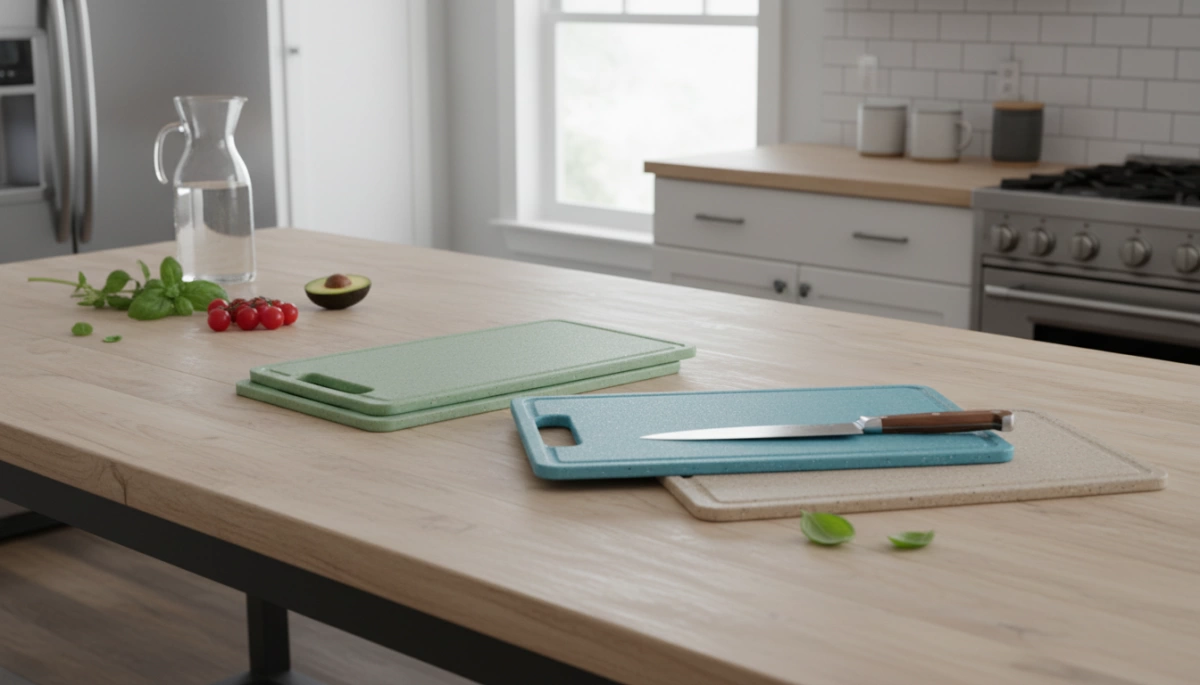
Recycled plastic cutting boards take everyday plastic waste and transform it into high-performance kitchen tools. Instead of manufacturing new plastics from fossil fuels, we repurpose existing materials to create safe, food-grade recycled plastic kitchenware. This approach keeps usable plastic out of landfills and oceans while giving you a tough, reliable surface for your daily meal prep.
Materials Matter: HDPE Chopping Blocks
You cannot just melt down any random plastic and chop fresh vegetables on it. The source material dictates the safety and lifespan of the product. We rely heavily on high-density polyethylene (HDPE) because it is incredibly resilient and perfectly safe for food contact.
When you are choosing a durable plastic cutting board, understanding the underlying material guarantees you are getting a product that performs. Here is why an HDPE chopping block is the industry standard:
- 100% Non-toxic: Crafted from FDA-approved recycled materials, ensuring a completely BPA-free surface.
- Knife-friendly: The dense material resists deep gouges and scratching, yet it is yielding enough so it won’t dull your chef’s knives.
- Highly Sanitary: The non-porous surface stops liquids and odors from seeping in, making it a completely dishwasher-safe green kitchen tool.
The Closed-Loop System
True sustainability is not a one-way street. We build our sustainable kitchen products around a closed-loop system, ensuring that what we make doesn’t eventually become trash.
Here is how closed-loop recycling cutting boards actually work in practice:
- Reclaim: We source clean, high-quality plastic waste that was destined for the landfill.
- Process: The plastic is rigorously sanitized, shredded, and melted down at high temperatures.
- Manufacture: We mold the recycled material into a dense, non-toxic plastic cutting board.
- Regenerate: At the end of its long lifespan, the cutting board itself can be recycled and remolded again.
This zero-waste kitchen prep cycle means you get a professional-grade chopping surface without adding a single ounce of new plastic to the environment.
Addressing the Elephant in the Room: Are They Toxic?
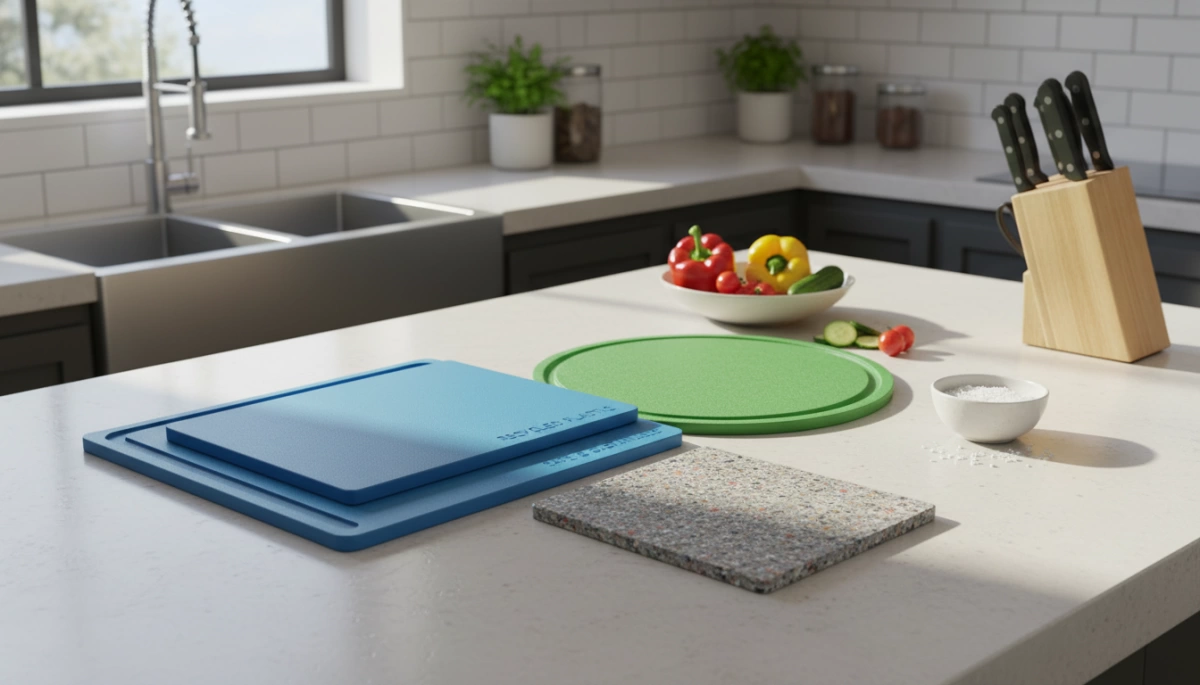
When we discuss Sustainable Kitchen Products: Recycled Plastic Cutting Boards, the immediate concern for most buyers is safety. There is a lingering fear that “recycled” or “eco-friendly” plastic implies lower quality or, worse, chemical contamination. It is crucial to tackle these concerns head-on because safety in the kitchen is non-negotiable.
Separating Fact from Fiction
Not all plastics are created equal. The misconception is that recycled boards are made from random, unregulated waste. In the professional manufacturing world, this is simply not how it works for food-contact surfaces.
Food-grade recycled plastic kitchenware must undergo rigorous purification processes. The material source matters immensely. We don’t just melt down random scraps; we utilize sustainable raw materials and strictly controlled production lines to ensure the final product is chemically stable and safe for food prep.
BPA, PFAS, and Leaching
The biggest buzzwords in toxicity are BPA (Bisphenol A) and PFAS. These chemicals are notorious for leaching into food, especially when a board is subjected to heat or heavy knife scarring.
Here is a breakdown of what to look for to ensure safety:
| Feature | Cheap/Standard Plastic | Certified Eco-Friendly Board |
|---|---|---|
| BPA Status | Often contains BPA or BPS | 100% BPA-Free |
| Heat Resistance | Low (prone to warping/leaching) | High (stable structure) |
| Material Source | Unknown/Mixed | Food-Grade Sustainable Materials |
| Certification | Rarely Tested | FDA & SGS Certified |
If a manufacturer cannot provide FDA or SGS certifications, you should walk away. Leaching typically happens when low-density plastics degrade. High-quality eco-plastics are engineered to be dense and resistant to deep scarring, which prevents microplastics from entering your food.
The Calmchop Difference
At Calmchop, we realized that being “green” wasn’t enough; the product had to be safer than the traditional alternative. We don’t ask you to choose between sustainability and health. Our approach combines sustainable raw materials with advanced safety features.
We utilize materials like wheat straw to create wheat straw eco cutting boards that reduce reliance on virgin petrochemicals without compromising hygiene. Furthermore, we integrate proprietary antibacterial technology using silver ions and Microban protection. This ensures that our boards are not only free from harmful chemicals like BPA but also actively fight against 99.9% of bacteria, providing a prep surface that is clean, durable, and truly non-toxic.
Sanitation vs. Sustainability: No Compromise
Many people worry that going green means sacrificing kitchen hygiene. I can assure you that with today’s sustainable kitchen products, specifically recycled plastic cutting boards, you never have to choose between protecting the planet and maintaining a sterile cooking environment.
Safe Cutting Board for Raw Meat
Preparing chicken or steak demands absolute safety to prevent cross-contamination. High-density polyethylene (HDPE) chopping blocks are strictly non-porous, meaning dangerous meat juices cannot soak into the core of the material. These eco-friendly chopping board alternatives are completely safe for raw meat prep. Because they are dishwasher safe green kitchen tools, you can effortlessly sanitize them with high-temperature water cycles right after use.
Advanced Hygiene Tech
Modern recycled plastic kitchenware goes far beyond being just a basic flat surface. We actively utilize smart material science to boost your everyday food safety. Upgrading your kitchen with an antibacterial eco-plastic cutting board adds a specialized layer of defense that actively inhibits bacterial growth. This technology keeps your prep station inherently cleaner between regular washes.
Durability and Knife Friendliness
A reliable cutting board must protect your expensive chef’s knives while holding up to years of heavy use.
- Gentle on Blades: The slightly forgiving surface of food-grade recycled plastic absorbs the impact of the blade, keeping your knives sharper for much longer.
- Scratch Resistant: The material resists deep gouges and knife grooves—the exact hiding spots where harmful bacteria thrive.
- Built to Last: These zero-waste kitchen prep tools handle heavy daily chopping without warping, cracking, or needing constant replacement.
How to Shop for a Sustainable Cutting Board
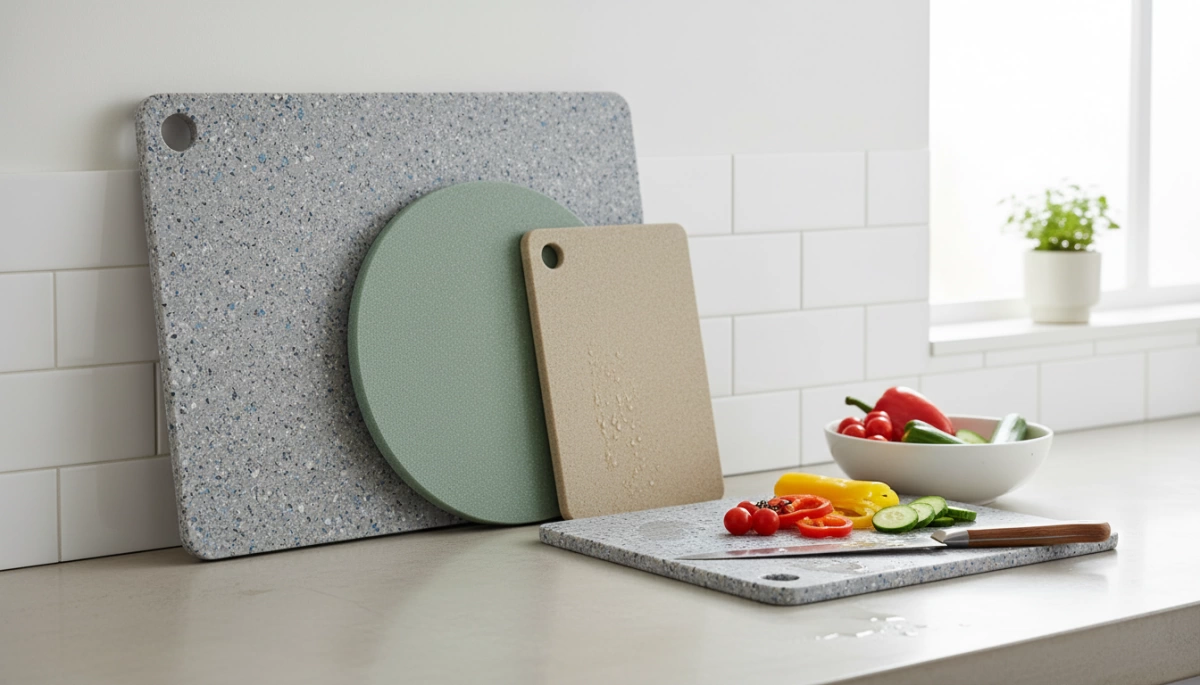
A Buyer’s Checklist
When sourcing sustainable kitchen products, not all recycled plastic cutting boards are created equal. You need a surface that handles heavy daily prep without compromising your health or the environment. At Calmchop, we always recommend verifying a few critical factors before you upgrade your kitchen setup.
Use this checklist to find the best eco-friendly chopping board alternatives:
- Verify the Material: Always demand FDA-approved recycled materials. Your surface must be explicitly labeled as a BPA-free sustainable prep board. Never compromise on food-grade safety.
- Check the Density: Look for a high-density polyethylene (HDPE) chopping block or a solid Polypropylene (PP) build. High density prevents deep knife scarring where bacteria hide. Understanding how PP cutting boards fit into smart and sustainable kitchen concepts will show you exactly why this material dominates modern eco-kitchens.
- Look for Natural Blends: Innovative recycled plastic kitchenware often incorporates organic materials to reduce overall plastic usage. A wheat straw PP cutting board is a perfect example of blending everyday durability with zero-waste kitchen prep goals.
- Confirm Maintenance Needs: Ensure your choice is a dishwasher safe green kitchen tool. High heat sanitation is non-negotiable, especially if you plan on using it as a safe cutting board for raw meat.
- Demand Non-Slip Features: Sustainable kitchen essentials must be highly functional. Choose boards with integrated rubber grips or textured edges to prevent dangerous slips during heavy chopping.
Sticking to these standards guarantees your new food-grade recycled plastic kitchenware is genuinely green, built to last, and exceptionally safe for daily use.
Caring for Recycled Plastic Cutting Boards
We build our sustainable kitchen products to handle heavy daily use, but proper care keeps them performing at their peak. Maintaining your recycled plastic cutting boards is incredibly simple compared to traditional wood, saving you time without compromising on hygiene.
Here is my straightforward routine for keeping your eco-friendly chopping board alternatives in top shape:
- Daily Cleaning: These are completely dishwasher safe green kitchen tools. Just load them into the dishwasher on a normal hot water cycle to effortlessly sanitize the surface.
- Tackling Stains: If vibrant foods like turmeric or beets leave a mark, skip the harsh bleach. Rub a simple paste of baking soda and water over the area, let it sit for five minutes, and rinse.
- Smart Usage: Avoid hacking with heavy meat cleavers. For standard slicing and dicing, a high-density polyethylene (HDPE) chopping block resists scarring beautifully. Understanding the basics of choosing the right cutting board for different ingredients not only prevents cross-contamination but also helps minimize unnecessary wear and tear.
- Proper Storage: Always dry your BPA-free sustainable prep boards completely before putting them away. I highly recommend storing them upright to maximize airflow and save valuable kitchen space.
By following these quick steps, your zero-waste kitchen prep tools will stay safe, clean, and ready for your next meal.
 English
  German
  Turkish
  Italian
  Russian
  Polish
  Arabic
  French
  Malay
Malay  Japanese
  Korean
  Thai
Thai