
The Environmental Reality of Polypropylene Cutting Boards
When we discuss sustainable plastic cutting boards, it is crucial to separate fact from fiction. As a manufacturer deeply committed to Green Production and environmental responsibility, we understand that the true ecological footprint of a kitchen tool involves its entire lifecycle. Polypropylene (PP) cutting boards offer a surprisingly practical solution for the eco-aware consumer when manufactured with our zero-waste philosophy.
Here is the reality behind the footprint of high-quality PP boards:
- Efficient Production Footprint: Compared to the intense heat required to forge glass or metal, and the extensive processing needed for some engineered wood products, producing food-grade polypropylene often requires lower energy inputs. We optimize this further through our zero-waste production initiatives, ensuring resources are used efficiently from the start.
- Recyclability as a Standard: PP is widely recognized as a fully recyclable material (typically #5). We view these materials not as future waste, but as part of a circular economy. Recyclable kitchen cutting boards can be diverted from landfills and repurposed, aligning with our mission to protect the planet while serving your kitchen.
- The Durability Advantage: The most sustainable product is the one you do not need to replace. A common myth equates all plastic with “single-use,” but our reality is different. Our boards are tested for 10,000+ cuts without wear. By choosing a high-density polypropylene chopping board that resists deep scarring and warping, you significantly reduce replacement frequency, lowering your long-term resource consumption.
Every cut should feel safe, and every choice should support a greener planet. By opting for durable, eco-conscious cutting board alternatives, you transform a simple kitchen tool into a long-lasting, sustainable asset.
Tackling the Microplastics Concern Head-On
We cannot ignore the growing conversation around microplastics from cutting boards. Recent studies indicate that significant particle release is often associated with low-quality, soft plastics or boards that have been used far past their prime. When a surface is too soft or heavily scarred, aggressive chopping inevitably creates debris. However, it is crucial to understand that not all plastic is created equal.
At CalmChop, we address this issue directly through superior material density. Our high-density polypropylene chopping board designs are engineered to strike the perfect balance between surface hardness and knife protection. By utilizing advanced manufacturing techniques, we create durable sustainable cutting boards that resist deep scarring. Our internal testing confirms that these surfaces can withstand 10,000+ cuts without significant wear, drastically reducing the potential for particle shedding compared to standard generic options. For a deeper understanding of how material quality impacts performance, you can explore why PP cutting boards are the best choice for your kitchen.
To further minimize impact and ensure safety, we recommend adopting these practical habits:
- Use Gentle Techniques: Focus on slicing motions rather than aggressive chopping to preserve the board’s integrity.
- Monitor Surface Wear: Replace your board immediately when deep grooves appear, as these can harbor bacteria and increase shedding risks.
- Invest in Quality: A knife-friendly texture prevents the “sawing” effect that generates micro-particles, keeping your food pure.
Choosing a premium, abrasion-resistant board isn’t just about longevity; it is a direct investment in safer meals and a cleaner environment.
Hygiene and Longevity: Sustainability Through Performance
Sustainability isn’t just about where a material comes from; it is about how long the product performs in your kitchen. We design our antibacterial PP cutting boards to be non-porous, meaning they resist the deep absorption of meat juices and odors that often ruin wooden alternatives. This allows for superior sanitation without relying on harsh chemical cleaners. Being dishwasher-safe eco cutting boards, they withstand high-temperature cleaning cycles to ensure a sterile surface for every meal, all while resisting the warping that plagues inferior plastics.
Silver-Ion Technology: Extending Product Lifecycle
We take safety and longevity a step further by integrating Silver-Ion Antimicrobial Technology into our manufacturing process. This technology is tested to be 99.9% effective against bacteria, actively preventing the microbial buildup that forces consumers to discard boards prematurely. By understanding the hidden benefits of antibacterial cutting boards, you can see how this tech transforms a simple kitchen tool into a long-lasting hygiene solution. A board that stays clean and safe is a board you don’t have to replace, directly reducing household waste.
Durability Meets Blade Protection
True sustainability means building products that survive the daily grind. We engineer our durable sustainable cutting boards to balance toughness with blade preservation.
- Tested Durability: Our boards are tested to withstand 10,000+ cuts without significant wear.
- Knife-Friendly Surface: The texture provides a non-slip grip while being gentle on sharp edges. Preserving your knife sharpness means less metal waste from sharpening and fewer knife replacements.
- Warp-Resistant Design: Built to maintain structural integrity even after repeated dishwasher use.
Every cut should feel safe, and every tool should last. By prioritizing high-performance materials, we ensure that your kitchen routine remains both hygienic and environmentally responsible.
Choosing and Maintaining a Sustainable PP Cutting Board
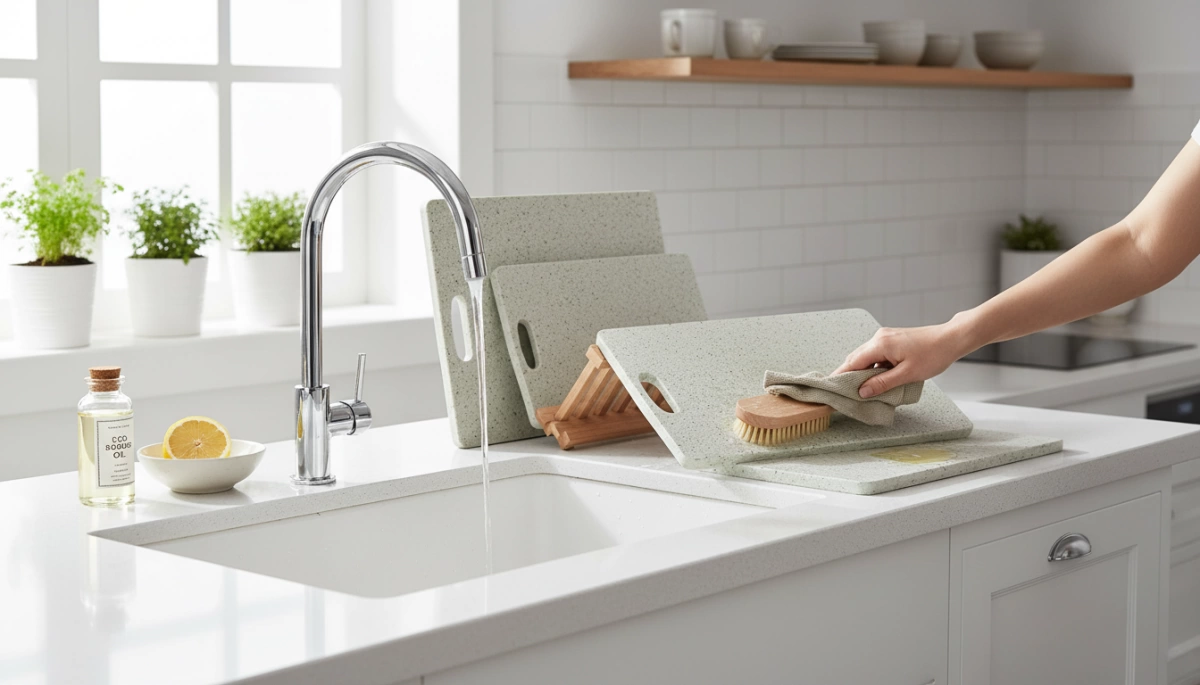
Selecting the right kitchen tools is the first step toward a greener home. When navigating the market for PP cutting boards and sustainability, it is crucial to look beyond the price tag and focus on specifications that ensure safety and longevity. A truly eco-aware choice balances material ethics with practical performance.
Key Features for Eco-Conscious Consumers
Not all plastic boards are created equal. To ensure you are minimizing your environmental footprint while maximizing kitchen safety, prioritize these specific features:
- Food-Grade Certification: Always verify FDA or SGS certification. This guarantees the material is safe for food contact and free from toxic manufacturing byproducts.
- BPA-Free Status: Ensure the board is strictly BPA-free. We believe every cut should feel safe, and eliminating bisphenol A is non-negotiable for family health.
- High-Density Build: Opt for a high-density polypropylene chopping board. Our internal testing shows that high-density boards can withstand 10,000+ cuts without significant wear, reducing the need for frequent replacements.
- Smart Design: Look for practical elements like non-slip edges and efficient water channels. These features prevent accidents and food waste during prep.
- Recycled Content: Seek out manufacturers offering recycled content options or those who utilize sustainable raw materials like wheat straw composites alongside PP.
Maintenance Guide for Maximum Lifespan
The most sustainable product is one you don’t have to replace often. Proper care extends the life of your dishwasher-safe eco cutting boards, keeping them out of landfills for years.
- Sanitization: Take advantage of PP’s heat resistance. These boards are generally dishwasher-safe, allowing for high-temperature cleaning that sanitizes without the need for excessive chemical sprays.
- Leverage Technology: Our boards feature Silver-Ion Antimicrobial Technology, which is 99.9% effective against bacteria. This built-in protection inhibits mold and odor, preventing the premature disposal of boards due to hygiene concerns.
- Surface Care: While a high-quality PP cutting board is designed to be knife-friendly, avoid using serrated blades for heavy chopping to prevent deep grooves where debris can accumulate.
End-of-Life Responsibility and Recycling
Sustainability doesn’t end when the product leaves the factory; it includes responsible disposal. Polypropylene is a thermoplastic polymer (Resin ID Code #5), making it one of the most recyclable kitchen cutting boards available.
- Know When to Retire: If your board eventually develops deep, un-cleanable grooves or significant warping after years of use, it is time to replace it to maintain hygiene.
- Local Recycling: Do not throw old PP boards in the general trash. Check with your local waste management facility regarding #5 plastic recycling. Many communities now have closed-loop programs that repurpose this material into new industrial products.
By choosing durable, food-grade polypropylene and committing to proper recycling, you transform a simple kitchen routine into a sustainable ritual.
PP vs. Other Materials: A Balanced Comparison for Eco-Conscious Kitchens
When equipping a sustainable kitchen, there is no single “perfect” material, but rather the right tool for the specific job. While natural materials have their aesthetic appeal, high-quality polypropylene cutting boards offer distinct advantages in hygiene and longevity that are hard to beat for daily, heavy-duty use. To help you decide, we’ve broken down the key differences between the most common options.
Material Comparison: Durability, Hygiene, and Maintenance
| Feature | PP (Polypropylene) | Wood | Bamboo |
|---|---|---|---|
| Hygiene | Excellent. Non-porous and often enhanced with antimicrobial tech. | Moderate. Porous surface can trap bacteria if not sanitized perfectly. | Good. Harder surface than wood, but can still absorb moisture. |
| Durability | High. Tested for 10,000+ cuts; resists warping and cracking. | Variable. Prone to scarring and requires regular oiling to prevent cracks. | High. Very hard, but this hardness can dull knives faster. |
| Maintenance | Low. Dishwasher safe and easy to sanitize. | High. Hand wash only; needs mineral oil treatment. | Moderate. Hand wash recommended; check for glue integrity. |
| Eco-Impact | Recyclable (#5). Long lifespan reduces waste; lower energy to produce. | Biodegradable. Compostable, but production is resource-intensive. | Renewable. Fast-growing, though often processed with adhesives. |
Where PP Shines in the Modern Kitchen
For the eco-aware consumer, sustainability isn’t just about the raw material—it’s about how long the product lasts and how safe it keeps your family. When you need to choose a cutting board that protects your health, PP boards are often the most practical solution for specific scenarios:
- Raw Meat and Fish Prep: Because PP is non-porous, it prevents juices (and bacteria like Salmonella) from seeping into the board. Our boards take this further with Silver-Ion Antimicrobial Technology, which is 99.9% effective against bacteria.
- Busy Households: If you don’t have time to hand-wash and oil a board after every meal, dishwasher-safe PP is a lifesaver. It withstands high temperatures without warping, ensuring your sanitation routine is effortless.
- Cross-Contamination Prevention: Using dedicated PP boards for different food groups is a standard professional kitchen practice that is easy to replicate at home.
- Knife Preservation: Unlike harder glass or bamboo surfaces, our plastic cutting boards are designed with a texture that offers a slight “give,” protecting your sharp blades from dulling prematurely.
By integrating durable, antibacterial PP cutting boards into your rotation alongside natural materials, you create a kitchen ecosystem that is both environmentally responsible and rigorously hygienic.
Why CalmChop Stands Out for the Eco-Aware Home
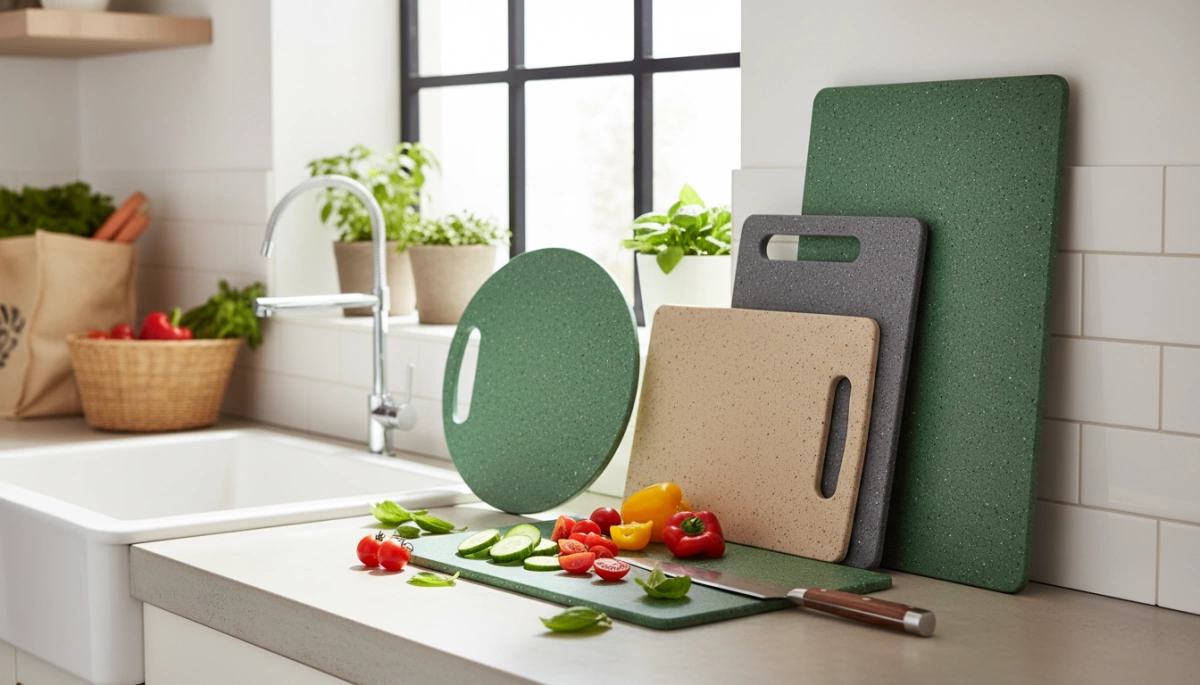
At CalmChop, we believe that true sustainability starts with superior engineering and a genuine commitment to the planet. We don’t just manufacture kitchen tools; we act as pioneers in tech-driven, sustainable plastic cutting boards designed to bridge the gap between modern convenience and environmental responsibility. Our approach transforms the standard kitchen routine into a “sustainable ritual,” ensuring that every meal prepared carries warmth and safety.
Commitment to Green Production
We understand that eco-conscious kitchen tools must be backed by responsible manufacturing. Our operations are guided by a strict zero-waste production philosophy. We optimize our material usage to ensure nothing is discarded unnecessarily, and we actively pursue carbon-neutral shipping methods to minimize the environmental footprint of our logistics. Led by experts in environmental science, our R&D team constantly refines our processes to ensure we meet ISO 9001 standards while prioritizing the health of the planet.
Technology Meets Longevity
The most sustainable product is one you don’t have to replace often. We integrate advanced Silver-Ion Antimicrobial Technology into our boards, which is proven to be 99.9% effective against bacteria. This feature not only keeps your food safe but also prevents the deep bacterial growth that often forces consumers to throw away plastic boards prematurely. When you invest in our wholesale antibacterial cutting boards, you are choosing a hygienic solution that maintains its integrity over years of use, not just months.
Durability That Reduces Waste
Cheap plastic boards warp and scar easily, leading to microplastic shedding and quick disposal. CalmChop boards are built differently. Our high-density construction is rigorously tested to withstand 10,000+ cuts without wear, ensuring that our surfaces remain knife-friendly and intact.
Key CalmChop Advantages:
- Reinforced Design: Features like our double-sided anti-slip plastic cutting board offer stability and separate zones for raw and cooked foods to prevent cross-contamination.
- Material Safety: All our products are BPA-free, food-safe, and FDA certified.
- Extended Lifespan: By resisting deep grooves and warping, we significantly reduce the frequency of board replacement, directly lowering your household’s plastic waste contribution.
By choosing CalmChop, you aren’t just buying a cutting board; you are supporting a system that values safety, durability, and a greener future.
Frequently Asked Questions About PP Cutting Boards and Sustainability
Are polypropylene cutting boards truly eco-friendly compared to wood?
Yes, when they are engineered for longevity. While wood is biodegradable, it often requires oiling and maintenance to prevent cracking. Polypropylene cutting boards eco-friendly designs focus on durability and recyclability. Our manufacturing process utilizes zero-waste production methods and carbon-neutral shipping to minimize the environmental footprint. By creating sustainable plastic cutting boards that withstand heavy use without warping or cracking, we reduce the frequency of replacement, which is a key factor in reducing overall kitchen waste compared to disposable or low-quality alternatives.
How do I recycle my old plastic cutting board?
Most recyclable kitchen cutting boards made from Polypropylene are classified as #5 plastic, which is widely accepted in many community recycling programs. Because we prioritize food-grade polypropylene sustainability, our boards are BPA-free and free from toxic fillers, making them suitable for the circular economy. Always clean the board thoroughly before placing it in your recycling bin to ensure it can be processed correctly.
Do PP cutting boards release microplastics into food?
Concerns about microplastics from cutting boards usually stem from soft, low-density plastics that shred easily under a knife. We address this by manufacturing high-density polypropylene chopping boards designed to resist deep scarring. Our internal testing confirms that our surfaces can withstand 10,000+ cuts without significant wear. This resistance not only preserves the board’s smooth surface but significantly minimizes the risk of plastic particles contaminating your ingredients.
How long should a sustainable PP cutting board last?
A high-quality, durable sustainable cutting board should serve your kitchen for years. The lifespan of our boards is extended significantly by our Silver-Ion Antimicrobial Technology, which is 99.9% effective against bacteria. This prevents the buildup of deep-seated mold and odors that typically force consumers to throw away plastic boards prematurely. For more details on selecting a board built for the long haul, you can read our insights on how to choose a durable, warp-resistant plastic cutting board. By choosing antibacterial PP cutting boards that resist wear and hygiene issues, you actively contribute to reducing plastic waste in the kitchen.
 English
  German
  Turkish
  Italian
  Russian
  Polish
  Arabic
  French
  Malay
Malay  Japanese
  Korean
  Thai
Thai