
The Science of the Stain: Why White Plastic Absorbs Color & Microbes
Ever wonder why that pristine white chopping board turns an unsightly orange after you chop a few carrots? Or why scrubbing it with soap never seems to get it fully clean? As a manufacturer dedicated to kitchen hygiene, I see this frustration all the time. The truth is, your board isn’t just dirty—its very structure is working against you.
Material Porosity & Knife Impact
At a microscopic level, standard commercial plastic isn’t completely solid. Every single time your knife hits the surface, it creates tiny micro-scratches. These microscopic valleys act like magnets for food particles and pigments.
- Deep clean white cutting board grooves: When you chop ingredients like beets or turmeric, the pigments get trapped deep inside these knife grooves.
- The staining process: Once a stain settles into these microscopic cuts, standard surface wiping cannot reach it.
- Material wear: Over time, cheap plastic degrades, creating a rougher texture that absorbs colors even faster.
The Bacterial Harbor
Those same scratches that trap food colors also present a major threat to food safety and kitchen hygiene. When moisture and food particles lodge inside knife grooves, bacterial growth is almost inevitable.
| Hazard Factor | Impact on Kitchen Hygiene |
|---|---|
| Micro-Scratches | Create an oxygen-deprived environment where bacteria thrive. |
| Organic Residue | Trapped food particles feed microscopic pathogens. |
| Moisture Retention | Standard plastic holds onto moisture, accelerating bacterial colonies. |
Regular dish soap can’t penetrate these microscopic grooves effectively, leaving invisible contaminants behind even after a thorough hand washing.
Proactive Design Over Reactive Scrubbing
Instead of fighting a losing battle with endless scrubbing, the solution lies in smarter engineering. We designed our boards to stop these problems before they start, moving away from high-maintenance materials to a truly scratch-resistant plastic cutting board.
- High-Density Construction: Engineered to resist deep knife penetration, keeping the surface smoother for longer.
- Advanced Protection: We integrate Silver-ion antimicrobial technology directly into the material matrix, offering continuous protection against microscopic invaders.
- Prevention First: By stopping stains and bacteria from penetrating the surface in the first place, we eliminate the need for harsh chemical bleaching down the line.
Advanced Hygiene: Looking Beyond What the Eye Can See
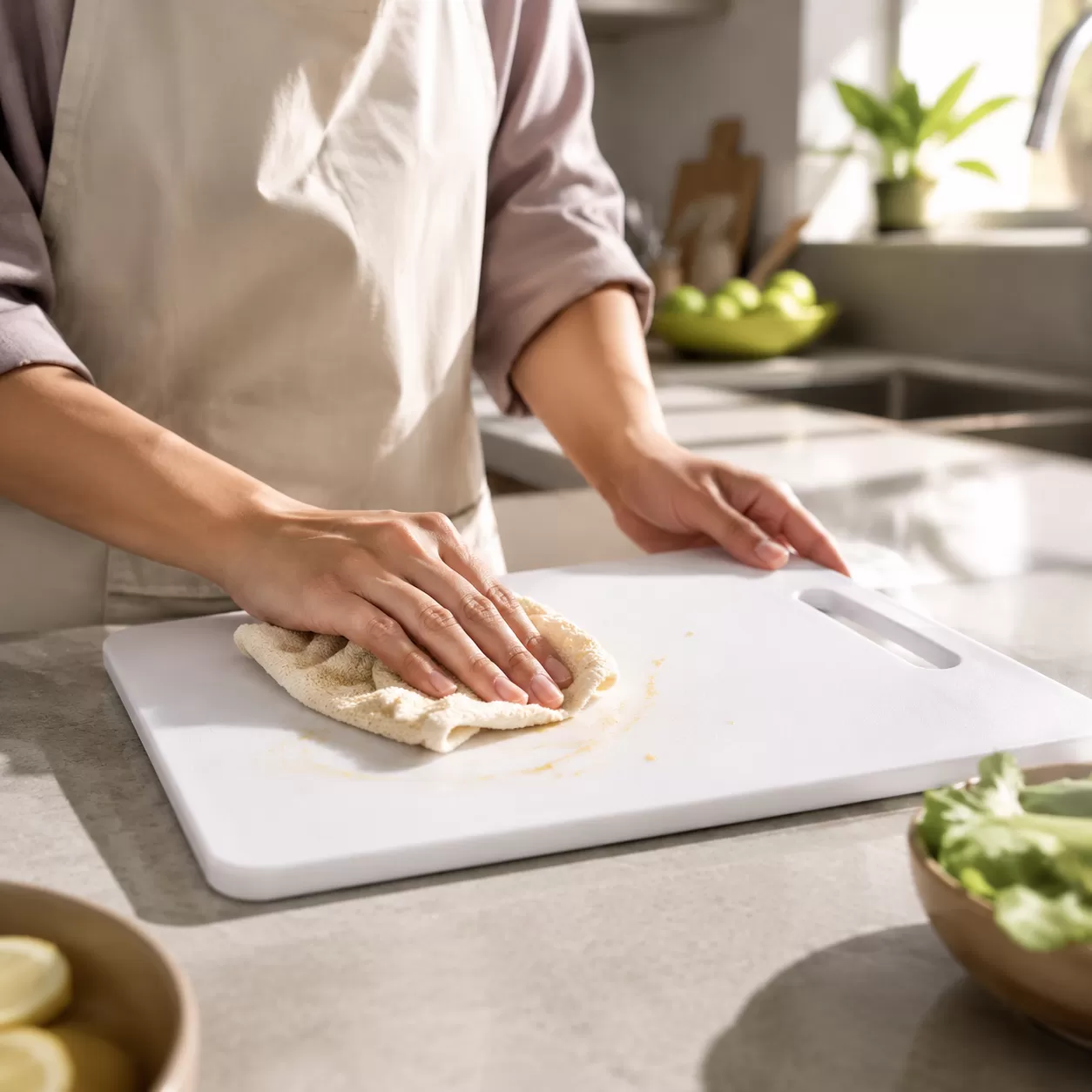
A visually clean cutting board does not mean a sanitized cutting board. Microscopic grooves hide bacteria that normal cleaning methods fail to eliminate, making advanced hygiene protocols essential for modern kitchen safety.
The Limits of Soap and Water
Standard dish soap and warm water work well for surface oils, but they cannot penetrate deep into microscopic knife cuts. Over time, bacteria like E. coli and Salmonella become trapped under the surface, safe from standard scrubbing. Relying solely on hand washing leaves invisible bio-films behind, increasing the risk of foodborne illness.
Tech-Driven Kitchen Safety
To achieve true kitchen safety, materials must work actively against microbial growth. Incorporating advanced material science reduces the reliance on manual scrubbing alone.
| Hygiene Technology | Mechanism | Effectiveness |
|---|---|---|
| Standard Plastic | Passive surface, manual removal only | Low (Relies entirely on scrubbing) |
| Chemical Bleach | Oxidizes surface pathogens | Medium (Corrosive, degrades plastic) |
| Silver-Ion Technology | Destroys bacterial cell walls continuously | High (Built-in, 24/7 sanitation) |
The calmchop Difference
We engineer our cutting boards to bridge the gap between visual cleanliness and true structural hygiene. By utilizing advanced silver-ion antimicrobial technology, calmchop surfaces actively inhibit 99.9% of bacterial growth within the inevitable microscopic scratches. This built-in defense works continuously beneath the surface, ensuring your preparation zone remains sanitary even between deep cleans.
The “Clean & Crisp” Blueprint: Step-by-Step Daily Maintenance
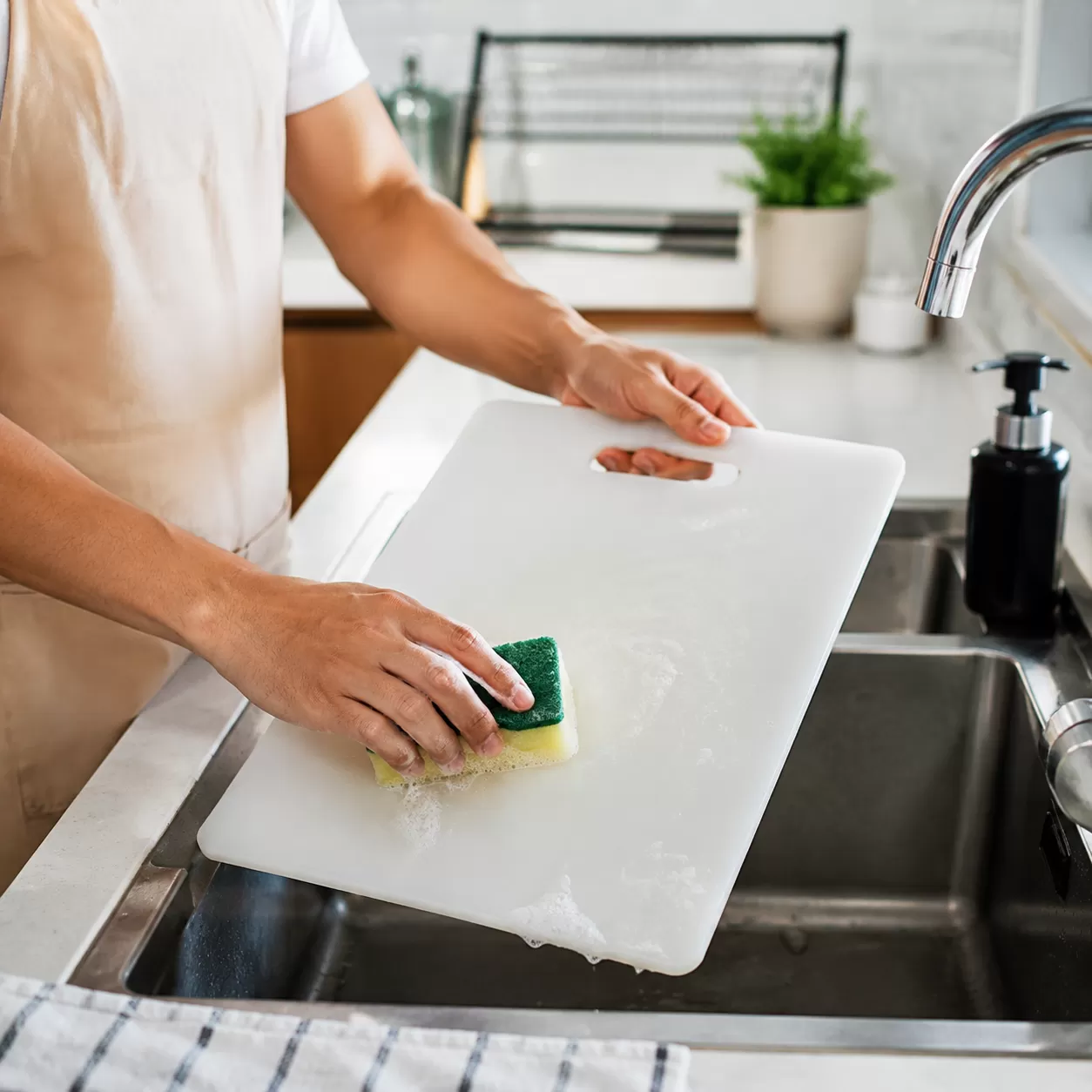
Keeping a white chopping board spotless requires a proactive routine. If you let juices sit, you are inviting permanent stains and bacteria into your kitchen. Follow this streamlined daily blueprint to keep your board pristine and ensure top-tier food safety and kitchen hygiene.
Step 1: Strategic Zone Isolation
Preventing cross-contamination raw meat zones is the foundation of kitchen safety. Never use the same board surface for raw proteins and ready-to-eat vegetables.
- Color-code your kitchen: Dedicate your white board strictly to specific food groups, or use designated sides.
- Commercial standards: This practice mirrors the strict protocols used in professional kitchens. In fact, many high-volume restaurants choose our plastic cutting boards specifically to streamline zone isolation and maintain strict hygiene standards under pressure.
Step 2: Intelligent Fluid Management
When prepping juicy meats or acidic tomatoes, liquids pool quickly. If left unchecked, these fluids seep into knife grooves, leading to deep stains and bacterial growth.
- Work on boards with built-in juice grooves to trap runoff.
- Keep a clean, damp microfiber cloth nearby to wipe away excess liquids immediately during prep.
Step 3: The Immediate Effortless Rinse
The longer food residue sits, the harder it is to clean. The moment you finish cutting, take the board to the sink.
- The Golden Rule: Rinse with cold water first if you cut meat (hot water cooks the proteins into the scratches).
- The Quick Scrub: Use a brush with dish soap to knock loose any particles before they dry out. This prevents the need for intense scrubbing later.
Step 4: Mechanical Dishwashing Guidelines
Using dishwasher safe chopping boards makes daily sanitation effortless, but you need to do it right to avoid warping the material.
| Dishwasher Parameter | Recommended Setting | Purpose |
|---|---|---|
| Placement | Securely on the bottom or side rack | Ensures even water exposure without bending |
| Temperature | High-heat wash / Sanitize cycle | Kills embedded bacteria in deep grooves |
| Drying Cycle | Heated dry or air dry thoroughly | Prevents moisture from trapping in storage |
Pro Tip: Ensure your board is rated for high-temperature commercial or residential dishwashers. Subpar plastics will warp under intense heat, ruining the flat cutting surface.
How to Deep Clean & Remove Tough Stains Without Harsh Bleach
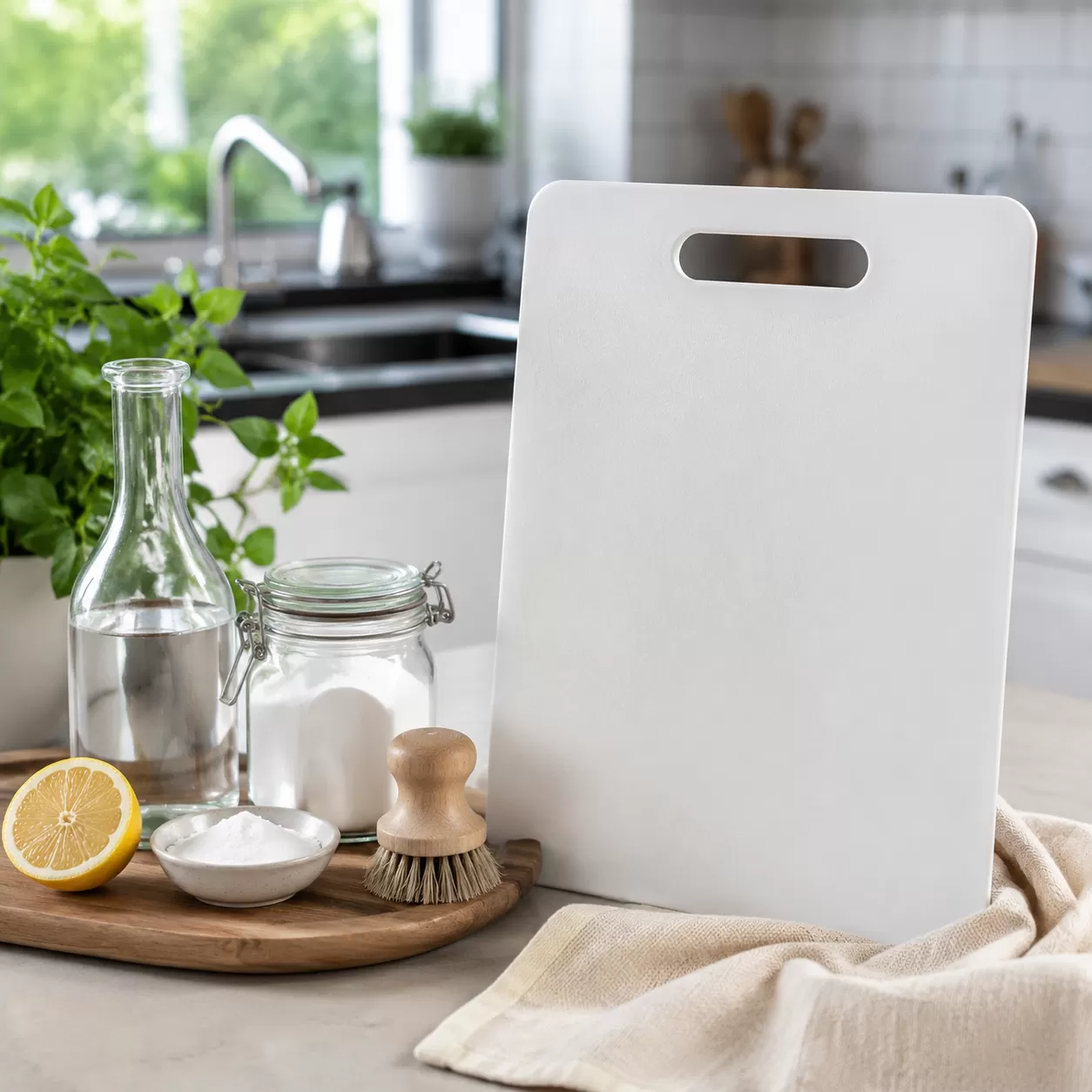
Harsh chemical bleach breaks down plastic surfaces over time, creating micro-fissures that actually trap more grime. Instead, you can keep your white chopping board pristine using safe, natural oxidation and acidic scrubs that lift deep discoloration without damaging the material.
The Natural Oxidation Method (Baking Soda & Hydrogen Peroxide)
When you need to remove turmeric stains from white chopping board surfaces, a standard dish soap won’t cut it. This natural chemical reaction lifts pigment straight out of the plastic pores.
- Create the Paste: Mix 2 tablespoons of baking soda with enough 3% hydrogen peroxide to form a thick baking soda and hydrogen peroxide paste.
- Apply and Set: Spread the paste generously over the stained areas, ensuring you cover all the deep clean white cutting board grooves.
- Wait: Let it sit for 30 to 45 minutes to let the oxygen bubbles lift the embedded pigments.
- Scrub and Rinse: Scrub in a circular motion with a firm nylon brush, then rinse with warm water.
The Citrus & Salt Acidic Scrub
For stubborn, greasy stains and lingering food odors, combining coarse salt with natural citric acid creates an excellent, abrasive stain remover.
- The Exfoliant: Sprinkle a heavy layer of coarse sea salt or kosher salt across the board.
- The Catalyst: Cut a fresh lemon in half and squeeze it slightly as you use it like a scrubbing pad, rubbing the salt firmly into the plastic.
- The Benefit: The salt physically exfoliates the knife scars while the citric acid naturally bleaches out organic food stains.
The Vinegar Disinfection Rinse
After lifting the stains, you need to ensure the surface is fully sanitized. A targeted acid rinse provides excellent food safety and kitchen hygiene without relying on toxic fumes.
Pro-Tip: Spray the board down with full-strength white distilled vinegar after scrubbing. Let it sit for 10 minutes before doing a final rinse. This cuts through any remaining grease film and neutralizes surface bacteria naturally.
For those using advanced kitchenware, maintaining high sanitation standards is even easier. High-quality pp cutting boards offer superior performance and hygiene compared to traditional porous plastics, making stain removal much faster and preventing deep bacterial absorption from the start.
Long-Term Safety, Certification, and When to Say Goodbye
Verifying Your Material Quality
Maintaining a Clean & Crisp: The Ultimate Guide to Maintaining a Spotless White Plastic Cutting Board requires knowing exactly what your board is made of. Cheap plastic boards often degrade quickly, shedding microplastics into your food. High-quality kitchenware must use FDA-certified BPA-free plastic to ensure long-term food safety and kitchen hygiene. If you want to avoid the chemical risks associated with low-grade plastics altogether, look for advanced materials. For example, upgrading to a specialized TPU cutting board provides a more durable, scratch-resistant surface that does not harbor bacteria the way standard polypropylene does.
The calmchop Commitment to Safety
At calmchop, we do not compromise on your family’s health. Traditional solid-color plastic boards are prone to deep knife grooves that become a breeding ground for pathogens. This is an especially critical hazard during infant meal prep, as detailed in our analysis of the hidden risks of solid-color polypropylene boards. We design our boards to resist deep scoring while utilizing medical-grade, non-porous materials that meet strict global safety standards. Our goal is to provide a reliable, long-lasting surface that keeps your food clean and your knives sharp.
The Inspection
No plastic cutting board lasts forever. To ensure proper antibacterial cutting board maintenance, perform a monthly visual and physical inspection.
You must replace your white chopping board immediately if it shows any of the following signs:
- Deep Knife Grooves: Channels that cannot be cleared by standard mechanical dishwashing or deep cleaning.
- Warping: A board that rocks or slides on the counter, creating a severe knife-slip hazard.
- Permanent Discoloration: Dark stains deep inside the scratches that resist natural oxidation and acidic scrubs.
When a board reaches this level of wear, it is time to say goodbye and protect your kitchen hygiene by investing in a fresh, certified surface.
 English
  German
  Turkish
  Italian
  Russian
  Polish
  Arabic
  French
  Malay
Malay  Japanese
  Korean
  Thai
Thai