
Decoding Materials: Polypropylene vs. High-Density Polyethylene
When we choose the raw materials for a premium plastic cutting board, we focus on two food-safe polymers: Polypropylene (PP) and High-Density Polyethylene (HDPE). Both offer distinct advantages depending on your culinary environment.
Polypropylene Kitchen Board Features
A polypropylene kitchen board is the ultimate choice for a modern kitchen upgrade. Engineered for everyday consumer use, these boards are lightweight, highly rigid, and fit easily into home dishwashers. PP resists warping under high temperatures, making it a reliable, low-maintenance food-safe cutting surface for daily meal prep.
High-Density Polyethylene for Commercial Food Prep
For high-volume, heavy-duty environments, high-density polyethylene (HDPE) is the industry standard. This commercial-grade food prep material is denser and more impact-resistant than PP. It withstands aggressive, continuous knife work without deep scoring, making it the preferred choice for professional chefs who prioritize longevity and surface integrity.
Comparison Matrix: PP vs. HDPE
| Feature | Polypropylene (PP) | High-Density Polyethylene (HDPE) |
|---|---|---|
| Primary Use | Home kitchens & everyday meal prep | Commercial kitchens & heavy-duty butchery |
| Flexibility | Rigid with slight flex; highly warp-resistant | Solid, dense, and impact-resistant |
| Dishwasher Safety | Excellent; handles high-temp home cycles | Excellent; withstands commercial sanitization |
| Knife Friendliness | Gentle on edges; preserves sharpness | Superior knife-friendly surface; absorbs impact |
| Weight | Lightweight and easy to maneuver | Heavier; stays firmly in place |
The Core Advantages of Premium Plastic Cutting Boards
When you are prepping meals daily, you need a surface that works as hard as you do. A premium plastic cutting board delivers specific operational perks that wooden or glass alternatives simply cannot match. From strict food safety to blade protection, engineered polymers offer a reliable foundation for any modern kitchen.
Unrivaled Non-Porous Hygiene for Raw Meat and Seafood
The standout feature of a high-quality plastic cutting board is its non-porous structure. Unlike wood, which can absorb liquids and trap deep-seated bacteria, a solid polymer surface keeps everything on the outside. This makes it an exceptionally food-safe cutting surface for handling high-risk ingredients like raw poultry, beef, and seafood, ensuring juices never seep into the core.
Effortless Sanitization via High-Temperature Dishwashers
Hand-scrubbing can only do so much. Our professional-grade boards are completely dishwasher-safe, allowing you to run them through high-temperature sanitation cycles without warping or cracking. This intense heat completely neutralizes stubborn pathogens, giving you total peace of mind with zero manual scrubbing required.
Knife Blade Preservation
We engineer our surfaces to be tough on food but incredibly gentle on your cutlery. The specific density of these modern polymers yields slightly under the pressure of a sharp edge.
Reduces blade friction: Prevents premature chipping.
Absorbs impact: Keeps your expensive chef knives sharper for longer.
No microscopic dulling: Unlike glass or stone, it preserves the fine edge of your steel.
Cross-Contamination Prevention Using Color-Coded Systems
Managing a busy kitchen requires smart workflow organization. By implementing a color-coded system, you completely eliminate the risk of cross-contamination:
| Board Color | Intended Food Group |
|---|---|
| Red | Raw Red Meat |
| Yellow | Raw Poultry |
| Blue | Seafood & Fish |
| Green | Vegetables & Fruits |
Investing in the right tools keeps your prep efficient, clean, and completely safe for your family or customers.
Overcoming Scratches: How Technology Solves the Microplastic & Bacteria Problem
We have all seen it: an old, low-density plastic cutting board covered in deep grooves from years of chopping. These deep knife scars are more than just an eyesore. They act as perfect breeding grounds for harmful bacteria and microscopic food particles that standard washing can miss. Over time, heavy scoring on cheap boards also leads to polymer shedding, raising valid concerns about microscopic plastic particles ending up in your meals.
To fix this, we have integrated advanced materials and engineering to create a highly resilient, microplastic-resistant kitchenware surface that stands up to daily abuse.
The Silver-Ion Revolution
We treat our premium boards with built-in silver-ion antimicrobial technology. This food-safe compound works at a cellular level to disrupt the growth of microorganisms.
99.9% Bacteria Reduction: It continuously inhibits the reproduction of microbes, keeping your prep surface cleaner between washes.
Long-Lasting Protection: Because the technology is blended directly into the material, it won’t wash away or wear off over time.
You can explore more about how this works in our detailed guide on how antibacterial technology enhances the food safety of cutting boards.
Engineered Durability Against Polymer Shedding
To stop microplastics at the source, our modern plastic cutting board lineup relies on high-density polymer blends engineered for maximum density. We test our surfaces to withstand up to 10,000+ continuous knife cuts before showing significant wear. This extreme durability means fewer deep grooves, less material degradation, and a vastly extended lifespan for your daily kitchen gear.
Essential Features of a High-Performance Plastic Cutting Board
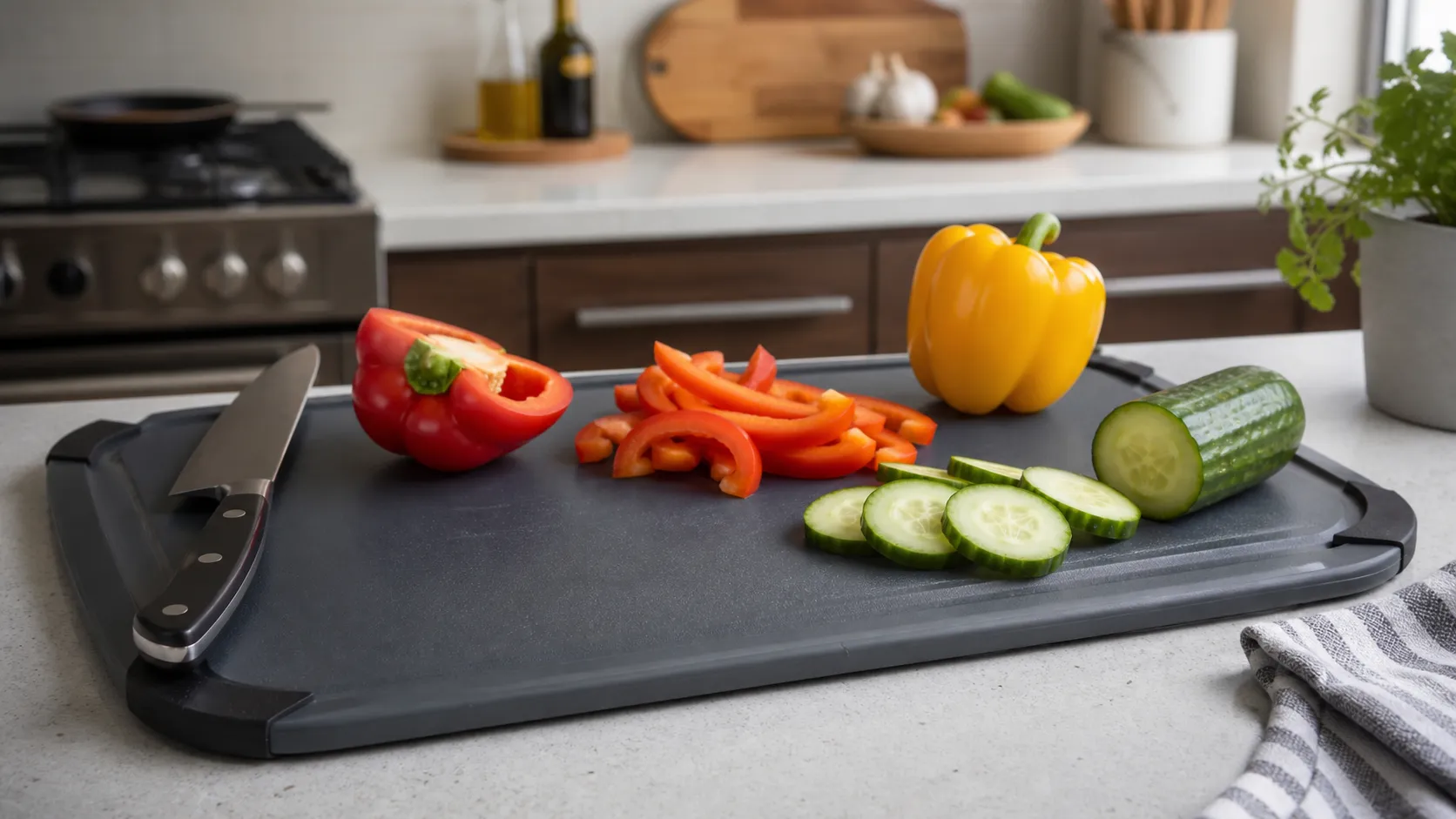
When we design a professional-grade plastic cutting board, we focus on features that solve real kitchen frustrations. A prep surface shouldn’t slide around, leak juices onto your counter, or force you to use multiple boards for one meal. We engineered our wholesale double-sided plastic chopping board with non-slip feet to check every box for safety, cleanliness, and ease of use.
The Anatomy of a Superior Prep Surface
To get the most out of your daily food prep, look for these non-negotiable design elements:
- Dual-Molded Non-Slip Edges: Safety comes first. Heavy-duty rubberized borders or feet grip the countertop tightly, preventing the board from slipping under heavy knife pressure.
- Deep Perimeter Juice Grooves: No more messy cleanups. Deep outer channels catch meat juices, tomato liquid, and water before they overflow onto your clean counters.
- Double-Sided Versatility: Flip the board over to separate raw proteins from fresh produce instantly, maximizing efficiency and hygiene.
- Integrated Handles: Ergonomic cutouts make lifting, carrying, and hanging storage effortless.
Feature Breakdown at a Glance
| Feature | Key Benefit | Why It Matters For Home & Commercial Kitchens |
|---|---|---|
| Non-slip rubber feet | Total stability | Prevents knife slips and injuries during heavy chopping |
| Deep juice groove design | Liquid containment | Keeps acids and juices off the workspace |
| Double-sided functionality | Cross-contamination prevention | Allows seamless switching between ingredients |
| Built-in handles | Easy maneuverability | Simplifies washing, carrying, and storing |
The Eco-Friendly Pivot: Can a Plastic Cutting Board Be Sustainable?
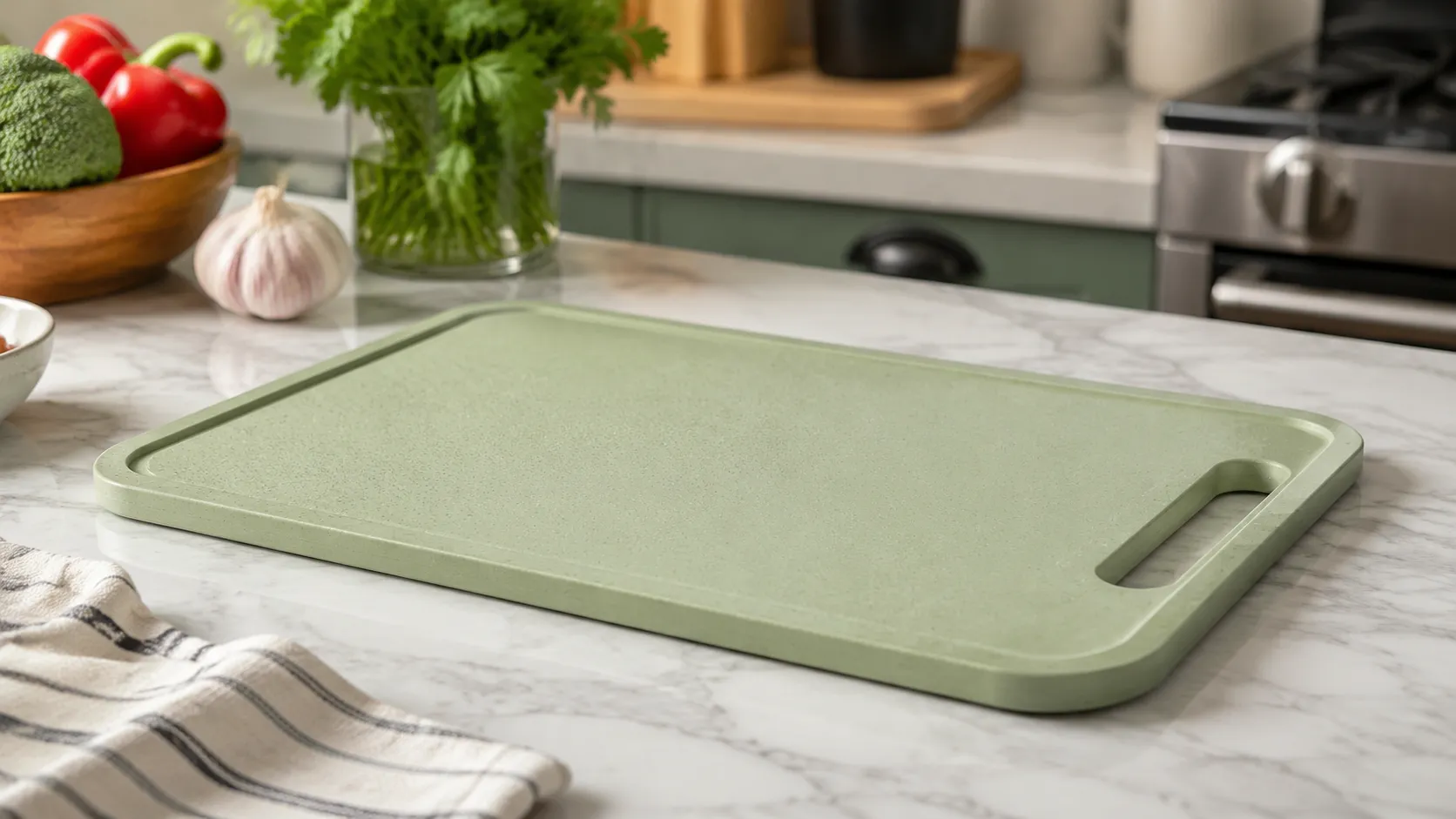
When you think of sustainability, a plastic cutting board might not be the first thing that pops into your head. But the kitchenware industry is changing fast. We are proving that intelligent, modern engineering can transform everyday polymers into highly sustainable, eco-friendly kitchen essentials. By shifting toward a circular economy and utilizing BPA-free polymer raw materials, we can drastically reduce our environmental footprint while maintaining peak kitchen hygiene.
Intelligent Manufacturing & Zero-Waste Pipelines
True sustainability starts on the factory floor. Our production facilities rely on smart, zero-waste manufacturing pipelines where every scrap of leftover material is immediately reprocessed back into the production cycle. If you want to dive deeper into how these modern workflows operate, check out our insights on the sustainable manufacturing of plastic cutting boards. This closed-loop approach ensures that no raw materials go to waste, minimizing energy consumption and maximizing resource efficiency from start to finish.
Longevity as a Core Sustainability Strategy
The greenest product is the one you don’t have to constantly replace. Low-quality boards warp, split, and end up in landfills after just a few months. We design our high-performance kitchen gear for ultimate longevity.
- Engineered Durability: Built to withstand thousands of impacts without severe degradation.
- Reduced Kitchen Waste: A commercial-grade, food-safe cutting surface lasts for years, keeping plastic out of waste streams.
- Recyclability: When the board finally reaches the end of its long life, the pure polymer composition means it can be fully recycled into new consumer goods.
Choosing high-quality, durable kitchen tools is a major step forward for any home kitchen upgrade. Buying better means buying less, and that is the ultimate goal of sustainable cooking.
Maintenance & Care: How to Make Your Plastic Cutting Board Last for Years
Keeping a plastic cutting board in top shape isn’t just about looks—it’s about food safety and longevity. While these boards are incredibly resilient, a little intentional maintenance goes a long way in protecting your knives and your family.
Daily Cleansing Best Practices
- The Dishwasher Route: Most modern polypropylene kitchen board options are completely dishwasher-safe. Run them on a high-temperature sanitizing cycle to blast away deep-seated bacteria.
- The Hand-Washing Method: If you are washing by hand, skip the lukewarm rinse. Use hot, soapy water and a stiff nylon brush to scrub inside any microscopic surface grooves where food particles love to hide.
Stain and Odor Eradication
Over time, pungent ingredients like garlic or vibrant foods like carrots can leave their mark. You don’t need harsh chemicals to fix this:
1. Sprinkle a generous amount of baking soda over the damp board.
2. Cut a lemon in half and use it to scrub the baking soda directly into the surface.
3. Let the mixture sit for 5 to 10 minutes before rinsing thoroughly. This naturally bleaches out stains and completely neutralizes stubborn odors.
Knowing When to Replace and Recycle Your Board
No kitchen tool lasts forever. If your board has deep, shaggy knife scars that you can catch a fingernail on, it’s time for an upgrade. These deep grooves become impossible to sanitize completely.
When it’s time to retire your board, don’t just throw it in the trash. Knowing how to choose recyclable plastic cutting boards helps reduce kitchen waste and ensures high-density materials can be repurposed. Check the recycling symbol on the back of your board—most high-quality PP and HDPE boards are fully recyclable in standard municipal programs.
FAQs About Plastic Cutting Boards
Are plastic cutting boards safer than wood for raw meat?
Yes, a plastic cutting board is generally safer for prepping raw meat and seafood because it features a non-porous surface. Unlike wood, it won’t absorb blood or bacteria, and you can toss it into a high-temperature dishwasher to completely sanitize it. However, if your board becomes heavily grooved over time, it can trap bacteria. To better understand how materials impact your health, read about whether plastic cutting boards may hurt your health due to microplastic shedding.
How do you get deep stains out of a plastic chopping board?
To lift stubborn stains and eliminate odors from your food-safe cutting surface, follow this quick routine:
- Sprinkle a generous layer of baking soda over the stain.
- Squeeze fresh lemon juice or pour white vinegar over the baking soda to create a fizzing paste.
- Scrub firmly with a stiff brush and let it sit for 10 minutes.
- Rinse thoroughly with hot water or run it through a dishwasher cycle.
Do plastic cutting boards dull knives quickly?
No, quality engineered polymers are designed to be a knife-friendly surface. Modern polypropylene and high-density polyethylene boards yield slightly under the knife edge, which actually preserves blade sharpness compared to hard surfaces like glass, ceramic, or bamboo.
How often should you replace a plastic cutting board?
You should replace a plastic cutting board every 12 to 24 months depending on use. If your board has deep, shaggy knife scars, warped edges, or stains that won’t lift, it is time for a replacement. Deep grooves compromise the antibacterial chopping board properties, making it hard to clean properly. For long-term peace of mind, consider upgrading to advanced options like antimicrobial BPA-free plastic cutting boards that actively fight bacterial growth throughout their lifespan.
Related Sources
- https://www.nist.gov/news-events/news/2018/11/do-kitchen-items-shed-antimicrobial-nanoparticles-after-use`
- https://www.foodauthority.nsw.gov.au/retail/cafes-restaurants-and-retail-outlets/cutting-and-serving-boards`
- https://nontoxiclab.com/are-plastic-cutting-boards-safe/`
- https://www.lidaplastic.com/news/pp-board-20616.html`
 English
  German
  Turkish
  Italian
  Russian
  Polish
  Arabic
  French
  Malay
Malay  Japanese
  Korean
  Thai
Thai