
Are you struggling to find the perfect plastic cutting board for your kitchen?
Pick the wrong one, and you’re stuck with warped plastic, dull knives, and trapped bacteria. Pick the right one, and everyday food prep becomes safer, faster, and completely effortless.
In this guide, you’ll discover the key features to look for in a high-quality plastic cutting board, from durable food-grade materials to smart, knife-friendly designs that last for years.
Let’s dive right in.
Anatomy of a Plastic Cutting Board: Understanding the Materials
When we evaluate any plastic cutting board, performance comes down to molecular structure. The polymer composition dictates knife wear, acoustic feedback, longevity, and hygiene. Here is how the most common kitchen polymers compare.
High-Density Polyethylene (HDPE)
- Profile: Rigid, dense, and structurally stiff.
- Primary Use: Widely adopted as a standard commercial food prep board in restaurant environments.
- Performance: Offers high impact resistance and long functional lifespans. However, its unyielding rigidity causes loud acoustic clack and accelerates knife edge dulling over repeated impacts.
Polypropylene (PP)
- Profile: Lightweight, semi-rigid, and thermally stable.
- Primary Use: Standard residential kitchens and everyday consumer prep boards.
- Performance: Provides solid heat resistance for standard dishwasher cycles. Over time, standard food-grade polypropylene (PP) surfaces remain prone to deep knife scarring, which can trap food particles if not properly maintained.
Thermoplastic Polyurethane & Elastomers (TPU/TPE)
- Profile: High-density synthetic elastomer engineered with elastic memory.
- Primary Use: Modern, high-performance, and sound-dampening prep surfaces.
- Performance: Acts as a resilient cushion beneath the blade. A TPU cutting board absorbs kinetic energy to eliminate harsh chopping noise while offering superior knife gouge resistance that protects fine culinary edges from chipping and rolling.
Material Safety Standards
Safety is non-negotiable in food prep. We prioritize materials that meet rigorous international food-contact benchmarks:
BPA-Free Formulations: 100% free of bisphenol compounds, phthalates, and toxic plasticizers.
Certified Food Contact: Verified non-porous barriers that prevent moisture, raw meat juices, and odors from penetrating beneath the surface.
Pure Polymer Integrity: Stable compounds that do not degrade or leach during high-temperature washing.
Plastic vs. Wood vs. Composite: An Objective Comparison
Choosing the right prep surface comes down to balancing hygiene, edge retention, daily maintenance, and long-term durability. While chefs and home cooks often debate the merits of traditional materials, understanding how they perform under daily use is essential. Both plastic and wooden chopping boards each have their own advantages and disadvantages, but modern synthetic polymers solve many of the practical headaches associated with traditional boards.
| Feature | Plastic Cutting Board (High-Density / TPU) | Natural Wood Board | Composite / Resin Board |
|---|---|---|---|
| Porousness | 100% Non-porous | Porous (capillary action) | Non-porous |
| Dishwasher Safe | Yes (High-temp safe) | No (Hand-wash only) | Yes |
| Blade Impact | Soft & knife-cushioning | Gentle on edges | Extremely hard (dulls quickly) |
| Maintenance | Zero oiling required | Regular mineral oil conditioning | Low maintenance |
| Upfront Cost | Budget-friendly to moderate | High | Moderate to high |
Hygiene & Food Safety: Non-Porous Barriers vs. Capillary Action
A high-grade plastic cutting board provides an impermeable, non-porous barrier. Raw poultry fluids, blood, and moisture cannot penetrate the core of the board, preventing deep bacterial harborage. In contrast, natural wood relies on capillary action to draw moisture inward; while hardwoods contain natural tannins, moisture trapped inside unsealed wood can lead to structural decay and cross-contamination if not sanitized properly.
Impact on Knife Edges: Preserving Sharpness and Preventing Chipping
The surface hardness of your prep surface directly dictates blade longevity:
Composite Boards: Made of dense paper pulp and resin, composite boards are exceptionally rigid and cause rapid edge rolling and micro-chipping on high-carbon blades.
Wood Boards: Soft grain provides excellent give, preserving sharp edges but scarring easily under serrated blades.
Modern Plastic & TPU Boards: A resilient, knife-friendly cutting board engineered from dense polymers absorbs blade strikes. The surface yields slightly under the edge, keeping your kitchen knives sharper for longer without chipping the tip.
Maintenance & Convenience: Dishwasher Sanitizing vs. Manual Oiling
Wood cutting boards require hands-on upkeep: hand-washing immediately after use, upright air-drying, and monthly rubdowns with food-grade mineral oil to prevent splitting. A dishwasher-safe chopping board eliminates this chore. It withstands commercial and residential high-heat wash and sanitize cycles, completely dissolving grease and neutralizing pathogens without cracking or splintering.
Cost-to-Lifespan Ratio
While end-grain wood blocks are an investment designed to last for years with high maintenance, standard plastic options deliver practical utility at a fraction of the cost. Premium polymer and TPU boards offer the ideal balance: an accessible upfront cost, resilient day-to-day durability, and effortless sanitization throughout their functional lifespan.
The 4 Common Problems with Standard Plastic Boards (And How Modern Design Fixes Them)
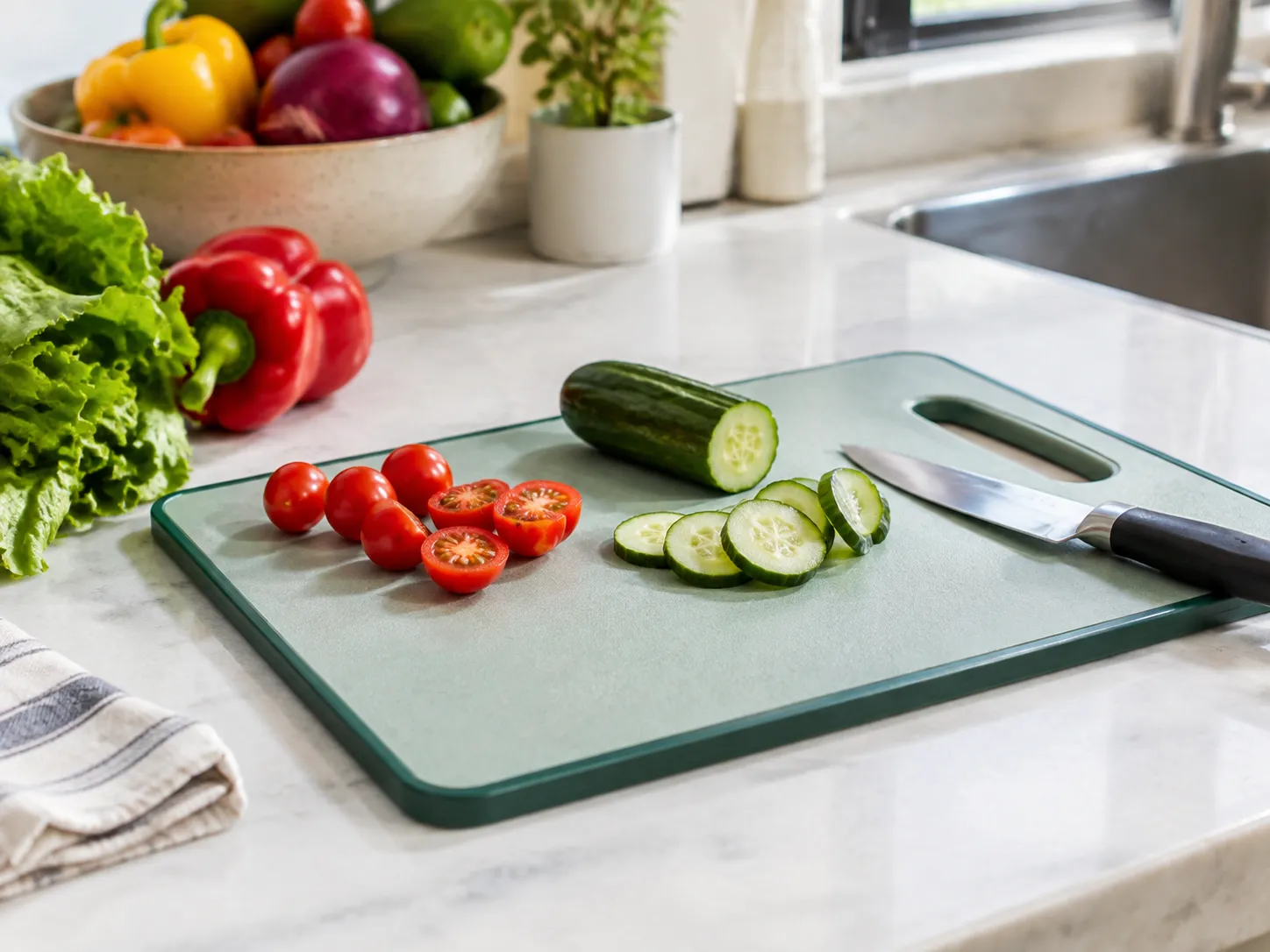
Traditional kitchen boards often fall short during heavy daily meal prep. We engineered our modern plastic cutting board solutions to eliminate the persistent frustrations of cheap, brittle sheets and deliver an effortless, durable prep experience.
+—————————+———————————–+—————————————+
| Common Issue | Standard Plastic Boards | Modern Engineered Solution |
+—————————+———————————–+—————————————+
| Knife Scarring | Deep grooves trap bacteria/odors | High-density, self-healing polymer |
| Impact Clatter | Loud, harsh clacking on counter | Kinetic sound-dampening elastomer |
| Countertop Slippage | Slides easily; requires damp towel| Co-molded rubber grips & perimeter feet|
| Heat Warping | Bends/bows in high-temp dishwasher| Dimensionally stable thermal core |
+—————————+———————————–+—————————————+
Problem 1: Knife Scarring and Bacterial Traps
Standard low-grade polyethylene boards develop deep, jagged cuts after just a few weeks of use. These micro-gouges trap raw juices, moisture, and food particles, making thorough cleaning difficult even with harsh scrubbing.
- The Modern Solution: We utilize high-density, resilient polymers and elastomeric TPU compounds that offer superior knife gouge resistance. The surface yields slightly under the blade’s edge rather than chipping or tearing, preserving the smooth surface barrier and keeping food prep strictly hygienic.
Problem 2: The Acoustic Clatter of Hard Plastic
Repetitive chopping on hard plastic creates an irritating, loud clacking noise that echoes through the kitchen. This sharp acoustic feedback also signals harsh blade impact, which quickly dulls fine chef’s knives.
- The Modern Solution: By integrating a sound-dampening prep surface, the material absorbs kinetic impact energy on contact. This cushions each knife stroke, cuts down prep noise for early-morning or late-night cooking, and protects delicate knife edges from micro-chipping.
Problem 3: Instability and Countertop Slippage
Lightweight, flimsy plastic boards skate across polished granite, quartz, or stainless steel countertops during rapid slicing, creating an immediate safety hazard.
- The Modern Solution: We eliminate the old-school trick of putting wet paper towels under your board. Modern designs use integrated, co-molded thermoplastic elastomer edges, such as our double-sided plastic chopping board with non-slip feet, to lock the board firmly to smooth surfaces without shifting under heavy downward pressure.
Problem 4: Heat Warping in Dishwashers
Most standard boards curl, cup, or twist after a single cycle in a hot dishwasher because the uneven thermal expansion permanently bends thin sheets of plastic. A warped board rocks constantly during prep and becomes practically unusable.
- The Modern Solution: High-performance boards feature reinforced cross-sections and high-temperature dimensional stability. Advanced material compositions in our customized plastic cutting board lines withstand continuous residential and commercial sanitizing cycles without losing their flat, rigid profile.
Key Functional Features to Look for Before Buying a Plastic Cutting Board
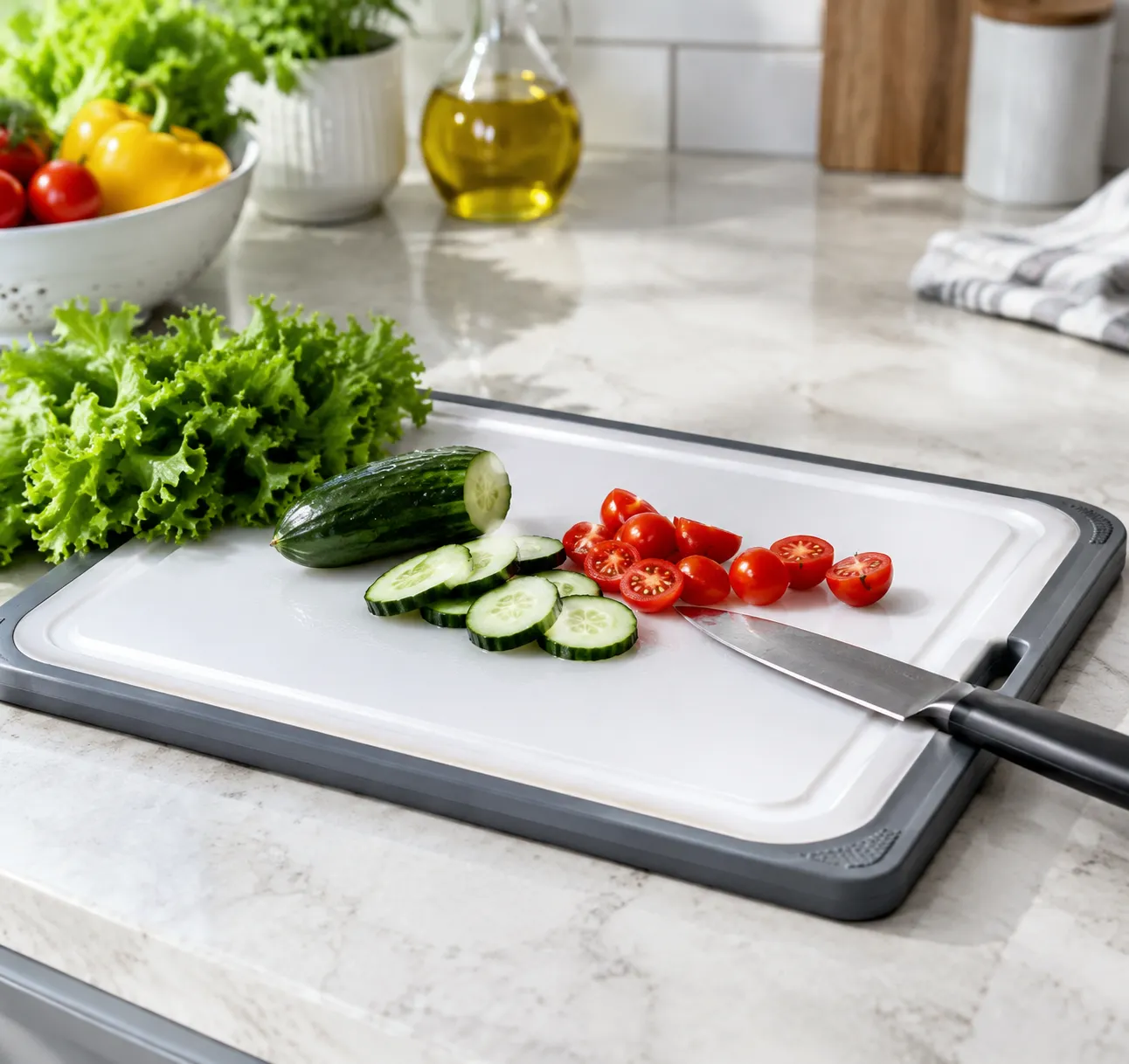
When we design and select a reliable plastic cutting board, we prioritize smart functional details that directly eliminate daily kitchen headaches. A quality board should manage mess, secure slippery ingredients, and store effortlessly without cluttering your prep zone.
Deep Perimeter Juice Grooves
A flat board often leads to messy countertops when slicing ripe tomatoes, citrus, or rested meats.
High-Capacity Runoff Channels: Look for a deep juice groove cutting board perimeter capable of holding several ounces of liquid before overflowing.
Tapered Edges: Fluid gathers cleanly in the recessed trench rather than leaking onto your prep table or floor.
Surface Texture Dynamics
Smooth plastic can become slick and dangerous during rapid knife work.
Micro-Textured Finishes: A subtle, textured grain holds wet proteins and round vegetables firmly in place without dulling your knife tip.
Sanitary Balance: The texture must be shallow enough to release food particles instantly under running water or during a dishwasher cycle.
Double-Sided Prep Utility
Cross-contamination is one of the most critical safety issues in home and professional food prep.
Dedicated Prep Zones: Using a double-sided cutting board with juice groove allows you to carve proteins on the grooved side and flip over to a flat reverse side for chopping herbs and vegetables.
Streamlined Workflow: Flipping the board saves prep space and speeds up multi-course meal preparation.
Ergonomics and Clean Storage
Storage convenience determines how often you reach for your cutting board.
Integrated Hanging Holes & Handles: Low-profile handle cutouts allow for quick carrying, controlled scraping of ingredients into pans, and wall hanging.
Slim Dimensional Stability: A balanced, slim profile slides easily into standard vertical drying racks without tilting or taking up valuable cabinet space.
| Essential Feature | Core Problem Solved | Practical Daily Benefit |
|---|---|---|
| Deep Juice Grooves | Meat and fruit liquids running onto counters | Clean, dry prep spaces with zero mess |
| Micro-Texture | Food slipping away from the knife edge | Safer, faster, and more precise cutting |
| Reversible Sides | Cross-contamination risks | Seamless separation of raw meats and produce |
| Integrated Handles | Awkward storage and handling | Fast transfers to the stove and compact drying |
Sanitization and Care: Keeping Your Plastic Cutting Board Pristine
Proper hygiene is the biggest advantage of using a quality plastic cutting board. Unlike wood, high-density polymer and TPU surfaces are non-porous and handle intense sanitizing routines without splitting or degrading. Here is how we recommend cleaning, sanitizing, and maintaining your prep surfaces for maximum food safety and longevity.
Routine Cleaning Protocol: Dishwasher Placement and Wash Temperatures
For everyday meal prep, a high-temperature wash cycle is the most efficient way to sanitize your board.
- Dishwasher Placement: Always place your dishwasher safe plastic cutting board in the top or middle rack, away from exposed lower heating elements to prevent localized heat stress.
- Wash Cycle Temperature: Run standard sanitizing cycles between 130°F and 165°F (55°C to 74°C). This temperature effectively eliminates foodborne grease and surface pathogens.
- Airflow & Drying: Store boards vertically in a dry rack or hang them using their integrated handles. Stacking damp boards flat traps moisture and encourages bacterial growth.
Deep Sanitization for Raw Protein Prep
Prepping raw poultry, beef, or seafood demands strict cross-contamination prevention. When high heat is not an option, we use two proven sanitizing methods:
- Bleach Solution (Standard Method): Mix 1 tablespoon of unscented liquid chlorine bleach per gallon of cool water. Submerge the board or wipe it down thoroughly, let the solution sit for 2 to 3 minutes, then rinse completely with hot water and air dry.
- Peroxide & Vinegar Method (Food-Safe Alternative): Spray the surface with 3% hydrogen peroxide, followed immediately by food-grade distilled white vinegar. Wipe clean with a paper towel and rinse. This duo destroys persistent surface bacteria without harsh fumes—a key reason why more foodservice providers choose specialized antimicrobial plastic cutting boards for commercial safety.
Stain and Odor Remediation
Porous-resistant synthetic boards can still pick up temporary surface stains from high-pigment ingredients like beets and turmeric, or lingering aromatics like garlic and onions.
- Baking Soda & Lemon Scrub: Create a thick paste using 2 tablespoons of baking soda, 1 tablespoon of water, and a squeeze of fresh lemon juice. Spread it over the stained area, let it rest for 15 minutes, and scrub firmly with a sponge before rinsing.
- Coarse Salt Scrub: Sprinkle coarse kosher salt directly onto the dry board and rub it vigorously with half a cut lemon. The natural citric acid breaks down odor-causing sulfur compounds while the salt acts as a gentle, scratch-free abrasive.
Replacement Indicators: When to Retire a Board
Even resilient plastic boards have an eventual service limit. Replace your board if you notice any of these three failure signs:
- Deep Knife Gouges: If knife tracks are deep enough for a fingernail to catch, food particles and microbes can shelter below the reach of dishwasher spray arms.
- Structural Warping: If the board rocks on flat counters and will no longer sit flush, it poses an immediate slip-and-cut hazard.
- Surface Shaving: If frequent heavy chopping begins to produce visible micro-shreds or fuzzy polymer edges, retire the board immediately to prevent plastic particles from transferring to food.
Frequently Asked Questions (FAQs)
Do plastic cutting boards dull knives faster than wooden ones?
Standard ultra-rigid plastic boards can contribute to micro-chipping or edge rolling if the material is too hard and unyielding. However, high-density elastomer and modern TPU designs provide an elastic cushion that yields slightly under blade pressure. This sound-dampening, resilient surface prevents premature dulling, making an advanced plastic cutting board just as gentle on your fine kitchen knives as premium end-grain wood.
How do I stop my plastic cutting board from sliding on smooth counters?
A common temporary fix is placing a damp paper towel or a thin silicone mat beneath the board. For a permanent and hassle-free solution, choose a board engineered with integrated non-slip rubber edges or co-molded silicone feet that grip polished stone, quartz, and stainless steel surfaces firmly during heavy prep work. You can find proven options in our guide to the best plastic cutting boards with non-slip dishwasher safe features.
Is it safe to cut raw poultry and meat on a plastic board?
Yes, high-grade plastic is one of the safest surfaces for raw proteins because its non-porous structure acts as an impermeable barrier against liquids and bacteria. Unlike wood, you can run a plastic board through high-temperature dishwasher sanitization cycles to eliminate pathogens completely. For maximum kitchen hygiene, we recommend maintaining dedicated boards for raw meats and ready-to-eat produce. Explore our detailed guide on antimicrobial BPA-free plastic cutting boards for safe kitchens to optimize your prep routine.
Can microplastics shed from regular plastic chopping boards?
Standard, brittle polypropylene or low-grade polyethylene boards can shed tiny shavings when subjected to aggressive, serrated cuts over time. To minimize this risk, use smooth-edge chef’s knives and upgrade to high-density, gouge-resistant polymers or resilient TPU materials that flex rather than splinter under knife friction.
How do I fix a warped plastic cutting board?
To flatten a heat-warped board, immerse it in hot water or run it through a high-heat dishwasher cycle until the material becomes pliable. Carefully place the softened board onto a flat countertop, set a heavy flat object like a cast-iron skillet or baking sheet weighed down with cans across its entire surface, and let it cool completely for several hours to restore its original shape.
 English
  German
  Turkish
  Italian
  Russian
  Polish
  Arabic
  French
  Malay
Malay  Japanese
  Korean
  Thai
Thai