
Are you looking for an eco-friendly kitchen upgrade that is durable, safe, and easy on your knives?
A wheat straw plastic cutting board has quickly become the ultimate alternative to traditional plastic and heavy wood boards.
It is lightweight, naturally antibacterial, and free from harmful chemicals. But how does it actually hold up against heavy daily chopping?
In this guide, you’re going to discover everything you need to know before buying a wheat straw plastic cutting board—including durability, safety facts, and how to pick the best one for your kitchen.
Let’s dive right in.
What Is a Wheat Straw Plastic Cutting Board?
A wheat straw plastic cutting board is an advanced agricultural waste biocomposite engineered for high-performance culinary prep. Instead of relying entirely on petroleum-based polymers or heavy hardwoods, this material bridges the gap between natural fiber durability and hygienic plastic functionality.
As a professional cutting board manufacturer, we design these surfaces by blending upcycled, reclaimed plant biomass with high-density, food-grade polymers to create a tough, non-porous, and long-lasting food prep tool.
The Biocomposite Blend: Natural Wheat Straw Fiber and Food-Grade Polypropylene
The core material is not just molded plant fiber; it is a meticulously calibrated composite:
- Natural Plant Matrix: Approximately 40% to 50% reclaimed wheat straw stalks left over after grain harvesting.
- Structural Binder Matrix: 50% to 60% virgin, food-grade polypropylene (PP #5), completely free from BPA, phthalates, and heavy metals.
- Fiber Reinforcement: The natural lignin and silica in raw wheat fibers act as a microscopic reinforcement grid, dramatically improving the board’s tensile strength and flexural resistance compared to basic standard plastics.
The Manufacturing Process: From Field Residue to Kitchen Counter
Converting post-harvest agricultural residue into high-density prep boards requires precision thermo-mechanical engineering:
- Fiber Harvesting and Refining: Wheat stalks are collected post-harvest, thoroughly washed, sterilized, and ground into micro-fine organic fibers.
- Thermal Compounding: The dried fibers are homogenized with food-contact-approved polypropylene pellets under strictly controlled melt temperatures.
- High-Pressure Injection Molding: The molten composite is injected into high-tonnage steel molds under extreme pressure, consolidating the fibers into a rigid, solid-core slab.
- Surface Finishing and Curing: The board is cooled rapidly to lock in dimensional stability, yielding a micro-textured, slip-resistant chopping block that won’t absorb liquids.
Biocomposite vs. Pure Bioplastic: Why Polymer Binders Matter
Pure 100% bio-resins (such as unblended PLA or raw pressed starch) degrade rapidly under normal kitchen conditions. They warp under hot water, crack under heavy cleaver strikes, and harbor bacteria when exposed to raw meat juices.
| Feature | Pure Plant Starch / 100% Bioplastic | Wheat Straw PP Biocomposite |
|---|---|---|
| Moisture Absorption | High (swells and harbors microbes) | Zero (completely non-porous) |
| Impact Tolerance | Brittle; prone to splintering under heavy cuts | High impact strength; absorbs heavy blade strikes |
| Thermal Resistance | Deforms under standard hot water cleaning | Withstands high heat sanitization and dishwashers |
| Material Integrity | Rapid structural breakdown within months | Multi-year commercial durability |
Plant fibers provide organic stiffness and reduce fossil fuel usage, but the food-grade polypropylene composite acts as an impermeable shield. This fusion ensures the board remains non-toxic, structurally rigid, and fully hygienic through thousands of meal prep cycles.
Wheat Straw Plastic Cutting Board Health, Safety, and Food Contact Standards
When we design and manufacture a wheat straw plastic cutting board, our first priority is what touches your food. Kitchen surfaces face direct heat, sharp blades, and acid from citrus and raw meats. A reliable prep board must remain chemically inert under all standard kitchen conditions.
Chemical Safety: Certified Non-Toxic and BPA-Free
Every reliable food-grade polypropylene composite must pass strict international food-contact guidelines before entering the kitchen. We formulate our wheat straw plastic cutting boards without harmful chemical additives:
- 100% BPA-Free and Phthalate-Free: Zero bisphenol compounds, heavy metals, or plasticizers that can leach into wet or acidic ingredients.
- Dual Food-Safe Certifications: Full compliance with US FDA 21 CFR and stringent European LFGB standards, proving the material will not migrate chemicals into food.
- Melamine-Free Binding: The structural bond relies strictly on clean, food-grade polymers rather than toxic formaldehyde-based resins.
The Gluten and Celiac Safety Profile
One of the most common concerns home cooks raise is whether wheat straw boards trigger wheat allergies or celiac reactions. The answer is an unequivocal no.
- Grain vs. Stalk: Gluten proteins reside entirely within the grain berry of the wheat plant. The straw used for manufacturing is the structural stem left behind after the edible grain is harvested.
- Thermal Breakdown: During high-temperature thermoforming (exceeding 200°C / 392°F), any incidental plant proteins denature completely, destroying active allergens.
- Laboratory Verification: Finished composite boards test below the standard detectable threshold (under 5–10 ppm) for gluten, making them safe for dedicated gluten-free meal prep.
Microplastic Reduction Through Fiber Reinforcement
Traditional pure plastic prep surfaces gouge quickly, releasing synthetic particles into chopped vegetables and meats. Integrating high-density agricultural fiber changes how the surface behaves under a knife:
| Performance Metric | Standard Polyethylene (PE) Board | Wheat Straw Biocomposite Board |
|---|---|---|
| Synthetic Polymer Content | 100% Virgin Petroleum Plastic | Significantly reduced via natural straw fiber |
| Material Degradation Mode | Plastic slivers and fine micro-shavings | Compact, high-density surface wear |
| Microplastic Shedding Risk | High under sharp, heavy knife cuts | Noticeably minimized due to plant-fiber locking |
The interlocking network of natural cellulose fibers reinforces the food-grade resin base. This structural density prevents deep flake-offs, keeping synthetic microplastic debris out of your family’s food supply.
Daily Kitchen Performance and Knife Friendliness of a Wheat Straw Plastic Cutting Board
A practical cutting surface has to strike the right balance between edge protection and structural resilience. We engineer each wheat straw plastic cutting board to handle heavy daily meal prep while addressing common kitchen frustrations like dull blades, stained boards, and dishwasher warping.
Blade Retention and Surface Hardness
One of the biggest concerns with synthetic or ultra-hard cutting surfaces is how quickly they dull a sharp chef’s knife.
- Balanced Shore D Hardness: The natural plant-fiber composite provides enough surface give to cushion the blade edge upon impact, preventing the micro-chipping caused by glass, marble, or overly hard composite materials.
- Reduced Blade Drag: Slicing through tough root vegetables or fibrous proteins feels smooth without the blade catching or biting too deep into the board.
- Controlled Scarring: The surface yields just enough to preserve your edge retention while maintaining structural integrity against deep, ragged gouges.
Non-Porous Hygienic Structure
Unlike untreated wood or low-density bamboo that easily absorbs moisture and harbors microbes, a wheat straw biocomposite provides a high-density, non-porous cutting surface.
| Performance Factor | Standard Wood/Bamboo | Wheat Straw Biocomposite |
|---|---|---|
| Juice Absorption | High (requires regular oiling) | Zero liquid absorption |
| Odor Retention | Traps garlic, onion, and fish smells | Wipes clean without lingering odors |
| Stain Resistance | Prone to deep beet and turmeric stains | High surface resistance to organic pigments |
| Bacterial Growth Risk | Porous grain traps moisture | Smooth, non-porous barrier |
Because moisture cannot penetrate the bonded matrix, raw meat juices, poultry fluids, and acidic citrus remain entirely on the surface for quick, complete sanitization.
Thermal Durability: Dishwasher Safe Resilience
Warpage is the primary failure point of traditional prep boards exposed to heat. Our wheat straw composite incorporates structural thermal stability designed for daily high-heat sanitation:
- Heat Tolerance: Stable under continuous temperatures up to 100°C (212°F), making it a reliable dishwasher safe prep board.
- Zero Splintering or Delamination: Unlike glued wooden blocks, the single-mold biocomposite has no glue layers or natural grains to split, peel, or crack in steam cycles.
- Form Retention: Flat-profile stability prevents wobbling on the countertop after repeated standard wash and dry cycles.
Comparing Wheat Straw Plastic Cutting Boards with Hardwood, Bamboo, and Conventional Plastic
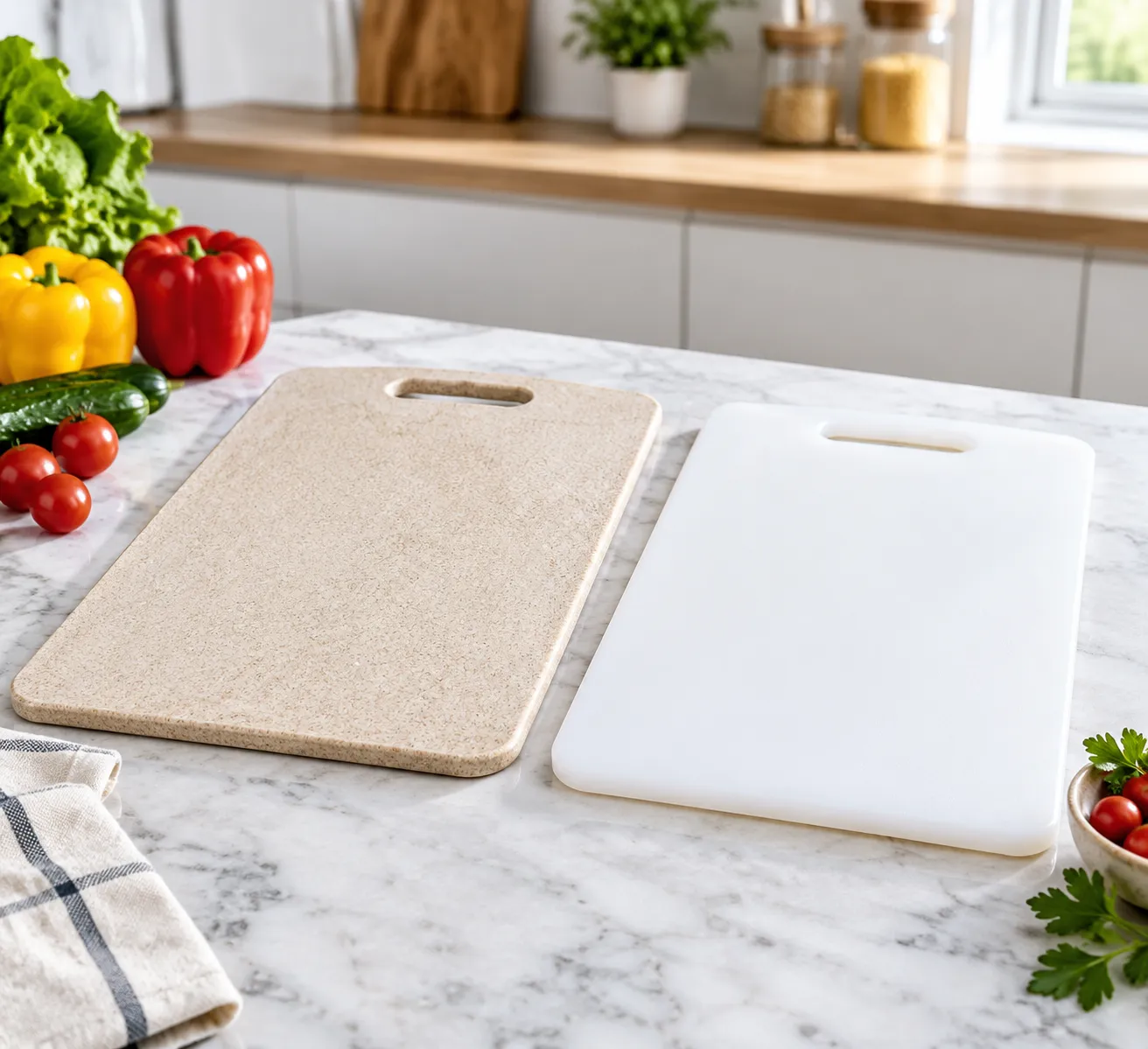
In our testing lab and production runs, we put wheat straw biocomposites head-to-head against standard kitchen chopping surfaces. Here is how they stack up across daily performance, knife care, and long-term value.
Side-by-Side Material Comparison
| Performance Metric | Wheat Straw Biocomposite | Hardwood (Maple / Walnut) | Bamboo | Traditional Plastic (HDPE / PP) |
|---|---|---|---|---|
| Carbon Footprint | Low (Upcycled agricultural residue) | Moderate (Forestry & kiln drying) | Low to Moderate (Glue/resin intensive) | High (100% Virgin petroleum) |
| Blade Dulling Rate | Low (Yields to sharp chef knives) | Very Low (Fiber self-healing) | High (Silica content dulls edges) | Moderate (Soft, but gouges easily) |
| Maintenance Routine | Zero Effort (Dishwasher safe) | High (Hand wash + Monthly oiling) | Moderate to High (Hand wash + Oiling) | Low (Dishwasher safe, but warps) |
| Gouge Resistance | High (Dense composite matrix) | High (End-grain self-heals) | Moderate (Prone to splintering) | Low (Forms deep micro-grooves) |
| Sanitation Profile | Non-porous (Resists liquids/stains) | Antimicrobial (If well-oiled) | Porous (Risk of seam separation) | Porous Over Time (Traps bacteria in cuts) |
| Price-to-Performance | Exceptional (Durable & affordable) | Premium (High initial cost) | Budget to Mid (Prone to splitting) | Budget (Short replacement cycle) |
Sustainability and Manufacturing Footprint
- Wheat Straw Biocomposite: Repurposes agricultural waste that farmers typically burn, cutting air pollution while displacing up to 50% of fossil-based polymers.
- Hardwood: Excellent durability, but requires slow-growth timber harvesting, energy-heavy kiln drying, and chemical sealants.
- Bamboo: Fast-growing grass, but relies heavily on formaldehyde-based adhesives to bond the vertical strips together.
- Traditional Plastic: Derived entirely from refined crude oil with a heavy extraction and refining footprint.
Knife Edge Retention Across Surfaces
- Gentle on Blade Edges: Wheat straw boards provide just enough surface yield to cushion blade impacts, preventing edge roll on delicate high-carbon chef knives.
- Hardwood vs. Bamboo: Hardwood remains the gold standard for knife preservation, whereas bamboo contains natural silica crystals that accelerate blade dulling.
- Standard Plastic: Pure polypropylene or polyethylene absorbs cuts easily, but creates ragged plastic burrs that catch and drag knife tips.
Maintenance: Hassle-Free Cleaning vs. Routine Oiling
- No Seasoning Required: Wheat straw cutting boards require zero food-grade mineral oil, beeswax, or moisture conditioning.
- Dishwasher Durability: Unlike hardwood and bamboo—which warp, split, and delaminate under heat—quality wheat straw boards withstand high-temperature sanitation cycles without structural degradation.
- Stain and Odor Defense: The non-porous surface blocks raw meat juices and vegetable pigments from penetrating deep into the material core.
Durability, Gouge Resistance, and Total Value
- Long-Term Surface Integrity: The high-density fiber-resin matrix resists deep knife gouging, significantly reducing micro-shredding compared to soft virgin plastics.
- Lifespan Expectations: A quality wheat straw cutting board delivers a reliable 3 to 5-year service life in active home kitchens without splintering.
- Economic Value: It combines the low-maintenance utility of synthetic boards with the eco-conscious profile of plant-based materials at a fraction of hardwood pricing.
The Environmental Truth: How Sustainable Is Wheat Straw Plastic?
As a cutting board manufacturer, I believe in giving clear facts rather than marketing greenwash. A wheat straw plastic cutting board offers substantial ecological advantages over traditional petrochemical boards, but understanding its real footprint requires looking at the full lifecycle from farm waste to final disposal.
Upcycling Agricultural Waste to Prevent Air Pollution
Every harvest season, grain farmers are left with billions of tons of leftover crop stems. In many agricultural regions, the standard disposal method is open-field stubble burning, which releases massive amounts of carbon dioxide, methane, and hazardous PM2.5 particulate matter into the atmosphere.
- Crop Waste Recovery: We collect discarded straw stalks directly from grain processors after the edible wheat is harvested.
- Pollution Prevention: Diverting agricultural residue into durable raw material prevents open-air burning and local air degradation.
- Zero Additional Farmland: Unlike dedicated bioplastics like corn-based PLA, wheat straw requires zero additional land, water, or fertilizers to cultivate.
Slashing Petroleum Dependence with Renewable Fibers
Standard plastic chopping boards are made entirely from virgin petroleum-based polymers. Integrating natural straw fibers fundamentally alters that manufacturing baseline.
- Reduced Fossil Fuel Base: We displace up to 40% to 50% of synthetic virgin resin by compounding structural plant fibers into the composite matrix.
- Lower Carbon Footprint: Producing raw agricultural biocomposite uses roughly 30% less energy during thermal molding compared to 100% pure high-density polyethylene (HDPE).
- Closed-Loop Efficiency: Factory scraps and trimmings during production are reground and reintroduced into the manufacturing cycle with minimal processing waste.
End-of-Life Realities: Composting and Recycling
True sustainability means being upfront about how these materials behave at the end of their usable life. A wheat straw composite board balances durability during kitchen prep with realistic disposal pathways.
| Disposal Method | Practical Reality | Best Practice Recommendation |
|---|---|---|
| Backyard Compost | Not Suitable | The food-safe polymer binder prevents breakdown in low-temperature home compost piles. |
| Industrial Composting | Conditional | High-heat commercial composting facilities can degrade the organic fraction over extended processing cycles. |
| Curbside Recycling | Category 7 (Other) | Blended composites cannot go into standard curbside municipal single-stream plastic bins. |
| Extended Life Span | High Impact | Using one dense, resilient wheat straw board for 3 to 5 years keeps multiple flimsy virgin plastic boards out of landfills. |
What to Look for When Choosing a Quality Wheat Straw Plastic Cutting Board
Not every board on the market delivers the same performance. When I evaluate or engineer a wheat straw plastic cutting board, I focus on functional engineering, material density, and third-party food safety compliance to ensure it holds up to daily kitchen prep.
Optimal Fiber-to-Resin Ratio for Structural Durability
The strength of a plant-fiber composite comes down to the exact material balance:
- The 30/70 or 40/60 Sweet Spot: The best boards balance 30% to 40% natural wheat straw fiber with 60% to 70% food-grade polypropylene (PP).
- Why Ratio Matters: Too much raw fiber makes the board brittle and prone to micro-cracking over time. Too little fiber defeats the purpose of choosing an eco-friendly biocomposite over standard petroleum plastics.
- High Structural Density: A properly compressed composite creates a rigid, non-porous core that resists deep knife gouges and prevents warping during high-temperature washing.
Smart Kitchen Design: Juice Grooves, Handles, and Non-Slip Grips
A great cutting board must stay secure on the counter and contain everyday kitchen messes. Look for these essential design features:
- Deep Perimeter Juice Grooves: Channels along the edge should hold at least 1.5 to 2 ounces of liquid to catch meat drippings and fruit juices before they spill onto your countertop.
- Molded Non-Slip Silicone Edges: Integrated TPR or silicone corners keep the board firmly locked in place on slick granite, quartz, or stainless steel worktops, eliminating the need for a damp towel underneath.
- Beveled Hanging Handles: Low-profile cutout handles make the board easy to carry, transfer chopped ingredients straight to the skillet, and hang dry to maintain hygiene.
Color-Coded Sets to Prevent Cross-Contamination
I always recommend multi-board sets over a single catch-all board. Using distinct color-coded boards helps streamline food safety and HACCP-style prep at home:
| Board Color / Icon | Dedicated Food Prep Category | Key Safety Benefit |
|---|---|---|
| Red / Orange | Raw Beef, Poultry, and Pork | Isolates raw meat bacteria and prevents salmonella transfer |
| Blue / Grey | Seafood and Raw Fish | Restricts strong odors and raw fish pathogens |
| Green / Beige | Fresh Vegetables, Fruits, and Herbs | Keeps ready-to-eat produce crisp and allergen-free |
Quality Verification and Food-Contact Testing
As a dedicated cutting board manufacturer, I advise checking for verified test reports rather than generic marketing claims:
- Certified BPA-Free & Heavy Metal-Free: Confirm the manufacturer provides clear documentation showing zero bisphenols, phthalates, or lead migration.
- FDA & LFGB Food-Contact Standards: Ensure the composite complies with US FDA 21 CFR standards and European LFGB testing, which imposes even stricter thresholds on chemical extraction during contact with acidic foods and high heat.
- Reputable Manufacturing: Source from established manufacturers who control the molding process and run routine batch-level inspections for surface density and heat tolerance.
Wheat Straw Plastic Cutting Board Care, Cleaning, and Longevity Guide
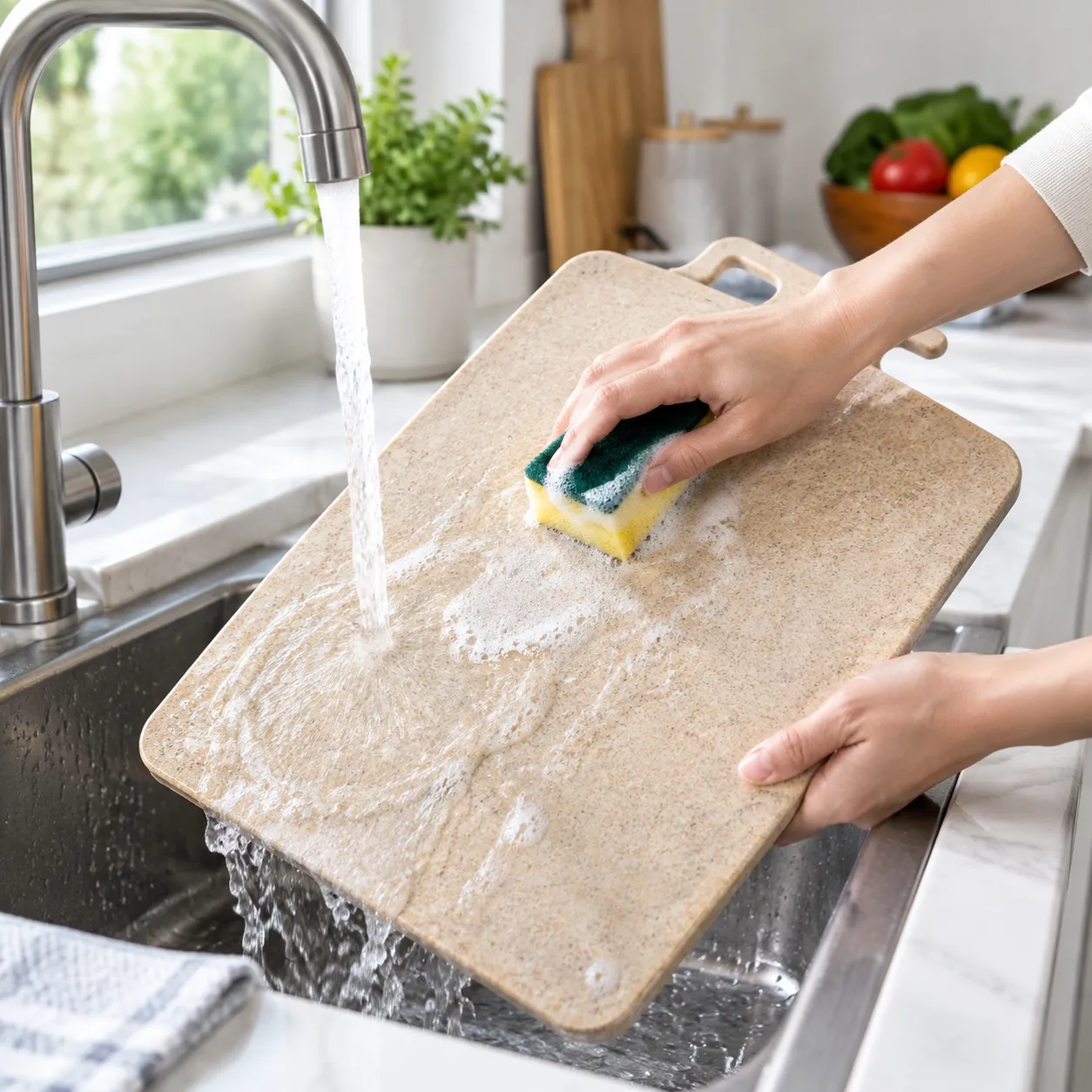
Maintaining a wheat straw plastic cutting board requires minimal effort compared to high-maintenance wood or bamboo. Because we engineer these boards with a dense biocomposite matrix, they resist water absorption and bacterial growth from day one. Following a few simple cleaning routines keeps your prep surface pristine and extends its usable lifespan.
Daily Sanitization: Handwashing and Top-Rack Dishwasher Settings
Daily maintenance takes seconds whether you choose manual washing or machine cycles:
- Routine Handwashing: Clean the surface immediately after use with warm water, standard dish soap, and a soft sponge. Avoid abrasive wire scrubbers that can scuff the composite finish.
- Dishwasher Safe Cleaning: Place your board on the top rack of the dishwasher. While our food-grade polypropylene composite handles regular wash heat, keeping it away from the bottom heating element prevents thermal warping over years of use.
- Drying and Storage: Always stand the board upright in a wire drying rack or hang it using the built-in handle. Airflow ensures complete drying on both sides.
Natural Stain Removal for Turmeric, Berries, and Beets
The non-porous cutting surface prevents deep juice penetration, but heavy pigments like turmeric, chili oil, and beet juice can leave surface residues if left sitting. We recommend natural spot-cleaning methods instead of harsh chlorine bleach:
- Baking Soda Paste: Mix two tablespoons of baking soda with a splash of water to form a thick paste. Spread it over the stain, let it sit for 10 minutes, and scrub gently with a damp cloth before rinsing.
- Lemon and Salt Scrub: Sprinkle coarse salt over the board and rub the surface vigorously using the cut side of half a lemon. The citric acid lifts organic colorants while naturally neutralizing lingering garlic or onion odors.
- White Vinegar Soak: For stubborn odors, wipe the board down with equal parts distilled white vinegar and water, then rinse thoroughly.
Replacement Timeline: Recognizing Deep Gouges and Responsible Disposal
A quality wheat straw plastic cutting board easily delivers 3 to 5 years of dependable daily kitchen service. However, all food prep surfaces eventually reach their limit.
| Condition Indicator | Status | Recommended Action |
|---|---|---|
| Light surface scratches | Normal daily wear | Continue normal use and washing |
| Slight surface discoloration | Aesthetic only | Apply baking soda paste treatment |
| Deep, rough knife gouges | Hygiene risk | Retire and replace the board |
| Warping or uneven wobble | Safety hazard | Retire immediately to prevent knife slips |
When deep knife tracks can no longer be thoroughly sanitized with a brush, it is time for a replacement. Check your local municipal waste guidelines for polypropylene (Resin Identification Code #5) composite processing to dispose of your retired board responsibly.
Frequently Asked Questions About Wheat Straw Plastic Cutting Boards
Do Wheat Straw Cutting Boards Smell Like Grain or Synthetic Chemicals?
No. A properly manufactured wheat straw plastic cutting board carries no foul chemical odor or overpowering grain scent.
- High-heat thermo-compression: During production, we process the blend at high temperatures, completely neutralizing organic odors and vaporizing volatile compounds.
- First-wash performance: You might notice a faint, natural earthy note straight out of the packaging, but it completely dissipates after your initial wash.
- Zero off-gassing: Unlike cheap, low-grade plastic chopping surfaces, quality food-grade biocomposites release no harsh synthetic petroleum fumes.
Can You Safely Prep Raw Meat, Poultry, and Fish on Wheat Straw Surfaces?
Yes, they are exceptionally safe for raw proteins.
- Non-porous density: The smooth, solid surface prevents raw meat fluids, blood, and moisture from penetrating into the core of the board.
- Bacterial control: Because moisture cannot seep beneath the exterior layer, harmful microbes have nowhere to hide or multiply.
- Cross-contamination prevention: We strongly suggest using dedicated, color-coded boards—one for raw poultry, meat, and seafood, and a separate board for fresh produce and cooked items.
Are Wheat Straw Plastic Cutting Boards Microwave or Oven Safe?
No. Never place a wheat straw cutting board inside an oven, microwave, toaster oven, or under an open flame.
- Designed for food preparation: These boards are engineered strictly for cutting, carving, and serving.
- Thermal thresholds: While they are a dishwasher safe prep board capable of withstanding standard hot-water wash cycles up to 100°C (212°F), direct radiant heat and microwave radiation will warp the polymer binder and permanently ruin the board’s flat profile.
Do Wheat Straw Chopping Boards Develop Visible Knife Cut Marks Over Time?
Yes, light surface scoring is natural, expected, and beneficial for your cutlery.
- Blade-edge protection: A board with zero give will quickly roll, chip, and dull your expensive chef’s knives. Our wheat straw fiber blend offers balanced surface resistance that cushions the blade impact.
- Gouge resistance: While shallow micro-grooves will appear with daily use, the densely packed plant fibers prevent the deep, shaggy gouges typical of pure polyethylene boards.
- Reduced shedding: The interwoven biocomposite structure drastically cuts down on the release of loose synthetic plastic shavings into your food during heavy chopping.
 English
  German
  Turkish
  Italian
  Russian
  Polish
  Arabic
  French
  Malay
Malay  Japanese
  Korean
  Thai
Thai