
Understanding Plastic Cutting Board Materials
When you are choosing a plastic cutting board, the type of polymer matters. The most common plastics you will find in the kitchen are High-Density Polyethylene (HDPE), Low-Density Polyethylene (LDPE), and Polypropylene (PP).
| Material Type | Hardness | Knife Friendliness | Warping Resistance | Common Use Case |
|---|---|---|---|---|
| HDPE | High | Excellent | High | Commercial & Heavy-Duty |
| LDPE | Low | Good | Low | Thin Flexible Mats |
| PP | Medium | Moderate | Medium | Everyday Lightweight Boards |
Key Material Properties That Matter
- Knife-Friendliness: A high-quality HDPE cutting board yields slightly under the knife blade. This prevents your knives from dulling quickly while stopping deep, hard-to-clean grooves from forming.
- Warping Resistance: High-density materials tolerate temperature shifts better, ensuring your board stays flat on the counter during prep.
Food Safety Standards and Certifications
We prioritize food-safe plastic kitchen tools that protect your health. Look for NSF certified cutting board markings, which guarantee the material meets strict public health standards. Every board should feature full FDA compliance and verified BPA-free cutting board claims to ensure no toxic plasticizers leach into your ingredients.
Emerging Materials and Alternatives
The industry is shifting toward sustainable cooking accessories. We are seeing a rise in bioplastic cutting board options, including wheat straw cutting board composites and recycled polymer blends. These eco-friendly food preparation tools reduce reliance on virgin petroleum while maintaining high hygiene standards.
Where Calmchop Fits
We engineered Calmchop to bridge the gap between commercial performance and non-toxic kitchen tools. Our material choice combines structural rigidity with elite knife care. By utilizing specialized high-grade polymers and bio-composites, we eliminate the structural weaknesses of cheap plastics, delivering a healthy cutting board surface that stays non-porous, resists deep scoring, and stands up to daily sanitizing.
Plastic vs Wood Cutting Board: The Ultimate Kitchen Showdown
We often get asked how a standard plastic cutting board holds up against traditional wood and bamboo. Selecting the right surface impacts everything from food safety to the lifespan of your expensive kitchen knives. Let’s break down the core differences so you can make the right choice for your culinary routine.
Key Differences At A Glance
| Feature | Plastic Cutting Board | Wood Cutting Board | Bamboo Cutting Board |
|---|---|---|---|
| Hygiene | High (Non-porous, sanitizable) | Moderate (Porous, traps moisture) | Moderate (Hard surface, can split) |
| Knife Wear | Extremely gentle on edges | Very gentle | Harder surface, can dull blades |
| Maintenance | Low (Dishwasher safe) | High (Hand wash + regular oiling) | High (Hand wash + conditioning) |
| Best Used For | Raw meat, poultry, seafood, prep | Bread, cheese, cooked meats | Vegetables, everyday chopping |
Choosing the Right Surface for Your Cooking Style
- Hygiene and Cleaning: A non-porous plastic cutting board does not absorb liquids. This makes it the superior option for raw meat, preventing deep bacterial retention. Wood and bamboo naturally absorb moisture, meaning they require stricter sanitation.
- Knife Edge Wear and Feel: High-quality plastics offer a forgiving surface that yields to the blade, preserving your knife’s sharpness. In contrast, bamboo contains natural silica which can dull your knives much faster.
- Durability and Maintenance: Wood boards require constant hand-washing and regular oiling to prevent cracking and warping. Our wholesale kitchen eco-friendly plastic cutting board with handle eliminates this hassle entirely by offering a warp-resistant, dishwasher-safe solution.
Why a Mixed Board Setup Wins
In a modern kitchen, you do not have to choose just one material. We recommend a hybrid setup to get the best of both worlds. Use a large wood board for dry prep, bread, and serving, and keep a dedicated, highly hygienic plastic cutting board specifically for proteins and high-moisture ingredients. This setup guarantees maximum food safety while preserving your premium kitchen tools.
Food Safety: Are Plastic Cutting Boards Safe?
When you are prepping a meal, food safety is always top of mind. A common question we hear is whether a plastic cutting board is truly safe for a busy kitchen, especially when handling raw meat. The short answer is yes—but how you use, color-code, and maintain your surfaces makes all the difference.
Cross-Contamination and Professional Kitchen Standards
In professional kitchens, avoiding cross-contamination is a strict requirement governed by HACCP (Hazard Analysis Critical Control Point) principles. The easiest way to bring these commercial safety standards into your home is by using color-coded cutting boards. Assigning specific colors to different food groups creates a visual boundary that keeps bacteria where it belongs.
| Board Color | Designated Food Group | Prevention Target |
|---|---|---|
| Red | Raw red meat | Salmonella, E. coli |
| Yellow | Raw poultry | Campylobacter |
| Blue | Seafood and fish | Marine pathogens |
| Green | Produce, fruits, and salads | Soil-borne bacteria |
| White | Bakery, dairy, and cheeses | Yeast and cross-contact allergens |
Using dedicated colors means you will never accidentally slice your salad greens on the same hygienic cutting board surface you just used to prep raw chicken. To learn more about how industrial kitchens manage these risks, see our guide on white cutting boards in food safety.
Microplastics, Scratches, and Chemical Safety
A major concern with older plastic surfaces is what happens when they get heavily scratched. Deep knife grooves can trap food particles and harbor bacteria, making them difficult to sanitize completely. Furthermore, deep chopping on low-quality plastics can release tiny wear particles or microplastics into food.
To ensure a truly healthy cutting board experience, chemical safety must be a priority. You should always opt for a verified BPA-free cutting board that contains no harmful plasticizers or toxic additives.
Practical Safety Checklist
To keep your food prep secure, follow this quick safety checklist:
- Ditch the deep grooves: If your board looks like a roadmap of deep knife scars, it is time to retire it.
- Sanitize after raw meat: Always wash boards used for raw meat immediately with high heat and a heavy-duty scrubbing technique.
- Keep it dry: Never stack damp boards; lack of airflow allows residual bacteria to multiply.
- Feel for stability: If a board warps and loses its flat profile, replace it immediately to avoid knife slips.
The Calmchop Safety Stance
At Calmchop, we design our kitchen tools with a safety-first mindset. We construct our boards using high-density materials that resist deep scratching far better than standard grocery store plastic. By combining non-slip edges with strict non-toxic kitchen tools standards, our designs actively minimize cross-contamination risks and keep your family safe.
Types of Plastic Cutting Boards and Their Use Cases
When setting up a high-functioning kitchen, choosing the right plastic cutting board comes down to matching the design to your specific cooking habits. Different styles serve distinct purposes, from quick prep work to heavy-duty butchering.
The Right Board for the Right Task
- Standard Solid Plastic Boards: These are the reliable workhorses for everyday chopping, slicing, and dicing. Typically made from dense polymers, they provide a stable surface that handles daily meal prep without wearing down your knives.
- Thin Flexible Mats: Incredibly lightweight and easy to bend, these mats allow you to funnel chopped ingredients directly into a pot. However, they lack stability for heavy chopping and can slip on smooth countertops.
- Color-Coded Board Sets: A must-have for preventing cross-contamination. Assigning specific colors to raw meat, poultry, seafood, and vegetables builds excellent food safety habits effortlessly.
- Commercial-Grade Slabs: Thick, heavy-duty boards designed for serious home chefs and small restaurants. They offer maximum stability and do not warp under heavy pressure or high-heat dishwashing.
- Specialty Plastic Boards: Equipped with features like deep juice grooves, integrated handles, or catch trays to keep your prep space clean and organized.
Quick Comparison Matrix
| Board Type | Best For | Top Advantage | Key Limitation |
|---|---|---|---|
| Standard Solid | Daily meal prep, vegetables, fruit | Balanced durability | Can be bulky to store |
| Flexible Mats | Quick funneling, light snacks | Easy ingredient transfer | Prone to deep knife scars |
| Color-Coded Sets | Preventing cross-contamination | High food safety | Requires disciplined use |
| Commercial Slabs | Heavy chopping, butchering | Maximum stability | Heavy and hard to handle |
Where Calmchop Fits Your Kitchen
We engineered our product lineup to merge the best elements of these categories into streamlined, high-performance tools. Instead of forcing you to clutter your cabinets with dozens of specialty mats, our wholesale double-sided plastic chopping board with non-slip feet and juice groove delivers a commercial-grade, hygienic cutting board surface with built-in stability. We focus on creating versatile, durable kitchen cutting boards that offer the spill protection of specialty designs alongside the safety benefits of color-coded systems.
Key Features to Look For in a Plastic Cutting Board
When you are shopping for a plastic cutting board, choosing the right features makes the difference between a frustrating kitchen tool and a seamless meal prep experience. We design our boards with specific, high-performance details that elevate your daily cooking while keeping food safety at the forefront.
Crucial Features Breakdown
- Size and Thickness: A board needs to be large enough for your ingredients but small enough to fit your sink. A thickness of at least 1/2 inch provides the stability required to prevent warping under heavy use.
- Surface Texture and Finish: Completely smooth boards allow ingredients to slip. Look for a lightly textured surface that grips the food and keeps your knife from skidding, without being so rough that it traps bacteria.
- Non-slip Properties: Safety is paramount. We integrate rubberized feet and non-slip edges into our designs to lock the board onto slippery stone or wood countertops.
- Juice Grooves: Deep perimeter channels are essential when carving juicy meats or slicing watery vegetables, preventing liquids from spilling onto your clean counters.
- Ergonomics and Handles: Integrated handles or beveled edges make it easy to lift, carry, and pour chopped ingredients directly into a pot.
- Dishwasher Compatibility: To ensure a truly hygienic surface, your board must withstand high-temperature cycles. A quality dishwasher-safe cutting board will not warp or degrade in the machine.
- Stain and Odor Resistance: High-density materials resist pigment penetration from tough ingredients like turmeric and beetroot, keeping your board looking clean.
- Eco-Friendly Considerations: Modern kitchens demand smarter materials. Incorporating recycled content or innovative bioplastic cutting board options reduces your environmental footprint without sacrificing durability.
Feature Comparison Matrix
| Feature | Best For | What to Look For |
|---|---|---|
| Thick HDPE Plastic | Heavy chopping & longevity | 0.5 to 1 inch thickness |
| Lightly Textured Surface | Precision slicing & safety | Micro-textured, non-porous finish |
| Rubberized Borders | Glossy countertops (Quartz/Marble) | Molded-on TPE edges |
| Juice Grooves | Meat prepping & juicy fruits | Deep, continuous perimeter channel |
| Wheat Straw / Bioplastics | Eco-conscious home cooking | BPA-free cutting board certification |
Quick Buyer’s Checklist
Before making your next purchase, use this quick checklist to ensure you are getting a high-value, safe kitchen tool:
- [ ] Is it certified food-safe and BPA-free?
- [ ] Does it have built-in non-slip grips to prevent sliding?
- [ ] Will it fit comfortably inside your standard dishwasher?
- [ ] Is the material non-porous to resist deep knife scars and bacteria?
- [ ] Does the manufacturer prioritize sustainability and modern, eco-friendly material blends?
How to Choose the Right Plastic Cutting Board for Your Kitchen
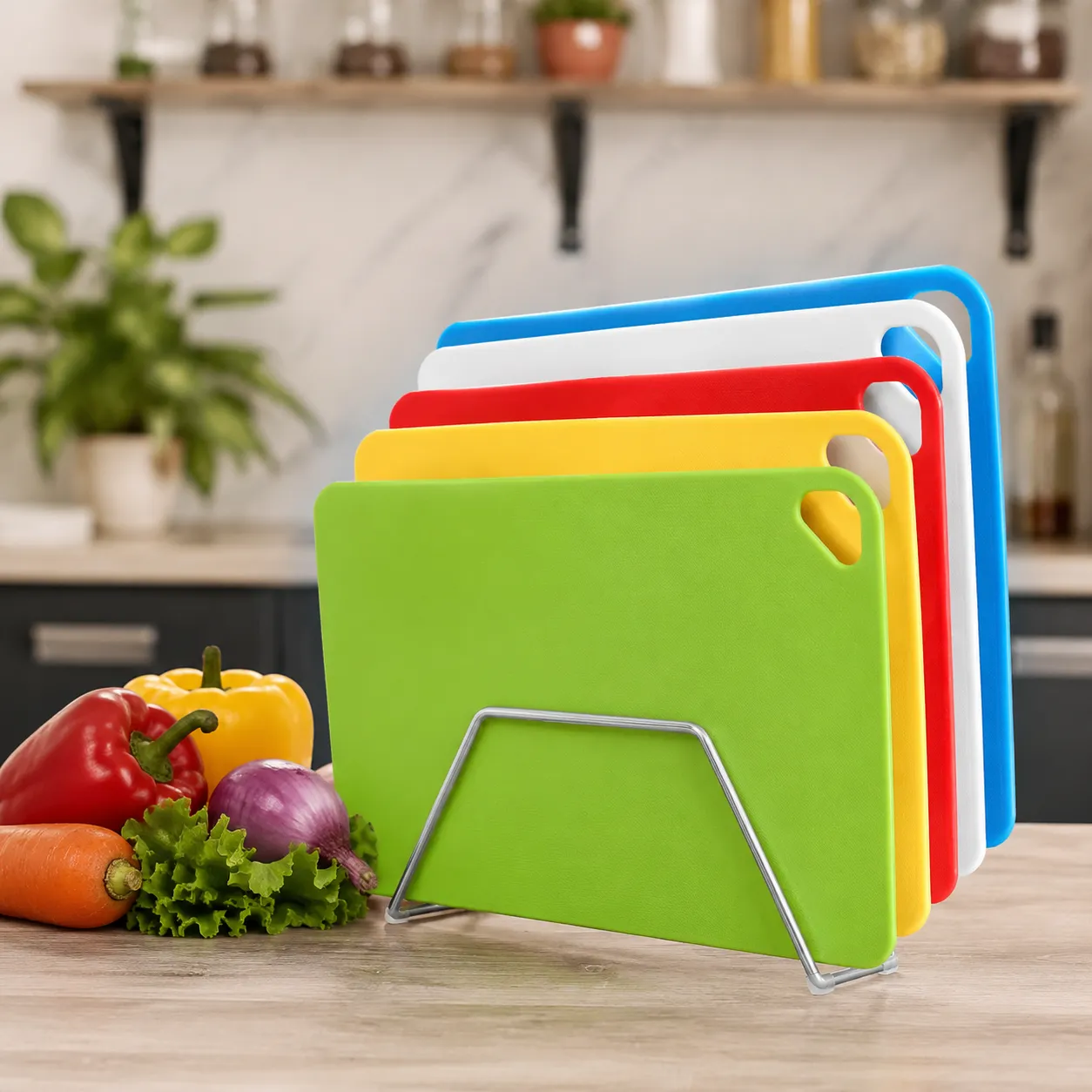
Finding the perfect plastic cutting board comes down to how you cook, how much space you have, and your budget. Choosing the wrong size or material leads to warped boards, dull knives, and unnecessary clutter.
Assessing Your Cooking Style and Space
Your daily habits dictate the type of board you need. If you handle heavy daily meal prep, a thin mat won’t cut it. You need a stable, durable kitchen cutting board.
- Counter Space & Storage: Measure your prep area before buying. A board that is too large will sit awkwardly on your counter, while a board that is too small makes food spill over. To find the right fit for your counter space, read our guide on how to pick the right cutting board for your kitchen.
- Home vs. Commercial Slabs: Standard home boards work for quick meals, but a heavy-duty commercial plastic chopping board makes sense if you prep large quantities of meat or vegetables. They offer more surface area and do not slide around during heavy chopping.
- Budget vs. Quality: Cheap, ultra-thin boards cut corners on material density. They warp quickly in the dishwasher and develop deep knife grooves that trap bacteria. Investing in a high-quality, food-safe plastic kitchen tools saves money over time.
Cutting Board Configurations Matrix
| Cooking Profile | Recommended Setup | Key Features to Look For |
|---|---|---|
| Minimalist (Occasional Cooking) | 1 Medium Board | Medium size, dishwasher-safe cutting board, double-sided design. |
| Practical Home Cook (Daily Meals) | 2-3 Board Set | Color-coded cutting boards, juice grooves, non-slip cutting board feet. |
| Serious Meal Prepper (Heavy Use) | 1 Large Commercial Slab + 2 Prep Boards | High-density material, thick profile, dedicated cutting board for raw meat. |
The Decision Flow: Find Your Calmchop Match
We design our Calmchop boards to fit real kitchen workflows. Use this quick framework to identify the best setup for your home:
- The Busy Family: Go for our standard color-coded cutting boards with non-slip edges. They prevent cross-contamination between raw meats and veggies while surviving daily trips through the dishwasher.
- The Eco-Conscious Home: Choose our bioplastic cutting board lines made from sustainable composites. They offer the hygiene benefits of traditional plastic with a lower environmental footprint.
- The Heavy Prep Chef: Opt for our thick, high-density polyethylene models that mimic the weight of wood but offer a completely hygienic cutting board surface.
Care, Cleaning, and Maintenance of Plastic Cutting Boards
Keeping a plastic cutting board in top shape isn’t just about looks—it’s about food safety. Over time, knife marks can become a breeding ground for bacteria if ignored. We need to stay on top of daily cleaning and deep maintenance to keep our kitchens safe.
Daily Cleaning and Scrubbing Techniques
For daily use, a quick rinse isn’t enough. We recommend mechanical scrubbing with hot, soapy water and a stiff-bristled brush to get into the grooves.
- Dishwasher Use: Most high-quality boards are a dishwasher-safe cutting board, which uses high heat to sanitize the surface effectively.
- Manual Wash: If hand-washing, use a concentrated dish soap and scrub vigorously across the knife tracks.
- Air Drying: Always stand the board upright in a drying rack. Never stack damp boards, as trapped moisture invites bacteria.
Deep Cleaning and Odor Removal
When working with pungent ingredients like garlic, onions, or fish, odors can cling to the surface. To refresh a stained or smelly board, use these household remedies:
| Method | Ingredients | Application |
|---|---|---|
| Baking Soda Paste | Baking soda + Water | Rub onto the board, let sit for 10 minutes, then scrub and rinse. |
| Vinegar Spritz | White vinegar | Spray directly onto the surface to neutralize strong odors. |
| Sanitizing Rinse | Hydrogen peroxide (3%) | Pour over the board to fizz away deep-seated bacteria after handling raw meat. |
Preventing Warping and Managing Wear
Plastic handles everyday kitchen tasks with ease, but it hates direct heat. Never place a hot pan on your board or leave it near an open flame.
Over time, you will notice surface scratches. Shallow, cosmetic scratches are normal, but deep, shaggy grooves pose a serious hygiene risk because sponge fibers and food particles get trapped inside. For detailed insights on how different materials hold up over time, you can read about our PP cutting boards compared for performance, hygiene, and durability.
When to Replace Your Board
No durable kitchen cutting board lasts forever. For family safety, we recommend replacing your plastic boards every 1 to 2 years, or sooner if they become heavily grooved, warped, or permanently stained.
Calmchop Care Guidelines
At Calmchop, we design our boards to make maintenance effortless. Our non-porous surfaces resist deep staining and rinse clean quickly. For daily care, simply slide our boards into the dishwasher or scrub them down with standard dish soap. Our high-density material ensures your board stays flat, safe, and ready for the next meal prep session.
Sustainability in a Plastic Cutting Board
The traditional plastic cutting board often faces environmental criticism due to its long lifespan and disposal challenges. However, the kitchen tool industry is evolving. While recycled plastic boards offer a second life to synthetic materials, they sometimes face strict regulatory limitations regarding direct food contact.
To bridge this gap, modern eco-friendly food preparation relies heavily on plant-based bioplastics and composite materials, such as wheat straw and natural plant fibers. We dive deep into these innovations in our breakdown of how PP cutting boards fit into smart and sustainable kitchen concepts, highlighting how eco-friendly food preparation is shifting toward smarter material loops.
Rethinking Kitchen Tool Lifespans
True sustainability in the kitchen often comes down to product longevity. A highly durable, non-toxic kitchen tool that lasts for years prevents the frequent waste generated by flimsy, disposable alternatives.
- Conventional Plastics: High durability, but pose long-term disposal challenges if not managed properly.
- Recycled Blends: Great for reducing virgin plastic use, but require strict vetting for food safety compliance.
- Wheat Straw & Bioplastics: Reduced carbon footprint during manufacturing, offering a circular alternative to petroleum-based items.
- Durable Design: Investing in a thicker, commercial-grade surface reduces the frequency of replacement, making it a highly sustainable cooking accessory.
The Calmchop Approach to Eco-Friendly Design
At Calmchop, we balance high-performance food safety with responsible manufacturing. We choose premium, high-density polymers and bioplastic blends that maximize service life while ensuring our products remain 100% recyclable. Our commitment extends from sourcing clean, sustainable materials to utilizing minimalist, plastic-free packaging, ensuring your kitchen stays efficient, safe, and environmentally conscious.
Common Mistakes to Avoid with Plastic Cutting Boards
Even a high-quality plastic cutting board can become a health hazard or wear out prematurely if handled incorrectly. Through our years of manufacturing and kitchen experience, we see the same missteps happening in both home and commercial kitchens. Avoiding these common blunders keeps your food safe and your prep work efficient.
Cross-Contamination and Surface Neglect
- Using One Board for All Foods: Prepping raw poultry and then slicing vegetables on the same surface without a deep sanitize cycle is the fastest way to spread foodborne illnesses.
- Ignoring Deep Grooves: When your board develops deep hacks and gouges from heavy chopping, it is time to resurface or replace it. These valley-like scars harbor trapped bacteria that normal washing cannot reach.
- Overlooking Color-Coding: Many home cooks skip using color-coded cutting boards for different food groups, missing out on a simple visual system that practically eliminates cross-contamination risks.
Environmental and Tool Mismanagement
- Exposing Boards to Excessive Heat: Plastic has its limits. Placing a sizzling hot pan on the surface or leaving it near an open flame ruins the flat profile, causing dangerous warping.
- Using Extremely Dull Knives: A dull blade requires excessive force, which causes the knife to slip and tear up the plastic surface unnecessarily. Keeping knives sharp actually extends the life of your board.
- Improper Drying and Storage: Stacking damp boards flat against each other traps moisture, creating an ideal breeding ground for mold and off-odors. Always store your gear vertically with proper airflow.
False Security and Poor Purchases
The Dishwasher Myth: Assuming a “dishwasher-safe” label solves all safety concerns is a mistake. While a high-heat dishwasher cycle sanitizes the surface, it cannot clean inside deep, microscopic knife gashes on a worn-out board.
- Buying Ultra-Thin Mats for Heavy Tasks: Selecting paper-thin, flimsy sheets for heavy-duty cleaver work or daily meal prep invites slipping. A stable, dense workspace is essential for safe knife work.
Calmchop Spotlight: How Our Plastic Cutting Boards Solve Real Kitchen Problems
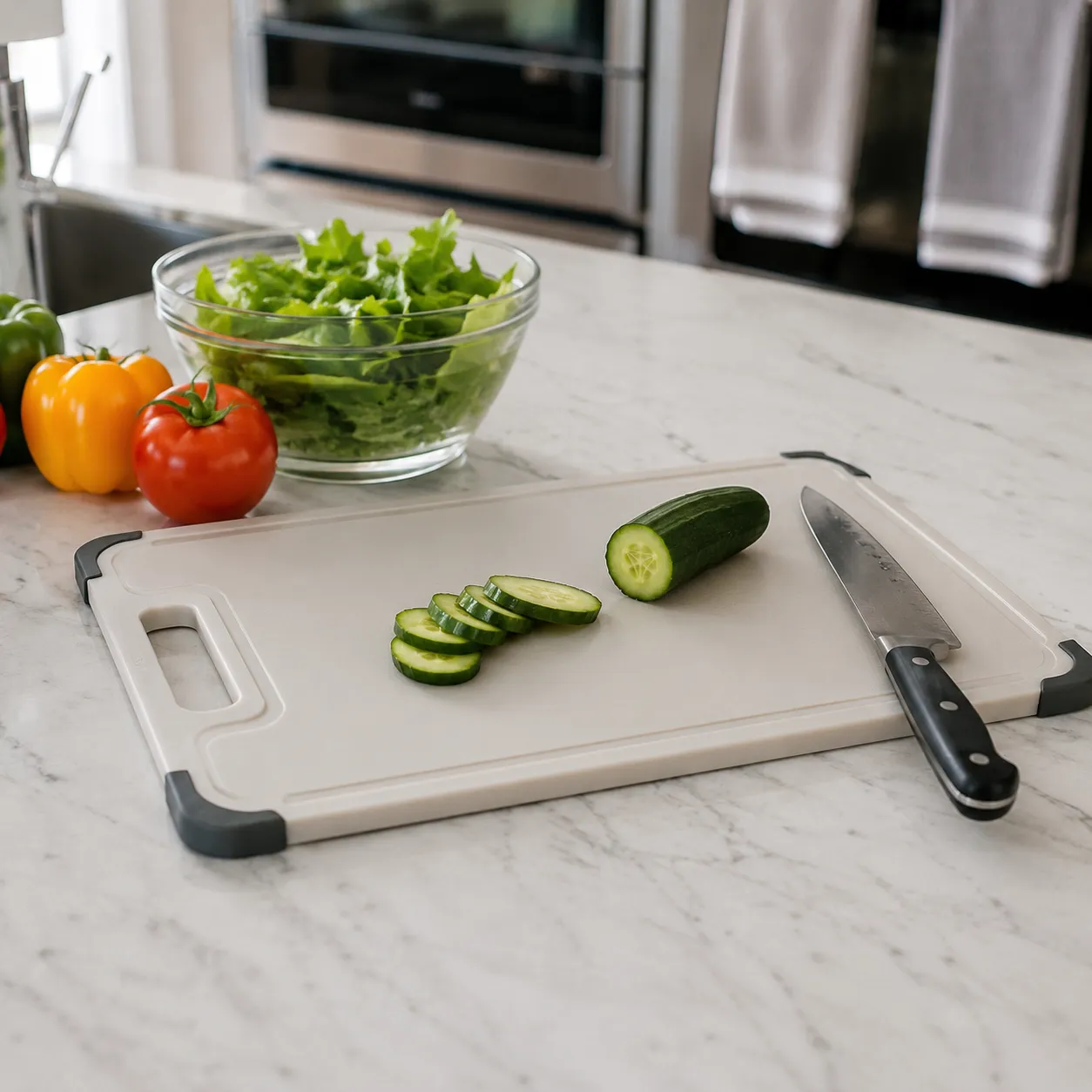
We designed Calmchop because we were tired of flimsy, generic kitchen tools that warp, slide around, and harbor bacteria. Our design philosophy centers on three core pillars: absolute food safety, everyday convenience, and modern aesthetics. We do not believe you should have to sacrifice the look of your kitchen to get a highly functional, commercial-grade plastic cutting board.
Core Features Built for Your Needs
Every detail of our boards directly solves a common cooking frustration. We combine high-density material science with smart ergonomics to deliver a superior prep experience.
| Feature | The Problem It Solves | The Calmchop Advantage |
|---|---|---|
| Premium Materials | Dull knives and chemical leaching | Heavy-duty HDPE and innovative bioplastics |
| Non-Slip Grip | Boards sliding on slick countertops | Molded silicone edges for locked-in stability |
| Juice Grooves | Liquids spilling over and creating messes | Built-in anti-splash deep juice channels |
Our focus on sustainable engineering ensures that our eco-friendly plastic cutting boards maintain the highest food safety standards while remaining durable enough for years of daily chopping.
Tailored for Every Type of Cook
We created a versatile lineup because a busy parent prep routine looks completely different from a professional chef setup.
- Busy Families: Dishwasher-safe, odor-resistant boards that allow you to feed the kids quickly without worrying about tedious cleanup or cross-contamination.
- Health-Focused Cooks: Non-porous, BPA-free surfaces designed specifically for hygienic raw meat and fresh vegetable prep.
- Small Food Businesses: Commercial-grade durability that stands up to heavy daily knife work. For larger operations, our wholesale customized plastic cutting board options offer tailored OEM production with built-in non-slip designs to match specific kitchen workflows.
Why Calmchop Stands Out
Generic boards cut corners by using thin, recycled scrap plastic that warps under minimal heat. Calmchop boards are engineered with precise thickness to stay perfectly flat, withstand high dishwasher temperatures, and provide a knife-friendly surface that preserves your blade’s edge longer than standard retail options.
Frequently Asked Questions About Plastic Cutting Boards
We get a lot of questions about how a plastic cutting board holds up in a busy kitchen. Here are the direct, no-nonsense answers to your most common burning questions.
Quick Reference Safety & Care Guide
| Question | The Quick Answer |
|---|---|
| Are plastic cutting boards safer than wood? | Yes, specifically for raw meat, because they are non-porous and can be sanitized in a dishwasher. |
| Do they dull knives quickly? | High-quality plastics like HDPE are knife-friendly and won’t dull blades prematurely. |
| Can they go in the dishwasher daily? | Yes, commercial-grade and high-density boards handle daily dishwasher cycles without warping. |
| How often should they be replaced? | Every 1 to 2 years, or as soon as they develop deep, clean-resistant grooves. |
Are plastic cutting boards safer than wood?
For handling raw meat, poultry, and seafood, a plastic cutting board is generally safer than wood. Plastic is non-porous, meaning bacteria and juices cannot sink beneath the surface. When you are done, you can toss it straight into the dishwasher for a high-heat sanitize cycle that kills lingering pathogens. Wood is great for bread and vegetables, but plastic wins on pure, effortless hygiene.
Do plastic cutting boards dull knives more quickly?
Not if you choose the right material. High-density polyethylene (HDPE) and polypropylene boards are engineered to absorb the impact of the blade. They yield slightly under the knife edge, which actually protects your knives from dulling prematurely. Avoid ultra-hard, cheap acrylic or glass boards, which will ruin a knife edge in a single prep session.
Can plastic cutting boards go in the dishwasher every day?
Absolutely. One of the main reasons we design our boards using heavy-duty, commercial-grade materials is to ensure they are 100% dishwasher-safe. Daily high-heat wash cycles won’t warp or degrade a premium board, making it easy to maintain a hygienic cutting board surface without tedious hand washing.
How often should I replace my plastic cutting board?
As a general rule, expect to replace your board every 12 to 24 months. However, you should ignore the timeline and look at the surface. If your board is covered in deep, rough knife grooves that you can’t thoroughly clean with a scrub brush, it is time to retire it. Those deep tracks are prime real estate for bacterial growth.
Is “BPA-free” enough to guarantee safety?
BPA-free is a great baseline, but it isn’t the whole story. To ensure you are using truly non-toxic kitchen tools, look for food-grade certifications like FDA compliance or NSF certification. At Calmchop, we ensure all our materials go beyond basic marketing buzzwords to meet strict global food contact safety standards.
How many cutting boards should I have in my kitchen?
We recommend a minimum of two boards, but three is the sweet spot for an efficient, healthy kitchen setup:
Board 1 (Plastic): Reserved strictly as a cutting board for raw meat and seafood.
Board 2 (Plastic or Wood): For ready-to-eat foods, produce, and cheeses.
Board 3 (Small Plastic/Bioplastic): A nimble, quick-grab board for aromatics like garlic, onions, and citrus.
What colors should I use for different types of food?
Using color-coded cutting boards is the easiest way to eliminate cross-contamination. Professional kitchens use a standardized system, and adopting it at home keeps your family safe:
Red: Raw meat
Yellow: Raw poultry
Blue: Seafood
Green: Vegetables and fruits
White: Dairy and bakery items
Can I recycle an old plastic cutting board?
It depends on the material code stamped on the back. Most high-quality boards made from HDPE (Plastic #2) or Polypropylene (Plastic #5) are widely recyclable through municipal curbside programs. Just make sure to scrub the board thoroughly to remove any food residue before tossing it into the recycling bin. If you are looking to minimize your footprint from day one, consider switching to an eco-friendly cutting board made from sustainable composites or recycled blends that actively reduce kitchen waste.
 English
  German
  Turkish
  Italian
  Russian
  Polish
  Arabic
  French
  Malay
Malay  Japanese
  Korean
  Thai
Thai